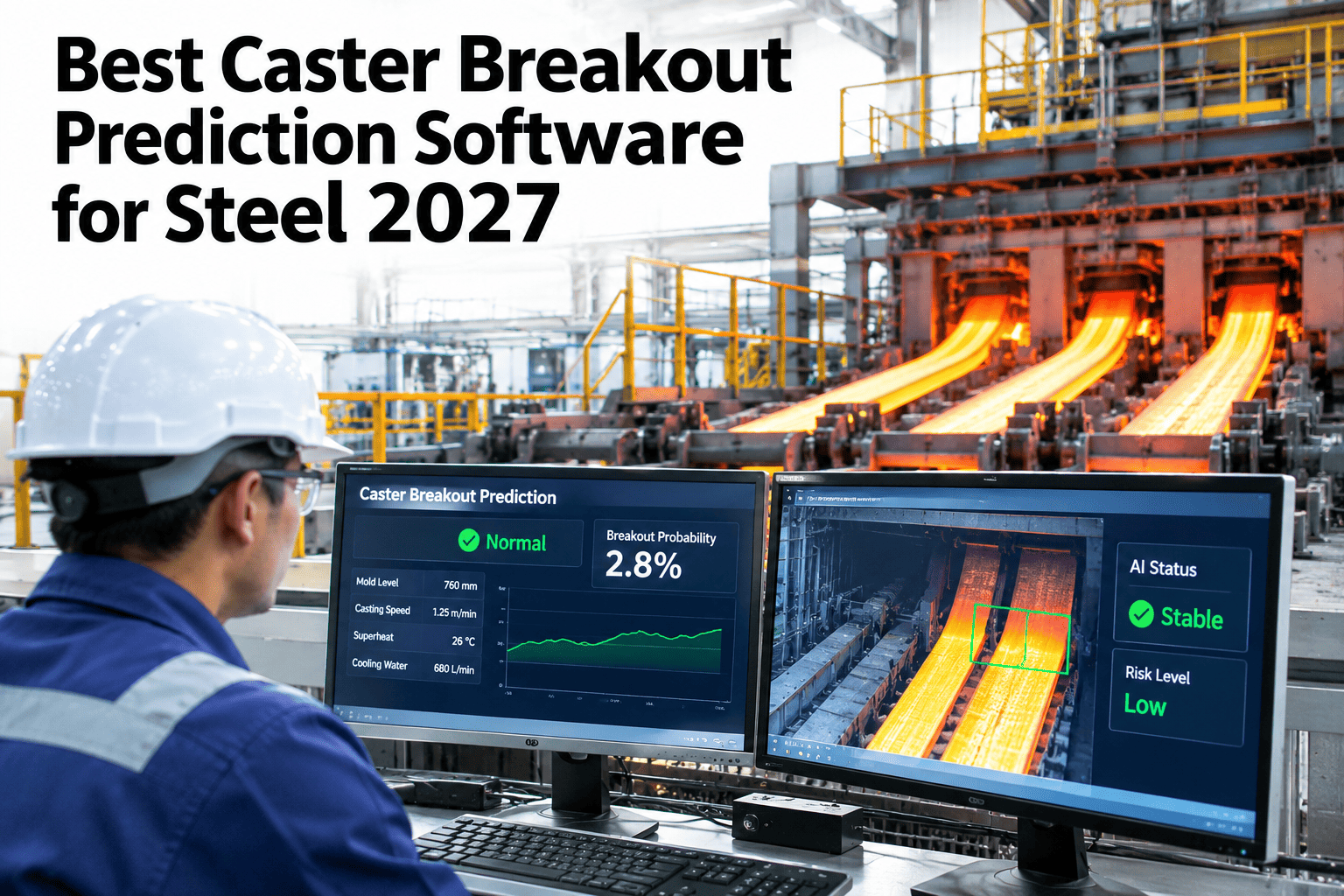
A breakout prediction vendor that only reads mold thermocouples is evaluating half the problem. The event that actually tears a shell open involves casting speed, mold level stability, and secondary cooling just as much as thermal pattern — and a 2027 buyer's shortlist should score every candidate against all four inputs, not just the one that's easiest to sell. iFactory, an on-premise AI platform for continuous caster breakout prevention, fuses all four into a single risk score rather than a thermocouple-only alert. See the fused risk-score approach.
Thermocouple-Only Is Half An Evaluation
The signals that actually predict a breakout come from four systems, not one — score vendors against all four.
Thermal Pattern Alone Catches Stickers. It Misses Everything Else.
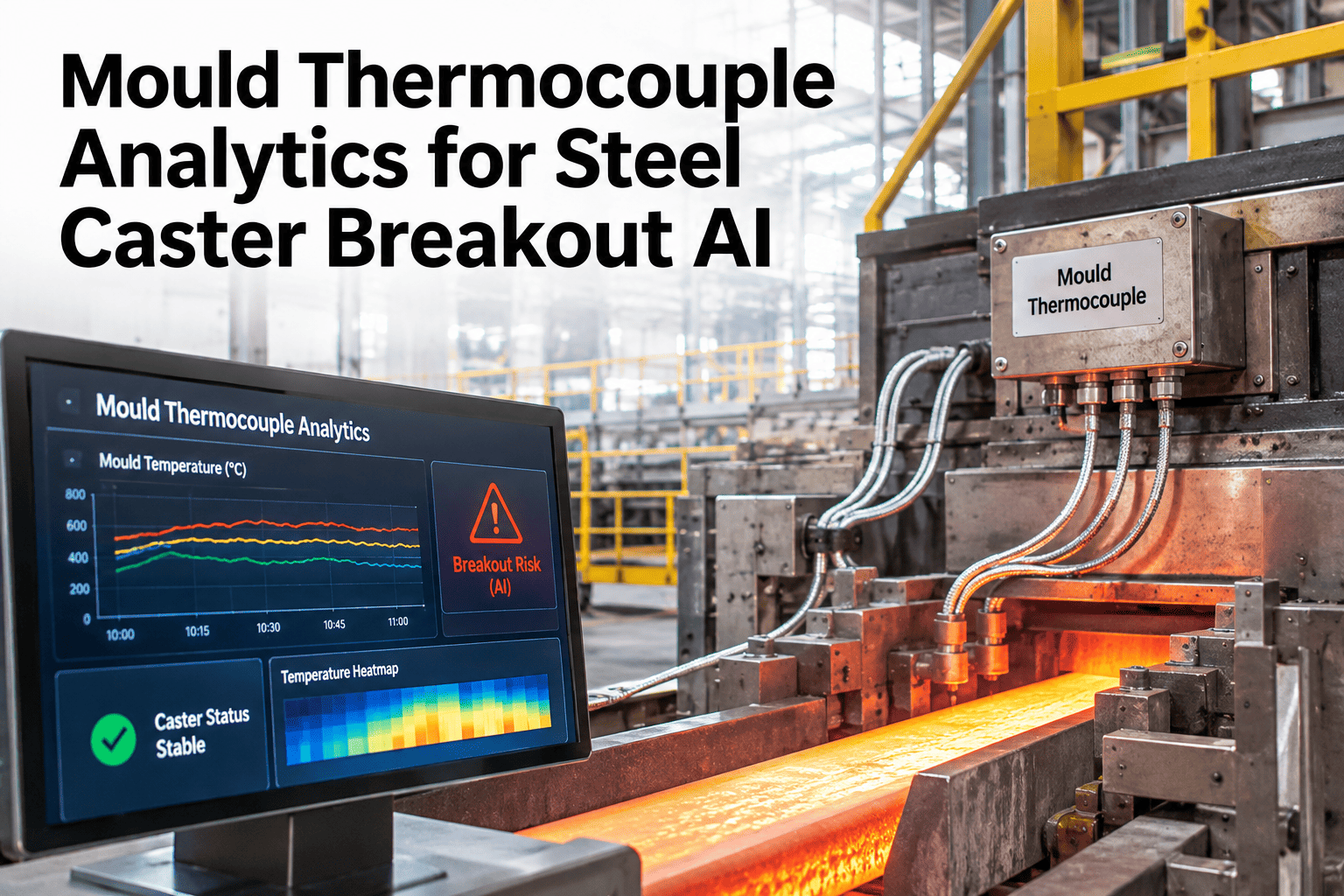
A mold thermocouple array detects the downward-propagating hot spot that signals a sticker forming between shell and mold wall — and nothing else.
- Speed-driven shell thinning → thermocouples see the temperature consequence late, after the shell is already thin.
- Mold level instability → disrupts flux infiltration and shell uniformity independently of thermal readings.
- Cooling water drift in secondary zones → erodes shell thickness downstream of the mold, outside the thermocouple's field of view entirely.
Does The Score Fuse All Four Inputs, Or Just Weight One Higher?
| Input | What it catches alone | What it misses alone |
|---|---|---|
| Mold thermocouple | Sticker formation, asymmetric heat transfer | Speed-driven and cooling-driven thinning |
| Mold level | Flux infiltration disruption, meniscus instability | Thermal sticker signatures |
| Casting speed | Shell-thickness-at-exit risk | Local thermal anomalies |
| Secondary cooling | Downstream shell erosion from ΔT drift | Mold-zone events entirely |
A genuine fusion model weighs these four together into one breakout risk score per heat. A vendor that bolts a speed or cooling flag onto a thermocouple-first product isn't fusing — it's layering alerts that still have to be reconciled by an operator under pressure.
Ask Any Vendor This One Question
"Show me the risk score for a heat where thermocouples were normal but casting speed and cooling ΔT were both drifting." If they can't produce one, the score isn't fused.
What's The Real False-Alarm Rate, Not The Headline Number?
A detection-accuracy percentage means nothing without the false-alarm rate that comes with it — and vendors rarely volunteer both in the same sentence.
Ask for false alarms per 100 heats, not just an accuracy percentage — a system tuned to never miss a breakout will also flag dozens of non-events, and operators stop trusting alerts that cry wolf.
The Thermocouples Were Clean. The Score Still Should Have Fired.
A slab caster runs a routine grade change mid-shift, nudging casting speed up to hold throughput while a secondary-cooling zone valve has been drifting out of calibration for three shifts, unnoticed. Mold thermocouples read normal the entire time — no sticker, no asymmetric heat transfer, nothing to alarm on. The combination of higher speed and under-cooled secondary zone thins the shell well before the mold thermocouples would ever see a consequence. A fused score tracking speed and cooling ΔT alongside thermal data would have flagged rising risk two heats earlier. A thermocouple-only system had nothing to say until it was already too late to matter.
Does It Write Back To Speed Control, Or Just Alert?
An alert an operator has to act on manually loses seconds that matter — the best systems close the loop automatically.
- Alert-only systems → operator sees a warning, has to interpret it, then manually reduces speed.
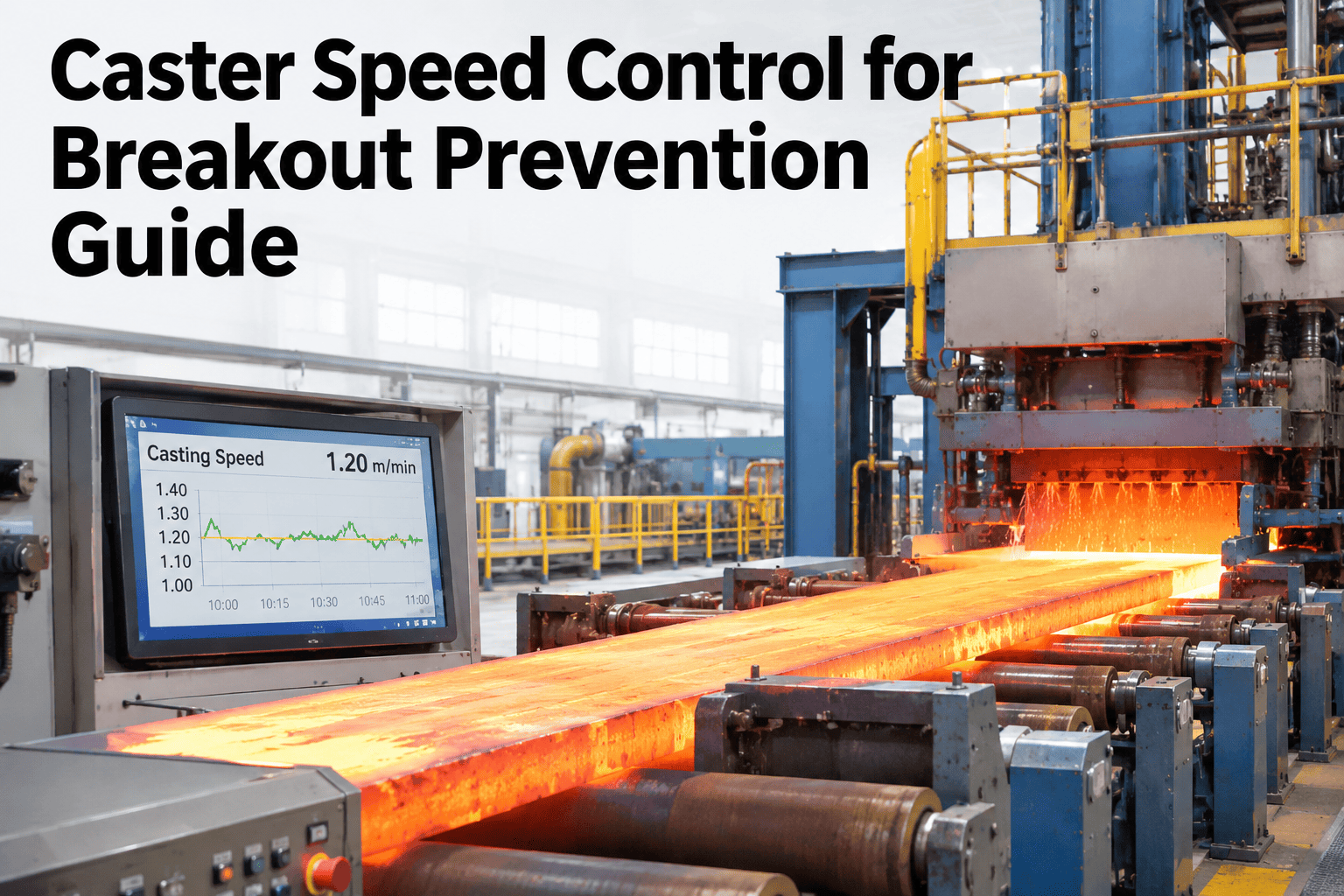
- Closed-loop systems → risk score crosses a threshold, speed reduction initiates automatically via direct write-back to the caster drive.
At casting speeds above roughly 1.0 m/min, the seconds an operator spends reading and reacting to an alert are seconds a closed-loop system doesn't spend at all. Ask whether the score triggers action or just triggers a screen.
Does The Model Retune Itself, Or Sit At Commissioning Settings?
Thresholds tuned once during commissioning rarely match the casting speed ranges, mold powder formulations, or steel grades a plant runs two years later.
- Static-threshold systems → accuracy quietly degrades as the product mix shifts away from commissioning conditions.
- Continuously-learning systems → retrain against new casting sequences and grade data, holding accuracy as the mix evolves.
Seven Questions For Any Shortlist
- Does the risk score fuse thermocouple, level, speed, and cooling data, or weight one input and flag the rest separately?
- What's the false-alarm rate per 100 heats, stated alongside the detection-accuracy figure?
- What's the typical lead time, and does it hold across sticker, crack, and speed-driven breakout mechanisms equally?
- Does the system write back to speed control automatically, or alert only?
- Does the model retrain on new casting sequence and grade data, or run on commissioning-era thresholds?
- Does it work with the thermocouple array already installed, or require a mold rebuild?
- Does production and risk-score data stay inside the plant network, or route through an external cloud?
"Works With Your Thermocouples" Isn't The Same As "Fuses Your Data"
Plenty of vendors will say a product is compatible with existing mold thermocouples — that's a hardware claim, not a fusion claim.
- Compatible → the system can read the thermocouple signal without new hardware.
- Fused → that thermocouple signal is combined with level, speed, and cooling data into one risk number, not reported alongside three separate dashboards.
Ask to see the actual scoring logic, or at minimum a worked example, before taking "fusion" at face value — it's one of the easiest words in this category to use loosely.
One Fused Score From Four Systems, Not Four Separate Alerts
iFactory's caster platform reads mold thermocouple arrays, level sensors, speed setpoints, and spray cooling systems as one continuous data stream, scoring breakout risk per heat rather than issuing a separate alert for each input.
- Uses the thermocouple array already installed — no mold rebuild required.
- Closed-loop speed reduction write-back when risk score crosses threshold.
- Continuous learning against new casting sequences and steel grades as the product mix evolves.
- On-premise deployment — thermal, level, speed, and cooling data stay inside the plant network.
What A Caster Operations Lead Should Ask Before Signing
A breakout prediction system earns trust when its false-alarm rate is low enough that operators act on every alert, not just the ones they happen to notice.
What Steel Plants Ask When Evaluating Breakout Prediction Software
It catches sticker-driven breakouts well but misses speed-driven and cooling-driven shell thinning entirely, so it covers only part of the failure space. Compare fused vs. thermocouple-only with the team.
Well-tuned multi-input systems report under one false alarm per 100 heats; anything far above that will train operators to ignore alerts. Ask for real false-alarm numbers from any vendor you're evaluating.
No — a fusion model can typically run on the thermocouple array already installed, adding level, speed, and cooling data on top rather than replacing hardware. Ask support about your current mold configuration.
Automatic write-back to speed control removes the seconds an operator would otherwise spend interpreting and reacting to an alert, which matters most at higher casting speeds. See how closed-loop response works.
A continuously-learning model retrains as casting speed ranges and grade mix shift, rather than sitting on thresholds set once at commissioning. Talk through your current tuning cadence with the team.
See A Fused Breakout Risk Score On Your Own Caster Data
Book a session with the iFactory team and compare a single fused risk score against whatever thermocouple-only alerting you're running today.