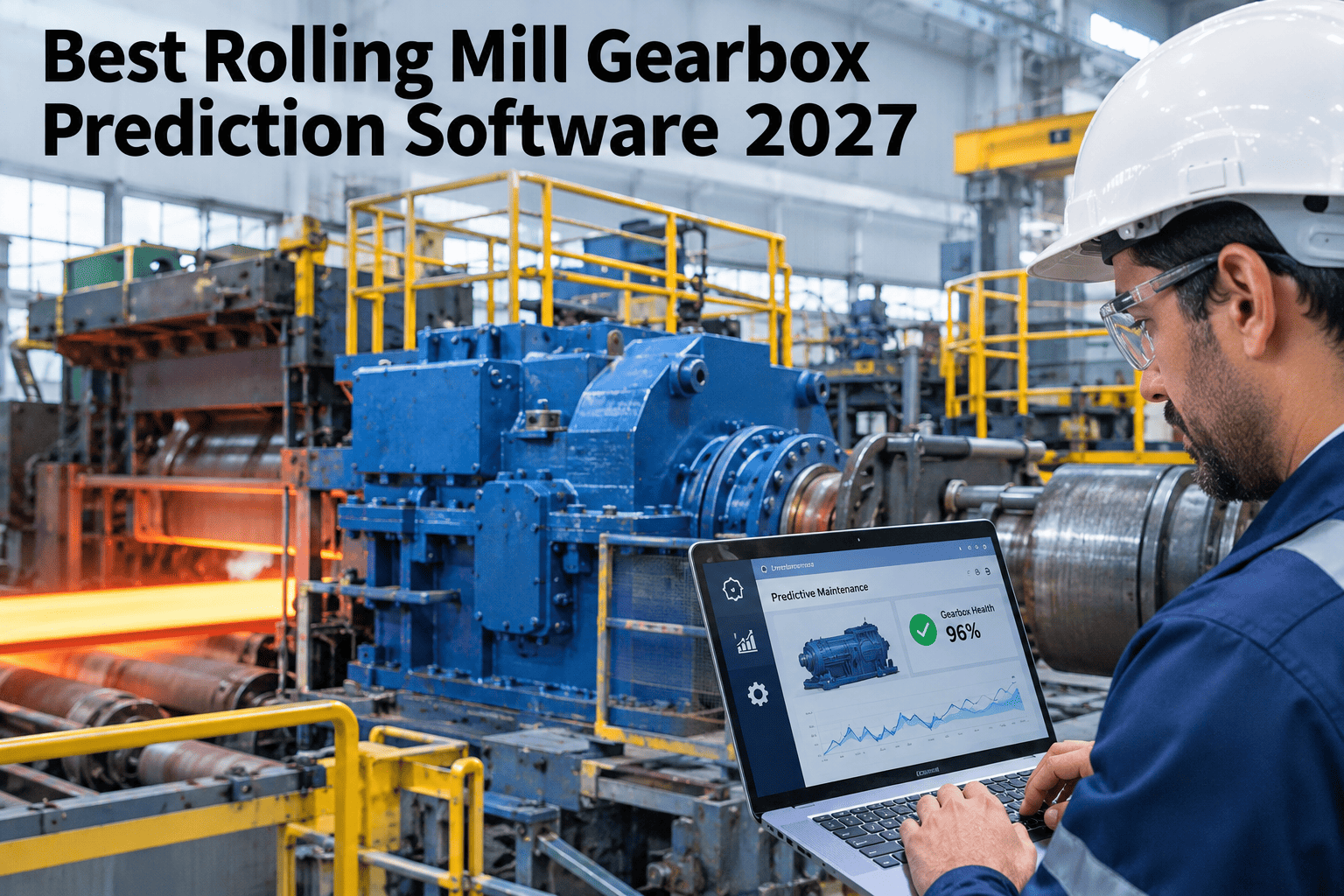
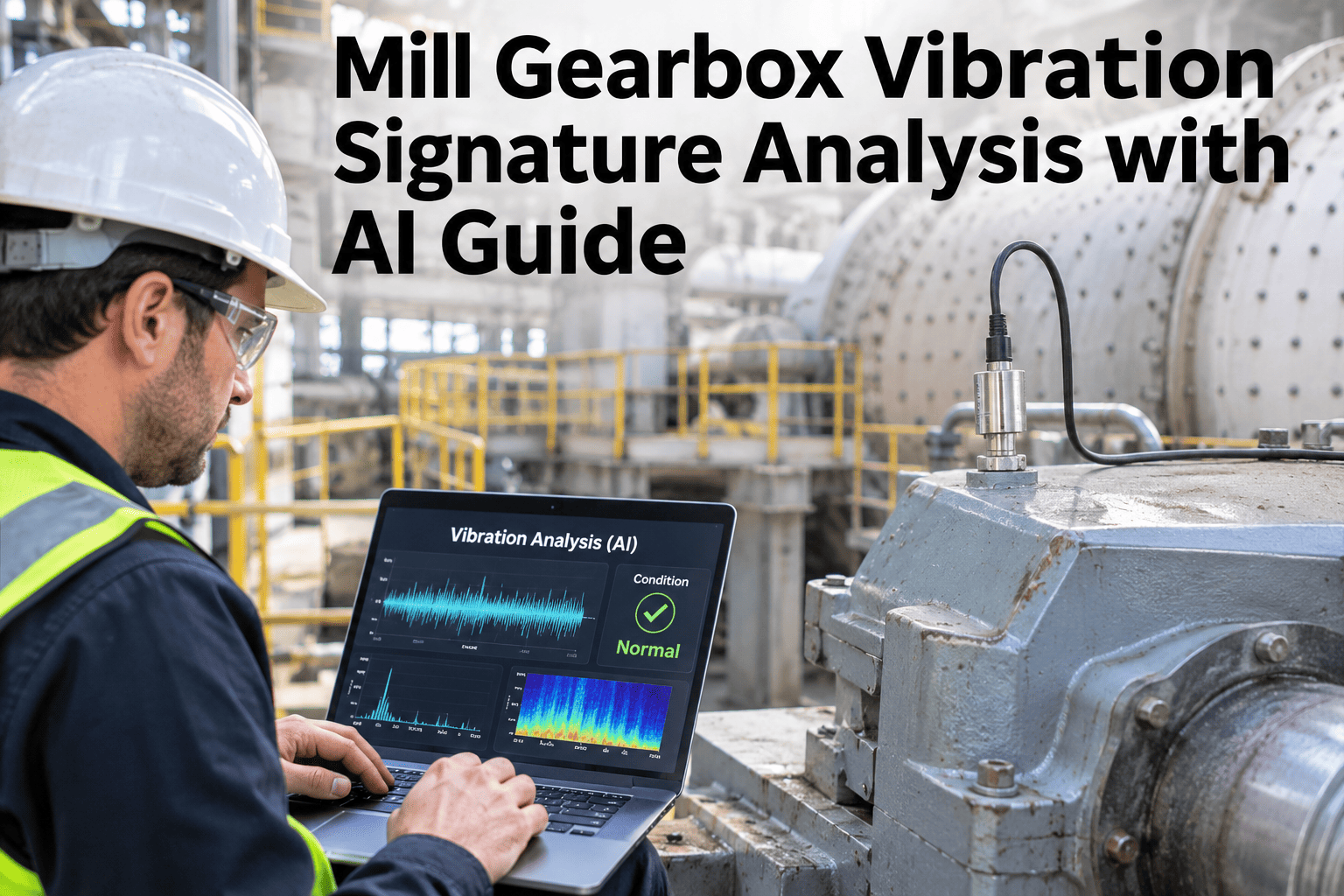
A rolling mill gearbox rarely fails on its own terms — a worn bearing or a cracked gear tooth degrades quietly for weeks, then takes down the stand, the line and the production schedule behind it in one event. "Best" software for predicting that failure is not the one with the most dashboards, it is the one that catches the right signal early enough to turn a catastrophic stop into a planned repair. Before comparing any vendor, it helps to know which detection layers actually matter and how far ahead each one can realistically warn you. Mill reliability teams evaluating their options in 2027 can walk through an evaluation checklist built around their own gearbox fleet with our team.
Rolling Mill Gearbox Prediction · Buyer's Guide 2027
What Actually Makes Gearbox Prediction Software "The Best" in 2027?
iFactory, an on-premise AI platform for predictive maintenance, combines vibration, oil, temperature and load analytics so a gearbox alarm names the fault and the confidence behind it — not just a number out of range.
What separates a good evaluation from a sales pitch
Vibration severity standardISO 20816-9:2020 (gear units)
Severity scale usedZone A (good) to Zone D (danger)
Bearing defect lead time via envelope analysisWeeks to months
Detection layers a complete platform needs4 or more, combined
The real question
Why Does "Best" Depend on What It Detects, Not That It Monitors?
A gearbox can fail from bearing wear, gear tooth pitting, lubrication breakdown, misalignment or shaft fatigue, and each failure mode leaves a different signature. Software that only reports an overall vibration number is monitoring; software that names the fault, estimates remaining life and ties it to a work order is predicting. The gap between those two is where most of the real evaluation work belongs. Ask our team which failure modes your current setup actually covers before adding another sensor.
Evaluation criteria
Six Capabilities Worth Testing Before You Commit
Every vendor demo looks impressive on a clean dataset. These are the capabilities that actually separate platforms once they run on your own noisy mill data.
Vibration envelope analysis
Catches bearing defects buried under larger low-frequency vibration, not just overall RMS velocity.
Oil condition analytics
Particle count and viscosity trending that confirms a bearing or gear finding, or catches lubrication failure alone.
Temperature trending
Casing and bearing housing temperature correlated against load, not a single fixed alarm point.
Load and torque analytics
Separates a real fault signal from one that only appears under specific load conditions.
AI fault classification
Names the suspected fault with a confidence score, instead of a generic "abnormal" alert.
Work order integration
A confirmed finding becomes a scheduled job automatically, not a report someone has to act on manually.
What each layer actually catches
Detection Layer, Failure Mode and Typical Lead Time
| Detection layer | Failure mode caught | Typical lead time |
|---|
| Vibration (envelope) | Bearing race and rolling element wear | Weeks to months |
| Vibration (order tracking) | Gear tooth pitting, scuffing, cracking | Weeks |
| Oil analysis | Lubrication breakdown, contamination, wear debris | Weeks to months |
| Thermal trending | Bearing distress, misalignment, lubrication loss | Days to weeks |
| Load / torque analytics | Drive-train overload, coupling and shaft stress | Days to weeks |
No single layer catches everything. A platform that only does vibration will miss early lubrication failures that oil analysis sees first, and vice versa.
See Which Detection Layers Your Mill Is Missing
Share your current gearbox monitoring setup and we will show which failure modes are covered and which are not.
Monitoring tool vs predictive platform
A Monitoring Tool Reports. A Predictive Platform Decides What to Do Next.
Monitoring tool
Overall vibration number against one threshold
Separate screens for vibration, oil and temperature
A report someone has to read and act on
Same alarm whether load is light or heavy
Predictive platform
Fault named, with a confidence score
Vibration, oil and temperature correlated together
A work order generated automatically
Alerts adjusted for the asset's own load pattern
Before you sign anything
Seven Questions to Ask Any Vendor in 2027
Most of what separates platforms shows up in the answers to a short list of direct questions, not in the demo.
01Which specific failure modes does the system name, and which does it only flag as "abnormal"?
02Does it combine vibration, oil and temperature, or run them as separate tools?
03How does it adjust alarms for load, speed and product mix changes?
04Does a confirmed finding generate a work order automatically, or just a report?
05Can it run on-premise, or does raw sensor data have to leave the plant?
06What is the realistic lead time for a bearing versus a gear tooth fault on your own equipment?
07How is the model retrained as your own failure history grows?
A composite scenario
The Finding That Combined Three Signals Into One Work Order
A mill drive gearbox showed a slowly rising bearing envelope signal alongside a gradual rise in oil particle count over several weeks, while overall vibration stayed within its normal zone the whole time. The illustrative figures below show how that combination played out.
Zone A
overall vibration reading throughout — would have passed a threshold-only check
2 signals
envelope trend and oil particle count, correlated to confirm the finding
1 window
scheduled repair during the next planned roll change
A vibration-only platform would have missed this fault until overall severity crossed a threshold — by which point the lead time left would have been far shorter.
Where iFactory AI fits
Four Signals, One Fault Name, One Work Order
Multi-Layer Sensing
Vibration envelope and order tracking, oil condition, temperature and load analytics on one asset record.
AI Fault Classification
Findings named against known bearing and gear fault signatures, with a confidence score attached.
Automatic Work Orders
A confirmed finding becomes a scheduled job tied to the next available roll change window.
Turnkey On-Premise Deployment
Sensor data stays on your own server, with no outside cloud dependency.
Delivered turnkey, live in 6 to 12 weeks
iFactory AI arrives pre-configured on an NVIDIA server, racked and ready with software pre-loaded. Rack it, connect power and Ethernet, and gearbox sensor integration begins. Scope covers cabling, network, PLC and SCADA integration, training and 24x7 remote monitoring.
Weeks 1-4
Ship, network and connect existing vibration, oil and temperature sensors
Weeks 5-8
Build asset baselines and tune fault classification to your gearbox fleet
Weeks 9-12
Go live, verify first findings against maintenance history and train teams
Expert reviewEvaluating gearbox prediction software
What holds up
Combining vibration, oil and thermal data catches failures a single layer misses, and is standard predictive maintenance practice backed by ISO 20816.
What to verify
That alarms adjust for load and speed changes, and that a finding actually generates a work order rather than sitting in a report.
What to avoid
Judging a platform on a clean demo dataset instead of your own noisy, load-varying mill data.
Bottom line: the best platform for your mill is the one that proves itself on your own failure history, not the one with the most polished dashboard.
Written from established predictive maintenance engineering practice. Confirm specific equipment limits with your gearbox and bearing manufacturers.
Frequently asked questions
What Mill Reliability Teams Ask Before Choosing Gearbox Prediction Software
Is vibration analysis alone enough to predict gearbox failure?
No. Vibration catches most bearing and gear faults well, but it misses some lubrication failures and contamination issues that oil analysis sees first, which is why the strongest programs combine both. See which layers your gearbox fleet is missing in a short review.
How far in advance can gearbox prediction software actually warn us?
Lead time depends on the fault type and detection method — envelope analysis on bearing defects typically gives weeks to months of warning, while gear tooth faults via order tracking usually give a shorter window. Discuss realistic lead times for your own gearboxes with our team.
Does the software need to run on-premise?
It depends on your data policy, but many steel plants prefer keeping raw sensor data on their own server rather than sending it to an outside cloud. Ask support about on-premise deployment options for your site.
What is ISO 20816-9, and why does it matter for gearboxes?
ISO 20816-9 is the vibration severity standard specifically covering gear units, giving a shared zone scale so an alarm means the same thing across different gearboxes and mills. See how zone-based alerting works on a short walkthrough.
How long does it take to see the first useful finding after deployment?
Most programs need several weeks of baseline data before findings carry real confidence, though an obviously developing fault can surface sooner once sensors are live. Plan a realistic rollout timeline for your gearbox fleet.
Evaluate Gearbox Prediction Software Against Your Own Mill Data
See how vibration, oil, temperature and load analytics combine into one fault name and one work order, on your own gearbox fleet.
{"@context":"https://schema.org","@type":"FAQPage","mainEntity":[
{"@type":"Question","name":"Is vibration analysis alone enough to predict gearbox failure?","acceptedAnswer":{"@type":"Answer","text":"No. Vibration catches most bearing and gear faults well, but it misses some lubrication failures and contamination issues that oil analysis sees first, which is why the strongest programs combine both."}},
{"@type":"Question","name":"How far in advance can gearbox prediction software actually warn us?","acceptedAnswer":{"@type":"Answer","text":"Lead time depends on the fault type and detection method — envelope analysis on bearing defects typically gives weeks to months of warning, while gear tooth faults via order tracking usually give a shorter window."}},
{"@type":"Question","name":"Does the software need to run on-premise?","acceptedAnswer":{"@type":"Answer","text":"It depends on data policy, but many steel plants prefer keeping raw sensor data on their own server rather than sending it to an outside cloud."}},
{"@type":"Question","name":"What is ISO 20816-9, and why does it matter for gearboxes?","acceptedAnswer":{"@type":"Answer","text":"ISO 20816-9 is the vibration severity standard specifically covering gear units, giving a shared zone scale so an alarm means the same thing across different gearboxes and mills."}},
{"@type":"Question","name":"How long does it take to see the first useful finding after deployment?","acceptedAnswer":{"@type":"Answer","text":"Most programs need several weeks of baseline data before findings carry real confidence, though an obviously developing fault can surface sooner once sensors are live."}}
]}