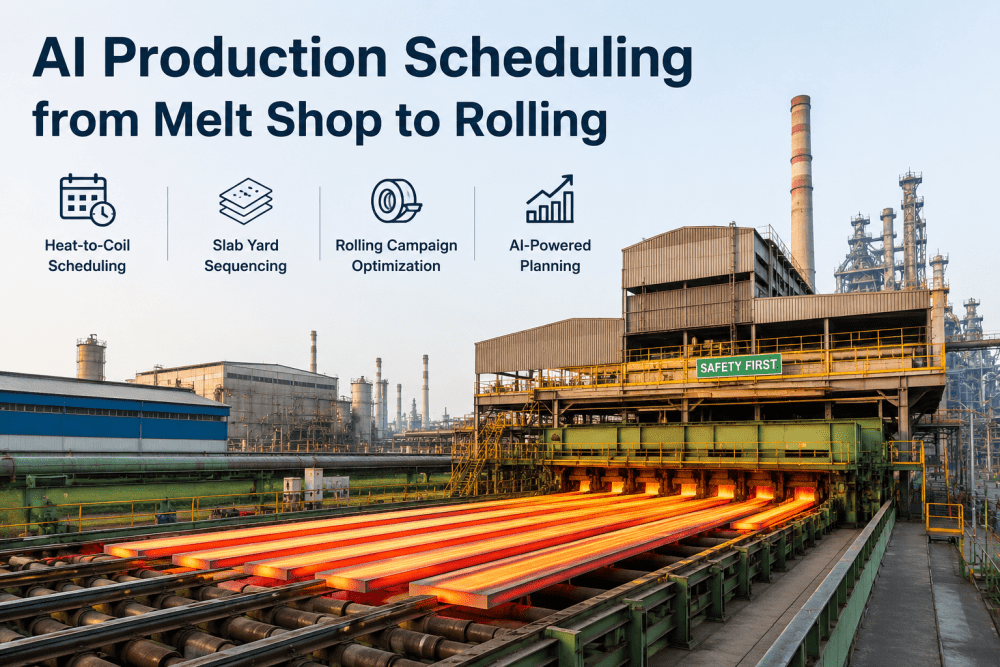
Every zone in an integrated steel plant thinks its own shutdown scope is the priority, and every zone is right about its own piece of the puzzle. Ironmaking wants the furnace reline window locked first, steelmaking needs the BOF vessel timeline to line up around it, casting has segment inspections that can't slip past a certain date, and rolling wants its own outage sequenced so finished inventory doesn't run dry. Coordinate all of that on a spreadsheet passed between department heads and the annual shutdown either runs long or leaves critical work undone because two zones both assumed the crane crew would be available at the same time. iFactory built its shutdown coordination platform to solve exactly this cross-zone scheduling conflict, and maintenance managers can see it against their own plant's zone map at this scheduling link.
Your Annual Shutdown Has Four Zones Competing for the Same Critical Path
AI-coordinated scheduling across ironmaking, steelmaking, casting, and rolling finds the sequence that minimizes total plant downtime instead of optimizing each zone in isolation.
Where Zone-by-Zone Planning Breaks Down
Each zone plans its own shutdown scope competently. The problem is entirely in the gaps between zones, where shared resources, shared crews, and shared critical paths get double-booked without anyone noticing until it's too late to fix cheaply.
Shared crane and rigging crews
Ironmaking and casting scope often needs the same heavy lift crew during overlapping windows, forcing one zone to wait or run parallel crews at premium cost.
Contractor specialty overlap
Refractory contractors needed for both furnace relines and BOF vessel work get booked by whichever zone submits its purchase order first, regardless of actual plant-wide priority.
Sequential dependency blindness
Casting segment work sometimes depends on steelmaking completing a related tie-in first, a dependency that lives in one engineer's head rather than in a shared schedule.
Inventory buffer mismatches
Rolling schedules its outage assuming a certain finished slab inventory buffer that casting's revised timeline no longer supports, discovered only days before the outage starts.
Map Your Zones Against a Single Critical Path
Bring your current zone-level shutdown plans to a scoping call and see where the cross-zone conflicts already exist before the schedule is finalized.
A Coordinated Sequence Across Four Zones
Rather than four independent schedules stitched together after the fact, AI-coordinated planning builds one sequence where each zone's window is set based on true plant-wide dependency and resource availability.
Furnace stave and refractory work scheduled first in the sequence, since downstream zones depend on hot metal supply resuming on a predictable date.
BOF vessel relining and ladle refractory work overlaps the tail end of ironmaking's window, sharing refractory contractor crews rather than competing for them.
Segment inspection and replacement follows once steelmaking confirms tie-in completion, using the crane crew freed up as ironmaking work wraps down.
Mill maintenance is scheduled last, timed against confirmed casting output resumption so finished inventory buffers are never left exposed.
Shared Resource Allocation Across Zones
Cross-Zone Shutdown Readiness Checklist
All four zones' scope lists consolidated into one master schedule before contractor booking begins
Shared resource conflicts identified and resolved at least 60 days ahead of the shutdown start date
Cross-zone dependencies documented explicitly rather than relying on informal engineer-to-engineer knowledge
Inventory buffer requirements confirmed against the finalized casting and rolling sequence
A single critical path owner designated with authority to resolve conflicts across zone boundaries
Daily progress tracking set up against the coordinated schedule, not four separate zone trackers
A Maintenance Manager's Take on Coordinated Planning
We used to find out about crane conflicts during the shutdown itself, when it was too late to do anything but wait. Building one coordinated schedule across all four zones caught three separate resource conflicts before the outage even started, which alone saved us more than a full day of the total window.
Frequently Asked Questions
How does this integrate with the zone-level schedules our teams already build?
Each zone continues building its own detailed scope and schedule as it does today. The coordination layer sits above those individual schedules, pulling them into one master timeline and flagging where resource requests, dependencies, or contractor needs overlap across zone boundaries before those conflicts turn into delays during the actual outage.
Who should own the master schedule once it's built?
Most plants designate a single critical path owner, often a senior maintenance manager or shutdown coordinator, with the authority to resolve conflicts across zone boundaries when priorities compete. Talk to support about how this role is typically structured relative to existing zone maintenance leadership.
How far in advance should coordination planning start?
Most successful coordinated shutdowns start cross-zone planning at least 90 to 120 days ahead of the outage, giving enough time to resolve shared resource conflicts before contractor commitments are locked in. Starting coordination later than 60 days out significantly limits the ability to actually change contractor bookings that have already been made independently by each zone.
Can this help track progress during the shutdown itself, not just planning?
Yes, daily progress tracking against the coordinated critical path is a core part of the platform, so a delay in one zone's scope immediately shows its downstream impact on dependent zones rather than being discovered days later. Book a demo to see how live tracking works during an active outage window.
Does this work for shutdowns smaller than a full annual outage?
Coordination benefits scale with the number of zones and shared resources involved, so even a two-zone planned outage sharing crane or contractor resources can benefit from the same conflict-mapping approach used for a full four-zone annual shutdown, just at a smaller scope.
Build One Schedule Instead of Four That Conflict
Book a 30-minute call and bring your current zone-level shutdown plans. iFactory will show where the conflicts already exist.