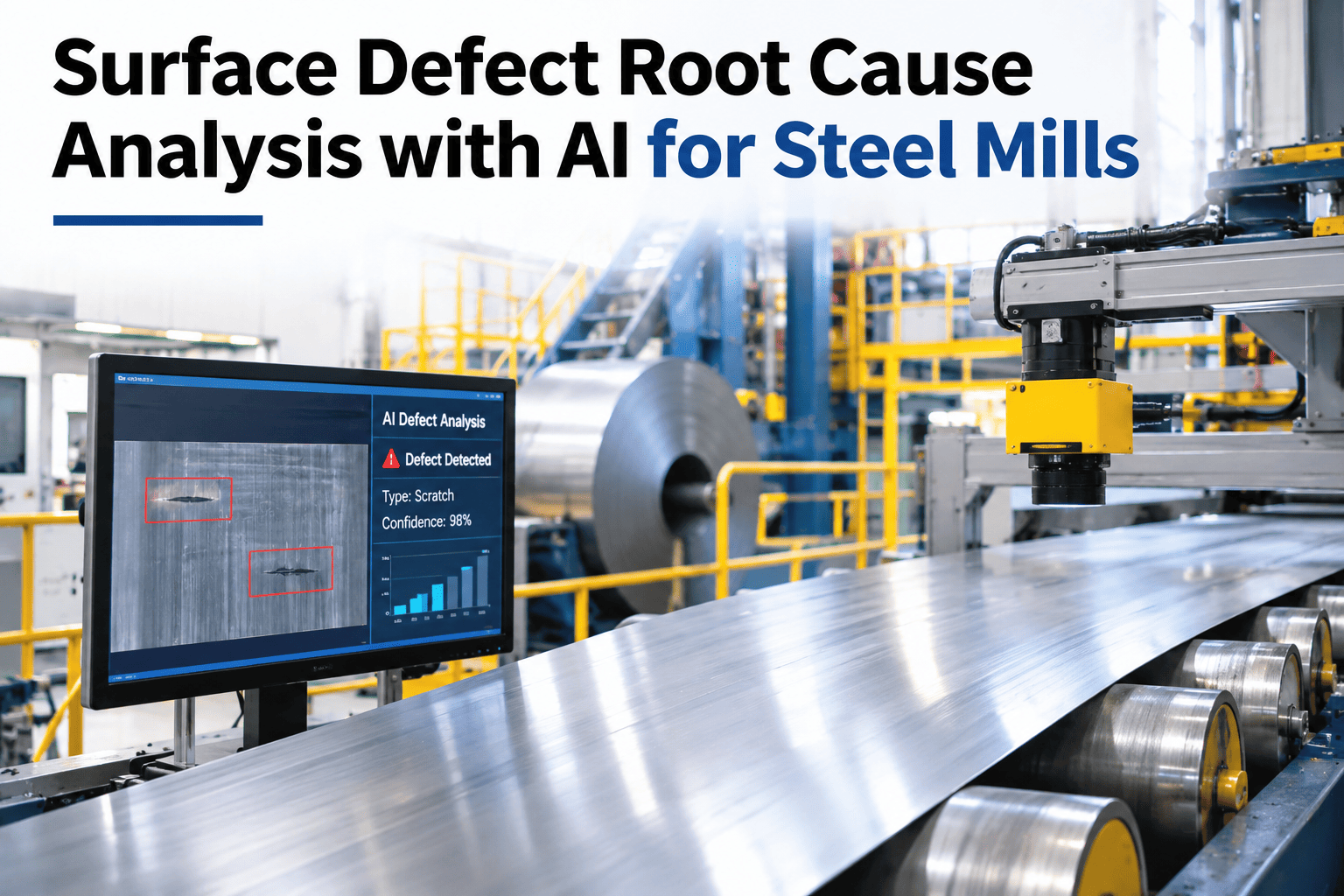
A surface defect caught by a steel mill's vision system tells you a coil has a problem, but not why. Finding the actual cause usually means pulling roll change records, temperature logs and process parameters by hand, cross-referencing them against the defect's location and timing, a process that can stretch into days before anyone confirms what actually happened upstream. Linking the defect pattern directly to process conditions automatically is what turns that search into a query. Steel mill quality teams can review a pattern-to-process linkage against a recent defect case with iFactory AI.
A Defect Pattern Tells You Something Is Wrong — Linkage Tells You Why
iFactory AI links surface defect patterns directly to upstream process conditions, turning a multi-day manual trace-back into a query that resolves in hours.
Why Defect Patterns Carry Process Information
Different root causes tend to leave different visual signatures on the steel surface — a roll-related defect often shows a repeating pattern tied to roll circumference, while a temperature-related defect shows a different, more diffuse signature. Recognizing the pattern is the first clue to the cause, if the system is built to connect them.
Common Defect Signatures and Their Process Links
| Defect signature | Likely process link |
|---|---|
| Repeating pattern at a fixed interval | Roll condition — wear or surface damage |
| Diffuse, inconsistent pattern | Temperature variation during processing |
| Pattern tied to a specific coil position | Material or chemistry variation within that coil |
See What Your Own Defect Data Links Back To
Share a recent surface defect case and a short session will show the process conditions it traces back to.
A Composite Scenario: The Pattern That Pointed Straight to a Roll Change
A mill's vision system flagged a recurring surface defect across several coils, and the initial investigation checked material chemistry first, since that was the usual first suspect for that defect type. The pattern's repeating interval, once matched against roll circumference data, pointed directly at a specific roll stand instead, and a records check confirmed that stand's rolls were overdue for inspection. Replacing the worn roll resolved the defect immediately, a conclusion the pattern-matching step reached in minutes rather than the days a chemistry-first investigation would have taken before eventually ruling it out — a shortcut iFactory AI's team can help build from your own defect and roll data.
Why Visualization Matters as Much as the Match Itself
A root cause finding is only useful if the quality team can see the evidence behind it. Visualizing the defect pattern alongside the matching process data — temperature trace, roll condition record, or material chemistry — lets an investigator confirm the link quickly rather than taking an automated match on faith.
Frequently Asked Questions
Stop Guessing at the Cause Behind Your Surface Defects
iFactory AI links defect patterns directly to process conditions automatically. Book a walkthrough with your own surface defect data.