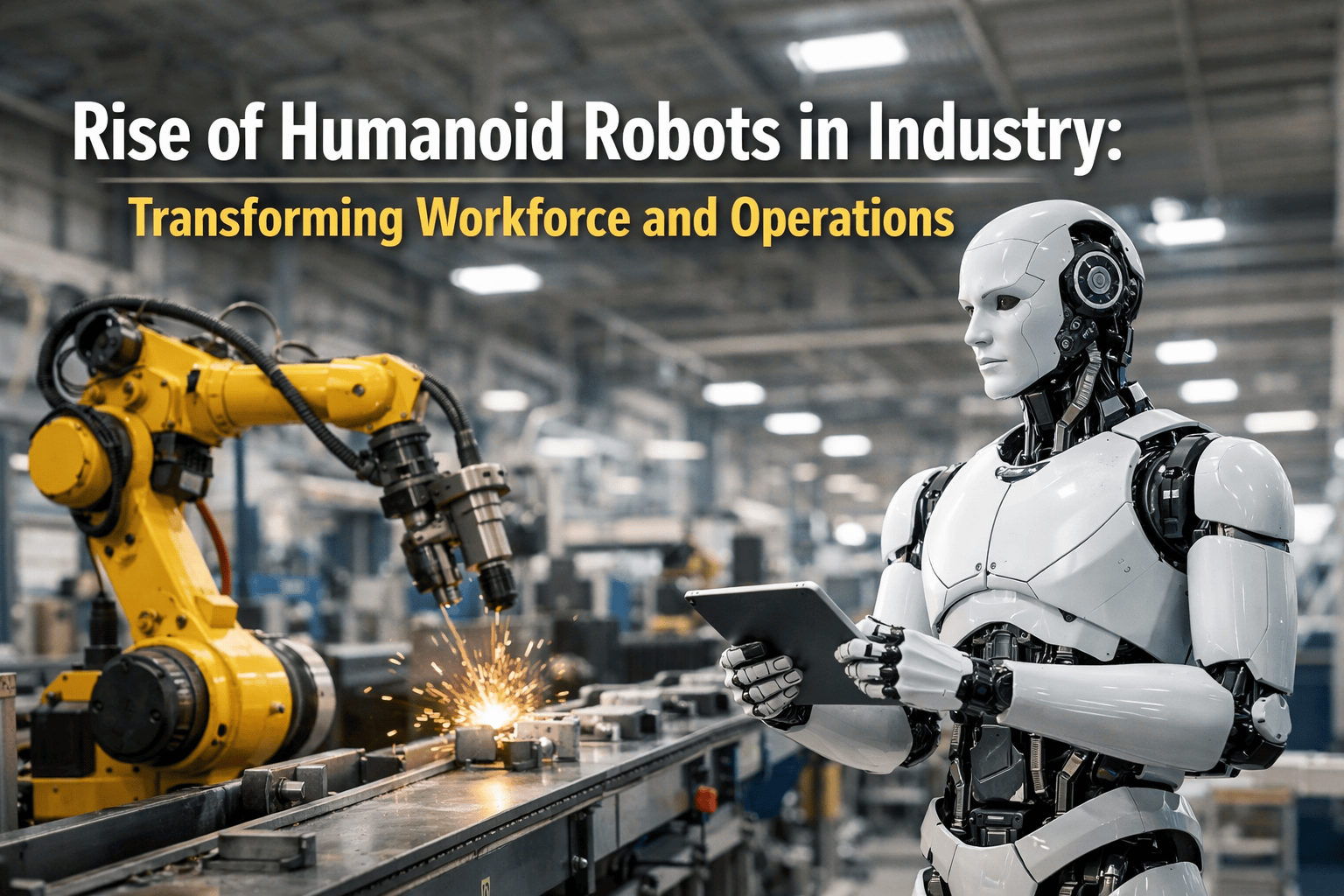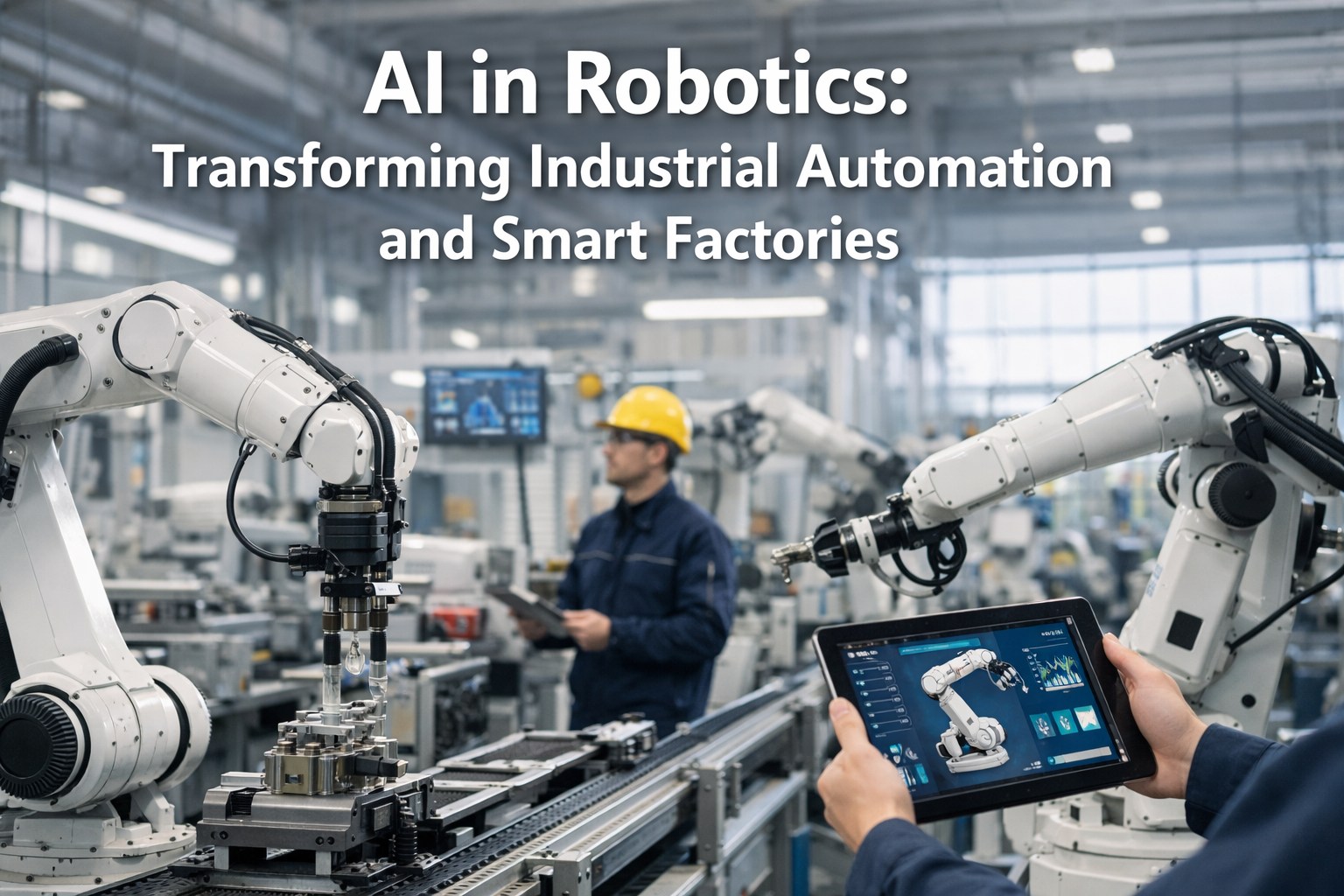
Industrial robots have been on factory floors for decades — but the leap from programmed automation to AI-driven autonomous robotics is rewriting what's possible in manufacturing. Traditional robots execute fixed routines. AI-powered robots perceive, adapt, and decide in real time — adjusting grip force mid-pick, rerouting around obstructions, and self-correcting when product dimensions drift. Manufacturers adopting AI robotics report 30–50% gains in throughput, 40–60% reductions in unplanned downtime, and defect rates dropping below 0.1% on AI-inspected lines. The transformation isn't coming — it's happening now in automotive, electronics, food processing, and pharmaceutical plants worldwide. Here's how iFactory makes AI-driven robotics accessible, integrated, and measurable for industrial manufacturers.
Most Factories Are Running Robots Without AI — And Paying the Price
The gap between legacy robotic automation and AI-integrated robotics is vast — and widening. Conventional industrial robots follow static programs: same path, same speed, same response regardless of what's actually happening on the line. When a part shifts position, a conveyor speed changes, or a new SKU enters production, operators reprogram manually — losing hours or days of productivity. AI robotics eliminates this brittleness entirely. Vision systems identify part variance in milliseconds. Reinforcement learning adapts grip and path dynamically. Collaborative robots (cobots) work alongside humans safely without physical barriers. Yet the majority of mid-size manufacturers have not yet connected their robots to AI platforms — running expensive hardware at a fraction of its intelligent potential.
See AI Robotics in Action — Free 30-Minute Demo
We'll walk you through live iFactory dashboards showing real-time robot performance, AI anomaly detection, and autonomous quality inspection — customized to your production environment.
The 5 Core Applications of AI in Industrial Robotics
AI doesn't upgrade just one robot capability — it transforms five interconnected systems that determine how well your entire automation infrastructure performs. iFactory monitors and optimizes each from a single platform:
Adaptive Robot Motion & Path Planning
Traditional robots follow rigid programs. AI-powered robots use real-time sensor feedback and reinforcement learning to adjust paths, speeds, and grip force dynamically — handling part variance, position drift, and mixed SKUs without manual reprogramming.
AI Vision & Automated Quality Inspection
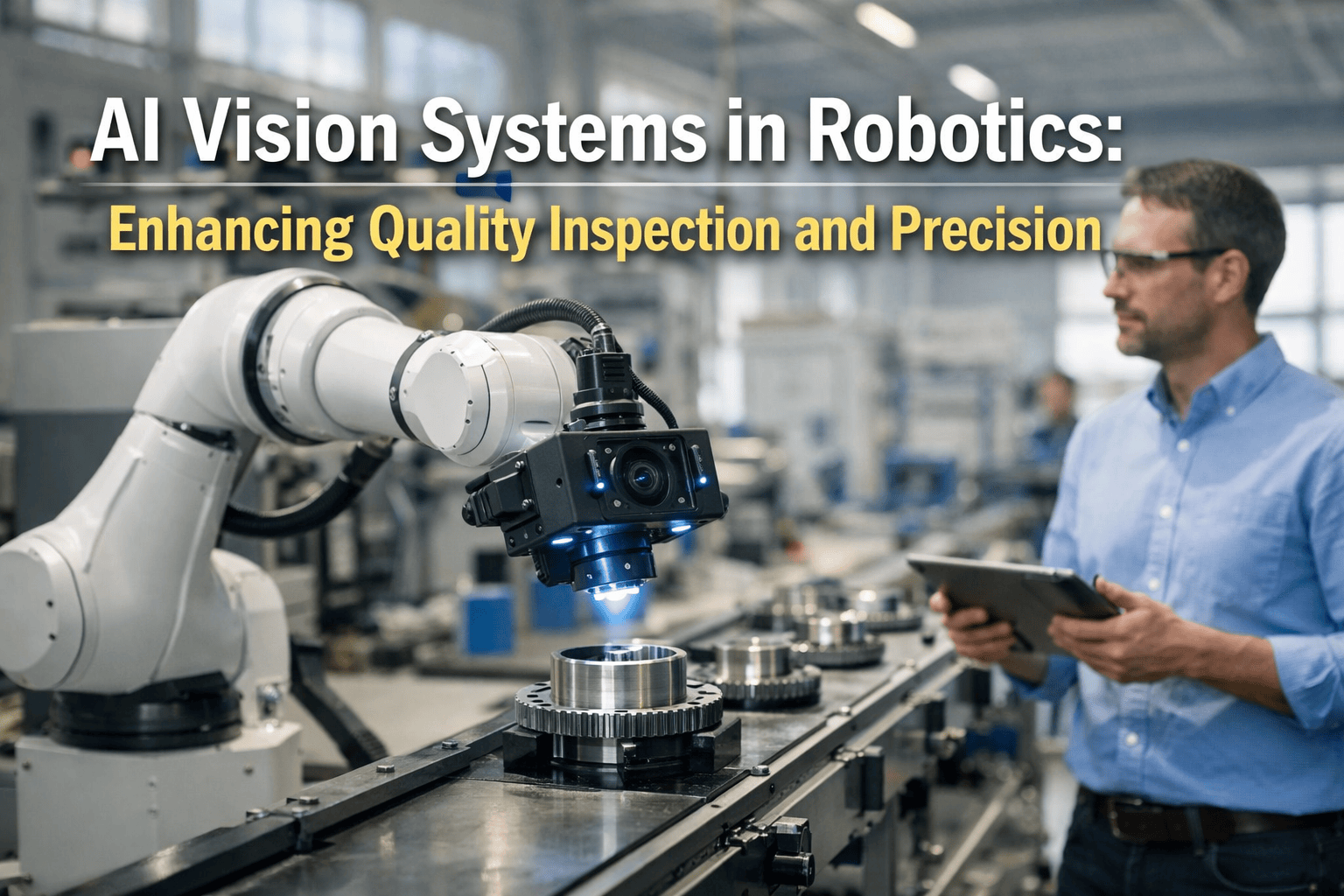
Machine vision systems powered by deep learning inspect 100% of parts at line speed — detecting surface defects, dimensional deviations, and assembly errors that human inspectors and conventional cameras miss. Defect escape rates drop below 0.1% on fully AI-inspected lines.
Predictive Robot Maintenance
Servo motors, joints, reducers, and end-of-arm tooling degrade over time — and most failures come without warning. AI monitors vibration, current draw, and thermal signatures to detect degradation weeks before breakdown, eliminating unplanned downtime that costs $50,000–$250,000 per incident.
Autonomous Mobile Robots (AMRs)
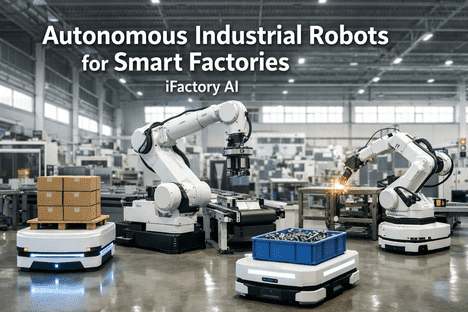
AI-driven AMRs navigate dynamic factory floors without fixed tracks or barriers — rerouting around obstacles, prioritizing deliveries based on production demand, and coordinating fleets of 50+ units autonomously. Material flow delays that stall production lines are eliminated.
Human-Robot Collaboration (Cobots)
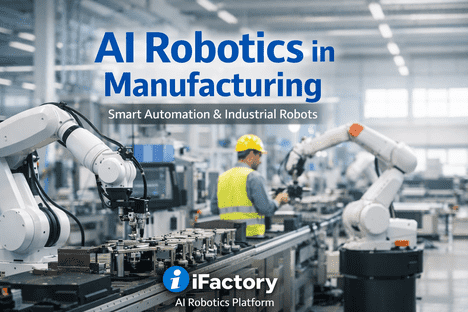
AI-powered cobots work alongside human operators without safety cages — using force sensing, vision, and proximity AI to adapt in real time. Ergonomic injury rates drop, operators handle higher-value tasks, and assembly cell throughput increases 20–35% without capital-intensive line redesigns.
Total Smart Factory Impact
When all five AI robotics capabilities are deployed together, the gains compound. A mid-size facility running 20–50 robots can expect 30–50% overall throughput growth, near-elimination of quality escapes, and downtime reductions that recapture millions in previously lost production capacity.
Want to see your facility's AI robotics potential? Book a free demo and we'll map AI robotics opportunities across your production lines in 30 minutes.
How iFactory's AI Robotics Platform Works
iFactory doesn't just connect robots to dashboards — it creates a closed loop between robot performance, production output, quality data, and maintenance activity. This is the difference between a monitoring tool and a platform that continuously improves your automation:
The iFactory Difference: Most robotics platforms show you cycle time charts. iFactory connects robot performance anomalies directly to the root cause — a degrading servo, a worn end-effector, a vision calibration drift — and auto-generates a maintenance work order before the robot fails. Robot optimization and predictive maintenance become one integrated system. See this in action in a free demo →
Where AI Creates the Most Value in Industrial Robotics
Most operations teams track robot uptime. Almost none have visibility into how much output those robots could be generating versus what they actually produce. iFactory gives you cell-level, line-level, and factory-level intelligence — turning aggregate uptime numbers into hundreds of actionable performance signals:
Robot OEE & Throughput — The Largest Recoverable Gain
Overall Equipment Effectiveness (OEE) for most industrial robots sits between 55–70% — far below the 85%+ achievable with AI optimization. Cycle time drift, micro-stoppages, and speed reductions below programmed rates go unnoticed without real-time monitoring. iFactory tracks OEE per robot, per cell, and per shift — identifying exactly where throughput is leaking and why.
Quality & Defect Costs — Hidden Manufacturing Losses
Defect costs in manufacturing average 5–10% of revenue when rework, scrap, warranty claims, and customer returns are fully accounted for. AI inline inspection catches defects at the source — before they propagate downstream into assemblies, shipments, or field returns. iFactory integrates vision inspection data with robot performance to identify which cells, programs, or tooling states generate quality escapes.
Unplanned Downtime — The Most Expensive Robot Failure Mode
A single unplanned robot failure on a critical line can halt production for 4–24 hours — costing $50,000 to over $250,000 depending on throughput and part value. AI predictive maintenance detects servo wear, gearbox degradation, and controller anomalies weeks before failure — shifting expensive emergency repairs into planned, low-cost maintenance windows.
See Your Robot Fleet's Real Performance — In Real Time
In 30 minutes, we'll show you live iFactory dashboards displaying robot OEE, cycle time analytics, AI quality inspection results, and predictive maintenance alerts — tailored to your automation environment.
How iFactory Delivers AI Robotics Results — Phase by Phase
iFactory identifies your highest-impact robotics opportunities within 60 days and delivers measurable production gains within the first quarter. Here's the implementation roadmap:
iFactory Maps Every Robot's True Performance
Robot controllers are connected via OPC-UA or MQTT. Vibration, thermal, and current sensors are deployed on high-value robots. iFactory establishes OEE baselines per cell — immediately surfacing cycle time losses, idle time patterns, and early degradation signals invisible to existing systems.
iFactory Starts Improving Production Immediately
AI vision inspection goes live at key quality stations. Predictive alerts flag robots showing early failure signatures. Cycle time optimization recommendations are activated. iFactory dashboards give plant managers real-time OEE, throughput, and quality visibility across every robot cell simultaneously.
iFactory Connects Robot Performance to Production Outcomes
AI models learn each robot's unique performance envelope — detecting anomalies specific to that cell, product, and shift pattern. Reinforcement learning begins optimizing motion paths for speed and longevity simultaneously. Quality data is linked directly to robot parameters — identifying which program states generate defects before they escape inspection.
iFactory Delivers a Self-Optimizing Production Environment
AI continuously adapts to new products, tooling changes, and shifting production demands without manual reprogramming. Cross-site robot benchmarking identifies best-performing programs and replicates them across facilities. Sustainability and productivity KPIs are auto-reported from real operational data.
This roadmap starts with your demo. Book 30 minutes now and we'll map your facility's AI robotics potential across all five capability areas.
How iFactory Turns Robot Data Into Production Action
Other platforms give you robot dashboards. iFactory gives you automated action that closes the loop between what your robots are doing and what your production needs. Here's what makes the difference:
Real-Time Robot Performance
Cell-level OEE, cycle time, throughput rate, and quality yield visible per robot, per shift, and per production order — not just a daily summary hours after the fact.
AI Anomaly & Failure Prediction
When servo current, joint vibration, or thermal signatures deviate from learned baselines, iFactory flags it instantly — before it becomes a breakdown, a quality escape, or a safety event.
Auto-Generated Maintenance Work Orders
iFactory doesn't just alert — it generates a maintenance work order with the specific robot, component, failure mode, and repair instructions. Degrading robots get fixed through your normal maintenance workflow before they fail.
Production & ROI Reporting
Every optimization is tracked against your pre-AI baseline. Automated reports show exactly how much throughput, quality, and uptime improved — ready for operations leadership and capital investment decisions.
Ready to Build a Smarter, Faster, More Autonomous Factory?
30 minutes. Zero obligation. We'll show you live iFactory AI robotics dashboards, map your robot fleet's optimization potential, and build a deployment roadmap you can take to leadership today.
Who Benefits Most From AI-Driven Industrial Robotics?
High-volume lines with welding, painting, assembly, and material handling robots see the fastest ROI from AI path optimization, predictive maintenance, and inline vision inspection. Mixed-model production environments benefit most from adaptive robotics that eliminate costly reprogramming between SKUs.
Ultra-precise pick-and-place, soldering, and inspection operations where sub-millimeter accuracy is mandatory. AI vision systems inspect 100% of boards and components at line speed — catching defects that escape traditional AOI systems and reducing field return rates by 40–70%.
Hygienic environments with strict compliance requirements where robot cleaning cycles, changeover times, and batch traceability are critical. AI robotics optimizes changeover scheduling, automates compliance documentation, and maintains end-to-end traceability from raw material to finished product.
Companies operating multiple facilities with heterogeneous robot fleets benefit from cross-site performance benchmarking — identifying which plants, cells, and programs deliver the best OEE and replicating those settings across the portfolio. AI models trained at one site accelerate deployment at the next.
AI Robotics Is Defining the Next Decade of Manufacturing Competitiveness
The manufacturers pulling ahead right now aren't the ones with the most robots — they're the ones whose robots are guided by AI. Adaptive motion, autonomous quality inspection, predictive maintenance, and intelligent fleet coordination are turning conventional production lines into self-optimizing smart factories. The performance gap between AI-enabled and conventional robotic automation is already measurable in throughput, quality, and cost — and it widens every year. iFactory gives manufacturers the platform to deploy these capabilities faster, connect them to production outcomes, and build a compounding competitive advantage that conventional automation cannot match.
Your Competitors Are Already Running AI-Powered Robots
30 minutes. Zero obligation. We'll map your robot fleet's AI potential, show you live performance dashboards, and build a roadmap to 30–50% throughput gains. Real numbers. Your factory.