New York City manufacturing operates under conditions no other U.S. metro can match: rent per square foot that runs five to ten times the national industrial average, OSHA and NYC Department of Buildings inspections that arrive without warning, freight windows compressed by traffic restrictions in Manhattan and the outer boroughs, and a workforce earning above-average wages in over 500,000 industrial jobs across the city's 21 Industrial Business Zones. In this environment, every operational inefficiency — a missed shift handover, an undocumented equipment fault, a verbal instruction lost between crews — translates directly into margin loss that suburban plants would simply absorb. Digital shift logbooks have become the operational backbone for NYC plants that intend to stay competitive in 2026. Book a Demo to see how iFactory deploys across NYC manufacturing sites in 2 to 4 weeks.
Running a Plant in NYC? Every Square Foot and Shift Hour Has to Pay Its Way.
iFactory's digital shift logbook closes the operational gaps that erode urban plant margins — from compressed real estate to compliance complexity to high-cost labor.
Why Urban Plants Cannot Afford the Same Inefficiencies as Suburban Ones
A plant in Onondaga County or rural Long Island can absorb a 20-minute verbal handover, a misplaced paper logbook, or a slow audit response. A plant in Sunset Park, the Brooklyn Navy Yard, Long Island City, or Hunts Point cannot. Real estate runs $25 to $45 per square foot in active Industrial Business Zones. Labor averages $65,000 to $95,000 per worker. Inspectors from OSHA, the NYC Department of Environmental Protection, FDA regional offices, and the NYC Fire Department visit more frequently than in any other U.S. metro. Every operational inefficiency is amplified by NYC's cost structure — which is precisely why digital shift logbooks deliver outsized ROI in urban facilities compared to rural or suburban counterparts.
Five Compounding Challenges Defining NYC Plant Operations in 2026
Compressed Floor Space
- Industrial rents in NYC IBZs run 5 to 10× national average
- Vertical multi-floor production layouts complicate handovers
- Paper logbook storage consumes valuable production square footage
Multi-Agency Compliance Layering
- OSHA, FDA, NYC DEP, FDNY, EPA, and DOB all inspect NYC plants
- Each agency demands different documentation evidence
- Audit prep alone consumes 150–250 hours per inspection cycle
High-Wage Labor Inefficiency
- NYC industrial workers earn ~$65K avg — 2× retail/hospitality
- Verbal handovers consume 15–30 paid minutes per shift
- 3 shifts × 365 days = thousands of lost labor hours annually
Tight Freight & Logistics Windows
- NYC truck routes restrict delivery hours in many IBZs
- Missed freight windows trigger same-day expedite fees
- Shift teams lose visibility into receiving and dispatch status
Workforce Turnover & Knowledge Loss
- NYC's tight labor market drives 20%+ annual turnover in operators
- Tribal knowledge walks out the door with each departure
- New hires take weeks to reach productive shift performance
Where iFactory Operates Across New York's Urban Manufacturing Sectors
New York City manufacturing is not monolithic. From food production in Hunts Point to apparel in the Garment District, biotech in Long Island City to precision metalwork in the Brooklyn Navy Yard, each sector has distinct operational and regulatory profiles. iFactory's shift logbook supports them all with industry-specific template libraries that get configured during onboarding.
| NYC Sector | Where It Operates | Shift Logbook Priorities | Key Compliance Layer |
|---|---|---|---|
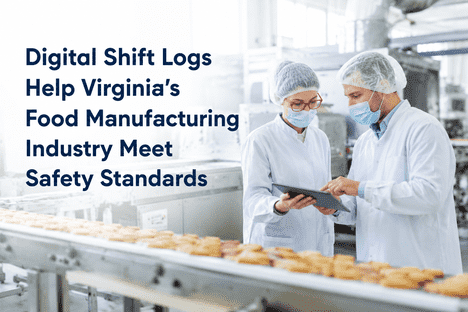
| Food & Beverage Production | Hunts Point, Sunset Park, Maspeth | Allergen changeovers, CIP cycles, temperature logs | FSMA · HACCP · NYC DOH |
| Biotech & Pharma | Long Island City, Brooklyn Navy Yard | Batch records, deviation tracking, e-signatures | FDA 21 CFR Part 11 · GMP |
| Apparel & Textiles | Garment District, Sunset Park | Production runs, defect rates, machine status | OSHA · NYS Labor Law |
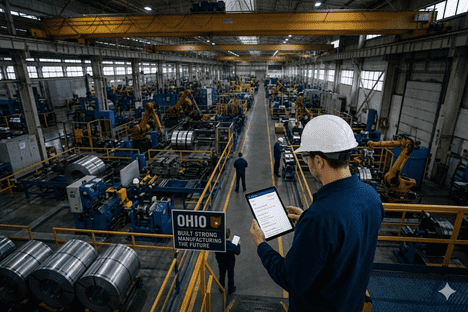
| Precision Metals & Fabrication | Brooklyn Navy Yard, Long Island City | Tool changes, QC checks, safety permits | ISO 9001 · OSHA |
| Specialty Chemicals | Maspeth, Greenpoint, Staten Island | Permit-to-work, leak inspections, MSDS access | EPA RMP · OSHA PSM |
| Print & Packaging | Long Island City, Bushwick, Hunts Point | Job changeovers, color/material verification, waste logs | NYC DEP · OSHA |
How a Digital Shift Logbook Translates to Urban Plant ROI
Operational Throughput
- Handover briefings drop from 20 minutes to under 3
- AI-generated shift summaries flag priorities automatically
- Real-time event logging eliminates rediscovery between shifts
- CMMS-linked entries auto-generate work orders for faults
Workforce & Knowledge Retention
- Documentation burden on supervisors drops 50%+
- Searchable logs preserve institutional knowledge through turnover
- Mobile-first interface fits NYC's lean shift structures
- New operators ramp 40–50% faster using log history
Compliance & Audit Readiness
- Audit-ready evidence packages generated on demand
- Immutable timestamped entries with e-signature attribution
- FDA 21 CFR Part 11, GMP, OSHA, HACCP, ALCOA+ aligned
- Multi-agency NYC inspections covered from one platform
Every one of these gains compounds in NYC's high-cost operating environment. Recovering even one labor hour per shift across three shifts and 250 operating days at $35/hour fully loaded recovers more than $26,000 per line per year — before counting downtime reduction, audit time savings, or recall-window compression. Book a Demo to model the ROI against your specific facility.
What Changes Inside an NYC Plant After Going Digital
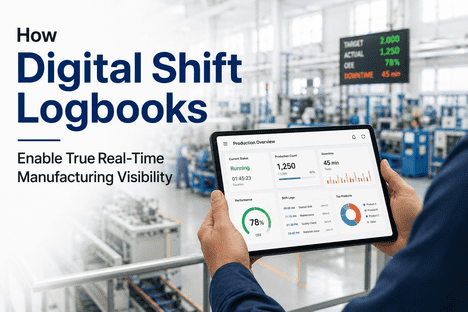
The difference between paper logbooks and iFactory's digital shift logbook is not just about going paperless. It is about converting every shift transition into a structured, auditable, searchable record that integrates with the rest of your operational stack — CMMS, MES, ERP, SCADA. For NYC manufacturers, the impact lands on the operational areas that hurt most.
| Operational Area | Paper / Verbal Handover | iFactory Digital Logbook | NYC Plant Impact |
|---|---|---|---|
| Shift Handover Briefing | 15–30 minutes verbal | Under 3 minutes via AI summary | ↓ 85% Briefing Time |
| Audit Preparation | 150–250 hrs manual retrieval | Evidence package on demand | ↓ 95% Prep Time |
| Storage Footprint | Binders, file rooms, $30+/sqft | Cloud-hosted, zero floor space | ↑ Reclaimed Square Footage |
| Cross-Shift Knowledge | Verbal, lost on turnover | Searchable history, always-on | ↓ 50% Onboarding Time |
| Equipment Fault Response | Verbal mention, often missed | Auto-generates CMMS work order | ↓ 40% MTTR |
| Inspector Response Time | Hours of paper retrieval | Filtered records in seconds | ↑ Inspection Pass Rate |
What iFactory's Shift Logbook Delivers to NYC Manufacturers
Mobile-First, Multi-Floor
- Runs on tablets and phones across vertical NYC facilities
- Offline mode for basement and steel-shielded production areas
- Auto-sync when connectivity returns — no entries lost
AI-Generated Handover Summaries
- NLP parses every entry for severity, equipment, and intent
- Incoming crews receive top priorities in under 60 seconds
- No more 30-minute verbal briefings that lose 40–60% of detail
Multi-Agency Audit Outputs
- OSHA-formatted incident records
- FDA 21 CFR Part 11-compliant e-signatures
- NYC DEP wastewater and emissions log exports
CMMS, MES & ERP Integration
- Logbook entries auto-generate work orders in CMMS
- Production data pulls from MES into shift context
- ERP sync keeps inventory and dispatch teams aligned
Customizable Templates by Sector
- Pre-built templates for food, pharma, metals, chemicals, print
- No-code template editing by operations leaders
- Multi-site clone for NYC operators with locations in NJ or LI
Searchable Knowledge Base
- Every entry timestamped, attributed, and searchable
- New hires train against real historical events
- Root cause analysis pulls timelines in minutes
Built for the Way New York Actually Manufactures
iFactory's digital shift logbook turns NYC's operational pressure — high rent, multi-agency oversight, expensive labor, tight logistics — into measurable efficiency gains across every shift and every line.
From Paper to Live Digital Logbook in 2 to 4 Weeks
NYC manufacturers cannot afford six-month rollouts. iFactory's onboarding is designed for the urban operational reality: tight schedules, limited downtime, lean IT teams. Most plants go from paper to live digital logbook in 2 to 4 weeks, with no infrastructure changes required.
Discovery & Template Setup
- Map shift patterns, areas, and asset hierarchy
- Select industry preset templates for your NYC sector
- Configure compliance fields for your inspecting agencies
Integration & Pilot Rollout
- Connect CMMS, MES, ERP, or SCADA where present
- Deploy tablets and mobile access to pilot area
- Train supervisors and operators on entry workflows
AI Summaries & Audit Reporting Live
- Activate AI handover summaries and severity classification
- Enable compliance dashboards for OSHA, FDA, NYC DEP
- Mandatory digital acknowledgment enforced on every handover
Full Site Rollout
- Expand to all shifts, lines, and floors
- Your admins own template evolution from this point
- 90-day support included for edge cases
Book a Demo to walk through a deployment plan tailored to your NYC facility — including timeline, template configuration, and integration scope.
Frequently Asked Questions — iFactory for NYC Manufacturers
Will iFactory work in a multi-floor NYC plant with patchy Wi-Fi or no cellular signal?
Yes. The mobile app operates fully offline — operators can log events, capture photos, and complete checklists in basement levels, steel-shielded production areas, or anywhere connectivity drops. Entries sync automatically when Wi-Fi or cellular returns, with built-in conflict resolution for overlapping entries.
Can iFactory handle the multi-agency compliance reality of NYC manufacturing?
Yes. The platform generates audit-ready evidence packages for OSHA, FDA 21 CFR Part 11, GMP, NYC DEP wastewater and emissions reporting, FDNY safety records, HACCP/FSMA food safety, and NYS Department of Labor requirements — all from a single immutable timestamped log.
How long does deployment take for a small or mid-sized NYC plant?
Most NYC manufacturers go live in 2 to 4 weeks. Cloud-based deployment means no infrastructure changes — just tablets or phones per shift station. Pre-configured industry templates accelerate setup, and your team can edit them without IT support from day one.
Does it work for both regulated (pharma, food) and non-regulated (apparel, metals) NYC operations?
Yes. iFactory ships with industry preset templates spanning food and beverage, biotech and pharma, apparel and textiles, precision metals and fabrication, specialty chemicals, and print and packaging. Compliance layers are activated only for the sectors that need them — operators in non-regulated industries get a streamlined experience.
Can it handle operators with multiple NYC locations or sites across the tri-state area?
Yes. Multi-site deployment supports site-specific templates, shift configurations, and reporting hierarchies while providing unified dashboards for corporate leadership. A plant in Sunset Park, a facility in Long Island City, and a sister site in New Jersey or Long Island all run on the same platform.
Stop Letting Urban Operating Costs Erode Your Margin
Every shift run on paper logs in NYC is paying suburban-style inefficiency at urban-level cost. Switch to a digital shift logbook designed for the way you actually operate.