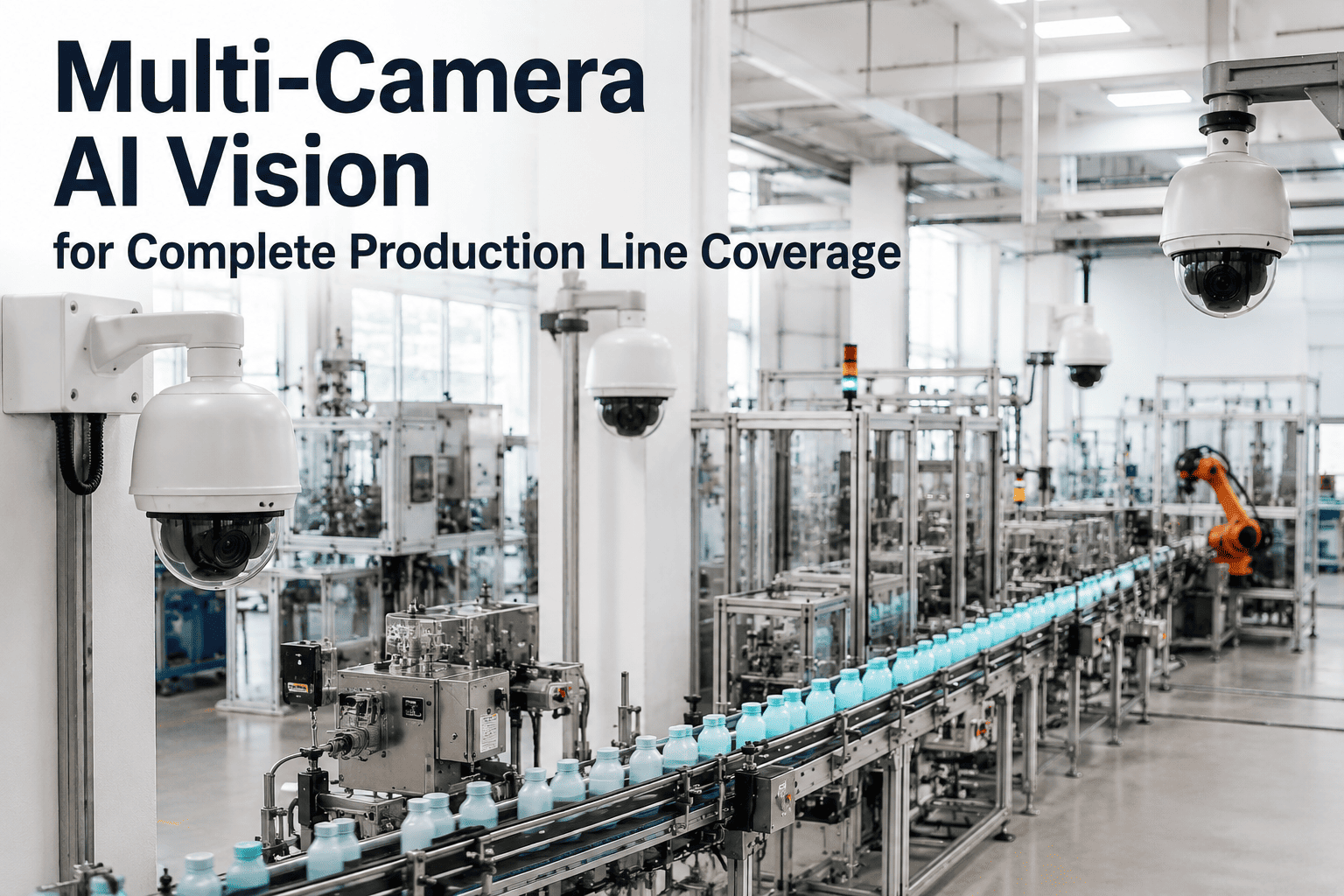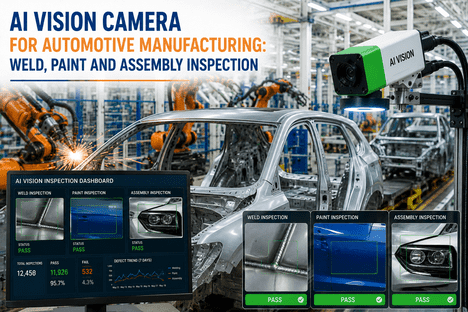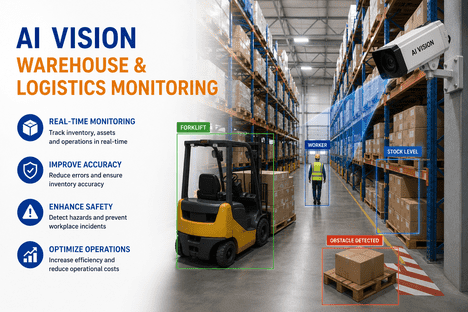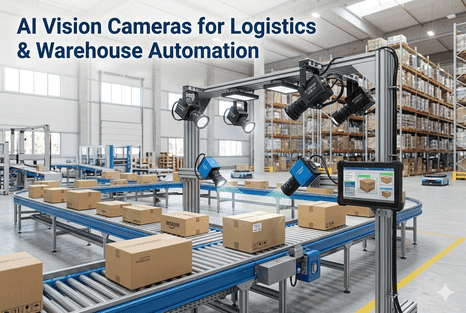
Most plant managers and warehouse directors are not short on cameras — they are short on cameras that actually tell them something before a problem becomes expensive. A CCTV feed that only exists for after-the-fact review is a blind spot with a lens attached. The ten problems below are the ones operations leaders bring up most often when they finally ask what a camera system should have been doing all along: catching the stockout before the shelf empties, the picking error before the box ships, the belt tear before the line stops, and the near miss before it becomes an incident report. Each one has a real cost attached, and each one is solvable with the same category of technology — talk to support about which of these is costing your operation the most right now.
10 Operational Blind Spots Costing You Money Right Now — And What Closes Each One
From retail stockouts to warehouse picking errors to conveyor tears to a legacy CCTV system that only records — here is what each blind spot actually costs, and how an AI vision camera turns it into a caught problem instead of a lost one.
Jump to the One Costing You the Most
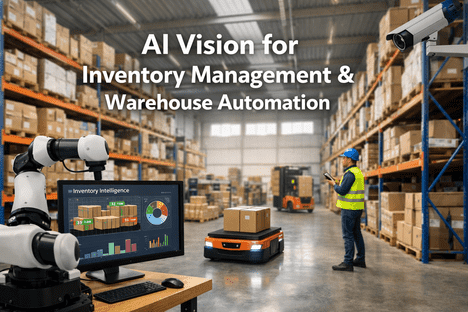
A shelf can sit empty for hours before a store associate happens to walk past it, and by then the sale is gone and the customer has often bought the item somewhere else. The gap is rarely a supply problem — it is a visibility problem, because the system of record says the item is in stock while the physical shelf tells a different story. AI vision cameras mounted over shelving continuously compare what should be there against what is actually there, flagging a gap the moment it appears instead of waiting for a scheduled walk-through that may not happen until the damage is done.
Order picking already accounts for roughly 55 percent of total warehouse operating cost, and picking travel time is the single biggest driver inside that number. A tired picker grabbing the adjacent SKU instead of the correct one is not a training failure — it is a predictable outcome of high-volume, repetitive work. Vision-guided pick verification checks the item against the order at the point of pick, catching the mistake before it is packed and shipped rather than after a customer opens the wrong box.
A belt tear rarely starts as a catastrophic failure — it starts as a small edge fray that traditional inspection methods, mechanical limit switches, and periodic manual walkarounds, simply do not catch until the tear has already propagated across the belt width. By the time a human notices, the fix is a full replacement and a shutdown measured in hours, not minutes. AI vision watches the belt surface frame by frame, flagging a developing tear or fray while it is still a localized, repairable issue.
A belt drifting off-center does not announce itself with an alarm — it announces itself months later as premature edge wear, material spillage, and idler damage that all trace back to a tracking issue nobody caught early. Mechanical sensors typically only trip once the drift has already caused contact damage. AI vision measures belt position continuously against its intended path, catching drift and swaying at the earliest point, before the edge ever makes contact with the frame.
One stray piece of tramp metal or oversized material entering a crusher or mill does not just stop that piece of equipment — it halts every upstream feeder and downstream hopper connected to it, and in food, pharma, or chemical lines it can trigger a full batch rejection. Manual spotting depends entirely on someone being positioned at the right point in the process at the right moment. AI vision cameras positioned upstream of the most expensive equipment catch the contaminant before it reaches machinery that cannot tolerate it.
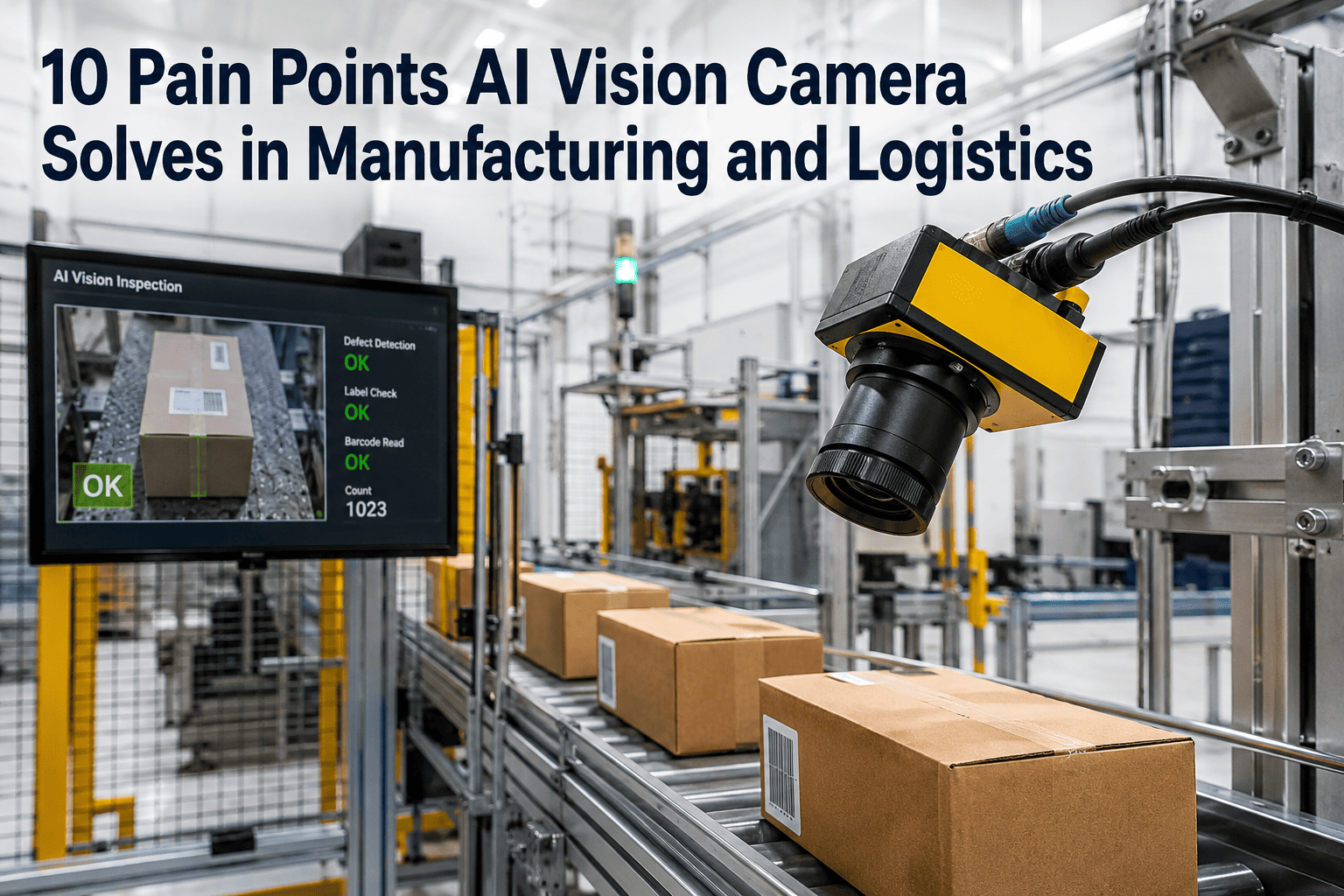
Most facilities already have cameras everywhere — the problem is that those cameras are built for after-the-fact review, not real-time prevention. Nobody watches forty camera feeds live for an eight-hour shift, so footage becomes evidence for an incident report rather than a warning that could have stopped the incident. AI vision does not require new camera hardware in most cases — it turns existing CCTV and VMS feeds into an active sensor network that flags anomalies the moment they appear, converting a passive archive into a system that actually prevents loss.
Safety programs depend heavily on workers self-reporting near-misses, but self-reporting has an obvious gap — people are busy, incidents feel minor in the moment, and reporting takes time nobody has during a shift. The hazard that almost caused an injury today is often the exact hazard that causes one next month, simply because nobody logged it the first time. AI vision monitoring PPE compliance, restricted-zone entry, and unsafe proximity to moving equipment logs every near-miss automatically, building a hazard pattern the safety team can act on before it becomes a claim.
The system says a bin holds forty units. A picker arrives and finds thirty-two. That eight-unit gap did not appear all at once — it accumulated silently over weeks through miscounts, misplacement, and shrinkage that nobody caught in the moment it happened. Most warehouses only discover the true scope during a scheduled cycle count, long after the discrepancy has already caused a missed order or an unnecessary reorder. AI vision-based inventory verification continuously reconciles what a camera sees against what the system records, surfacing drift as it happens instead of once a quarter.
A pallet arrives damaged and nobody can say for certain whether it happened in transit, during loading, or during unloading — so the cost gets absorbed, disputed, or fought over for weeks without a clear answer. Standard dock cameras capture footage, but reviewing hours of recording after a claim is filed is slow and often inconclusive by the time anyone looks. AI vision at the dock timestamps and flags load and unload events automatically, building a documented record that resolves a damage dispute in minutes instead of becoming a standing argument between departments.
A photo-eye sensor can tell you a jam happened. It cannot tell you the carton entered the packer skewed by five degrees three seconds earlier, which is the actual root cause repeating itself dozens of times a shift as short, easy-to-ignore stoppages. Each micro-stop costs only a few seconds, but multiplied across a shift they quietly erase more uptime than a single major failure. AI vision positioned upstream catches the misalignment causing the stoppage and can trigger a diverter to reject the problem unit before it ever reaches the point of failure.
Which of These Ten Is Costing Your Operation the Most?
Every pain point above is solved by the same underlying technology, tuned to your specific line, dock, or shelf. See it working on your own footage before committing to anything.
Every One of These Is the Same Problem Wearing a Different Uniform
What Changes Once a Camera Actually Watches
The value is not the camera. It is the four-step loop that turns a frame of video into a prevented loss instead of a recorded one, and it looks nearly identical whether the pain point is a stockout, a belt tear, or a picking error.
What Operations Teams Ask Before Rolling Out AI Vision Cameras
See Which of These Ten Pain Points Your Own Footage Is Already Showing
One AI vision platform, watching every blind spot above — shelf, belt, dock, and floor — before the small problem becomes the expensive one.