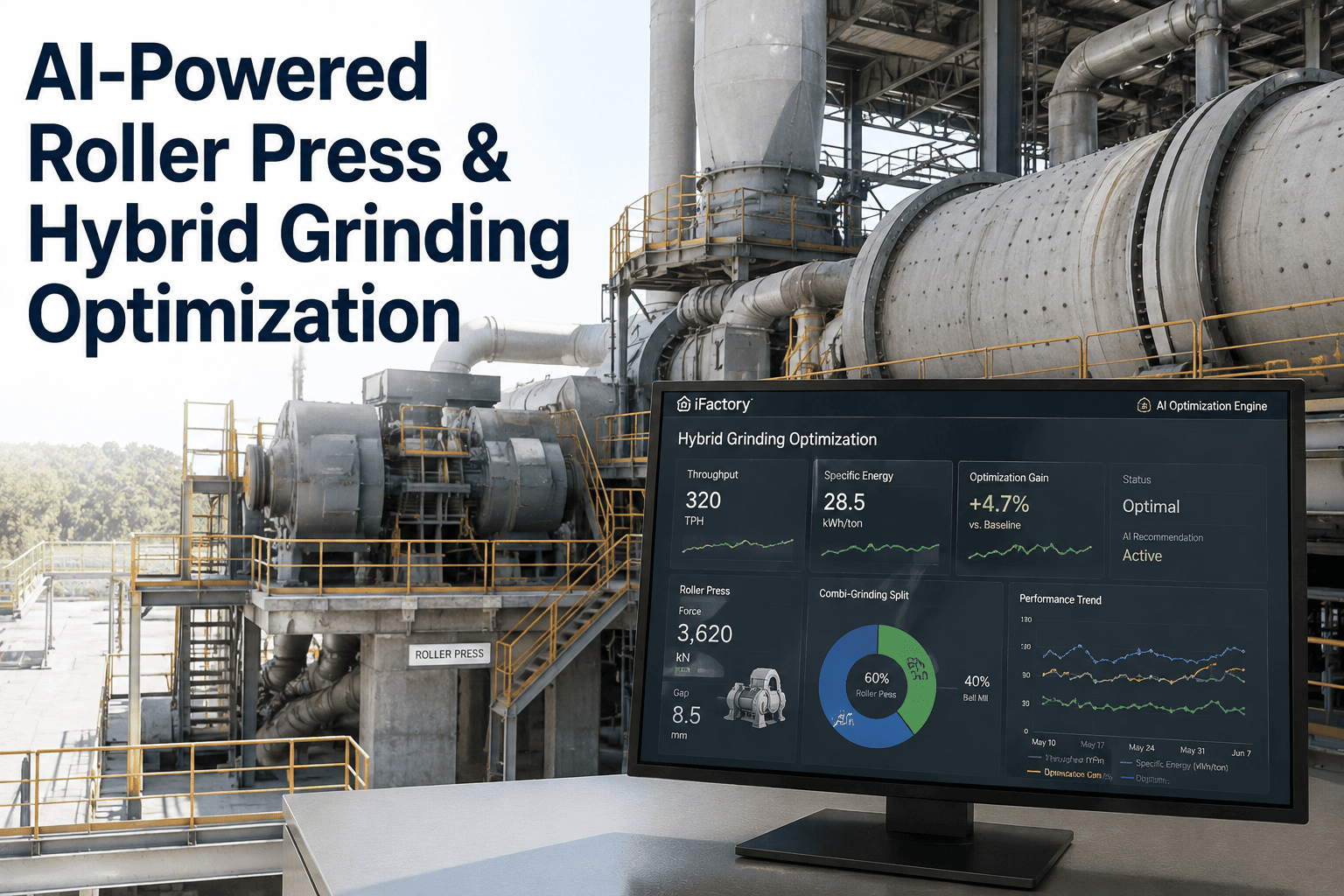
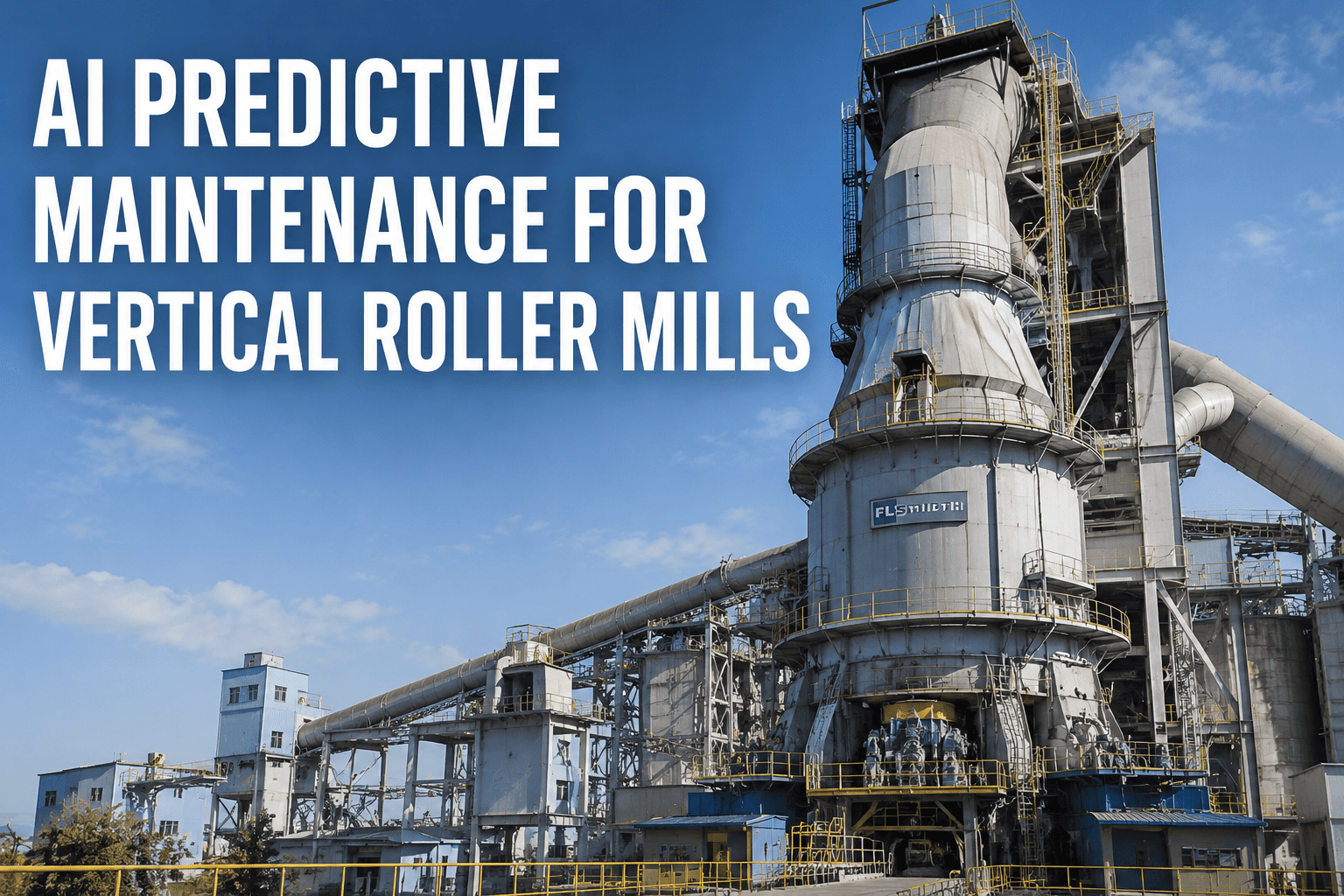
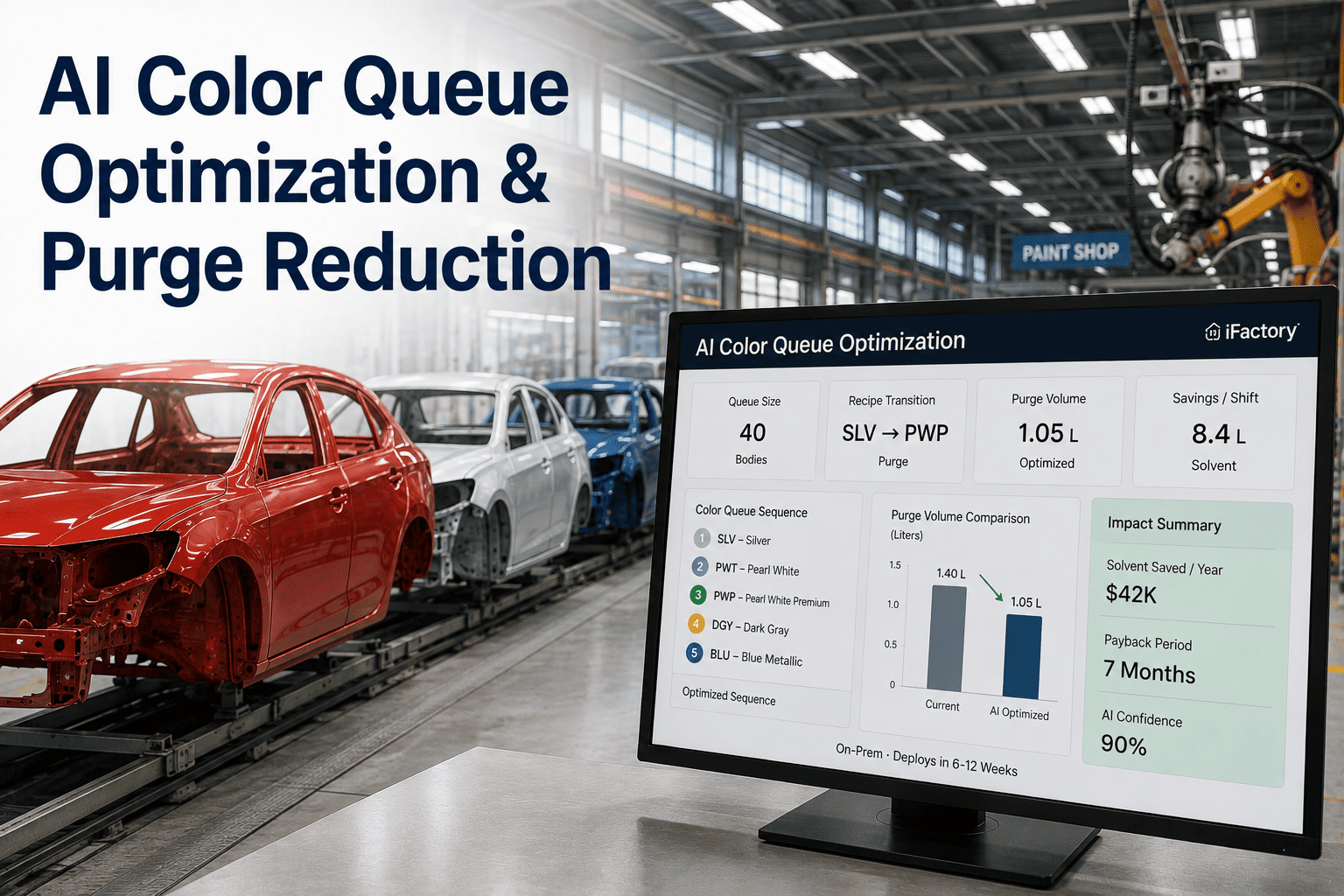
Grinding is where a cement plant spends its electricity. The grinding circuits consume 60 to 70 percent of a plant's total electrical energy, and electricity is one of the two largest costs in making cement — so every kilowatt-hour shaved off a tonne of finished cement drops straight to the bottom line. A roller press, or high-pressure grinding roll, is one of the most energy-efficient ways to do that grinding: it compresses the feed between two rolls at enormous pressure, doing the coarse work at a fraction of a ball mill's energy and handing the mill a pre-cracked feed that finishes far more easily. But a roller press only delivers that efficiency when it's run right, and running it right is a moving target. The grinding force, the roll gap, and the way the work is split between the press and the ball mill all interact, and the correct settings shift constantly as feed grindability, moisture, and clinker chemistry drift. Push the force too high and you burn energy over-grinding fines; too low and you overload the ball mill with a coarse cake. Most circuits are set conservatively and left alone, leaving tonnes-per-kilowatt-hour on the table every shift. iFactory's AI optimization engine holds the circuit at that shifting optimum in real time — tuning force, gap, and the combi-grinding split to squeeze more tonnes per kWh while holding target Blaine and strength. It runs on-premise, keeping your process data in-house. To see it on your circuit, book a demo.
CEMENT PLANT · AI ROLLER PRESS & HYBRID GRINDING
Squeeze More Tonnes Per kWh From Your Roller Press Circuit.
A roller press grinds at a fraction of a ball mill's energy — but only when force, gap, and the combi-grinding split are held at the right point as feed and moisture drift. iFactory's AI optimization engine tunes all three in real time, driving the circuit to its minimum kWh per tonne while holding target Blaine and strength. On-premise, keeping your process data in-house.
60–70%
Of plant electricity used by grinding circuits
30–50%
Less specific energy than a ball mill for the press
3 levers
Force, gap, and combi-split tuned together
2–4 kWh/t
Achievable saving from combined circuit tuning
Grinding Is Where the Energy Goes
In a cement plant, the electricity bill is dominated by comminution — reducing clinker and additives to the fine powder that is finished cement. The grinding circuits alone consume 60 to 70 percent of the plant's total electrical energy, and grinding accounts for 30 to 40 percent of the total electrical draw, which is why efficiency here moves the whole plant's cost structure. Energy is 30 to 40 percent of the cost of making cement, so a circuit running a few kilowatt-hours per tonne above its potential is quietly spending real money on every tonne it produces — and doing it around the clock.
Every kWh/t Is Money and Carbon
Because grinding is such a large share of the electrical load, every kilowatt-hour per tonne shaved off the circuit drops straight to operating cost — and cuts the fuel burn and CO2 behind that power. With rising carbon prices, an inefficient grinding circuit is a growing liability on two fronts at once, cost and compliance.
The Ball Mill Is the Energy Hog
Conventional ball mills grind by tumbling media, an inherently inefficient mechanism that can run anywhere from the high twenties to over forty kilowatt-hours per tonne on older circuits. Most of that energy becomes heat and noise rather than new surface area, which is exactly why plants add a roller press to take load off the mill.
The Roller Press Is Far More Efficient
A roller press consumes only 30 to 50 percent of the specific energy of a ball mill for the same comminution, because compressing a packed bed of particles is a far more efficient way to break them than tumbling media. Shifting grinding work from the mill to the press is the single biggest efficiency lever in the circuit.
But Only If It's Tuned
That efficiency isn't automatic — it depends on running the press at the right force and gap and splitting the work with the mill correctly, and the right settings move as feed and moisture change. A press left on conservative fixed settings gives back much of its advantage, which is the gap continuous optimization closes.
Systematic optimization of a grinding circuit typically recovers 15 to 25 percent of wasted energy — worth $200,000 to $400,000 a year at a mid-size plant — often without major capital expenditure. The equipment to grind efficiently is frequently already installed; the opportunity is in operating it at its true optimum, tonne after tonne, instead of at a safe setting that leaves energy on the table.
How a Roller Press Grinds
A roller press, or high-pressure grinding roll, breaks material in a fundamentally different way than a ball mill — and understanding that mechanism is what makes its three control levers make sense. It's a compression machine, not an impact one.
THE PRINCIPLE
Inter-particle compression
Two counter-rotating rolls — one fixed, one floating on a hydraulic system — draw a full bed of material into the gap between them and compress it at extreme pressure, on the order of 100 to 200 MPa. The particles break against each other under that pressure rather than by being struck, which is a far more energy-efficient way to create new surface area than the tumbling action of a ball mill.
THE CAKE
Pre-cracked feed
The material leaves the rolls as a compacted cake shot through with microcracks — a large fraction already reduced fine, with much of it below two millimetres and a meaningful share already below the size a mill would target. Those microcracks are the hidden prize: even the coarser cake fragments are internally fractured, so when they reach the ball mill they break far more easily than raw clinker would.
THE PAYOFF
Mill does less work
Feeding pre-cracked cake to the ball mill raises the mill's breakage rates and throughput while cutting its specific energy — a roller press can lift a ball mill system's output by 30 to 50 percent. The press does the coarse reduction cheaply and hands the mill an easier job, which is the whole logic of the combined circuit and the reason the split between them matters so much.
See Your Circuit Driven to Its Minimum kWh/t
Bring your roller press and ball mill circuit data. iFactory engineers will show how AI tunes grinding force, roll gap, and the combi-split in real time against your feed, and how much specific energy it recovers while holding your Blaine and strength targets.
The Three Levers the AI Tunes
Optimizing a roller press circuit comes down to three interacting controls — the force, the gap, and the split with the mill. None can be set in isolation, because moving one changes the best value of the others, which is precisely why it's an AI problem rather than a fixed recipe.
01
Grinding Force
The hydraulic pressure on the particle bed largely determines how much comminution happens — higher force makes a finer cake with more fines, but specific throughput drops and energy absorption rises as pressure climbs. Crucially, there's an optimum rather than a "more is better": lower specific grinding force actually improves comminution efficiency, so pushing pressure past the sweet spot wastes energy for diminishing return. The AI holds force at the point that delivers the needed reduction for the least energy, not the maximum the machine allows.
02
Roll Gap
The operating gap between the rolls sets throughput and how the bed is compressed, and it responds to material loading, roll speed, and moisture — higher moisture, for instance, tends to produce smaller gaps, higher energy absorption, and a finer product. Gap and force are coupled through the material's response, so a good operating point balances the two against the current feed. The AI reads the gap behavior continuously and coordinates it with force and speed to keep the press stable and efficient as conditions shift.
03
The Combi-Grinding Split
In a hybrid circuit, how much reduction the press does versus how much it leaves for the ball mill — set through recirculation and separator behavior — determines the whole circuit's efficiency. Load the press too lightly and the mill does expensive work it needn't; push it too hard and throughput and stability suffer. The AI manages the split so the cheap press energy displaces as much costly mill energy as the quality target allows, optimizing the circuit as one system rather than two machines.
The reason these can't be tuned by a fixed setpoint is that they trade against each other and against a feed that never holds still. Raising force shifts the ideal gap; changing the split changes what fineness the press should target; a shift in clinker grindability or moisture moves all three optima at once. Holding the true optimum means adjusting continuously, which is what an optimization engine does and a control-room setpoint cannot.
Optimizing the Circuit as One System
The real target isn't the press or the mill alone — it's the tonnes of on-spec cement per kilowatt-hour out of the combined circuit. Treating the roller press, the ball mill, and the separator as one coupled system is what unlocks the efficiency that tuning any single machine misses.
1
Shift Work to the Cheaper Machine
The core move is to have the press — at 30 to 50 percent of the mill's specific energy — do as much of the reduction as it efficiently can, so the ball mill's expensive tumbling energy is spent only on the final finishing it's needed for. Every tonne of reduction moved from mill to press lowers the circuit's kWh per tonne, and the AI pushes that shift as far as stability and quality permit.
2
Exploit the Microcracked Cake
Because the press leaves the cake internally fractured, the ball mill grinds it with higher breakage rates and lower specific energy than it would raw clinker — a documented mill specific-energy drop and capacity gain from HPGR-crushed feed. The AI tunes the press to maximize that downstream benefit, not just the press's own output, so the mill inherits the easiest possible feed.
3
Coordinate the Separator
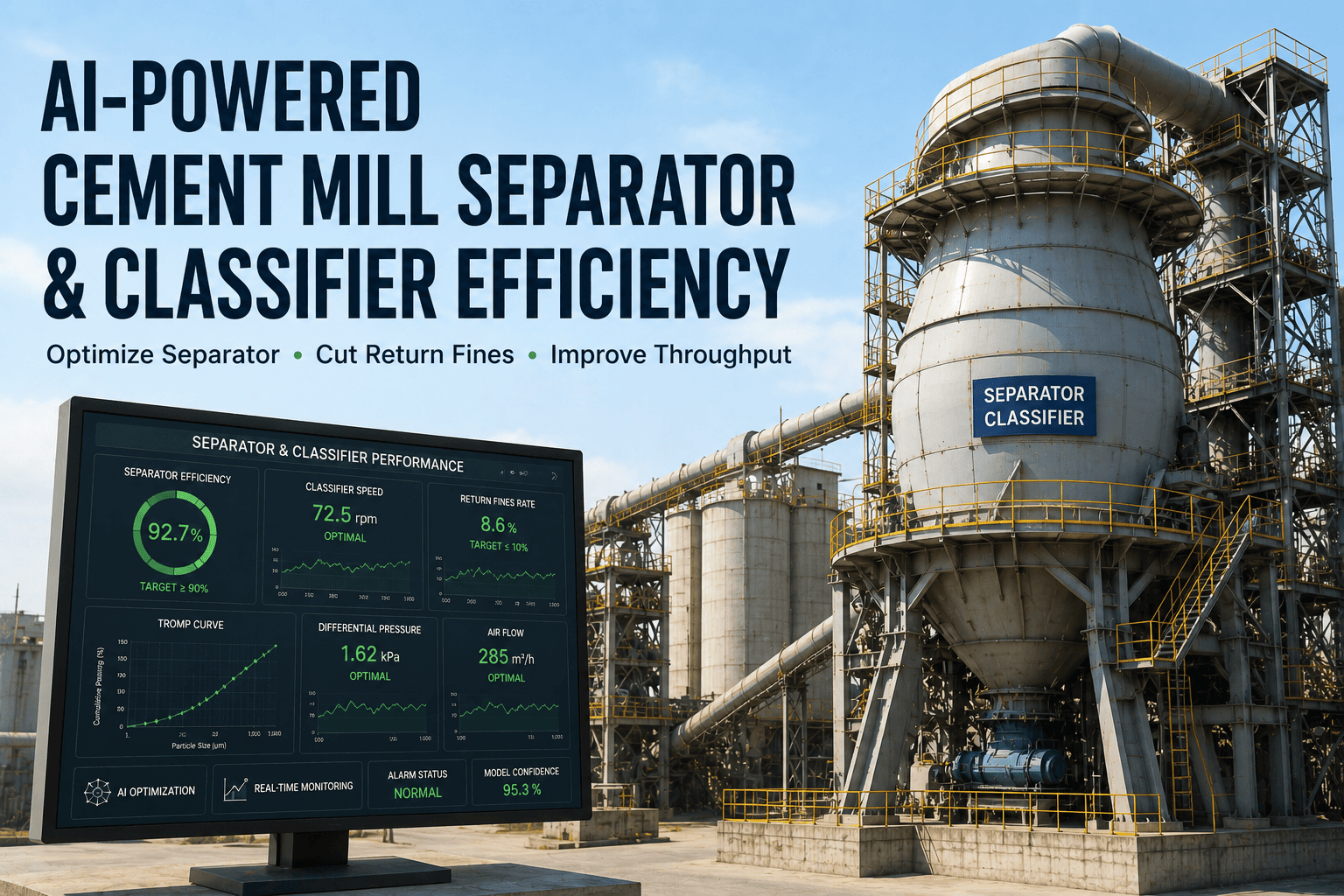
The separator decides what returns for regrinding and what leaves as product, so its cut interacts directly with the press-mill split and with over-grinding. The AI coordinates separator behavior with the grinding controls to sharpen the classification — sending back what needs more work and passing what's on-spec — rather than recirculating fines that are already fine enough.
4
Adapt to the Feed in Real Time
Clinker grindability, moisture, and chemistry drift shift by the hour, and a setting that was optimal this morning wastes energy this afternoon. The AI tracks those changes and re-optimizes force, gap, split, and separator together continuously, so the circuit stays at its efficient point through the variation instead of drifting off it between manual adjustments.
Retrofitting a roller press ahead of an existing ball mill already cuts overall circuit energy by roughly 25 percent — but that gain is the circuit's potential, not its guaranteed daily result. Whether a plant actually captures it depends on operating the combined circuit at its optimum every shift, which is the difference between having the equipment and getting its full value out of it.
More Efficient, Without Sacrificing Quality
The one thing an energy optimization must never do is coarsen the cement or weaken it, so product quality is the hard constraint the AI works within — the goal is fewer kilowatt-hours at the same or better cement, never cheaper cement that's off-spec.
Hold Blaine and Residue
The optimization targets the minimum energy that still hits the required Blaine fineness and sieve residue, so the product's particle size stays on specification. Trimming grinding pressure and energy to the minimum that holds target fineness is exactly where the savings come from — cutting waste, not cutting fineness.
Stop Over-Grinding, Don't Coarsen
Much wasted grinding energy goes into over-grinding particles that are already fine enough, so the aim is to stop that over-grinding while holding the particle size distribution — sharpening the separation rather than letting the product drift coarse. The energy saved is energy that was never adding useful value in the first place.
Protect 28-Day Strength
Because strength depends on the particle size distribution, the AI works to maintain or improve the size distribution at the same residue, which preserves 28-day strength as energy comes down. A sharper cut at the same fineness can hold or even improve strength while the circuit uses less power — quality and efficiency moving together.
Validated Against the Lab
Optimization moves are made within limits confirmed by quality data, so fineness and strength are watched as the circuit is tuned rather than assumed. The engine optimizes toward lower energy inside a quality envelope, keeping the product firmly on-spec while it hunts for the efficient operating point.
On-Premise: Your Process Data Stays In-House
Grinding optimization runs on your live circuit data, product recipes, and quality results — operational information that reveals how your plant makes cement and at what cost — so the AI is built to run on-premise, at the edge, with the speed real-time circuit control demands.
Recipes and Process Data Stay Local
Circuit settings, product recipes, energy figures, and quality data expose your process know-how and cost structure, so on-premise processing keeps all of it inside your network and out of any external cloud. The operational data that defines your competitiveness never leaves the plant.
Real-Time Optimization at the Edge
The feed drifts continuously and the circuit has to be re-optimized in step, so the optimization runs locally against the live process rather than round-tripping to a remote server. Edge processing lets the engine adjust force, gap, and split in real time as conditions change.
Runs Through Connectivity Gaps
A continuous grinding circuit can't have its optimization depend on an internet link, so on-premise operation keeps the engine running within the plant's own environment regardless of external connectivity — the resilience a 24/7 process requires.
Live in 6 to 12 Weeks
The turnkey model ships a pre-configured, racked-and-ready AI server with the software pre-loaded, so a focused grinding-circuit optimization scope goes live in 6 to 12 weeks — real-time roller press and combi-grinding optimization without an open-ended platform build.
From Baseline to Continuous Optimization
Grinding optimization proves out fast because the savings are measurable in kilowatt-hours per tonne against the circuit's own baseline. The rollout is staged so gains are demonstrated before the AI takes a continuous hand on the controls.
1
Baseline the Circuit
Deployment starts by measuring the circuit's real specific energy against throughput and quality — power draw at multiple feed rates, the press and mill split, separator performance, and the kWh per tonne at target Blaine — establishing the baseline every gain is measured against.
2
Model Force, Gap, and Split
The AI ingests the circuit's process, energy, and quality data to learn how force, gap, speed, and the combi-split interact for your feed and how they trade against fineness and strength — building the model it optimizes against within your real constraints.
3
Advise, Then Optimize in the Loop
The engine first recommends setpoints for operators to validate against lab quality, proving the savings hold at spec, before moving to continuous closed-loop optimization — earning trust on a bounded scope before it drives the circuit in real time.
4
Extend Across Mills and Plant
With savings proven on one circuit, optimization extends to other grinding lines and raw-material grinding, and the energy and quality data feed plant-wide efficiency tracking — making continuous kWh-per-tonne optimization standard across the plant.
What Changes in the Plant
AI roller press and hybrid grinding optimization turns the plant's biggest electrical load into a continuously optimized process — more tonnes per kilowatt-hour, held at spec, through every shift and every shift in the feed.
01
Lower kWh Per Tonne
Tuning force, gap, and split to the shifting optimum drives the circuit's specific energy down toward its true potential, recovering a meaningful share of the 15 to 25 percent of grinding energy typically wasted — worth six figures a year at a mid-size plant on the plant's largest load.
02
More Throughput From the Same Circuit
Getting the most from the press's pre-cracking and the optimal split lifts the whole circuit's output, so the plant can grind more tonnes on the same equipment and power — capacity unlocked by operating better, not by buying more machine.
03
Quality Held, Not Traded
Because Blaine, residue, and strength are the constraints the optimization respects, the energy comes out of over-grinding and inefficiency rather than out of the product — the cement stays on-spec, and a sharper cut can even hold or improve strength as power falls.
04
Lower Cost and Carbon Together
Every kilowatt-hour per tonne saved cuts both the electricity bill and the CO2 behind it, so the optimization improves operating cost and carbon footprint at once — an increasingly valuable pairing as energy prices and carbon costs rise together.
Frequently Asked Questions
The questions process and energy engineers ask most often about AI roller press and hybrid grinding optimization.
Won't just running the roller press at maximum pressure grind most efficiently?
No — and this is one of the most useful counterintuitive findings in grinding. It's tempting to think more grinding force always means better efficiency, but the opposite is true past a point: lower specific grinding force actually improves comminution efficiency, while pushing pressure higher makes specific throughput drop and energy absorption rise for diminishing return. In other words, beyond the sweet spot you're spending extra energy to produce excess fines you may not even want. So there's an optimum grinding force, not a maximum, and it depends on the feed and the fineness you're targeting. The same is true across the circuit: the best gap depends on the force and the material, and the best press-mill split depends on both. That's exactly why fixed setpoints leave money on the table — an operator picks a safe, conservative pressure and leaves it, which is neither the efficient point nor stable as feed changes. The AI finds and holds the force that delivers the reduction you need for the least energy, adjusting as grindability and moisture shift. It optimizes for tonnes per kilowatt-hour at target quality, which is usually well below the maximum pressure the machine can exert. To see where your circuit's optimum actually sits,
book a demo.
Will optimizing for energy hurt our cement quality?
No, because quality is the hard constraint the optimization works within, not something it trades away. The target is the minimum energy that still hits your required Blaine fineness and sieve residue — the savings come from trimming grinding to the minimum that holds target fineness, which means cutting waste rather than cutting quality. A large share of wasted grinding energy actually goes into over-grinding particles that are already fine enough, so the biggest opportunity is to stop that over-grinding while holding the particle size distribution steady — the goal is explicitly not to coarsen the product. In fact, sharpening the separation at the same residue can hold or even improve 28-day strength while specific consumption falls, because strength depends on the particle size distribution and a better-controlled distribution can help it. Throughout tuning, fineness and strength are watched against lab quality data, so the engine optimizes toward lower energy inside a validated quality envelope rather than assuming the product is fine. So the honest answer is that done correctly, energy optimization and quality are complementary: you're removing kilowatt-hours that were being spent on over-grinding and inefficiency, not kilowatt-hours that were building strength. The product stays on-spec, and often the consistency improves because the circuit is held at a controlled operating point instead of drifting.
Why can't our operators just set the optimal points once?
Because there's no single optimal point that stays optimal — it moves continuously, and it moves in several dimensions at once. Three things make this hard for a fixed setpoint. First, the levers interact: raising grinding force changes the ideal roll gap, changing the press-mill split changes what fineness the press should target, so you can't tune one and leave the rest. Second, the feed never holds still — clinker grindability, moisture, and chemistry drift through the day, and each shift moves the optimum for all three levers, so a setting that was efficient this morning is wasting energy this afternoon. Third, the tradeoffs are genuinely multivariable, balancing energy against throughput against fineness against strength simultaneously, which is more than a person can re-solve by hand every hour. So operators do what's reasonable given those difficulties: they pick conservative, stable settings that safely make spec and leave them, which protects quality but leaves efficiency on the table because the safe setting is rarely the efficient one and never tracks the drift. The AI's advantage is precisely that it can re-optimize continuously — reading the live circuit, recomputing the best combination of force, gap, and split as conditions change, and holding the circuit at its efficient point through the variation. It's not that operators can't find a good point; it's that no static point stays good, and only continuous optimization captures the difference.
We don't have a roller press yet — is a retrofit worth it, and does this help?
A roller press retrofit is one of the most practical efficiency investments a ball-mill plant can make, and yes, the optimization compounds its value. Adding a high-pressure grinding roll ahead of an existing ball mill creates a combined circuit that handles the coarse reduction far more efficiently — the press runs at 30 to 50 percent of the mill's specific energy — typically cutting overall circuit energy by roughly 25 percent without the full capital cost and downtime of replacing the mill entirely. It also lifts the mill system's output by 30 to 50 percent, because the microcracked cake the press produces grinds much more easily, raising the mill's breakage rates and lowering its specific energy. Many plants use a roller press retrofit as a first step and find the combined circuit meets their efficiency targets on its own. Where the AI comes in is turning that ~25 percent potential into realized daily savings: the retrofit installs the capability, but capturing its full value requires operating the combined circuit at its optimum every shift as feed varies, which is exactly what the optimization engine does by continuously tuning force, gap, and the split. So the retrofit and the optimization are complementary — the press gives you the efficient equipment, and the AI makes sure you actually get its full benefit rather than a conservative fraction of it. Contact
iFactory support to discuss your circuit and where the biggest gains sit.
How fast does it deploy, and does our process data leave the plant?
Deployment runs in a defined 6-to-12-week window, because the turnkey model ships a pre-configured, racked-and-ready AI server with the software pre-loaded rather than requiring a ground-up build, and the recommended scope is one grinding circuit first so the kilowatt-hour-per-tonne savings validate against that circuit's own baseline before extending. The rollout is staged: the engine first advises setpoints for operators to confirm against lab quality, proving the savings hold at spec, then moves to continuous closed-loop optimization once trust is established. On data, nothing needs to leave the plant: the system runs on-premise and at the edge, inside your network, because circuit settings, product recipes, energy figures, and quality results reveal your process know-how and cost structure — some of the most competitively sensitive information a cement plant holds. Processing it locally keeps it out of any external cloud. On-premise and edge operation also serves the technical reality that the feed drifts continuously and the circuit must be re-optimized in step, which local processing delivers in real time without a remote round trip, and it keeps the optimization running within the plant's own environment even where connectivity is limited or interrupted — essential for a continuous 24/7 grinding circuit. So you get a fast, bounded deployment and full control of your process data at once. Contact
iFactory support to scope your grinding circuit.
TUNE THE FORCE · SET THE GAP · BALANCE THE SPLIT
More Tonnes Per kWh, Held at Spec, Every Shift.
An AI optimization engine that tunes roller press grinding force, roll gap, and the combi-grinding split with your ball mill in real time — shifting reduction onto the cheaper press energy, exploiting the microcracked cake, and coordinating the separator to drive the circuit to its minimum kWh per tonne while holding Blaine, residue, and 28-day strength. On the plant's largest electrical load, six figures a year in reach, on-premise and at the edge, live in 6 to 12 weeks.