AI Predictive Maintenance for Vertical Roller Mills (VRM)
By James C on August 22, 2026
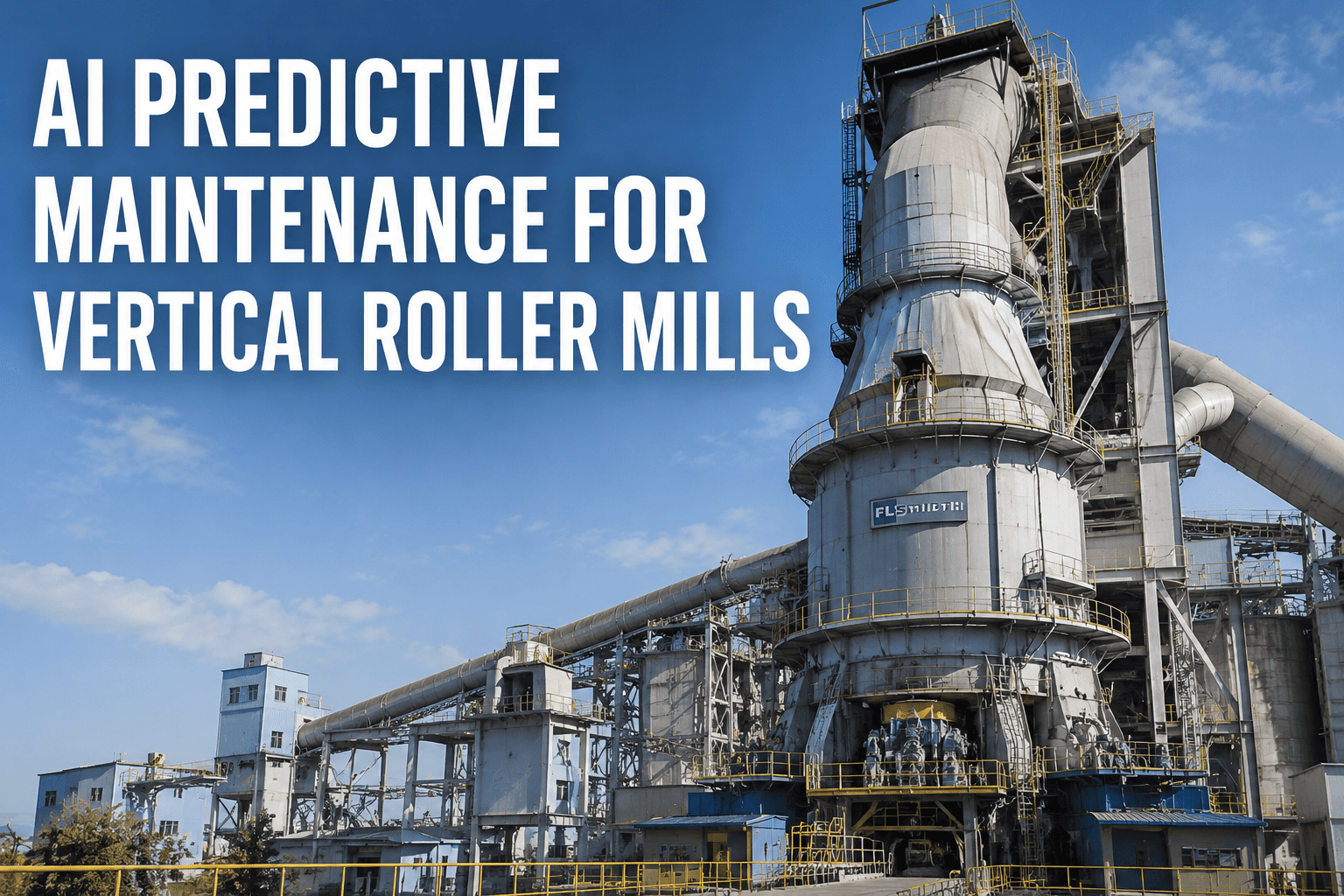
When a cement plant loses its vertical roller mill, it does not lose a machine. It loses the grinding circuit. The VRM is the throughput chokepoint for raw meal, cement, coal, and slag, and almost nothing downstream keeps running without it. That is why the failures that matter most are the ones nobody sees coming: a gearbox bearing spalling quietly for weeks, a hydraulic seal weeping until grinding pressure turns unstable, rollers wearing past their curve while specific power creeps up unnoticed. iFactory VRM predictive maintenance reads the early signals in vibration and process data, so roller and rocker-arm campaigns stretch to their true end of life and the surprise stop never arrives.
Grinding Reliability for Cement Plants
AI Predictive Maintenance for Vertical Roller Mills
Detect VRM roller wear, hydraulic seal failure, and gearbox degradation before they cost you the circuit. iFactory's vibration AI turns your mill's own signals into lead time — extending campaigns while protecting throughput and product fineness.
Kilns get the attention, but the grinding circuit is where availability is quietly won or lost. A single VRM commonly feeds the entire raw meal or finish grinding line, so an unplanned mill stop does not slow production — it halts it. The components that fail are big, expensive, and long-lead. A main gearbox is not a shelf item; a rebuilt or replacement unit can take months to arrive. Reactive maintenance on a VRM means paying twice: once for the emergency repair, and again for every tonne the plant could not make while waiting. Predictive maintenance changes the equation from surprise to schedule.
Where a Vertical Roller Mill Actually Fails
Every VRM has the same handful of failure points, and each one speaks before it breaks. The trick is hearing it early enough to act on your terms. Here is the anatomy of the machine and the four places condition monitoring earns its keep.
Four Failure Modes, Four Early Signals
Each failure point leaves a fingerprint in the data long before it forces a stop. The value of VRM condition monitoring is reading that fingerprint early enough to plan the fix rather than survive it.
1Roller and Tire Wear
Early signalRising specific power, drifting throughput, changing vibration signature
If missedLost tonnage, poor fineness, eventually a forced grinding stop
AI doesPredicts remaining wear life and times hardfacing to the true curve
2Hydraulic Seal Failure
Early signalGrinding pressure instability, accumulator drift, oil temperature trend
If missedUnstable grinding bed, high vibration, quality excursions, a trip
AI doesFlags pressure and leak trends before the bed goes unstable
3Gearbox Degradation
Early signalBearing vibration spectra, gear-mesh frequencies, oil condition, temps
If missedCatastrophic failure, months of downtime, a long-lead replacement
AI doesCatches bearing and gear defects at the incipient stage, with lead time
4Rocker-Arm Fatigue
Early signalLoad asymmetry, abnormal vibration patterns across the rollers
If missedRoller instability and secondary damage that widens the repair
AI doesDetects load and vibration asymmetry that points to structural stress
Not sure which of the four is quietly aging on your mill? Book a 30-minute demo and we'll walk your VRM's vibration and process history against live diagnostics.
The Cost of a Surprise Versus the Cost of a Plan
The gap between reactive and predictive maintenance on a VRM is not a small efficiency. It is the difference between a scheduled weekend intervention and weeks of lost production while a long-lead part crosses an ocean.
Run to failure
Mill runs blind, signals unread
Sudden failure with no warning
Scramble for a long-lead spare
Weeks of circuit downtime
Lost tonnage nobody recovers
Predictive with iFactory
AI reads vibration and process data
Early anomaly, weeks of lead time
Parts staged, crew scheduled
Short, planned intervention
Throughput protected
Vibration Is the Language a VRM Speaks
A vertical roller mill is never silent. Bearings, gears, rollers, and the grinding bed all leave a signature in vibration and process data, and each defect shifts that signature in a characteristic way. iFactory's vibration AI learns the healthy baseline of your specific mill, then watches for the deviations that mean wear, imbalance, looseness, or a developing bearing fault — and converts them into an alert with a remaining-life estimate you can plan around.
1
Listen
Streams vibration spectra plus power, pressure, temperature, and throughput from the mill.
2
Learn
Builds the healthy baseline for your mill, not a generic template, across load and material.
3
Detect
Spots the deviation that maps to roller, hydraulic, gearbox, or rocker-arm degradation.
4
Warn
Issues an alert with a remaining-life window, so the fix lands on your schedule.
Stretch the Campaign Without Gambling on It
Fixed-interval maintenance is conservative by design. To avoid a failure, plants replace rollers and rebuild rocker arms earlier than the components truly need — leaving good life on the table and buying more stops than necessary. Condition-based intelligence lets you run each campaign to its real end of life, confident that the mill will warn you before the margin runs out.
Roller and rocker-arm campaign length
Fixed interval
Replaced early to stay safe
AI condition-based
Run to true end of life, planned
safe margin
The extra length is real component life you already paid for. AI turns it into fewer stops and lower spend, without adding failure risk.
What Predictive Maintenance Delivers on a VRM
Moving from reactive and calendar-based work to condition-based, AI-driven maintenance converts directly into the numbers a plant manager watches — availability, cost, and consistency.
Weeks
Earlier warning
lead time to stage parts and plan the stop
↑
Mill availability
fewer unplanned grinding-circuit stops
Longer
Campaigns
rollers and rocker arms run to true end of life
Steady
Product fineness
a stable grinding bed protects quality
Frequently Asked Questions
Does iFactory work with our VRM regardless of the OEM?
Yes. The approach is signal-based rather than brand-specific, so it applies to Loesche, FLSmidth, Gebr. Pfeiffer, thyssenkrupp, and other vertical roller mills. iFactory learns the healthy baseline of your particular mill from its own vibration and process data, so the diagnostics fit your machine rather than a generic model.
Do we need to install new sensors?
Often not many. Most VRMs already report power, differential pressure, grinding pressure, bearing and oil temperatures, and throughput, and many carry vibration sensors on the gearbox and rollers. iFactory uses what exists first, and where a critical component is under-instrumented, the starting review identifies the small number of additions that unlock the most protection.
How is vibration AI different from a standard alarm limit?
A fixed alarm only trips once vibration is already high, which is often too late to plan. Vibration AI learns the normal signature of your mill across load and material and detects the subtle spectral shifts that precede a fault, giving weeks of lead time instead of a last-minute trip. It also points to the likely component, so the crew knows what to prepare.
Can it really catch a gearbox problem early enough to matter?
Gearbox faults are exactly where early detection pays the most, because the replacement is long-lead and the failure is catastrophic. Bearing spalling and gear-mesh defects show in vibration spectra and oil condition well before failure. Catching them at the incipient stage turns a multi-week emergency into a planned intervention with the spare already on site.
How quickly can we get value from it?
Value begins once the baseline is learned and the mill's live data flows through the models. The fastest way to size the opportunity is a demo on your own VRM history — bring your vibration data, recent campaign records, and any past failures, and we will show where the early signals were and what lead time you would have gained.
Turn Surprise Failures Into Scheduled Work.
See Your VRM's Early Signals Before They Cost You the Circuit
Bring your mill's vibration data, campaign history, and any past gearbox or hydraulic events. We'll show where the warning signs lived, how much lead time AI would have given, and what a longer, safer campaign looks like on your line.