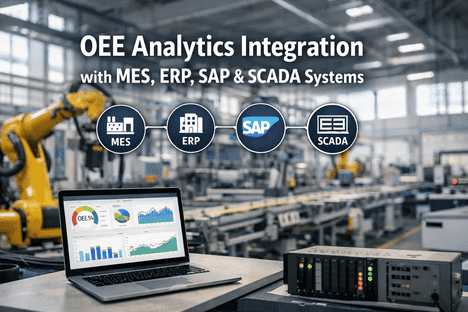
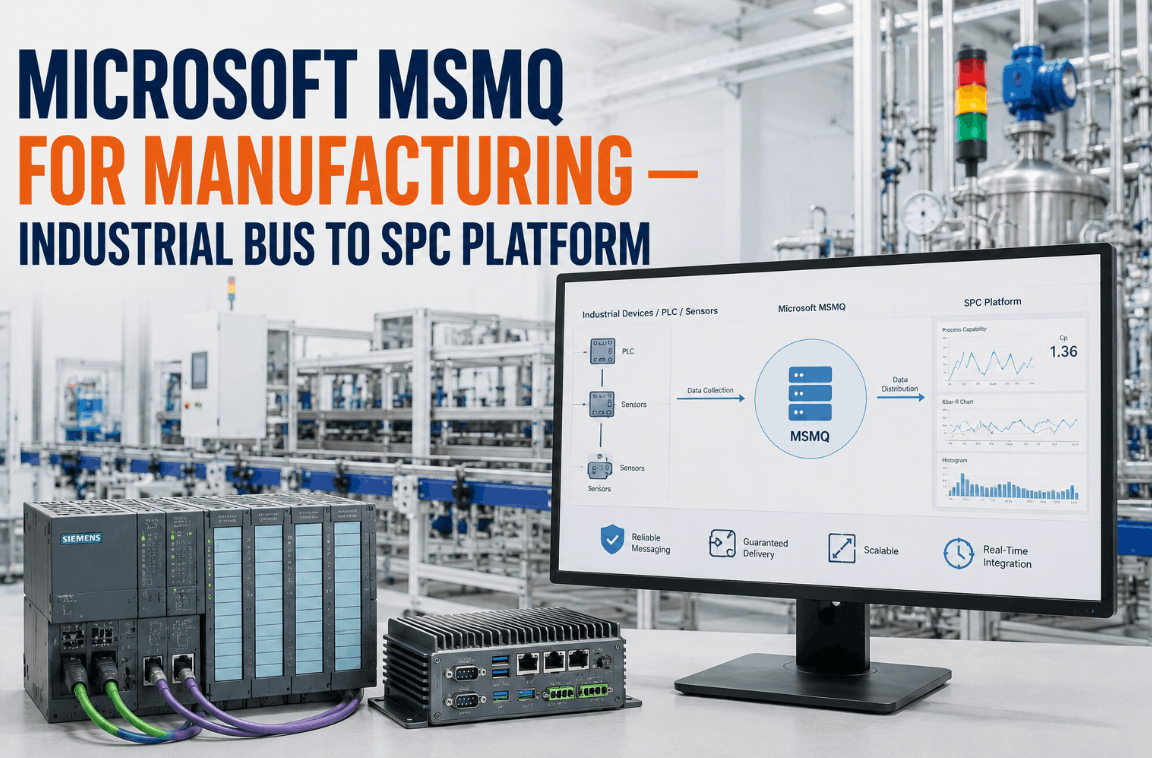
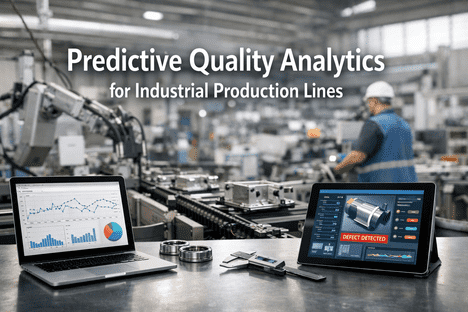
Every manufacturer lives with the same frustrating truth. The ERP knows what was supposed to happen — which orders, which SKUs, which quantities, which due dates. The shop floor knows what actually happened — which machine stopped, for how long, how many good parts came off the end of the shift. Between those two worlds sits an information gap that distorts cost accounting, undermines capacity planning, and reduces the weekly production review to a debate about estimates instead of an analysis of facts. Closing that gap is the single most valuable integration a plant can do. Connecting OEE analytics to SAP, Oracle, Microsoft Dynamics, existing MES, and SCADA/PLC systems transforms OEE from an isolated shop-floor report into a number that flows in real time into production planning, cost accounting, maintenance workflows, and executive dashboards. Done right using modern web services and open protocols, the integration takes days, not months — and the payoff is an 18–25% reduction in planning-to-execution variance, audit prep time cut from days to hours, and a single source of truth that every system finally agrees on.
Unified MES · ERP · SAP · SCADA Integration
One Platform That Talks to Every System You Already Own
iFactory connects OEE analytics to SAP, Oracle, Microsoft Dynamics, existing MES, and SCADA/PLC systems — bidirectionally, in real time, using standard web services and open protocols. No rip and replace required.
5 Layers
ISA-95 hierarchy unified into a single data flow
Days
Integration go-live timeline vs. 12–18 months for legacy MES
Zero
Custom code required for standard SAP/Oracle/Dynamics scenarios
12+
Industrial protocols supported out of the box
Sources: ISA-95 / IEC 62264 Standard · TEEPTRAK MES ERP Integration Guide · SAP S/4HANA Integration Documentation · iFactory Customer Deployments
The ISA-95 Hierarchy — Where iFactory Fits
Manufacturing systems live in five distinct layers defined by the ISA-95 standard, each operating at a different time scale and purpose. Most plants have systems at every layer, but they rarely talk to each other cleanly. iFactory acts as the connective intelligence layer — pulling data up from the floor, pushing context down from the enterprise, and making OEE the metric that unifies them.
L5
Business Planning
SAP S/4HANA · Oracle ERP · MS Dynamics · Infor
Days to months
Orders · Costs · Capacity · Strategy
L4
Manufacturing Operations
MES · CMMS · LIMS · QMS
Hours to shifts
Execution · Quality · Maintenance
AI
iFactory Intelligence Layer
OEE Analytics · AI Forecasting · Loss Intelligence
Real-time · Predictive
Unifies every layer above and below
L3
Supervisory Control
SCADA · Historian · HMI · Ignition · Wonderware
Seconds
Monitoring · Supervision · Alarms
L2
Machine Control
PLC · DCS · CNC Controllers · Robotics
Milliseconds
Direct machine control
L1
Field Devices
Sensors · Actuators · IoT Gateways · Smart Meters
Continuous
Raw physical measurement
The Silo Problem — And the Unified Alternative
Most plants operate their manufacturing systems as disconnected islands. Each system has its own truth, its own report, its own database. When numbers disagree — and they always do — nobody knows which to trust. iFactory replaces this with a unified model where every system contributes to and draws from the same source of truth.
The Silo Problem
Disconnected Systems
Numbers rarely match across systems
Manual re-entry wastes 15+ hrs/week
Cost accounting runs on estimates
No single source of truth
The iFactory Way
One Unified Model
iFactory
Unified OEE Model
ERP
MES
SCADA
CMMS
QMS
PLC
One number, agreed across all systems
Zero manual re-entry — data flows both ways
Real actuals feed cost accounting live
Every system reads from the same truth
Ready to see your own systems unified? Book an architecture walkthrough.
Data Flows Both Ways — Continuously
Integration is not a one-way feed. Production orders and context need to flow down from enterprise systems; actual production results, OEE, and maintenance triggers need to flow back up. iFactory operates as a bidirectional intelligence hub that keeps both directions synchronized in near real time.
ERP / Planning Layer
SAP · Oracle · Dynamics
Production orders
SKU master data
BOM & routings
Shift calendars
Target rates
Shop Floor / Execution Layer
PLC · SCADA · MES · CMMS
Real OEE numbers
Actual quantities
Downtime events
Quality actuals
Maintenance triggers
Every Protocol, Every System — Out of the Box
iFactory ships with native adapters for every major enterprise system and industrial protocol used in modern manufacturing. No custom middleware, no point-to-point spaghetti. Here is what connects the day you go live.
Modbus TCP
Legacy industrial
SQL / ODBC
Historians, DBs
Pre-Built Connectors for the Systems You Run
Every connector below is native, tested, and supported. Integration is configuration, not custom development. Most deployments complete the full connector setup in 5 to 10 business days.
ERP Systems
Enterprise Planning
SAP S/4HANA
SAP ECC
Oracle ERP Cloud
Microsoft Dynamics 365
Infor CloudSuite
Sage X3
MES Platforms
Execution Layer
Siemens Opcenter
SAP Digital Manufacturing
Rockwell FactoryTalk
GE Proficy
Plex MES
Custom / in-house MES
SCADA & Historian
Supervisory Layer
Ignition by Inductive Auto
Wonderware / AVEVA
OSIsoft PI System
Siemens WinCC
GE iFIX / Proficy Historian
Rockwell FactoryTalk View
PLC & Controls
Machine Layer
Siemens S7 family
Allen-Bradley / Rockwell
Mitsubishi Electric
Schneider Modicon
Omron / Keyence
Fanuc / Mazak / Haas CNC
What Unified Integration Actually Delivers
Integration is not an end in itself. It is the prerequisite for operational outcomes that are impossible when systems run as silos. Here is what changes the day the last connector goes live.
01
Real Actuals Feed Cost Accounting
Production quantities, downtime, and yield flow back to ERP in real time — replacing month-end estimates with live numbers.
02
Production Plans Reflect True Capacity
ERP planning engines consume real OEE data — no more promising orders the floor cannot deliver.
03
Audit Prep Collapses From Days to Hours
Every production record, OEE calculation, and quality event is traceable and reproducible — audit reports generate themselves.
04
Maintenance Triggers Become Automatic
AI-detected failure signals create work orders in your CMMS with zero manual handoff between systems.
05
Executive Dashboards Stop Being Wrong
VP of ops, CFO, and plant directors finally look at the same number — because there is only one number to look at.
Days vs. Months — The Deployment Reality
Legacy MES integrations routinely take 12 to 18 months, cost millions, and require dedicated SI teams. iFactory's integration model uses standard open protocols and modern web services — so the timeline looks nothing like that.
Traditional MES Project
12–18 months
$250K–$2M
iFactory Integration
5–15 days
Configuration only
Day 1–2
System inventory & access setup
Day 3–6
Core connectors configured (ERP, SCADA)
Day 7–10
Bidirectional flows tested end-to-end
Day 11–15
Go-live · dashboards active · audit ready
What Teams Gain After Integration
18–25%
Reduction in plan-to-execution variance after unifying ERP and shop floor
2 days to 4 hrs
Audit preparation time with automatic traceability
15+ hrs/wk
Saved by eliminating manual data re-entry across systems
Zero
Custom middleware or point-to-point code required
Frequently Asked Questions
How does iFactory actually integrate with SAP S/4HANA?
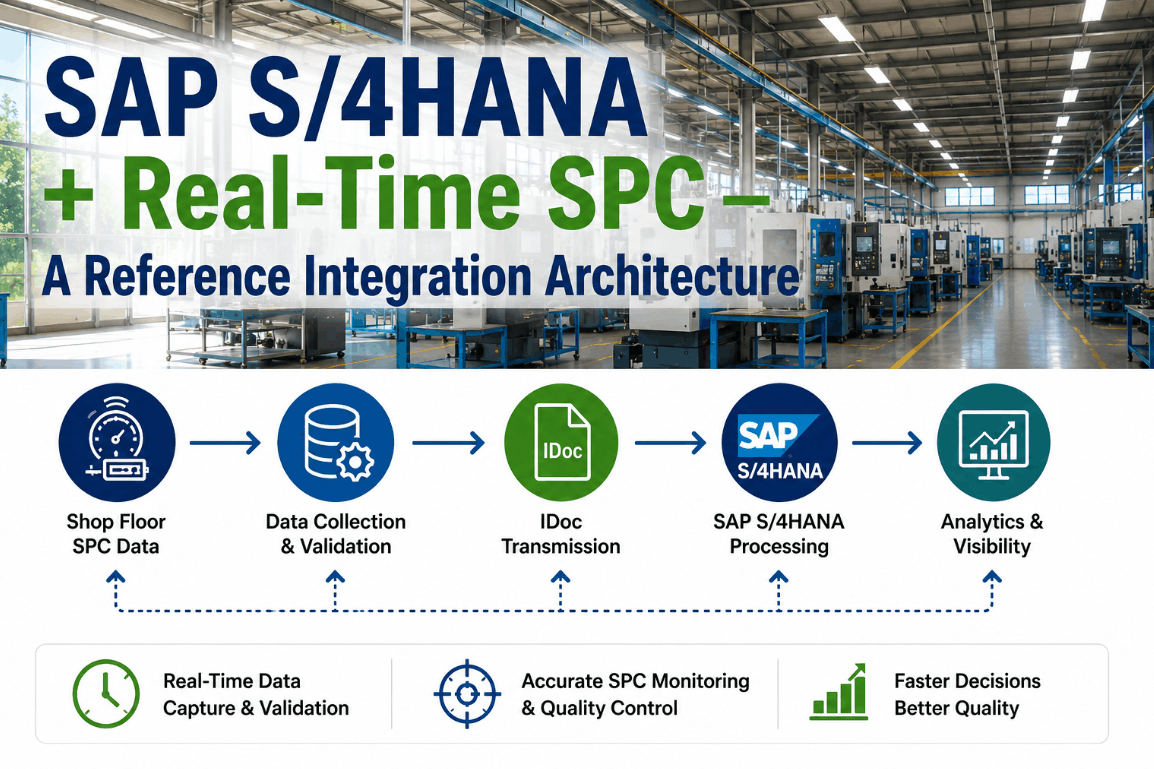
iFactory uses SAP's standard OData services and BAPI interfaces — no custom ABAP development required for standard scenarios. Production orders flow from SAP PP into iFactory for context; OEE actuals, quantities, and downtime flow back to SAP CO and PP modules bidirectionally. Integration typically completes in 5–10 business days.
Book a demo with our SAP integration specialist.
Can iFactory work alongside an existing MES, or does it replace it?
Both models work. Most customers keep their existing MES (Siemens Opcenter, SAP DMC, Rockwell, Plex, etc.) and add iFactory as the intelligence layer that unifies MES, ERP, and SCADA into a single OEE view. For plants without an MES, iFactory alone can serve as the execution-layer analytics platform — without the 12-month implementation timeline MES typically requires.
What if our PLCs are from the 1990s and have no modern interface?
iFactory supports legacy protocols natively: Modbus TCP, RS-232 serial taps, relay contact inputs via IoT gateways, and non-intrusive current/vibration sensors for machines with no digital output at all. A 1990s controller typically goes live in one hour per machine using wireless sensors — no controller modification, no downtime during install.
How is data security handled across these integrations?
All connections use TLS encryption, certificate-based authentication, and role-based access control. iFactory deploys via edge gateways that buffer data locally and sync securely to the cloud — OT networks never expose direct inbound access. Enterprise SSO (SAML, OAuth2) is supported, and data flows are fully auditable for SOC 2, ISO 27001, and regulated-industry requirements.
Ask support for our security architecture documentation.
What happens if one of the upstream systems goes down?
iFactory's edge gateways buffer all production data locally and replay it once the connection is restored — no data loss, no dashboard gaps. If SAP is temporarily unavailable, the shop floor continues logging OEE normally; the system syncs back once SAP returns. This is the opposite of brittle point-to-point integrations where one failure cascades across the plant.
Does integration require the IT team to manage servers or databases?
No. iFactory is cloud-native and fully managed — there are no servers to provision, no databases to maintain, no software patches. The edge gateways on the shop floor handle protocol translation and local buffering; everything above that runs as SaaS. Your IT team's involvement is limited to firewall rules and SSO configuration.
One Truth. Every System.
Stop Paying for Five Systems That Disagree. Connect Them and Ship.
Book a 30-minute integration architecture session — we will map your existing SAP, MES, SCADA, and PLC stack, show you exactly how iFactory connects each layer, and quantify the time and cost savings for your specific environment.
6 ISA-95 Tiers
Unified into a single OEE data flow
12+ Protocols
Native support out of the box
24+ Systems
Pre-built connectors ready day one
5–15 Days
Full integration go-live timeline