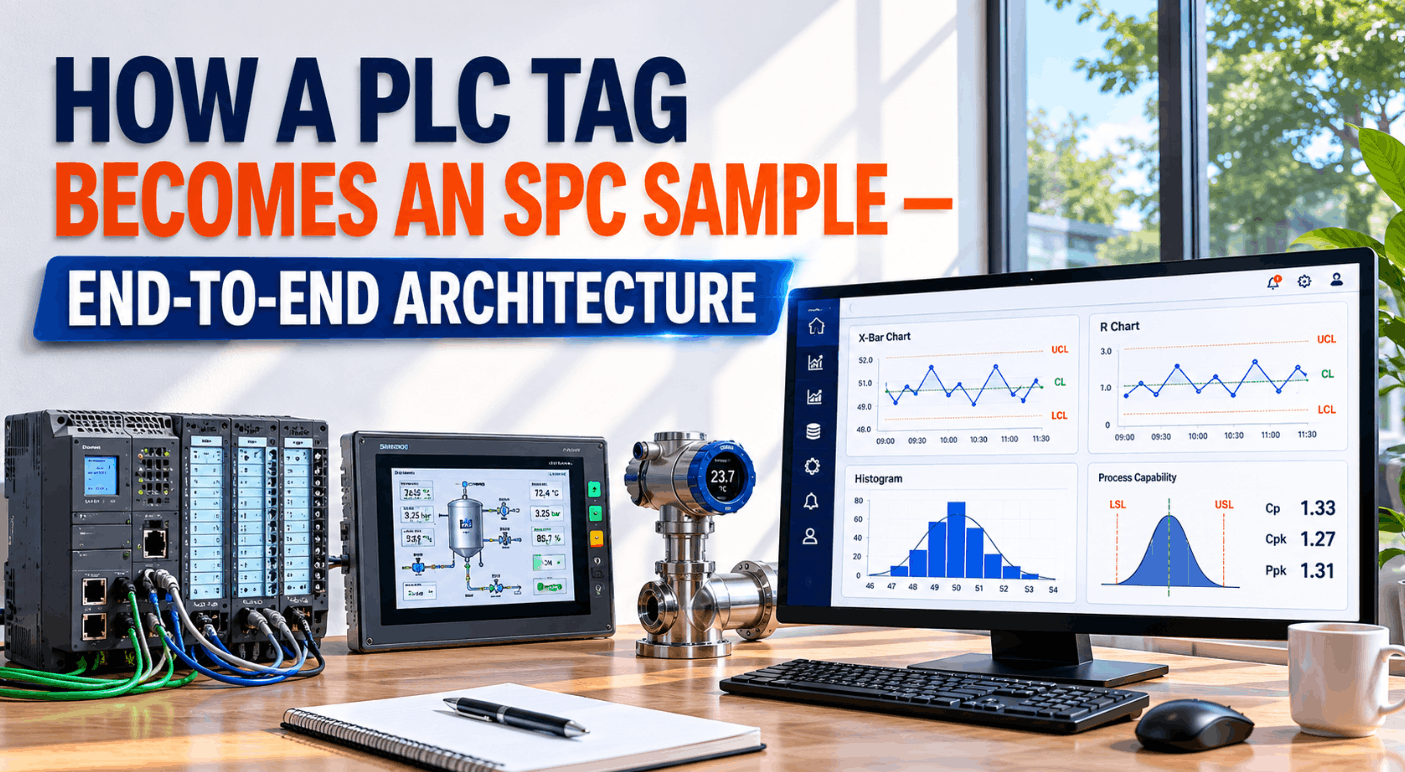
In modern manufacturing plants, the distance between a raw PLC tag and an actionable SPC sample is not measured in feet — it is measured in latency, reliability, and auditability. For Manufacturing IT Directors managing hybrid OT/IT environments, the data pipeline that connects shop-floor controllers to statistical process control engines is one of the most mission-critical yet least-documented architectures in the plant. iFactory's industrial integration layer closes this gap by instrumenting every hop — from PLC tag acquisition through MSMQ message queuing, connector worker processing, and REST/webhook delivery — all the way into the SPC engine. When IT teams Book a Demo with iFactory, they typically discover that their existing PLC infrastructure is already capable of feeding a fully auditable, real-time SPC pipeline without ripping out legacy OT systems.
Why the PLC-to-SPC Data Path Is Often Broken
The manufacturing data pipeline between PLCs and SPC systems fails not because of hardware limitations, but because of architectural gaps that accumulate over years of piecemeal integration. In most plants, PLC tags are polled at inconsistent intervals, timestamps are not normalized to UTC, and the message broker — if one exists at all — lacks dead-letter queuing or replay capability. The result is an SPC engine fed by incomplete, out-of-order, or duplicated samples that corrupt control charts and trigger false alarms.
iFactory addresses this by treating the data pipeline as a first-class engineering concern. The platform deploys a structured, event-driven architecture where every tag read is a discrete, timestamped, serialized event with a unique message ID — making the entire path from shop floor to SPC engine traceable, replayable, and auditable for ISO 9001 and IATF 16949 compliance. Reliability teams exploring this architecture can Book a Demo to see how iFactory maps their existing PLC tag structure to a production-ready SPC data stream.
The End-to-End Architecture: Every Hop Explained
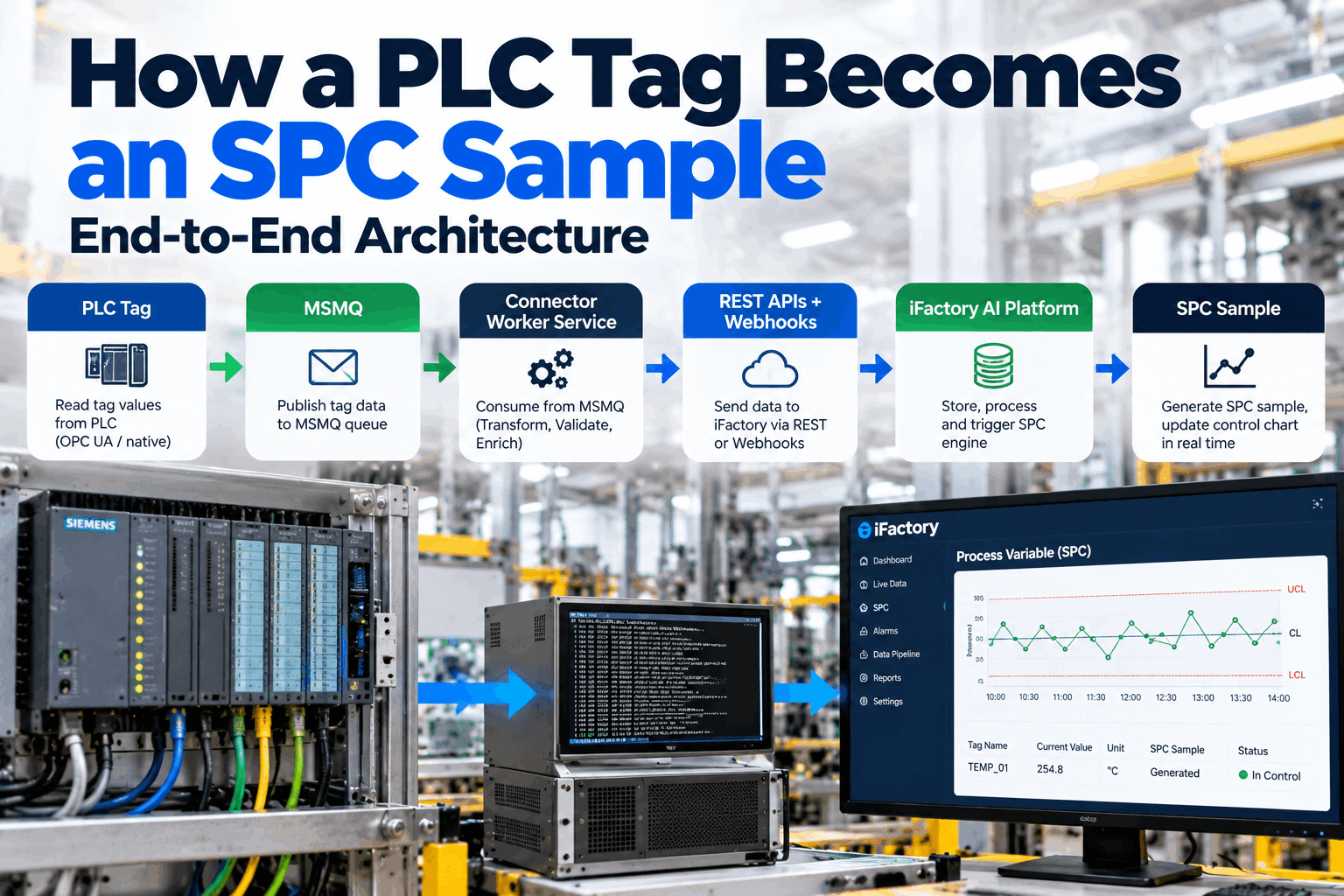
Understanding the full journey of a single PLC tag value — from the moment it changes in the controller to the point it becomes an SPC subgroup sample — is essential for any IT Director responsible for data integrity. iFactory's architecture is built on five sequential, instrumented stages.
PLC Tag Subscription via OPC-UA
The iFactory Edge Connector establishes an OPC-UA subscription against the PLC server. Rather than polling, it uses monitored item change notifications — meaning a message is only sent when the tag value changes beyond a configured deadband, reducing noise while guaranteeing every significant process event is captured. Each event is immediately timestamped with the PLC server time (SourceTimestamp) to preserve process chronology independent of network latency.
MSMQ Serialization and Queuing
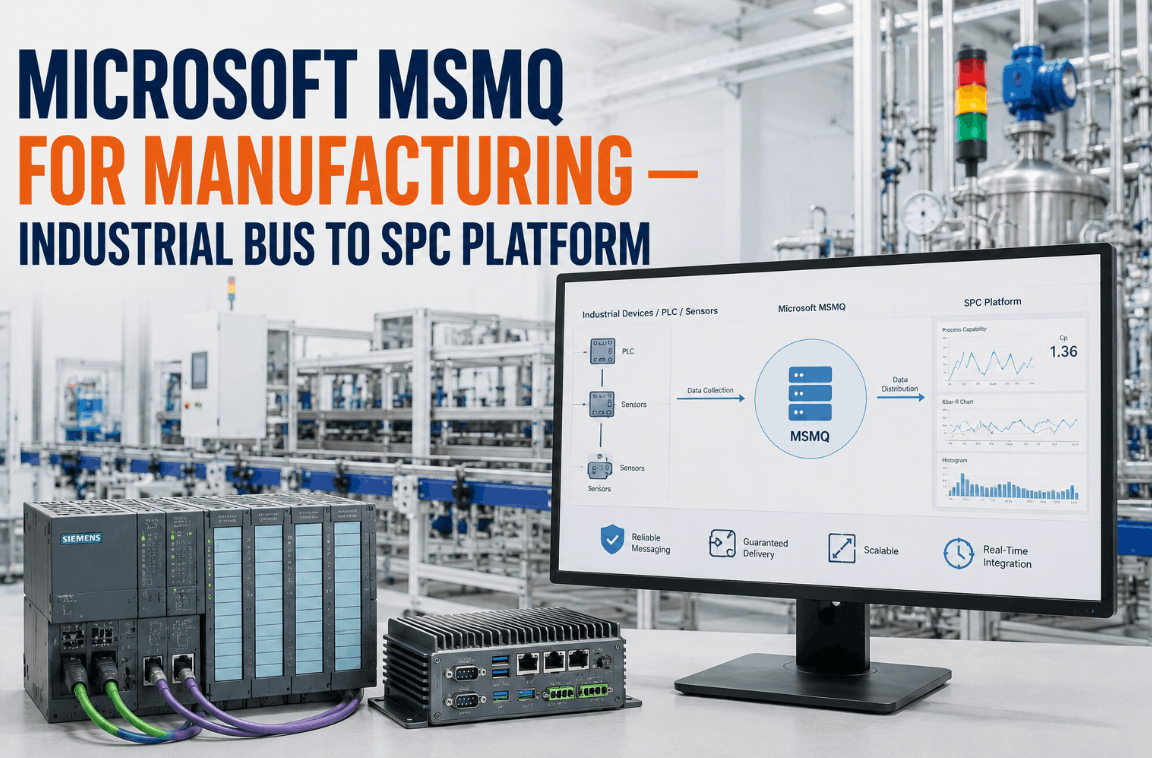
The edge connector serializes each tag event into a structured JSON envelope containing the tag path, raw value, engineering units, quality code, source timestamp, and connector version. This envelope is written to a local MSMQ transactional queue before any outbound transmission occurs. This design ensures that if the network link between the plant floor and the iFactory cloud is interrupted, messages accumulate locally and replay in strict order when connectivity resumes — guaranteeing exactly-once delivery to downstream consumers.
iFactory Worker Service: Normalization and Context Enrichment
The Worker Service dequeues messages and applies the asset hierarchy mapping configured during onboarding. A raw tag like "ROL_MILL_03.AGC.THICKNESS_ACT" is resolved to a canonical asset ID, measurement characteristic, and active production order. The worker also applies engineering unit conversions, checks for out-of-range raw values against configurable sensor validity bounds, and stamps each message with a unique event GUID before forwarding. This is the stage where raw OT data becomes semantically rich manufacturing data.
REST or Webhook Delivery to the SPC Engine
Enriched measurement events are delivered to the iFactory SPC engine via a secure REST POST or a configurable outbound webhook. The SPC engine receives a fully formed sample payload including characteristic ID, nominal, tolerance, actual value, lot/coil reference, operator, and equipment ID. The engine then evaluates the incoming sample against the active control plan, calculates Cpk in rolling windows, and updates the control chart in real time. For organizations using third-party SPC software, iFactory's webhook delivery is format-configurable to match target schemas without custom middleware.
Audit Trail and Event Ledger
Every message traversing the pipeline is written to an immutable event ledger — preserving the original PLC value, each transformation applied by the worker service, the delivery timestamp, and the HTTP response code from the SPC endpoint. This ledger is queryable and exportable for quality audits, customer PPAP submissions, and internal process improvement reviews. IT Directors gain complete provenance for every data point in every control chart. Book a Demo to see the audit ledger in action.
Architecture Comparison: Legacy Polling vs. iFactory Event-Driven Pipeline
The following matrix illustrates the structural differences between a conventional polling-based PLC data collection approach and iFactory's event-driven pipeline architecture. The differences are not cosmetic — they directly determine data completeness, latency, and audit capability.
| Architecture Dimension | Legacy Polling Approach | iFactory Event-Driven Pipeline |
|---|---|---|
| Tag Acquisition Method | Fixed-interval polling (typically 1–5 seconds) | OPC-UA monitored item subscriptions with deadband filtering |
| Timestamp Integrity | Server receipt time — reflects network lag | PLC SourceTimestamp — reflects exact process event time |
| Network Interruption Handling | Data lost during outage — gaps in SPC charts | MSMQ local buffering with ordered replay on reconnect |
| Asset Context | Raw tag name only — requires manual mapping | Worker service auto-resolves to asset ID, order, operator |
| SPC Delivery Format | Proprietary or custom connector per integration | Standardized REST or webhook with configurable schema |
| Auditability | No message-level traceability | Immutable event ledger with full transformation history |
| Legacy PLC Compatibility | Limited to modern OPC-DA/UA servers | Modbus TCP, Ethernet/IP, PROFINET, OPC-UA, MQTT |
Key Capabilities of the iFactory Data Pipeline
The following capabilities define what separates an instrumented, production-grade OT data pipeline from a fragile point-to-point integration. IT Directors evaluating iFactory should verify each of these against their current architecture's actual behavior under fault conditions.
Protocol-Agnostic Edge Connectors
iFactory edge nodes connect to Siemens S7, Allen-Bradley ControlLogix, Mitsubishi MELSEC, and legacy Modbus RTU devices via a unified connector framework. A single worker service instance can simultaneously consume tags from multiple protocols and PLCs across different plant zones without custom integration code.
Configurable Subgroup Sampling Logic
The worker service supports configurable subgroup formation rules — time-based (every N seconds), count-based (every N parts), or event-triggered (on lot boundary). This allows the SPC engine to receive properly formed subgroups aligned with the production rhythm rather than arbitrary time windows, improving X-bar and R chart statistical validity.
Dead-Letter Queue Management
Messages that fail delivery after configurable retry attempts are moved to a dead-letter queue with full context preserved. IT operations teams receive automatic alerts with the failure reason and a one-click replay interface — ensuring no measurement event is silently lost and every SPC gap can be investigated and backfilled.
ERP and MES Context Injection
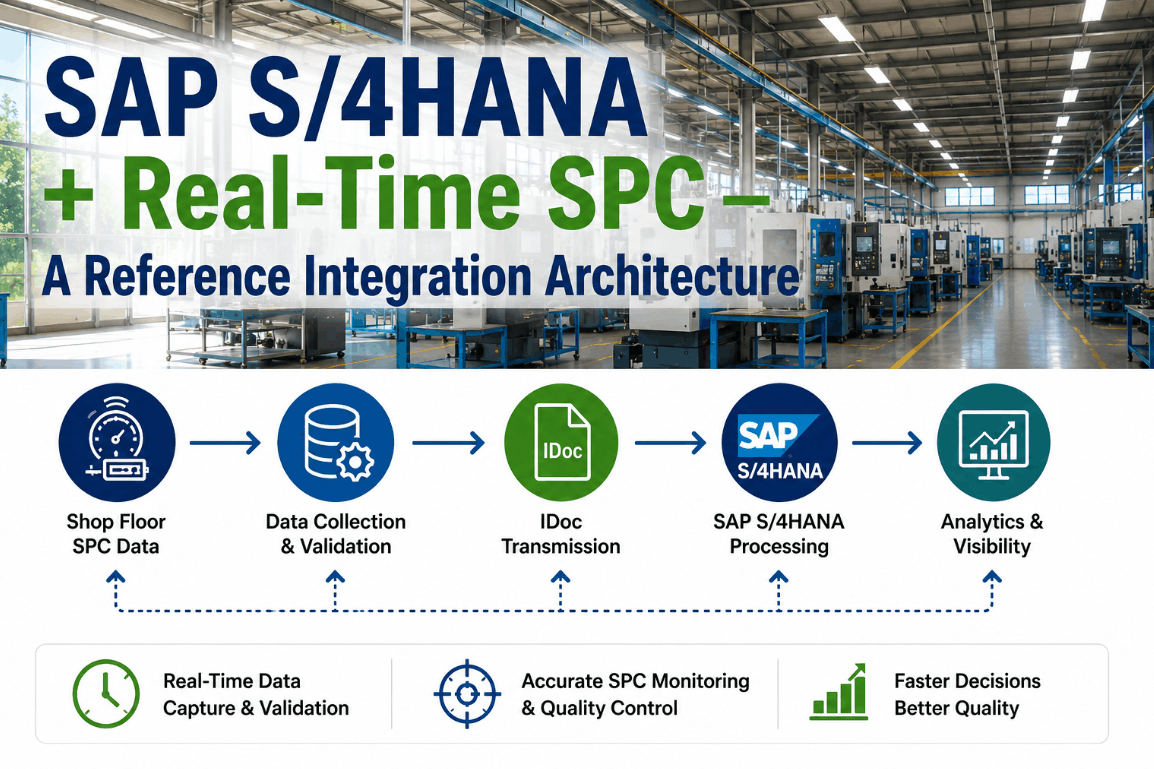
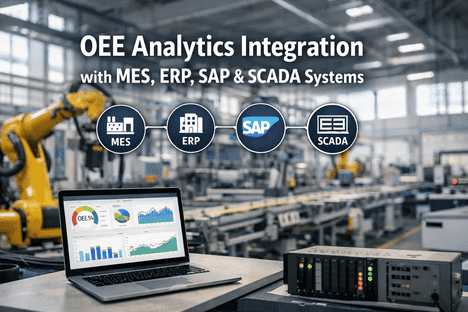
The worker service queries the active production order from SAP or the plant MES at each subgroup boundary, injecting order number, customer specification, material grade, and target values directly into the SPC sample payload. This eliminates the manual step of linking quality records to production orders after the fact.
A well-designed PLC-to-SPC pipeline should be evaluated on three criteria: timestamp fidelity, fault tolerance, and semantic richness. Timestamp fidelity means the SPC sample reflects when the process event occurred in the controller — not when a server polled it. Fault tolerance means a 30-minute network outage does not create a 30-minute gap in your control charts. Semantic richness means the SPC engine receives a sample that already knows what machine, what order, and what operator produced it. iFactory's architecture satisfies all three. The use of OPC-UA SourceTimestamps, MSMQ local buffering, and worker-service context enrichment represents the current best practice for OT data pipeline design in ISO-regulated manufacturing environments. IT Directors who have struggled with "phantom" SPC violations caused by timestamp drift or data gaps will find this architecture eliminates the root cause rather than masking symptoms.
Conclusion: From Tag to Chart — Architecture That Earns Trust
A PLC tag has no quality value until it arrives at the SPC engine as a complete, timestamped, contextualized, and auditable sample. Every hop in the pipeline — acquisition, queuing, normalization, enrichment, delivery — is a potential point of failure that can corrupt your control charts and undermine quality decisions. iFactory's end-to-end architecture instruments every hop, buffers against network faults, enriches raw tags with production context, and delivers a complete audit trail that supports customer PPAP submissions and internal process capability reviews. Manufacturing IT Directors who want to see the full pipeline architecture running against their actual PLC tag structure should Book a Demo with iFactory's integration engineering team.
Frequently Asked Questions
Does iFactory require replacing our existing OPC-UA server?
No. iFactory's edge connector acts as an OPC-UA client and connects to your existing server — whether it is a Kepware, Ignition, or native Siemens server — without any changes to the OPC-UA server configuration or PLC program.
How does the system handle duplicate tag values that arrive out of order due to network retransmission?
The worker service uses the unique message GUID and SourceTimestamp to deduplicate and reorder messages before forwarding to the SPC engine, ensuring the control chart always reflects the correct process chronology.
Can the pipeline deliver SPC samples to a third-party SPC platform like Minitab or InfinityQS?
Yes. iFactory's outbound webhook delivery supports custom JSON schema mapping, allowing the worker service to format SPC sample payloads to match any third-party SPC platform's REST API specification.
What is the minimum latency between a PLC tag change and an SPC sample update?
Under standard LAN conditions, the end-to-end latency from PLC tag change notification to SPC engine receipt is typically under 2 seconds, including MSMQ serialization, worker processing, and REST delivery.
How is the pipeline secured against unauthorized access or data tampering?
All OPC-UA connections use certificate-based mutual authentication, MSMQ queues are access-controlled at the OS level, REST endpoints require JWT bearer tokens, and the event ledger is write-once — making post-hoc data modification detectable and auditable.