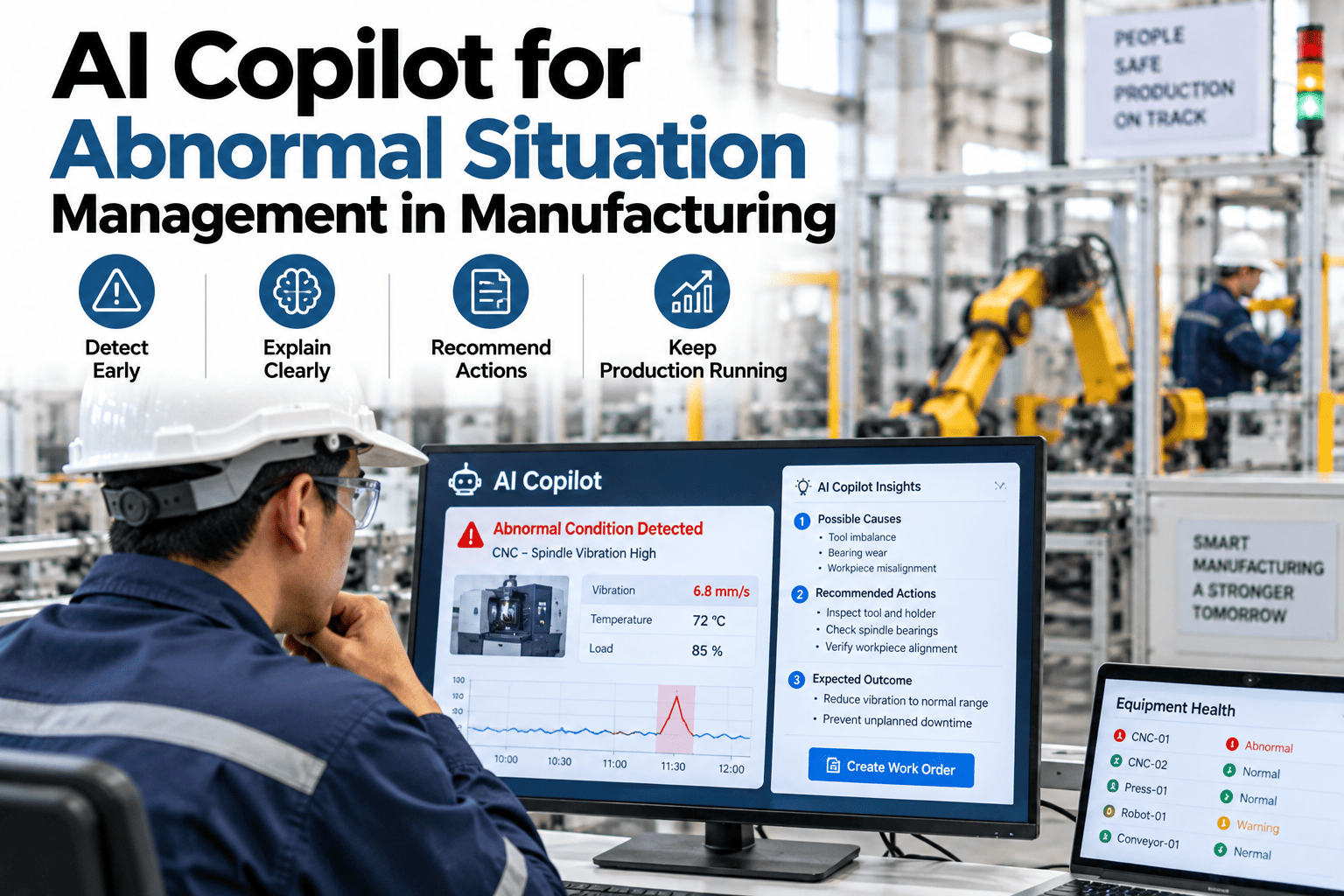
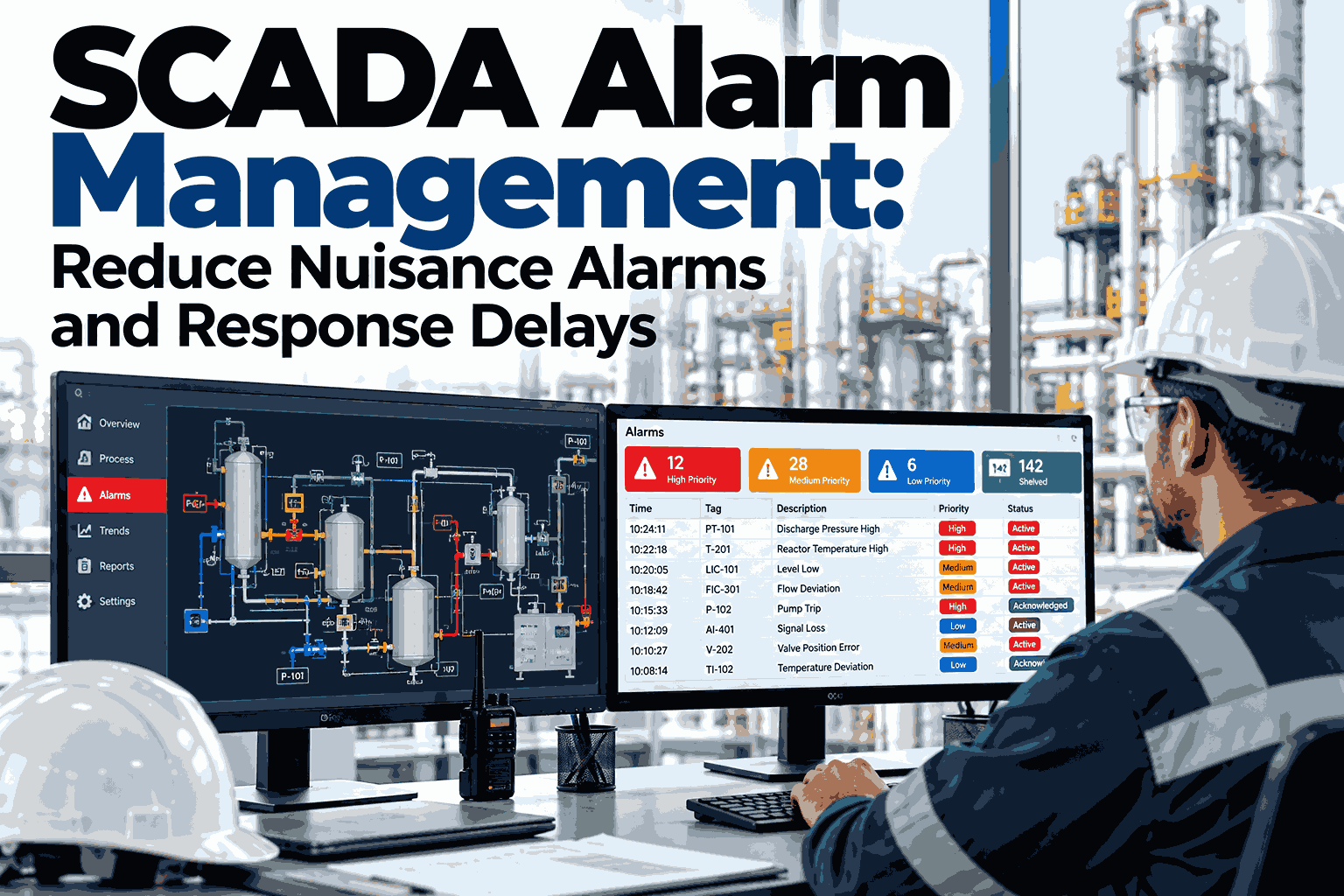
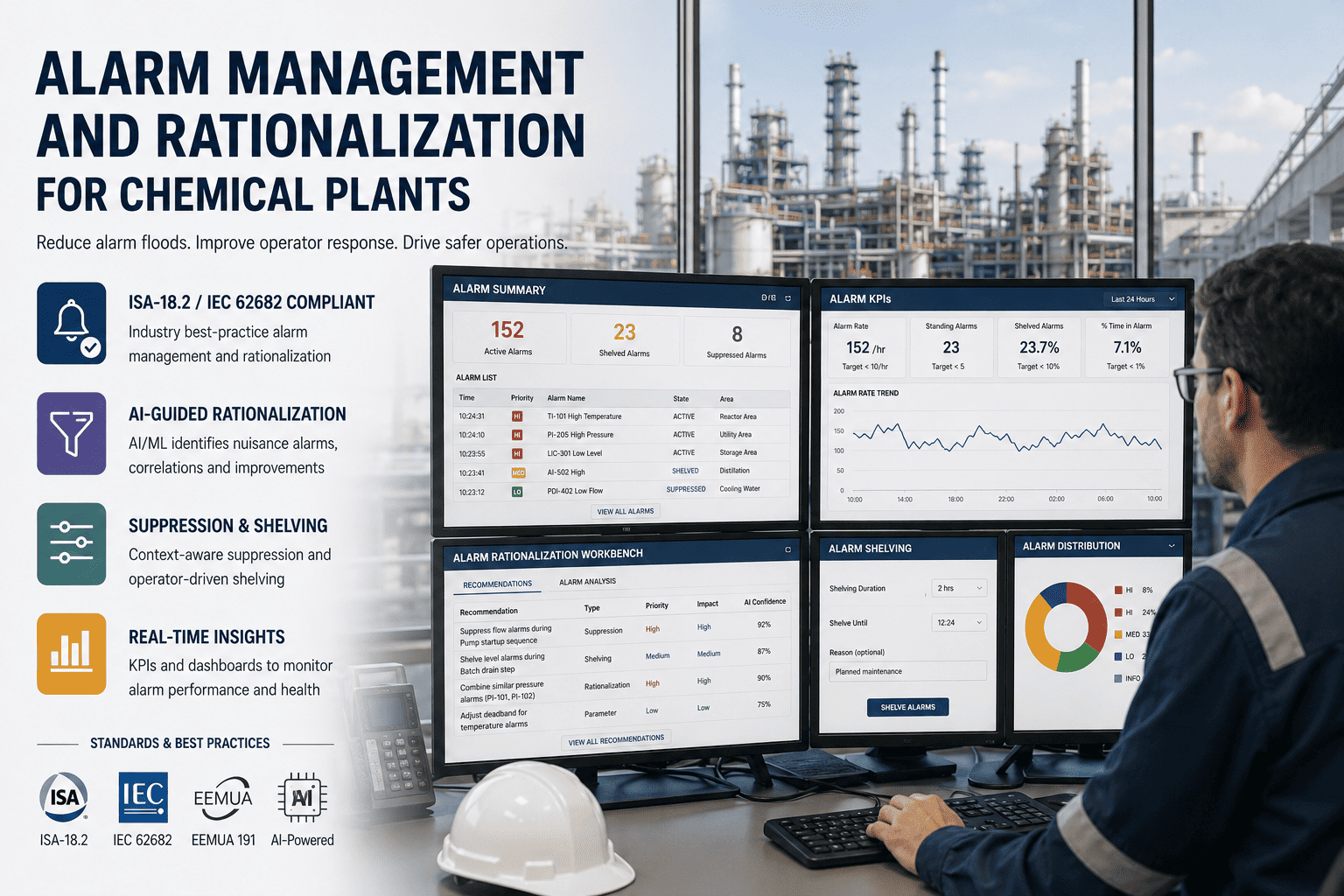
An alarm flood doesn't announce itself politely. A single upset condition in a process plant can cascade into dozens or hundreds of alarms firing within minutes, and the operator responsible for responding is left trying to figure out which one actually matters while the console keeps filling with noise. Industry research on alarm management has documented this problem for decades: more than eighty percent of alarm system performance issues trace back to alarms that never should have been configured as alarms in the first place, and a flood of low-value noise is exactly what buries the one alarm that actually needs an immediate response. An AI copilot built for abnormal situation management doesn't just prioritize the noise, it actively helps the operator understand what's actually happening and what to do about it, in the moment the situation is developing. If your operators are still fighting alarm floods with nothing but priority codes to guide them, book a demo to see what real-time guided response actually looks like.
AI COPILOT · ABNORMAL SITUATION MANAGEMENT
Guidance the Moment a Process Starts to Deviate
iFactory's AI copilot prioritizes alarms, diagnoses process deviations, and recommends the safest, most effective response in real time, so an abnormal situation gets handled before it escalates.
NORMAL
WATCH
ABNORMAL
CRITICAL
WHY THIS PROBLEM IS SO WELL DOCUMENTED
Alarm Floods Aren't a New Problem, Just an Unsolved One
The Abnormal Situation Management Consortium has spent decades researching exactly why plant operators struggle during process upsets, and the finding holds up across every industry it's been studied in: the volume of alarms configured on a modern control system routinely exceeds what any human can meaningfully process during a genuine upset.
80%+
of alarm system performance issues trace back to alarms that don't meet the actual definition of an alarm
Thousands
of alarms typically configured across a single plant's control system
Minutes
for a single upset to cascade into a genuine alarm flood across a process unit
One
operator often responsible for interpreting all of it during the exact moment it matters most
WHAT THE COPILOT DOES DURING AN EVENT
Four Things Happening in the Background While an Operator Responds
Real-Time Alarm Prioritization
Dozens of simultaneous alarms are ranked by actual process significance, not just configured priority level, surfacing the one that genuinely needs attention first.
Process Deviation Diagnosis
The pattern of deviating variables is correlated against known upset signatures to identify what's actually happening, not just which individual tags are out of range.
Recommended Response
A specific, ranked action recommendation grounded in your plant's own procedures and prior successful responses to similar deviations.
Automatic Event Logging
The full sequence of alarms, diagnosis, and response is captured automatically for post-event review and operator training, without relying on someone to reconstruct it afterward.
See how your last alarm flood would have played out
iFactory can replay a past abnormal situation from your own historian data and show you exactly how the copilot would have prioritized and guided the response.
THE FLOOD, BEFORE AND AFTER
What Alarm Rationalization Plus a Copilot Actually Changes
TYPICAL UPSET, UNMANAGED
150+ alarms
in the first ten minutes, most low-value noise burying the alarms that actually matter
SAME UPSET, RATIONALIZED + COPILOT
5-8 alarms
surfaced to the operator, ranked by actual significance, with a recommended response attached
OPERATOR ALONE VS OPERATOR WITH COPILOT
What Changes in the First Critical Minutes
| Factor |
Operator Alone |
Operator With ASM Copilot |
| Alarm interpretation |
Manual triage across every firing alarm |
Pre-ranked by actual process significance |
| Root cause identification |
Relies entirely on operator experience and pattern recognition |
Correlated automatically against known deviation signatures |
| Response guidance |
Recalled from training or a printed procedure binder |
Surfaced directly, grounded in your own procedures |
| Event documentation |
Reconstructed manually after the fact, often incompletely |
Logged automatically and completely as it happens |
| Consistency across shifts |
Varies with individual operator experience |
The same rigorous guidance available to every operator |
TURNKEY DEPLOYMENT
How iFactory Builds Your ASM Copilot
What Gets Delivered
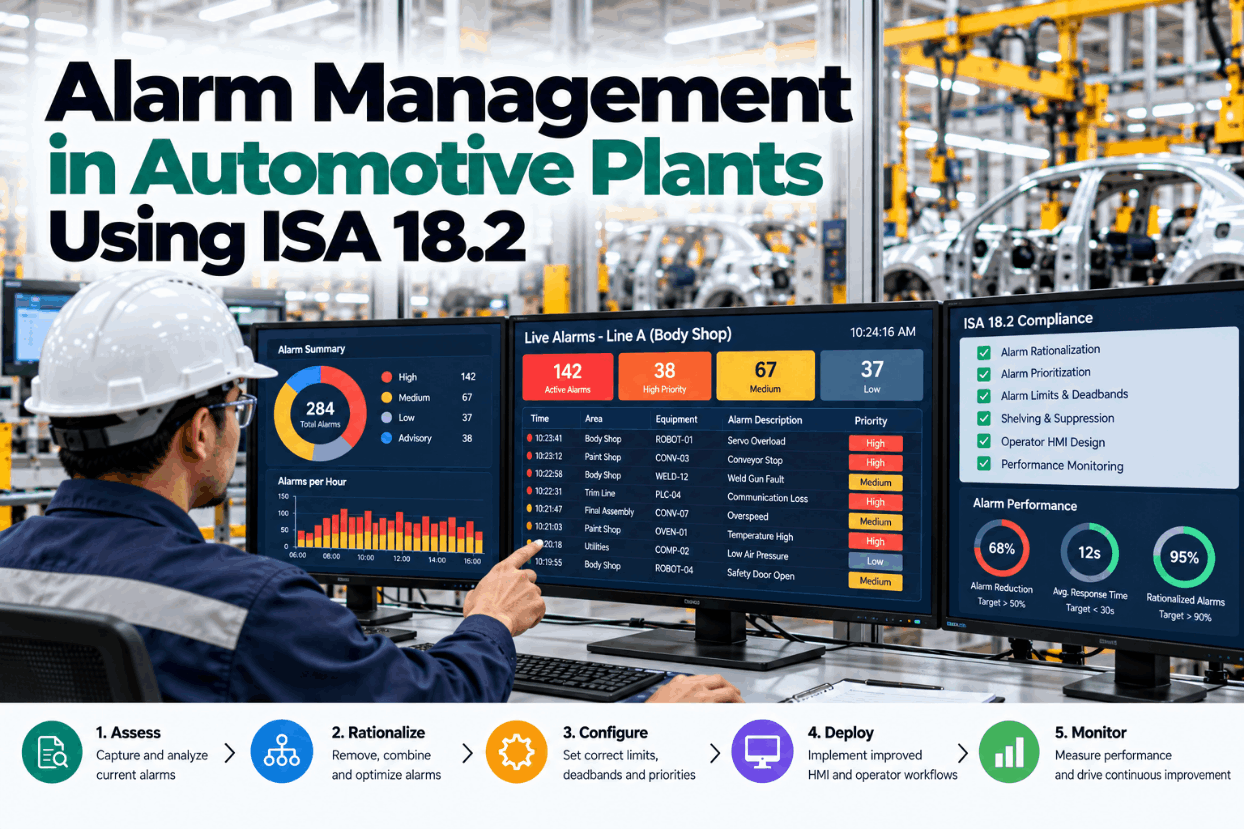
Alarm rationalization review aligned to recognized industry practice
A copilot trained on your plant's own upset history and response procedures
Real-time deviation diagnosis correlated against known signatures
Automatic event logging for post-incident review and training
Console integration so guidance appears where operators already work
Rollout Timeline
Weeks 1-3: Alarm system audit and rationalization review
Weeks 4-6: Copilot training on historian and procedure data
Weeks 7-8: Console integration and operator training
FREQUENTLY ASKED QUESTIONS
What Operations Teams Ask About ASM Copilots
Does this replace the need for proper alarm rationalization first?
No, and this order matters: a copilot layered on top of an unrationalized alarm system still has to work with the same underlying noise problem, since a large share of configured alarms fail to meet the actual definition of an alarm in the first place, something targeted at the operator that requires a timely response to an actual abnormal condition. Rationalization done properly, following recognized practices like those codified in ANSI/ISA-18.2, removes a huge amount of that structural noise, and the copilot then adds real-time prioritization and guided response on top of an already cleaner foundation rather than trying to compensate for a fundamentally noisy system.
Book a demo to see how rationalization and the copilot work together in the rollout sequence.
Can operators actually trust an AI recommendation during a genuine safety-critical event?
The copilot is built to support operator decision-making, not replace it, which means every recommendation is grounded specifically in your plant's own documented procedures and prior successful responses rather than a generic suggestion, and the operator retains full authority to follow, modify, or disregard the guidance based on their own judgment and situational awareness. This is a deliberate design choice, since abnormal situation management has always depended on human judgment for the final call, and the goal is giving that judgment better, faster information, not removing it from the loop.
Contact our support team to review how recommendations are grounded and how operator override works.
How does the copilot actually rank which alarms matter most during a flood?
Ranking is based on the actual process significance of the deviation, how far a variable has moved from its safe operating range, how quickly it's trending, and what it typically precedes based on historical upset patterns, rather than relying solely on the static priority level an alarm was originally configured with, which often doesn't reflect the real urgency in a specific evolving situation. This dynamic ranking is what surfaces the handful of alarms that genuinely need attention out of a flood that might otherwise contain a hundred or more simultaneous entries.
Book a demo to see the ranking logic applied against a real historical upset from your own plant.
What kind of historical data does the copilot actually need to be useful?
Historian data covering past process upsets and deviations, along with whatever documented response procedures already exist, gives the copilot the foundation it needs to recognize deviation signatures and ground its recommendations in what's actually worked before at your specific plant. Plants with a longer, well-documented history of past events and their resolutions will see a copilot with richer pattern recognition from day one, but even a more limited starting history combined with your existing procedure documentation is enough to provide real value while the system continues learning from new events as they occur.
Contact our support team to review what historian and procedure data you currently have available.
How does event logging actually help beyond just documentation for compliance?
Automatic, complete event logging serves compliance and incident review needs, but its ongoing operational value comes from feeding directly back into operator training and into the copilot's own pattern recognition, since a genuinely well-documented past event becomes a training scenario for newer operators and a data point that sharpens future deviation diagnosis for similar situations. Manually reconstructed event logs, by contrast, are frequently incomplete or inconsistent depending on who compiled them and how much time passed before the compilation happened, which limits how useful they actually are for either purpose.
Book a demo to see how a logged event feeds into operator training material.
GUIDED RESPONSE FROM THE FIRST SIGN OF TROUBLE
Give Your Operators Clarity in the Moments That Matter Most
iFactory's AI copilot prioritizes alarms, diagnoses deviations, and recommends the right response in real time, so an abnormal situation gets handled before it becomes a genuine incident.