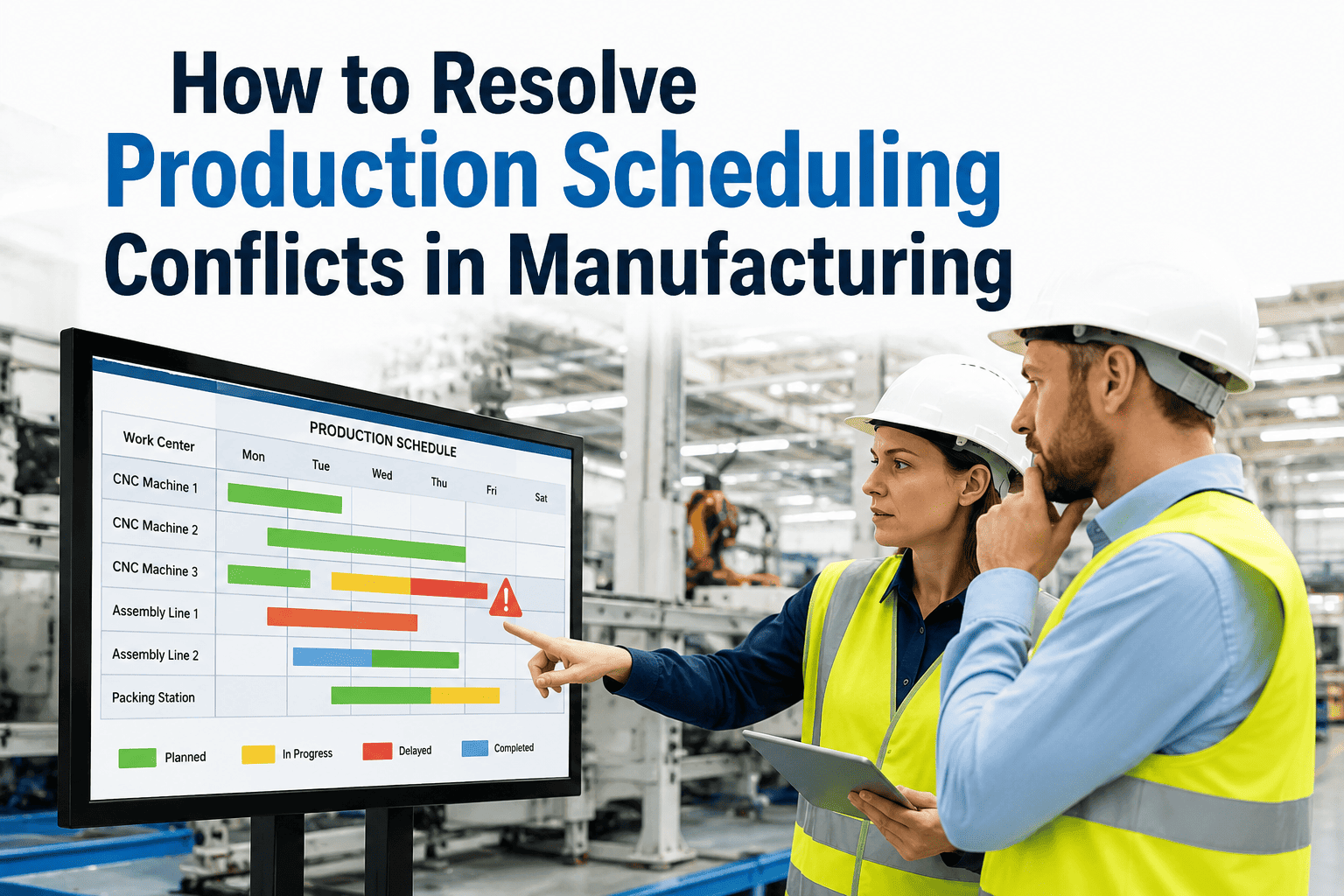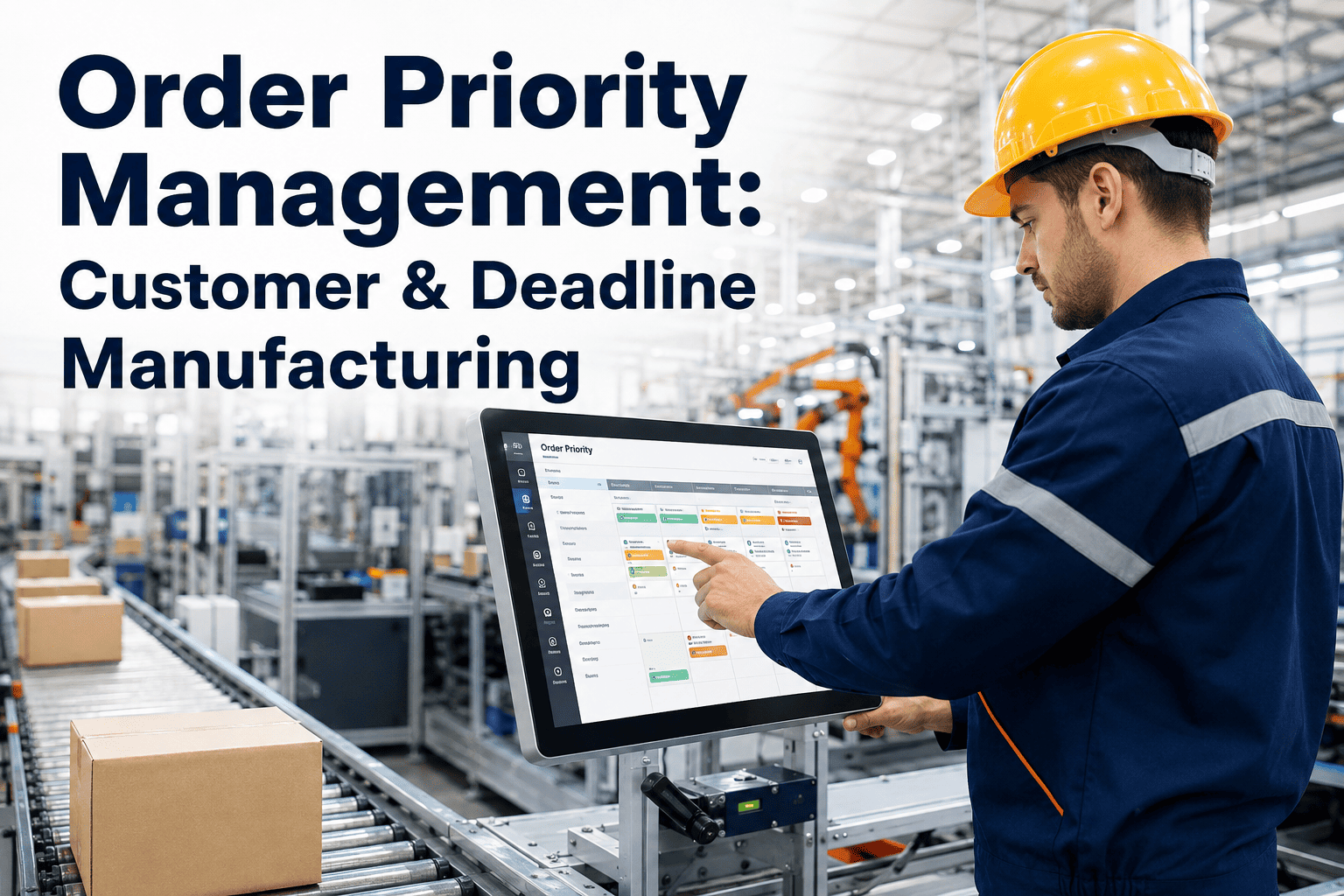
Every account manager believes their customer is the priority one, and on a bad week the loudest phone call wins the schedule slot regardless of what the actual contract terms or margin profile say. Without a documented, consistently applied priority system, order sequencing quietly becomes a popularity contest between whoever escalates hardest, which erodes trust with the steady customers who never call to complain and just watch their deliveries slip instead. iFactory's AI-driven priority engine applies a documented rule set to every order automatically, and you can book a demo to see it built around your own customer tiers and contract terms.
The Squeaky Wheel Should Not Be Setting Your Production Schedule
iFactory applies your documented customer tiers, contract terms, and deadline rules to every order automatically, so priority decisions are consistent whether or not the customer happens to call that day.
Inconsistent Priority Decisions Quietly Damage Your Most Reliable Customer Relationships
The customers who never escalate are frequently the ones absorbing the cost of an informal priority system, because their orders get bumped for whoever raised their voice most recently. The figures below reflect how often this pattern shows up once plants actually audit their order sequencing history.
Five Factors a Documented Priority System Should Actually Weigh
A useful priority framework combines several factors rather than relying on any single one, because contract terms alone or deadline proximity alone each produce distortions if used in isolation.
Contractual Delivery Commitments
Formal service level agreements and contractual delivery windows should carry weight proportional to the penalty or relationship risk tied to missing them.
Deadline Proximity
Orders genuinely closer to their required ship date warrant higher sequencing priority, but only relative to other legitimately time-sensitive orders.
Customer Tier and Lifetime Value
A formally defined customer tier structure, reviewed periodically rather than left to informal reputation, keeps this factor from becoming arbitrary.
Order Size and Margin Profile
Larger or higher-margin orders can reasonably carry more scheduling weight, provided the rule is applied transparently rather than case by case.
Downstream Dependency
An order feeding directly into another customer's production line may warrant elevated priority regardless of its own size, since a delay compounds downstream.
Turn Your Informal Priority Logic Into a Documented, Automated Rule Set
iFactory helps formalize the priority factors your best planners already weigh intuitively, then applies them consistently across every order and every shift. Book a demo and map it against your own customer tiers.
From Weighted Rules to a Consistently Sequenced Schedule
iFactory's priority engine scores every order against your weighted rule set continuously, rather than requiring a planner to manually apply the logic every time a new order or disruption enters the schedule.
Rule Configuration
Your customer tiers, contract terms, and priority weightings are configured into the engine, reflecting the actual policy your business wants applied.
Continuous Order Scoring
Every order in the schedule is scored against the rule set in real time, so priority reflects current conditions rather than a stale ranking from order entry.
Automatic Sequencing
The schedule sequences orders according to their current priority score, automatically adjusting when a new high-priority order enters or a deadline shifts.
Transparent Override Trail
When a planner manually overrides the automated priority, the reason is logged, building a transparent record for future policy review rather than a hidden exception.
Informal Priority Decisions vs a Documented, Automated System
The table below compares what happens under an informal, escalation-driven priority process against a documented system applied consistently by iFactory's engine.
| Dimension | Informal / Escalation-Driven | iFactory Documented System |
|---|---|---|
| Basis for Priority | Whoever escalates most recently or loudest | Weighted, documented rule set |
| Consistency Across Shifts | Depends on which planner is on duty | Same rule applied regardless of shift |
| Customer Trust | Erodes for low-escalation, high-value accounts | Protected through transparent, fair sequencing |
| Auditability | Rarely documented after the fact | Full override trail with logged reasoning |
| Response to New Orders | Manual reassessment, often delayed | Automatic real-time rescoring |
Outcomes After Moving to a Documented, Automated Priority System
These figures reflect results from facilities that replaced informal, escalation-driven order sequencing with iFactory's documented priority engine.
Questions Sales and Operations Teams Ask About Priority Management
Give Every Customer the Same Fair, Documented Priority Logic
iFactory's AI applies your weighted priority rules to every order automatically, protecting the reliable customers who never call to complain. Book a demo and see it built around your own tiers.