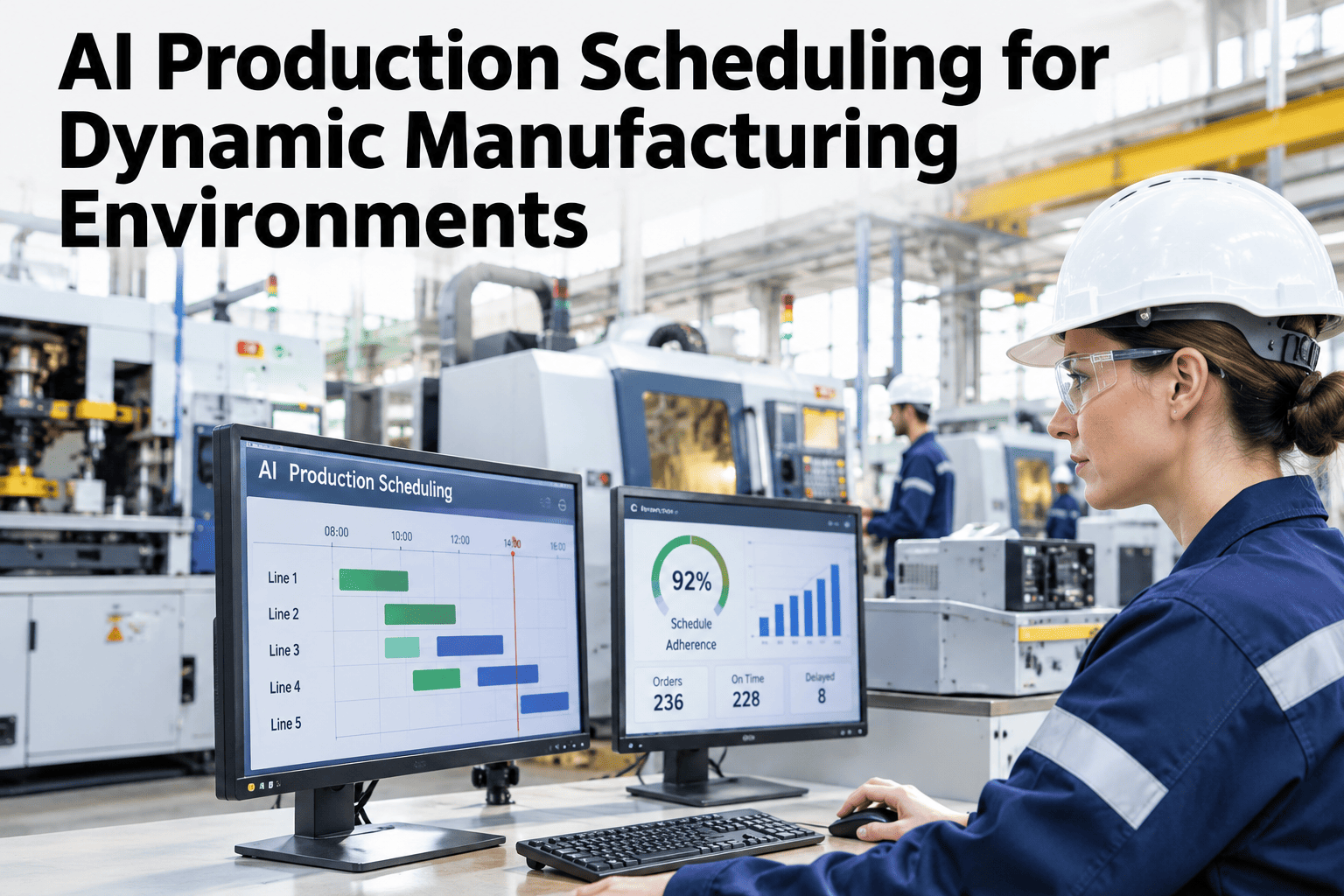
A static schedule built Monday morning is often obsolete by Monday afternoon — a machine goes down, a material shipment is late, a rush order arrives, and the plan that took hours to build no longer matches reality. AI production scheduling rebuilds that plan continuously, weighing machine availability, material constraints, maintenance windows and new orders together, in seconds rather than hours. Documented deployments report scheduling time reductions as high as 96% and throughput gains in the 20% range once dynamic rescheduling replaces a static, manually rebuilt plan (C3 AI customer case studies, 2026). You can see dynamic rescheduling run against your own constraints with our team.
The Schedule That Rebuilds Itself When the Plant Doesn't Cooperate
iFactory, an on-premise AI platform for AI production scheduling, continuously re-evaluates machine availability, material constraints and order priority, so the plan on screen always matches the plant on the floor.
What Makes Production Scheduling "Dynamic" Rather Than Static?
A static schedule is built once per period — often weekly or daily — and held until the next planning cycle, regardless of what actually happens on the floor in between. Dynamic scheduling re-evaluates the plan continuously against live conditions, so a machine breakdown, a late shipment, or a rush order triggers an automatic replan instead of waiting for the next manual cycle.
Four Constraints a Dynamic Scheduler Balances Together
What Dynamic Scheduling Delivered in One Documented Case
A global contract manufacturer operating across 30 countries relied on first-in-first-out and manual schedule adjustments, which could not adapt to real-time disruptions like material shortages or shifting capacity. After deploying AI-driven scheduling across six production lines, the company unified data from ten disparate sources and achieved an estimated 2.8% revenue lift along with full production capacity utilization (C3 AI customer case study, 2026).
Test Dynamic Rescheduling Against Your Own Disruptions
Share a recent week of schedule changes and disruptions and see how a dynamic scheduler would have responded.
Book a Scheduling Demo Ask About Integration ScopeStatic Weekly Schedule vs Continuous Dynamic Rescheduling
| Dimension | Static Schedule | Dynamic Rescheduling |
|---|---|---|
| Update frequency | Once per planning cycle | Continuous, triggered by disruption |
| Disruption response | Manual rework, often hours | Automatic replan, often minutes |
| Rush order handling | Appended, disrupting the plan | Weighed against existing commitments |
| Planner role | Builds and rebuilds the schedule | Reviews and approves recommendations |
What a Production Planning Manager Would Check First
What Manufacturing Teams Ask About AI Production Scheduling
Let Your Schedule Keep Up With Your Plant
Book a session with iFactory AI to see dynamic production scheduling respond to your own machine, material and order data.
Book a Dynamic Scheduling Session Contact Our Support Team