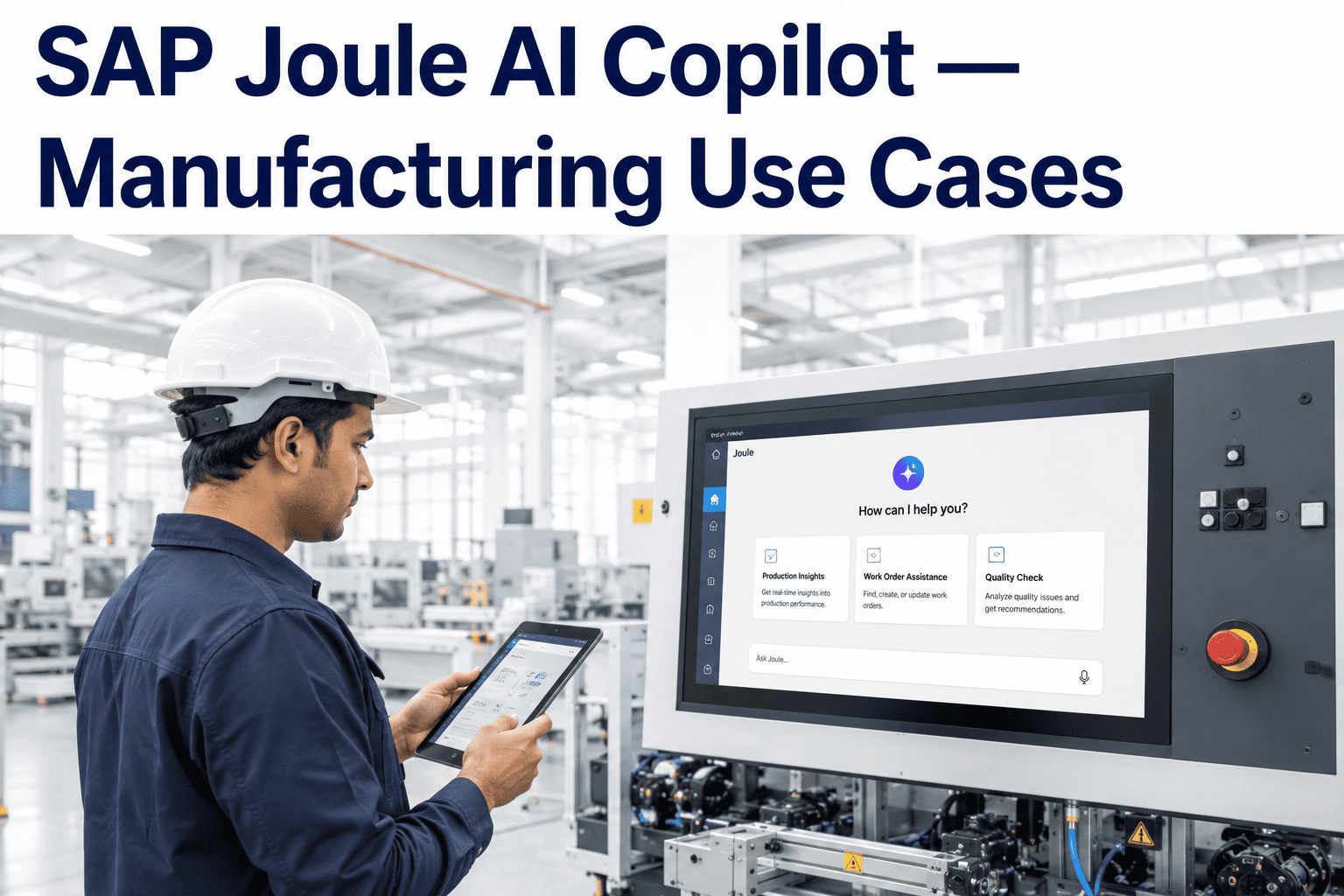
Most conversations about AI chatbots on the shop floor still default to customer service imagery, but the real traction in manufacturing is happening somewhere quieter — an operator troubleshooting a fault code at two in the morning without waiting for a supervisor, a technician pulling the exact torque spec from a buried SOP in seconds instead of digging through a binder, a maintenance planner asking a natural language question about a machine's history instead of running a database query. These are unglamorous use cases, but they save minutes that add up to hours of downtime avoided every week across a plant running multiple shifts. The plants seeing real value are not asking a chatbot to make decisions — they are using it to surface the right information, from the right document, at the moment someone on the floor actually needs it. iFactory AI's shop floor assistant connects to your SOPs, maintenance logs, and production data so operators get accurate, sourced answers instead of guessing or waiting. Book a Demo to see it running against your own documentation.
What AI Chatbots Actually Do on the Shop Floor — Beyond the Hype
iFactory AI's shop floor assistant answers operator troubleshooting questions, surfaces SOPs instantly, logs maintenance queries, and supports training — all grounded in your plant's own documentation and data.
Why Shop Floor AI Assistants Are Gaining Traction in Manufacturing
The average manufacturing operator loses meaningful time every shift searching for information that technically already exists somewhere in the plant — a fault code explanation buried in a PDF manual, a torque spec in a binder at the supervisor's desk, or the maintenance history of a machine that only lives in one engineer's memory. A conversational interface that can search across SOPs, manuals, and logs and return a sourced answer in seconds removes that friction without requiring anyone to learn a new system or change how they already work.
Five Practical Shop Floor Use Cases for AI Chatbots
The use cases below are drawn from actual production deployments, not speculative applications. Each one addresses a specific, recurring friction point that plants already experience daily, rather than introducing a new workflow operators need to be trained on from scratch.
Fault Code Troubleshooting
Operators describe a fault code or symptom in plain language and receive the relevant troubleshooting steps sourced directly from the equipment manual, without waiting for a supervisor or maintenance technician to be available.
SOP Lookup and Clarification
Standard operating procedures, torque specs, and changeover instructions are retrieved instantly by asking a natural language question, replacing the search through binders or shared drives that slows down changeovers.
Maintenance History Queries
Technicians ask about a specific machine's repair history, last preventive maintenance date, or recurring failure pattern and get a sourced summary instead of manually cross-referencing multiple maintenance logs.
New Operator Training Support
New hires ask process questions as they come up during on-the-job training, getting immediate, consistent answers instead of interrupting a trainer or waiting until the next scheduled session.
Natural Language Production Queries
Supervisors ask questions about shift output, downtime causes, or quality metrics in plain language and get an answer pulled directly from production data, without needing to build a report or query a database.
How a Shop Floor Assistant Gets Deployed — A Four-Step Timeline
Deploying an AI assistant on the floor does not require a lengthy IT project. Most plants move from kickoff to a working pilot within a few weeks, because the assistant is grounded in documentation that already exists rather than requiring new data collection.
Document and Data Connection
Existing SOPs, equipment manuals, maintenance logs, and production data sources are connected so the assistant has grounded, accurate source material from day one.
Safety Guardrail Configuration
Response boundaries are configured so the assistant surfaces documented information and escalates to a human for anything outside its sourced knowledge, rather than guessing.
Pilot on a Single Line or Shift
The assistant is piloted with a small operator group first, with usage and answer accuracy monitored closely before wider rollout across additional lines or shifts.
Plant-Wide Rollout and Refinement
Based on pilot usage patterns, the assistant is expanded plant-wide, with document coverage and response tuning continuously refined from real operator questions.
Generic Chat Tools vs. a Purpose-Built Shop Floor Assistant
Not every AI chat interface is appropriate for a production environment. The comparison below highlights why a general-purpose consumer chatbot behaves very differently from a system purpose-built for manufacturing use with proper safety guardrails.
- Answers generated from general internet knowledge, not your plant's actual SOPs
- No connection to your maintenance logs or production data
- No audit trail of what was asked, answered, or by whom
- No escalation path when a question falls outside safe or known territory
- Answers sourced directly from your own SOPs, manuals, and logs
- Connected to live maintenance history and production data
- Full query and answer audit trail logged for compliance and review
- Configured to escalate to a human for anything outside sourced knowledge
What Operations Leaders Say About Shop Floor AI Assistants
Our biggest concern going in was operators getting confidently wrong answers from a chatbot. What actually happened is closer to a smart search engine for our own documentation — it points to the exact SOP section and cites where the answer came from, and it tells the operator plainly when it does not have a documented answer instead of guessing. Night shift troubleshooting calls to our on-call supervisor dropped noticeably in the first month, which was the outcome we cared about most.
Give Every Operator Instant Access to the Answers Already in Your Documentation
iFactory AI's shop floor assistant is grounded in your own SOPs, manuals, and maintenance data, with safety guardrails that escalate to a human when the answer isn't documented.
AI Chatbots for Manufacturing — Frequently Asked Questions
What is a shop floor AI assistant and how is it different from a general chatbot?
A shop floor AI assistant is a conversational interface grounded specifically in your plant's own SOPs, equipment manuals, maintenance logs, and production data, rather than general internet knowledge. Unlike a consumer chatbot, it is configured with safety guardrails so it only answers from documented, sourced material and escalates to a human when a question falls outside that scope, which is essential in an environment where a confidently wrong answer could affect safety or quality.
Can operators trust the answers a shop floor assistant provides?
The assistant is designed to cite the specific SOP section, manual page, or log entry that supports each answer, so operators can verify the source rather than relying on an unexplained response. When a question falls outside the scope of documented material connected to the system, it is configured to say so plainly and escalate rather than generate a plausible-sounding but unverified answer.
How long does it take to deploy a shop floor assistant?
Most plants move from initial document connection to a working pilot within a few weeks, since the assistant draws on SOPs, manuals, and logs that already exist rather than requiring new data collection or extensive custom development. A phased rollout starting with a single line or shift is typical before expanding plant-wide. Contact Support for a deployment timeline specific to your documentation setup.
What safety guardrails are in place to prevent incorrect guidance?
Response boundaries are configured so the assistant only surfaces information sourced from connected documentation, with explicit escalation to a human supervisor or technician for any question that falls outside that scope. Every query and response is logged for audit and review, which allows operations teams to continuously monitor accuracy and refine document coverage based on real usage patterns.
Does the assistant work with our existing maintenance and production systems?
iFactory AI's shop floor assistant connects to common maintenance management systems, historian databases, and document repositories already in use across most manufacturing plants. Book a Demo to confirm compatibility with your specific systems and see the assistant configured against a sample of your own documentation.