Most condition monitoring programs do not fail because the sensors were wrong, they fail because the plant tried to monitor everything at once, spread thin across a technology stack nobody had time to properly learn, with alerts flowing to nobody in particular. A program that starts narrow, on the assets that actually justify the investment, with one monitoring technology mastered before adding a second, tends to survive its first year and grow from there. A program that starts broad tends to quietly stop getting attention within six months. iFactory helps plants design the starting scope, asset selection, and rollout sequence that turns condition monitoring into a program that lasts rather than a pilot that fades. You can book a demo to see a starting scope built around your own critical assets.
CONDITION MONITORING · PREDICTIVE MAINTENANCE · PROGRAM LAUNCH
Start Small, Start Right, and Build a Program That Actually Lasts
iFactory guides the critical asset selection, technology choice, and analyst training that separates a condition monitoring program from a sensor pilot nobody looks at after month three.
1
Select Assets
Criticality-ranked shortlist
›
2
Choose Technology
Matched to failure modes
›
3
Deploy and Baseline
Establish normal operating ranges
›
4
Train Analysts
Build interpretation skill
›
5
Scale
Expand from proven results
WHY MOST PROGRAMS STALL EARLY
Sensors Get Installed, Then Nobody Owns What Happens Next
The technical part of condition monitoring, installing sensors, streaming vibration or thermal data, is often the easiest part of the project. The harder part is building the organizational habit of someone actually reviewing that data, understanding what a trend shift means, and acting on it before a failure occurs. Programs that skip the analyst training step tend to generate data that nobody trusts enough to act on.
70%+
Estimated share of new condition monitoring rollouts that lose momentum within the first year without a dedicated review process
5-10%
Typical share of plant assets that account for most unplanned downtime, the natural starting point for a program
Weeks
Baseline period generally needed before alert thresholds become meaningful rather than noisy
STEP ONE, ASSET SELECTION
Start With the Assets Where Failure Actually Hurts
Not every asset deserves condition monitoring on day one, and trying to cover the whole plant at once is one of the most common reasons programs never get past the pilot stage. Criticality should weigh consequence of failure, not just failure frequency.
Downtime Impact
Assets whose failure stops an entire line or bottleneck process, not just a single station.
Repair Cost and Lead Time
Equipment with expensive parts or long lead times where early warning meaningfully changes the outcome.
Safety Consequence
Assets where failure creates a safety risk to operators, which justifies monitoring regardless of cost.
Failure History
Equipment with a documented pattern of unplanned failures that a maintenance team already knows about.
Get a Criticality-Ranked Shortlist for Your Plant
iFactory works through your asset list to identify where condition monitoring will actually move the needle first. Book a demo to build a shortlist for your own equipment.
STEP TWO, MATCH TECHNOLOGY TO FAILURE MODE
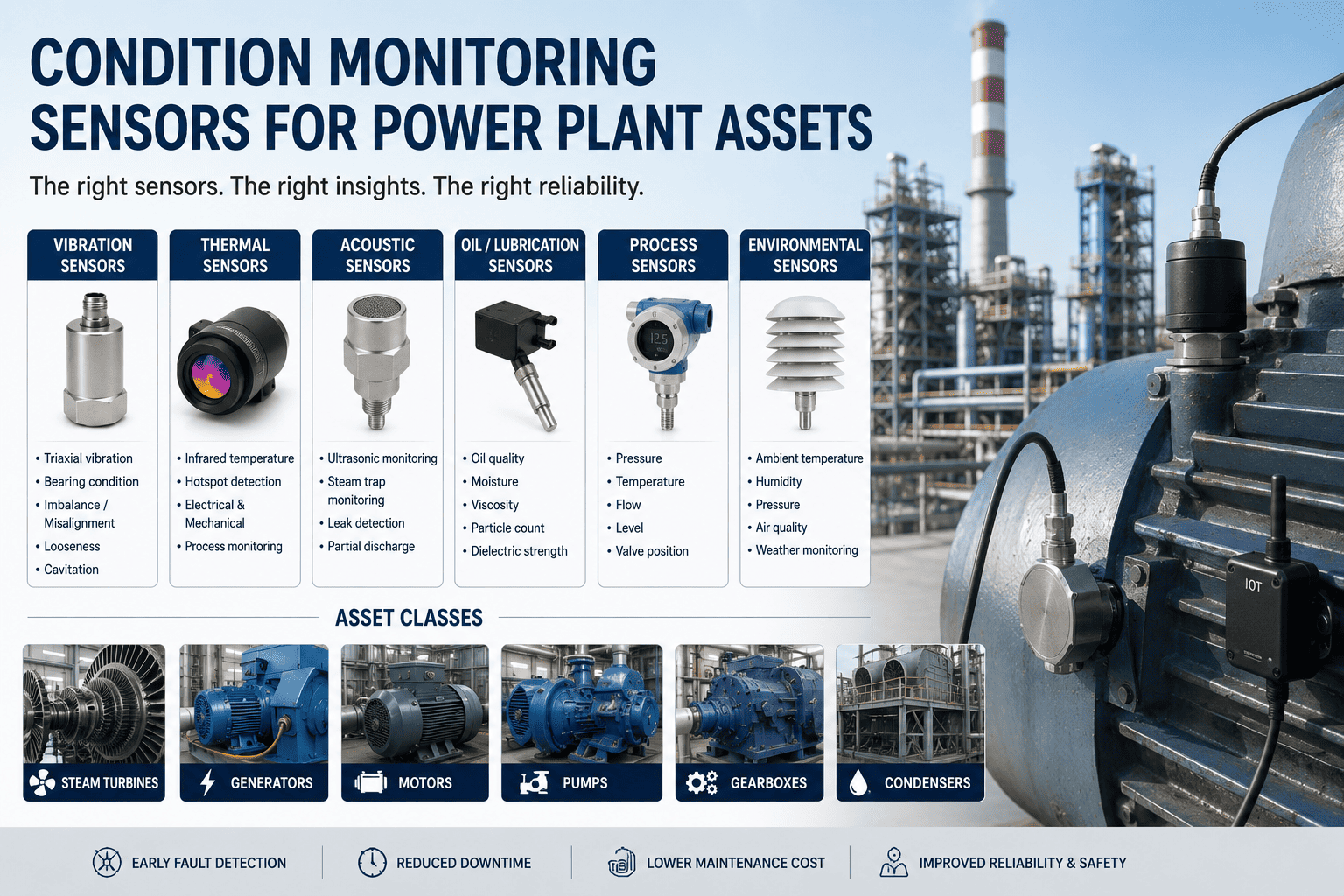
Different Monitoring Technologies Catch Different Kinds of Failure
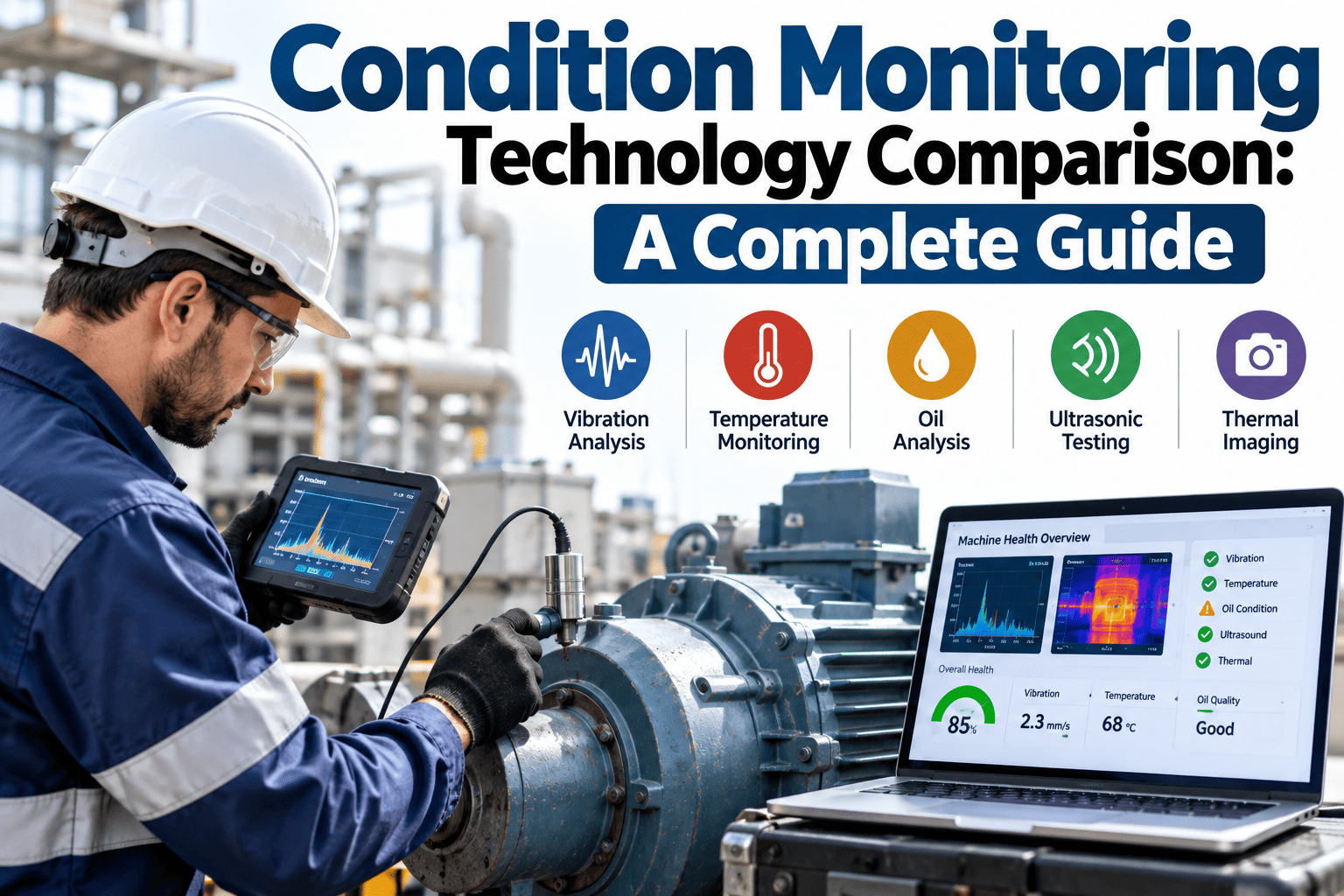
The most common early mistake is choosing a monitoring technology based on what a vendor is selling rather than what failure mode the asset is actually prone to. Vibration analysis and oil analysis, for example, catch very different things.
| Technology |
Best Detects |
Typical Assets |
| Vibration Analysis |
Bearing wear, imbalance, misalignment |
Rotating equipment, motors, pumps, fans |
| Thermal Imaging |
Overheating, electrical connection issues |
Electrical panels, motors, bearings |
| Oil Analysis |
Contamination, wear particles, degradation |
Gearboxes, hydraulic systems, compressors |
| Ultrasonic and Acoustic |
Air or fluid leaks, early bearing friction |
Compressed air systems, steam traps, valves |
STEP THREE, PITFALLS TO PLAN AROUND
Mistakes That Quietly Kill Momentum in the First Year
A handful of avoidable mistakes account for most programs that lose steam before they prove their value, and most of them are organizational rather than technical.
No Defined Owner for Alert Review
Alerts arrive but nobody has explicit responsibility to review and act on them, so they get ignored after the initial novelty fades.
Skipping the Baseline Period
Thresholds set before normal operating ranges are understood generate false alarms, eroding trust in the whole system quickly.
Trying to Cover Every Asset at Once
Spreading limited analyst time across too many assets means none of them get the attention needed to build confidence in the program.
No Path From Alert to Work Order
An alert that does not connect to maintenance scheduling requires a manual handoff that often gets dropped under normal workload pressure.
WHO SHOULD BE INVOLVED FROM DAY ONE
The Roles That Make a Program Stick
Condition monitoring works best as a cross-functional effort rather than a project owned entirely by one department.
Reliability Engineers
Lead asset criticality ranking and technology selection based on known failure modes.
Maintenance Technicians
Provide practical input on failure history and become the front line for acting on alerts.
Plant Operations Leaders
Sponsor the program and connect its results back to downtime and production metrics leadership tracks.
Data Analysts
Own trend review and threshold tuning as more asset history accumulates over time.
FREQUENTLY ASKED QUESTIONS
Questions Maintenance Leaders Ask Before Launching
How many assets should we start monitoring in the first phase?
Most successful programs start with somewhere between five and fifteen critical assets rather than attempting plant-wide coverage, giving the team enough scope to prove value without spreading analyst attention too thin to build real expertise. The exact number depends on available analyst time and how much downtime those assets historically cause.
Book a demo to determine a starting scope for your plant.
How long does the baseline period need to be before alerts are reliable?
A baseline period of several weeks is generally needed to capture normal operating variation, including different production conditions and load levels, before alert thresholds stop generating false positives and start reflecting genuine deviations. Rushing this step is one of the most common reasons early alerts get ignored.
Contact our support team to review baseline timelines for your specific assets.
Do we need in-house vibration or thermal analysis expertise to run this program?
Not necessarily from day one, many programs start with vendor or platform-assisted interpretation while building in-house analyst skill over time, though developing internal expertise generally improves long-term program ownership and response speed. The training step in the rollout sequence is specifically designed to build that capability gradually rather than requiring it upfront.
Book a demo to discuss training support options for your maintenance team.
How do condition monitoring alerts actually turn into scheduled maintenance work?
Alerts should route directly into your maintenance workflow, ideally generating or feeding a work order recommendation rather than requiring someone to manually notice an alert and separately create a ticket. This connection is often the difference between a program that prevents failures and one that just generates data nobody acts on in time.
Contact our support team to review integration options with your maintenance system.
When is the right time to expand the program to additional assets?
Expansion generally makes sense once the initial asset group has a stable baseline, a demonstrated catch or two that justified the investment, and an analyst review process that is functioning reliably, rather than on a fixed calendar timeline. Expanding before the first phase is solid tends to recreate the same overextension problem the phased approach was meant to avoid.
Book a demo to plan an expansion timeline once your first phase is running.
Build a Condition Monitoring Program That Outlasts the Pilot Phase
iFactory helps you select the right starting assets, match technology to failure mode, and build the review process that keeps a program running. Book a demo to start planning your rollout.