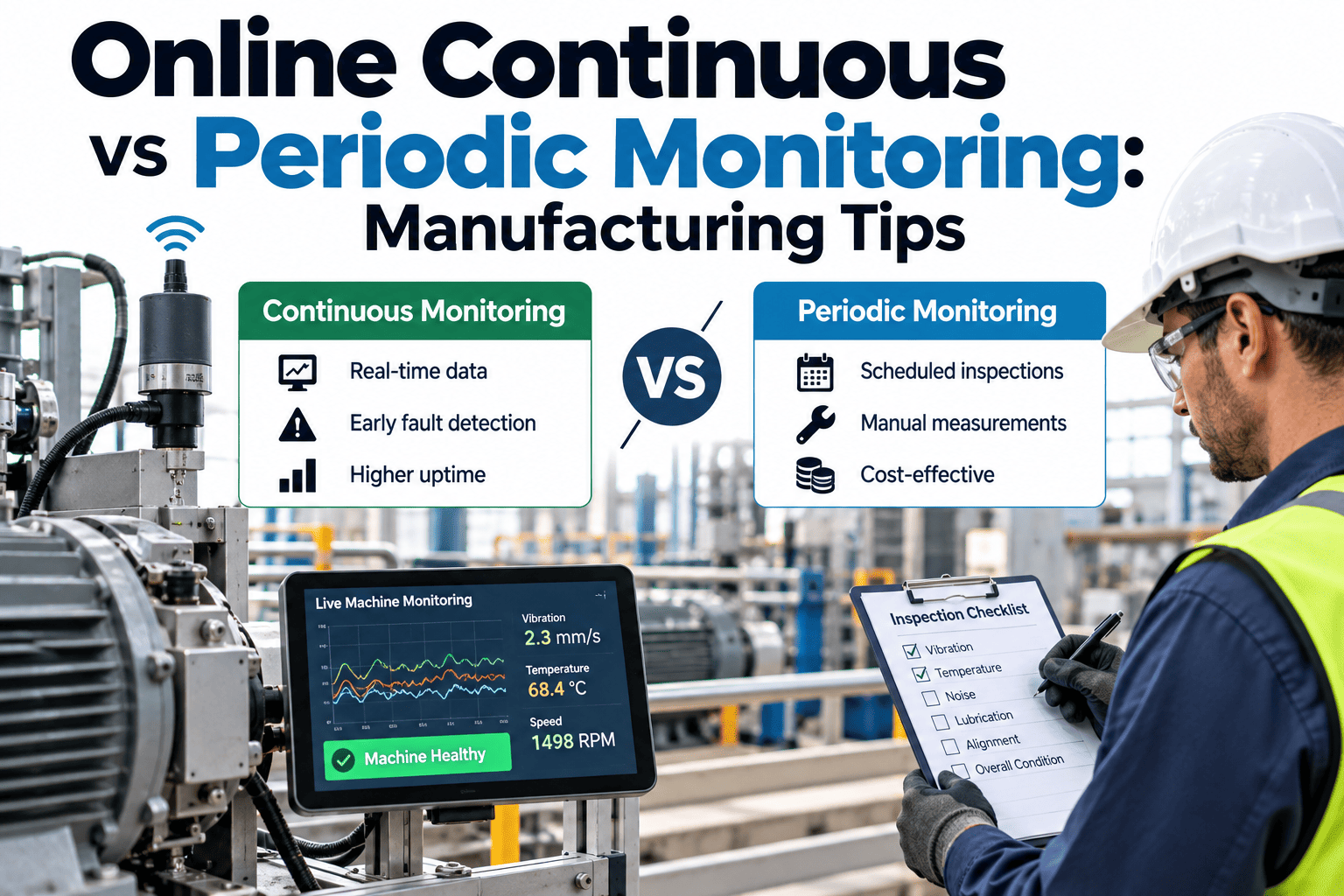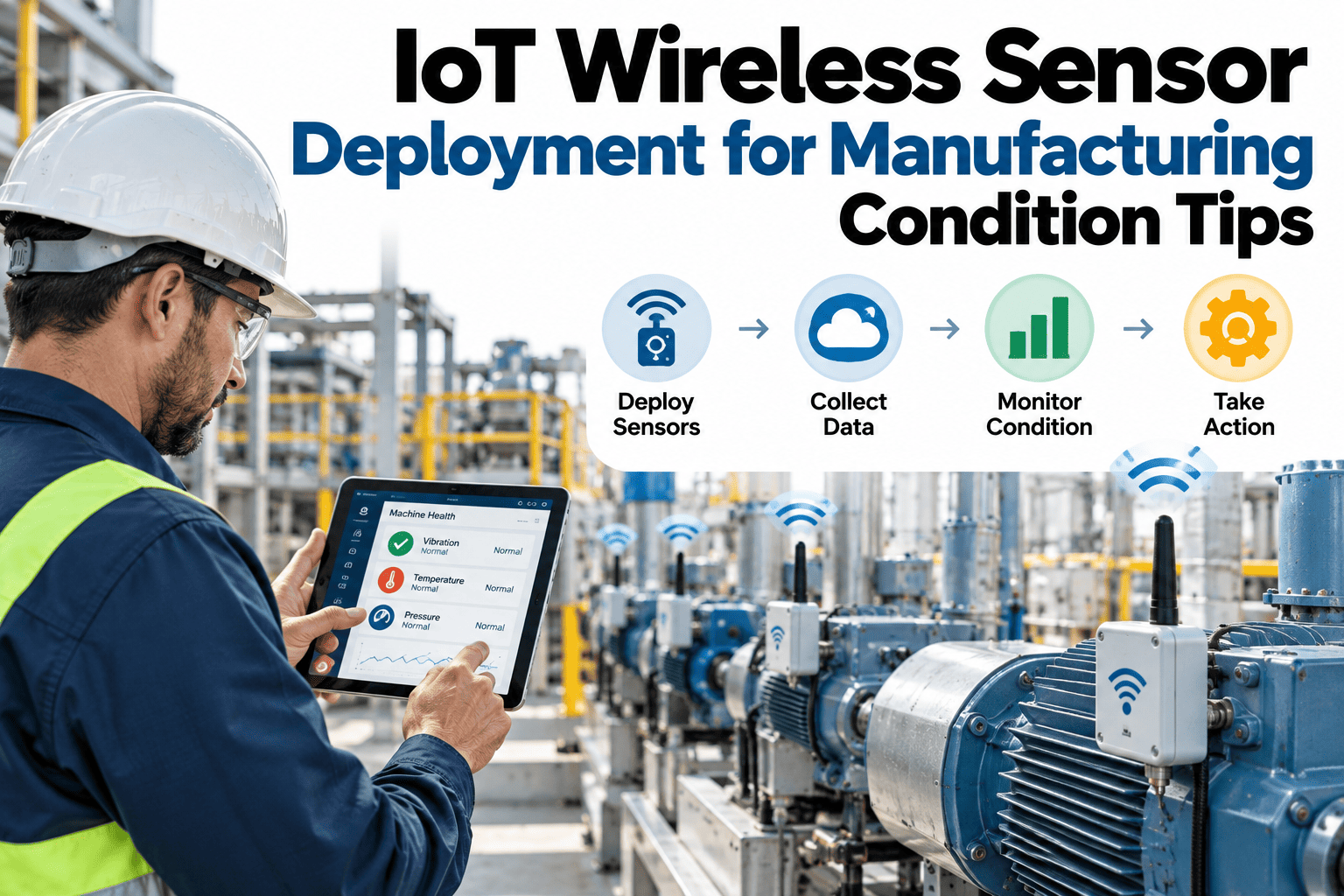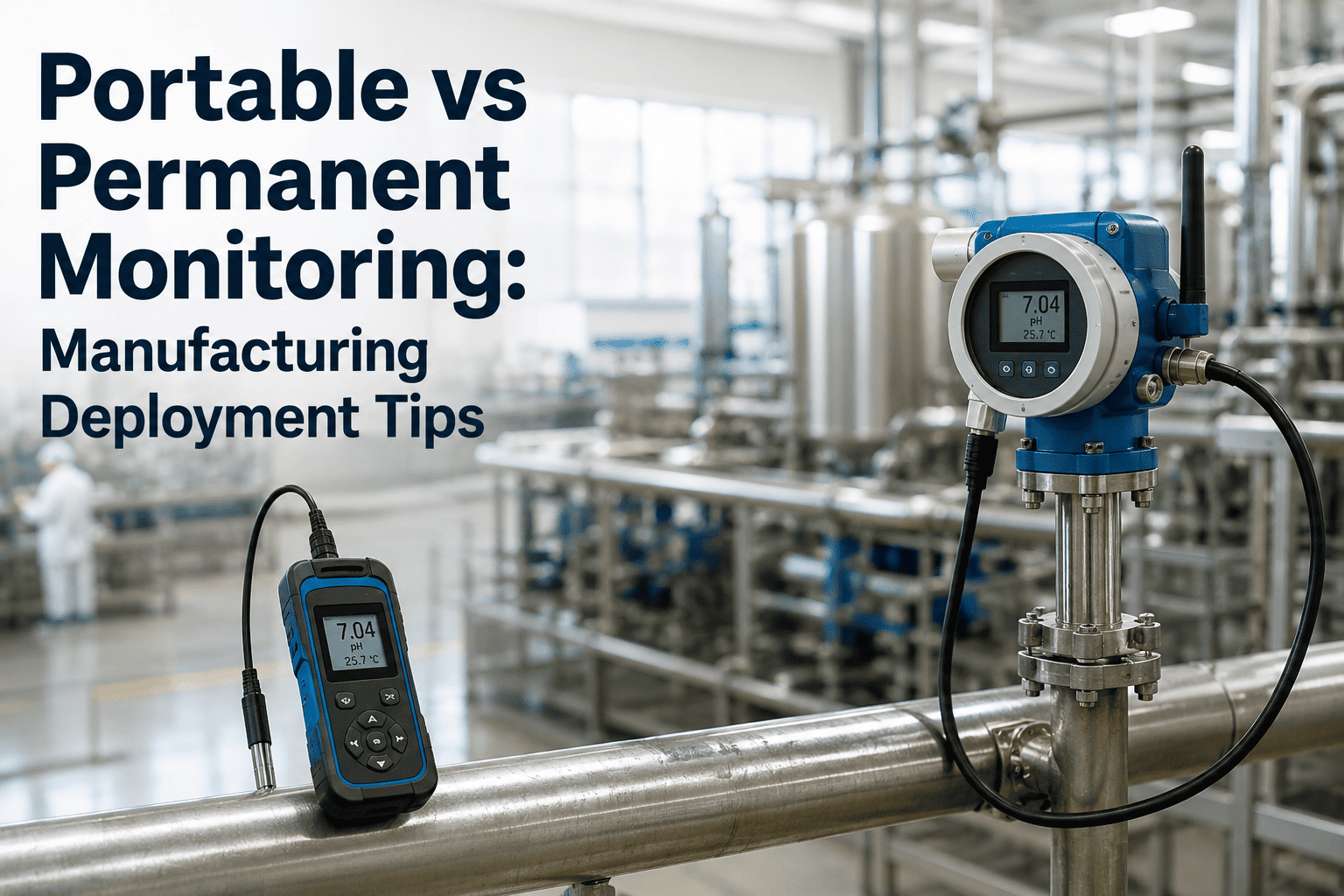
Reliability teams building out a condition monitoring program almost always face the same early decision: buy portable route-based equipment that one technician carries between assets, or install permanent online sensors that stream continuously. Neither answer is universally correct, and plants that treat this as an either-or choice usually end up either overspending on permanent sensors for low-risk equipment or missing early warning signs on assets that needed continuous coverage. Teams working through this decision can Book a Demo to review a deployment approach matched to their specific asset mix.
Two Fundamentally Different Coverage Models
Portable monitoring relies on a technician physically visiting each asset on a defined route, collecting readings at fixed intervals — weekly, biweekly, or monthly depending on the program. Permanent monitoring installs sensors directly on the asset with continuous data transmission, catching changes that develop between scheduled portable visits. The core tradeoff is coverage frequency versus deployment cost: permanent sensors see everything continuously but cost significantly more per asset to install, while portable routes cover far more assets per dollar but leave gaps between visits where a fast-developing fault can progress undetected.
When Portable Monitoring Is the Right Choice
Portable, route-based monitoring makes the most sense for assets where a developing fault typically progresses slowly enough that a scheduled visit interval — weekly or biweekly — still catches it with enough lead time to plan a repair. It also makes sense purely on cost grounds for lower-criticality assets, where the consequence of a missed early warning is inconvenient rather than severe, and where installing permanent sensors on every unit would consume a monitoring budget better spent elsewhere.
When Permanent Monitoring Justifies the Higher Cost
Permanent online monitoring earns its higher cost on assets where the consequence of a missed fault is severe enough that continuous coverage changes the risk calculation entirely. A bottleneck asset with no redundancy, a fast-developing fault mode like cavitation or electrical arcing, or equipment in a hazardous location where technician access for portable readings is itself a safety concern — these are the cases where the gap between scheduled visits represents genuine, unacceptable risk rather than a manageable tradeoff.
Cost and Coverage Side by Side
Laying the two approaches out directly against each other clarifies where each one earns its place in a monitoring program, and why most mature programs eventually settle on a hybrid mix rather than committing fully to one method across the entire plant.
| Factor | Portable Route-Based | Permanent Online |
|---|---|---|
| Per-asset cost | Lower — one collector covers many assets | Higher — dedicated sensor and transmitter per asset |
| Detection interval | Days to weeks between visits | Continuous, near real-time |
| Labor requirement | Ongoing technician time per route | Minimal after installation |
| Best-fit fault modes | Slow-developing mechanical wear | Fast-developing and safety-critical faults |
| Scalability | High — easy to add assets to an existing route | Lower — each asset requires dedicated hardware |
Designing a Hybrid Program That Actually Works
Most mature condition monitoring programs land on a hybrid model, but the mistake many plants make is treating the split as a one-time decision rather than something that evolves as data accumulates. An asset initially placed on a portable route might reveal a pattern of fast-developing faults over its first year of monitoring, making a strong case to upgrade it to permanent coverage. Building this review into the program from the start — rather than treating the initial portable-versus-permanent split as fixed forever — keeps the deployment mix aligned with what the plant actually learns about its own equipment.
Frequently Asked Questions: Portable vs Permanent Monitoring
What route interval is typical for portable condition monitoring?
Route intervals commonly range from weekly to monthly depending on asset criticality and known failure progression speed, with more critical or higher-risk assets on a shorter cycle within the portable population and lower-risk assets on a longer one. The right interval for a specific asset should be set based on how quickly its known fault modes typically progress from detectable to failure, not applied uniformly across every asset on the route. Teams building a route schedule can Book a Demo to review interval planning for their asset list.
Can portable monitoring data feed the same AI pattern recognition models as permanent sensors?
Yes — portable route data can feed the same underlying pattern recognition and trending models, though the analysis has to account for the gap between readings differently than continuous data does, since a trend built from weekly snapshots requires a different confidence approach than one built from continuous streaming data. Combining both data types into a single asset health view, rather than treating them as separate systems, gives the most complete picture across a hybrid deployment.
How do we decide which specific assets get upgraded from portable to permanent first?
The strongest upgrade candidates are assets that show either a documented history of fast-developing faults in the portable data, or assets where the production or safety consequence of a missed fault has increased since the original deployment decision was made — such as a line that lost redundancy after a related asset was decommissioned. Ranking upgrade candidates by combined failure consequence and observed fault progression speed produces a more defensible priority list than upgrading based on asset age or cost alone.
Does permanent monitoring eliminate the need for a technician entirely?
Permanent monitoring eliminates the routine data collection visit, but it does not eliminate the need for a technician to investigate and act on flagged alerts, verify sensor health periodically, and perform the physical inspection work that sensors alone cannot replace, such as checking for oil leaks or physical damage. The labor savings from permanent monitoring come from removing repetitive collection rounds, not from removing the human role in maintenance entirely.
Is there a minimum plant size or asset count where a hybrid program makes sense versus going all-portable or all-permanent?
Hybrid programs make sense almost as soon as a plant has more than a handful of monitored assets with meaningfully different criticality levels, since the whole rationale for hybrid deployment is matching investment to risk rather than applying one method uniformly. Very small asset populations with uniformly high criticality might reasonably go all-permanent, while very large populations of mostly similar low-risk equipment might start all-portable and add permanent sensors selectively as specific risks are identified. Contact iFactory Support for help scoping a deployment mix for a specific plant.