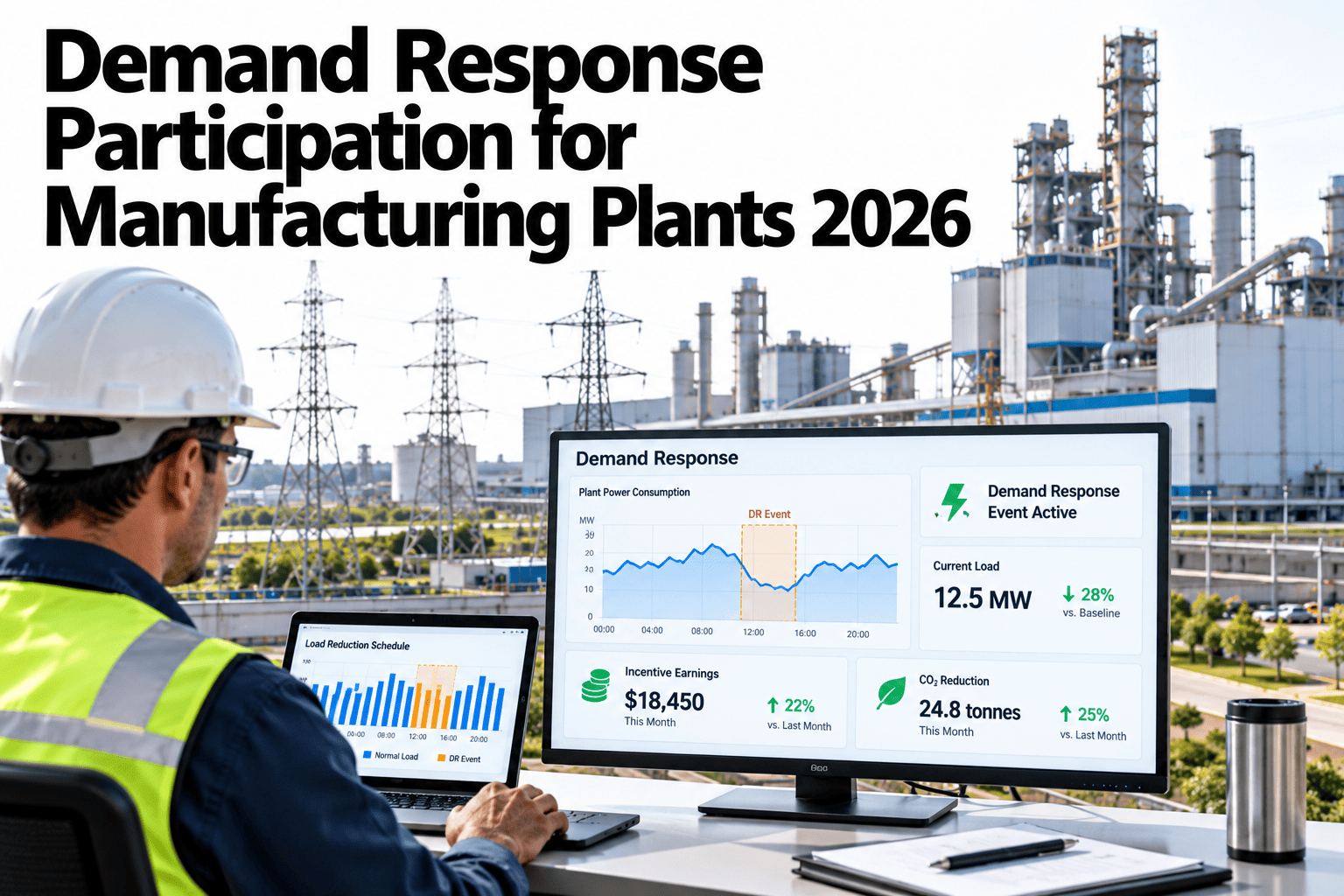
Getting paid to cut load sounds like free money until the first curtailment event lands during a scheduled production run and the plant has to choose between the payment and the order. Demand response revenue only works if the flexibility behind it is real, which means knowing in advance which loads can actually flex on short notice and which ones cannot be touched without a production consequence the payment doesn't cover. Programs, curtailment plans, and the honest cost of participation all have to line up before signing anything, and operations directors evaluating a program can assess their real curtailment capacity before committing to a contract.
The Payment Only Works if the Flexibility Behind It Is Real
iFactory AI identifies which loads can actually curtail on short notice, so a DR commitment matches what the plant can deliver without disrupting production.
Why Flexibility Has to Be Verified, Not Assumed
A load that looks interruptible on paper, such as a batch process between runs or a non-critical chiller, may not actually be free to curtail at the specific moment an event is called.
Events Don't Align With Idle Windows
A load that is genuinely flexible during a scheduled maintenance window may be mid-run when an actual curtailment call arrives.
Restart Costs Get Left Out
Some processes carry a real cost to shut down and restart, such as scrapped batches or extended ramp time, that offsets part of the DR payment.
Notice Windows Are Shorter Than Planning Assumes
Some programs call events with as little as ten to thirty minutes notice, which is not enough time to safely interrupt certain processes.
Comparing the Three Program Types
Each program type trades revenue potential against the firmness of the commitment required.
| Program Type | Call Frequency | Revenue Pattern | Commitment Level |
|---|---|---|---|
| Capacity Market | Rarely called, often zero events in a year | Steady payment for standing by | Firm, with penalties for non-performance when called |
| Economic / Price-Responsive | Participant chooses when to respond to price signals | Variable, tied to actual participation | Voluntary, no penalty for sitting out an event |
| Emergency / Interruptible | Called only during genuine grid emergencies | Typically higher per-event, but infrequent | Firm, often with short notice and strict compliance |
Economic programs are usually the lowest-risk starting point for a plant that has not yet verified its real curtailment capacity, since participation stays voluntary while the data to support a firmer commitment is built.
Model a Real Event Against Your Own Load Data
Bring your interval and process data to a 30-minute session and see which loads would have genuinely been available during a past event window.
Building a Curtailment Plan That Holds Up
A plan that is specific about which equipment, by what amount, and with what notice, is far more reliable than a general commitment to reduce load.
What Happens During a Called Event
The sequence from notification to verified performance is where most of the operational risk in a DR program actually lives.
The plants that stay enrolled in a demand response program for years, rather than dropping out after one bad event, are the ones that verified their flexibility with real interval and process data before committing to a firm program. A capacity or emergency program's non-performance penalty can erase several years of payments from a single missed event, which makes an honest flexibility assessment worth more upfront than the enrollment bonus most programs advertise.
Frequently Asked Questions
What happens if we can't curtail during a called event?
Firm programs, such as capacity and emergency types, typically carry a non-performance penalty that can offset or exceed the payments earned, which is exactly why verifying real flexibility before enrolling matters more than the advertised revenue figure. Review penalty structures for programs in your region in a short session.
How much notice do we actually get before an event?
It varies significantly by program, from day-ahead notice on some economic programs down to ten or thirty minutes on certain emergency programs, so matching a program's notice window to your process's actual response time is a core part of choosing the right one. Ask the iFactory AI team to review notice windows for your region.
Which loads in a plant are typically good DR candidates?
Equipment with natural idle windows, thermal storage capacity, or processes that can shift timing without spoiling a batch tend to be the strongest candidates, while continuous processes with high restart costs are usually poor fits for firm commitments. Identify your plant's genuine curtailment candidates in a demo.
Should we start with an economic or a capacity program?
An economic program is generally the lower-risk entry point, since participation is voluntary and there is no penalty for sitting out an event, which gives a plant time to build confidence in its real flexibility before taking on a firm capacity commitment. Compare program options for your load profile on a call.
How is curtailment performance actually verified?
Interval meter data during the event window is compared against an established baseline of what the plant would have consumed without curtailing, and that comparison is what both proves performance for payment and protects against a disputed penalty. Get guidance on baseline methodology from the support team.
Know What You Can Actually Curtail Before You Commit
iFactory AI verifies real load flexibility against your own interval and process data. Book a walkthrough before enrolling in a DR program.