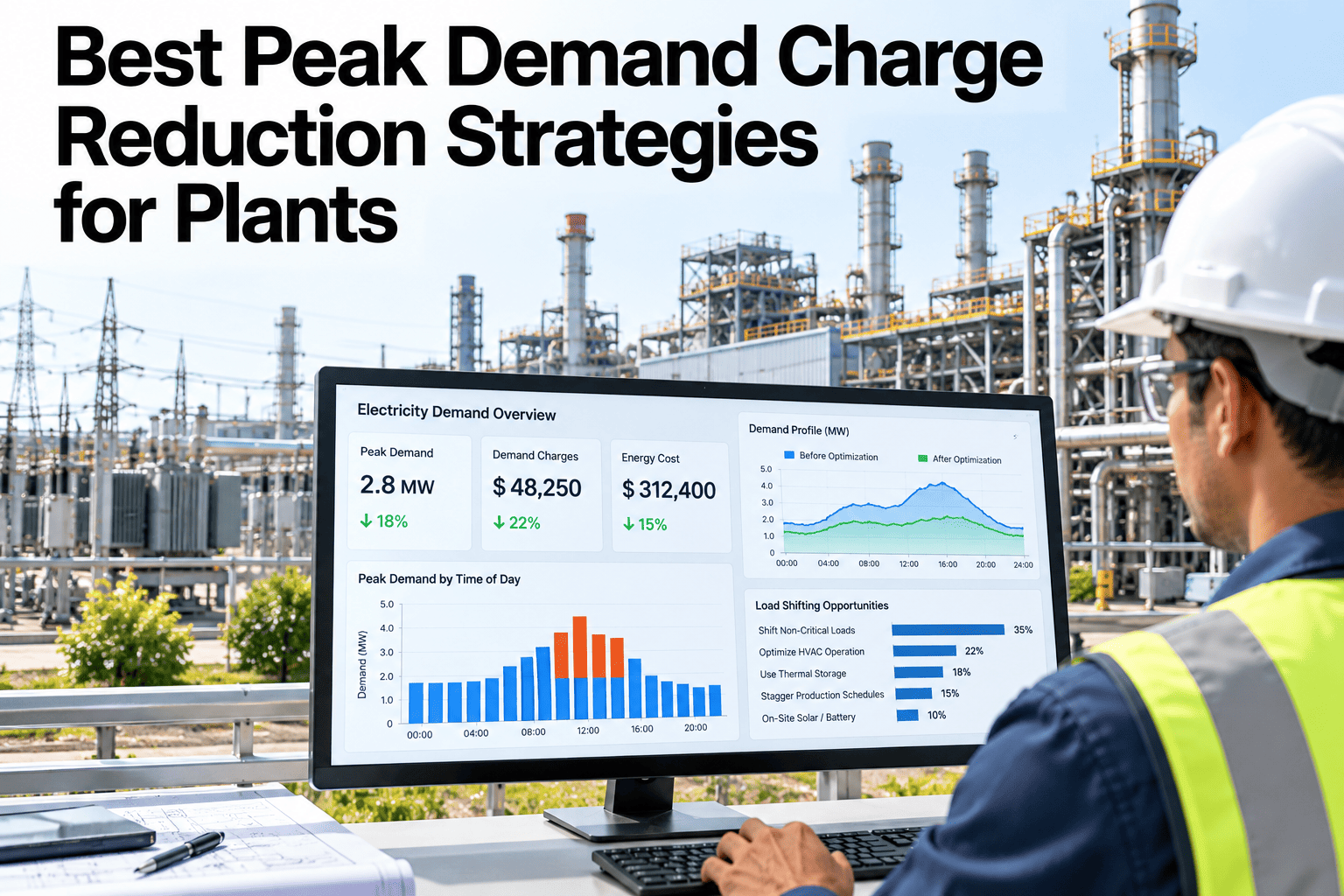
Most utility bills charge for energy twice: once for the kWh consumed over the month, and again for the single highest fifteen-minute interval of demand, measured in kW, that the plant hit at any point during that billing period. That second charge is set by a window most plants are not actually watching in real time, which means a compressor startup overlapping with a shift change can set a demand peak that inflates the bill for the next month regardless of how efficient the rest of operations were. Reducing that peak through load staging and real-time alerts, without cutting output, is what a working demand management setup looks like against your own interval data.
The Bill Is Set by Fifteen Minutes You Probably Weren't Watching
iFactory AI tracks interval demand in real time, alerts before a new peak is set, and sequences equipment starts to keep load under the threshold.
How a Demand Charge Actually Gets Set
A demand charge is not based on average usage. It is based on the single highest interval, typically fifteen or thirty minutes, reached during the entire billing cycle, and some utilities apply a ratchet clause that carries a portion of that peak forward into future months.
One Interval Sets the Whole Bill
A single fifteen-minute spike, even if the rest of the month ran well below it, becomes the number the demand charge is calculated against.
Equipment Starts Overlap by Accident
Compressors, chillers, and process heaters starting within the same interval, often around a shift change, stack their inrush demand together.
Ratchet Clauses Extend the Damage
Some tariffs bill a percentage of the annual peak demand every month for up to a year, meaning one bad interval affects far more than one invoice.
Three Approaches to Managing the Peak
Each strategy trades off differently between cost, complexity, and how much it touches production itself.
| Strategy | How It Works | Production Impact |
|---|---|---|
| Load Shedding | Non-critical equipment is temporarily shut off when demand approaches a threshold | Requires equipment that can tolerate brief interruption |
| Load Staging | Equipment starts are sequenced so inrush demand does not stack in the same interval | Minimal, since total run time is unchanged |
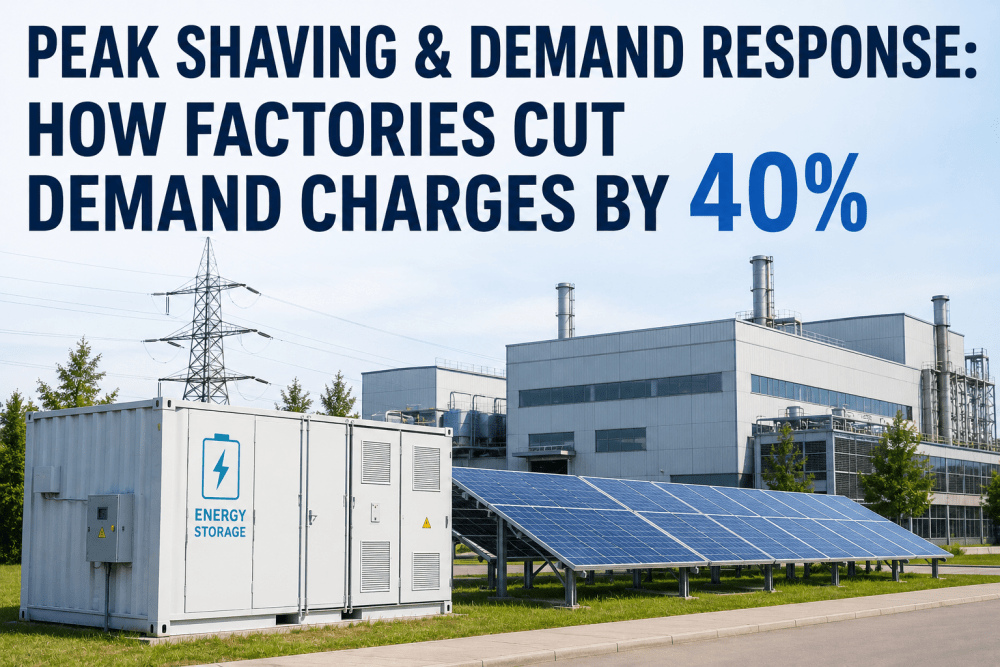
| Onsite Generation or Storage | Batteries or generation cover part of the load during a predicted peak window | None on production, but requires capital investment |
Load staging is usually the lowest-cost place to start, because it changes timing rather than equipment or capital, and most plants have more flexibility in start sequencing than they have used.
Find Your Stacked Starts Before the Next Bill Does
Bring a month of interval data to a 30-minute session and see which equipment starts are overlapping to set your peak.
Building an Alert Threshold That Actually Works
An effective demand alert gives the team enough lead time to act before the interval closes, which means it has to fire on a trend, not just a hard limit.
An Illustrative Scenario: One Overlapping Start
The figures below are a labeled illustrative composite, not a reported customer result, showing how much a single stacked start can influence monthly demand charges relative to a staged alternative, indexed to 100.
The plants that make the fastest progress on demand charges usually start with staging, not shedding, because it requires no change to what equipment runs or for how long, only when. Teams are often surprised to find the interval that set their peak for the month happened during a routine startup sequence, not during a genuine production surge, which is exactly the kind of pattern a continuous interval view catches and a monthly bill review never will.
Frequently Asked Questions
How is the demand interval actually measured by our utility?
Most utilities use a fifteen or thirty-minute rolling or fixed window, and the exact length and whether it is rolling or fixed changes how aggressively a short spike affects the bill, so the first step is confirming your specific tariff's interval definition. Review your tariff's interval structure in a short session.
What is a ratchet clause, and do we have one?
A ratchet clause bills a percentage of your highest annual peak demand every month for a set period afterward, regardless of that month's actual usage, which means a single bad peak can inflate bills for months rather than one. Ask the iFactory AI team to check your tariff for a ratchet clause.
Will load staging slow down our production startup?
Staging changes the order and timing of equipment starts, not the total time to reach full operation in most cases, since the delay introduced between staggered starts is typically a matter of minutes rather than a meaningful production impact. Model a staging sequence against your own startup routine in a demo.
How much lead time does a demand alert actually give us?
The lead time depends on how early in the interval the trajectory is flagged, which is why monitoring the running interval continuously, rather than reviewing after it closes, is what makes an alert actionable instead of just informational. See how alert timing is configured for your interval length.
Is onsite battery storage worth it if staging already helps?
Staging and shedding usually address the controllable portion of a peak, while storage becomes worthwhile when a plant has unavoidable demand spikes it cannot delay or shed without affecting production, so the two approaches are often complementary rather than alternatives. Evaluate whether storage fits your specific load profile on a call.
Spread the Load, Not Just Cut the Output
iFactory AI monitors your interval demand in real time and sequences starts to keep the peak down. Book a walkthrough built around your own interval data.