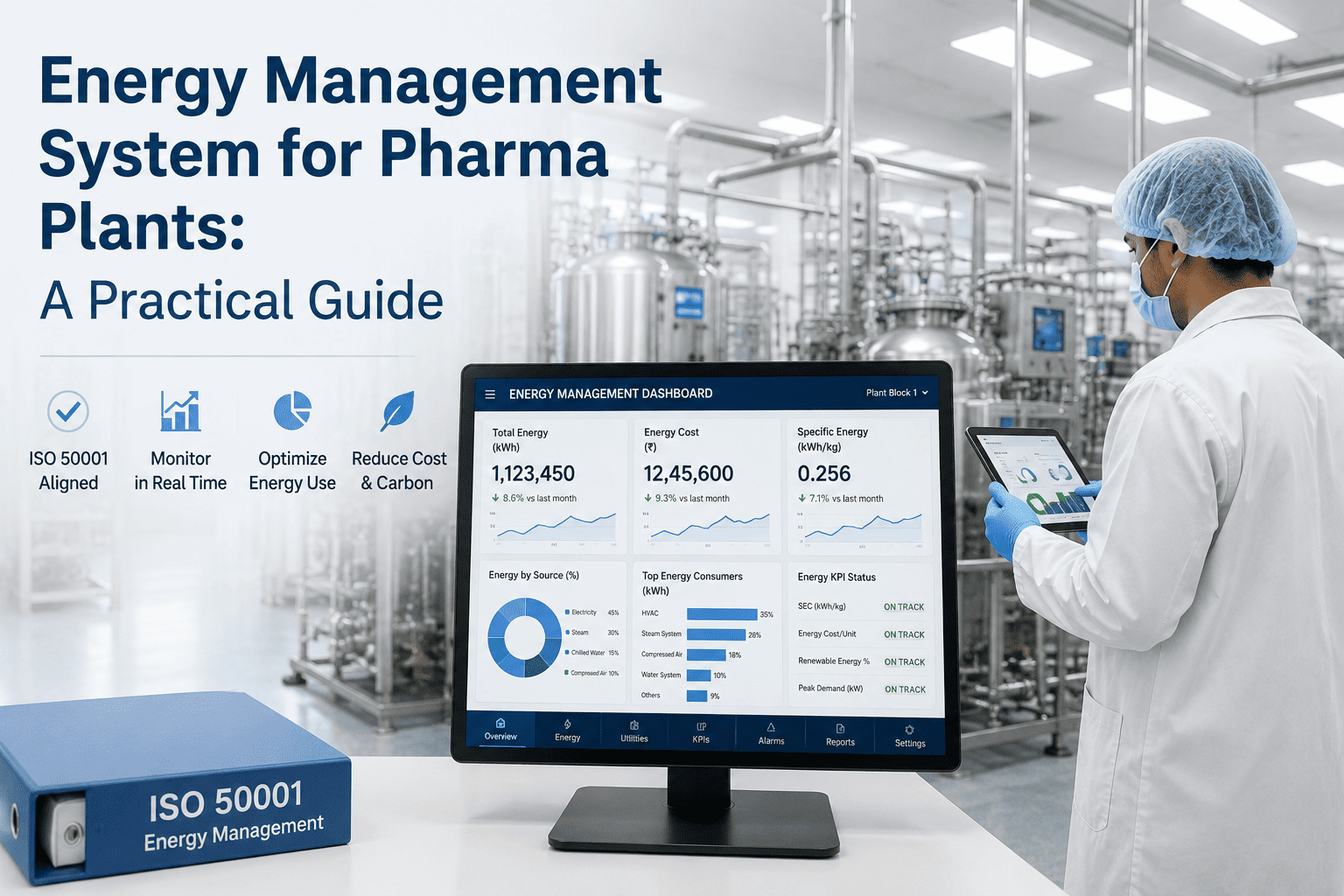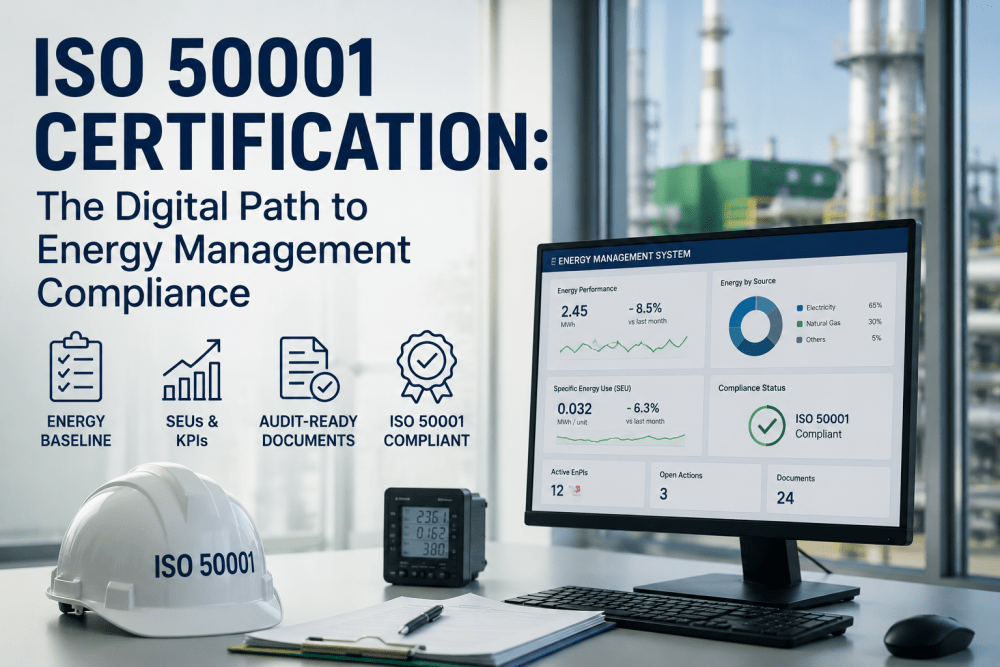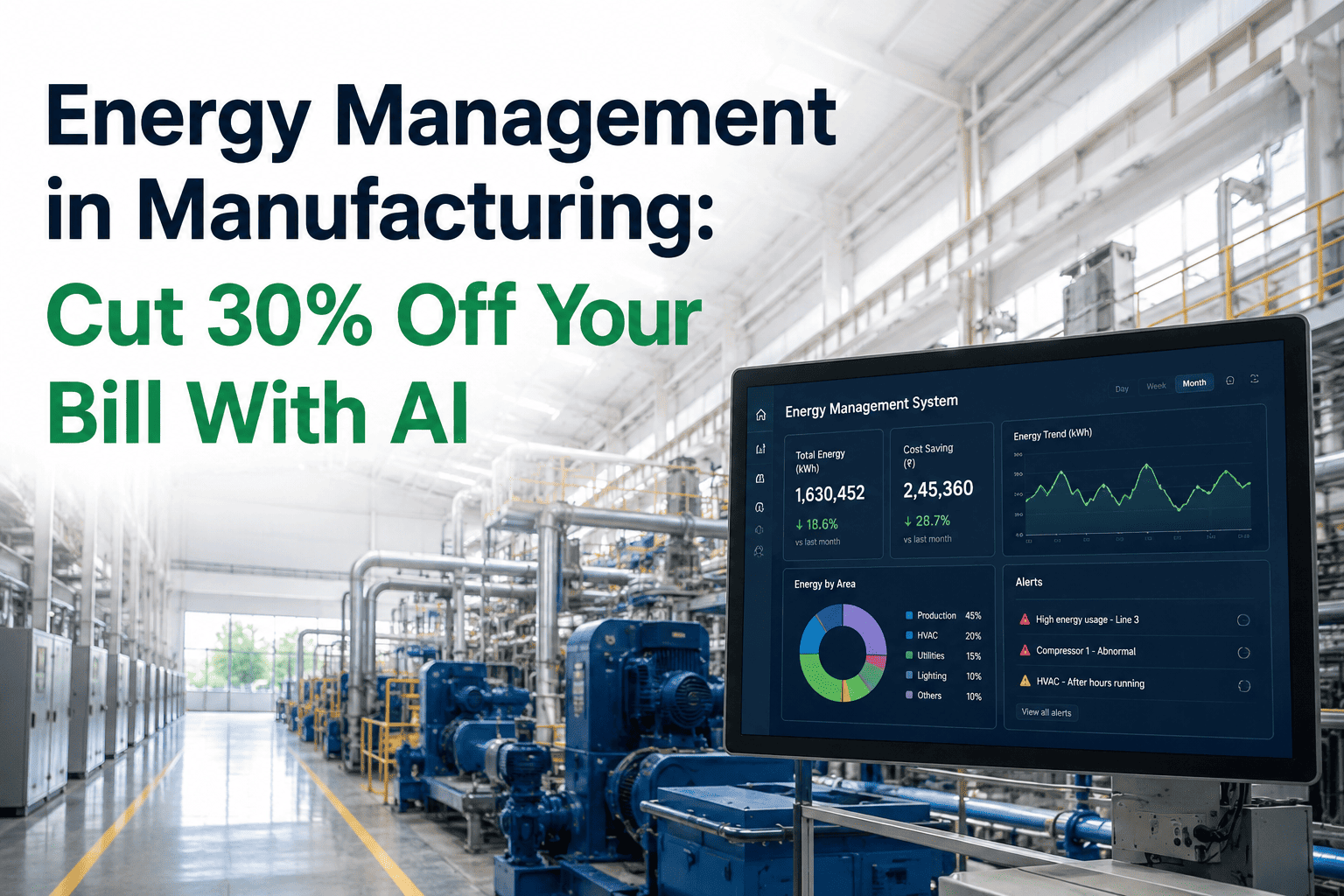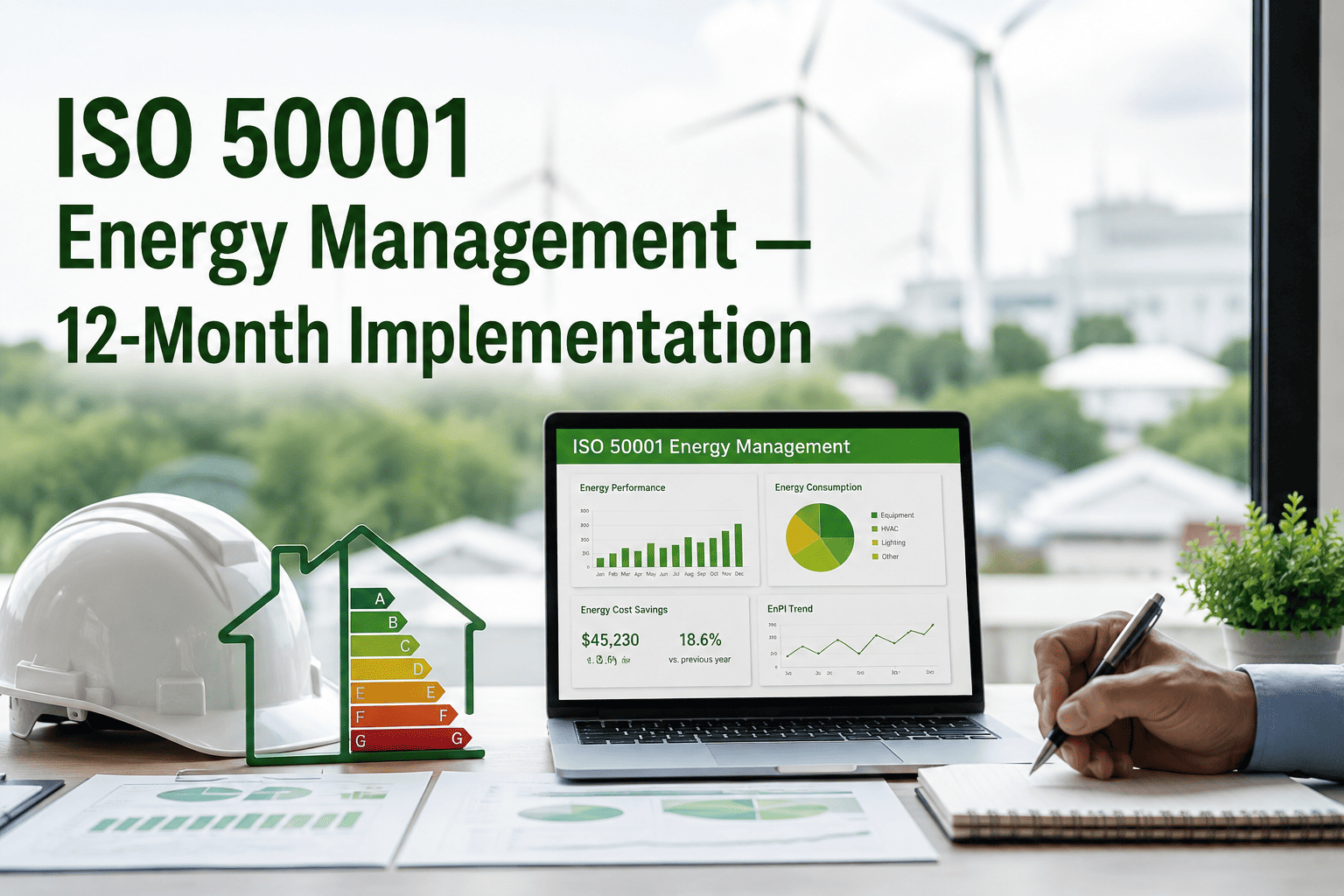
Getting ISO 50001 certified is less about a single audit day and more about building a management system that keeps producing energy performance improvements year after year. Manufacturing plants that treat it as a paperwork exercise usually fail their first surveillance audit, while plants that build the PDCA cycle into daily operations tend to keep finding savings long after the certificate is issued. A realistic implementation runs about twelve months from kickoff to certification audit, covering baseline establishment, significant energy use identification, EnPI selection, and the operational controls an auditor will actually want to see evidence of. iFactory's energy monitoring platform gives your team the metering and reporting backbone this whole process depends on, and you can book a demo to see how the data layer supports certification.
ISO 50001 Certification in 12 Months, Not 24
A structured, month-by-month roadmap for establishing your energy management system, from baseline to certification audit.
Why Manufacturing Plants Pursue ISO 50001
Beyond the certificate itself, plants pursuing ISO 50001 are usually responding to one of three pressures: customer requirements flowing down through the supply chain, regulatory reporting obligations tied to energy or emissions, or a straightforward need to control rising utility costs. The standard's PDCA structure, plan, do, check, act, forces a discipline around energy management that ad hoc efficiency projects rarely sustain once the initial enthusiasm fades.
The 12-Month Implementation Roadmap
This is the phasing we recommend for a mid-sized manufacturing plant with one or two facilities pursuing first-time certification.
Scoping and Energy Team Formation
Define system boundaries, appoint an energy management representative, and secure leadership commitment. Most delayed certifications trace back to a weak energy policy or an energy team without real authority to act.
Energy Review and Baseline
Collect at least twelve months of historical consumption data, identify significant energy uses, and establish the energy baseline that all future performance improvements will be measured against.
EnPI Selection and Objectives
Choose energy performance indicators that genuinely reflect your significant energy uses, set measurable objectives and targets, and build the action plans that will deliver them.
Operational Controls and Metering
Install or validate metering at the significant energy use level, document operational controls, and train personnel whose work affects energy performance on the new procedures.
Internal Audit and Management Review
Run a full internal audit against the standard's clauses, correct any nonconformances found, and complete the management review that closes the first PDCA cycle before the external audit.
Certification Audit
Stage one reviews documentation completeness; stage two verifies the system is operating as documented, with objective evidence of energy performance improvement over the baseline period.
Where Plants Get Stuck
The same handful of gaps derail more first-time certifications than any other factor. Knowing them ahead of time lets you build the system correctly the first time instead of retrofitting fixes after a failed audit.
Insufficient Sub-Metering
Auditors want to see energy consumption tracked at the significant energy use level, not just a single utility meter for the whole facility. Retrofitting sub-metering mid-project causes months of delay.
EnPIs That Don't Normalize for Production
An EnPI that ignores production volume will show energy performance swinging with output rather than efficiency, undermining the credibility of your reported improvements.
Documentation Without Operational Reality
Procedures that exist only on paper and don't match what operators actually do on the floor are the single most common finding in stage two audits.
No Continuous Data Collection
Manual monthly meter readings make it nearly impossible to catch and correct energy performance deviations before they accumulate into a missed annual target.
Build the Data Foundation Your EnMS Needs
ISO 50001 certification depends on metering and reporting that most plants don't have in place on day one. iFactory closes that gap.
What Auditors Actually Check
Understanding the audit checklist in advance takes much of the anxiety out of certification. Stage two auditors typically walk through these areas in sequence.
Energy Policy Alignment
Is the documented energy policy actually reflected in day-to-day decisions, or does it sit disconnected from how the plant operates?
Baseline and EnPI Traceability
Can you trace every reported EnPI value back to raw metered data, with a clear normalization methodology documented?
Objective Evidence of Improvement
Is there measurable energy performance improvement against the baseline, supported by data rather than estimates or assumptions?
Competence and Awareness Records
Are training records available for personnel whose work significantly affects energy performance, matched to the roles the system actually identifies?
Frequently Asked Questions
Can we compress the timeline below 12 months?
Some plants with existing sub-metering and a mature quality management system have certified in eight to nine months, since much of the documentation discipline required overlaps with what ISO 9001 already demands. Plants starting from scratch with no metering infrastructure should plan closer to 14 to 16 months. Rushing the baseline period specifically tends to produce EnPIs that don't hold up under audit scrutiny.
Do we need a certification body accredited in our specific industry?
ISO 50001 certification bodies are accredited to the standard itself rather than to specific industries, though auditor experience in your sector can make the process smoother. It's worth confirming your chosen certification body has assessors familiar with manufacturing energy profiles before signing a contract. Contact support if you'd like a list of considerations for selecting a certification body.
What metering granularity does the standard actually require?
ISO 50001 does not mandate a specific metering technology or interval, only that you can demonstrate energy performance at the significant energy use level with data sufficient to support your EnPIs. In practice, most auditors expect at least monthly granularity, and many manufacturers find that interval or continuous metering pays for itself through faster detection of performance deviations.
How does iFactory support the EnMS after certification?
The platform continues to feed your EnPI dashboards and management review reporting after certification, since surveillance audits occur annually and re-certification comes every three years. Continuous monitoring also surfaces new energy-saving opportunities that a one-time audit would never catch. Book a demo to see the ongoing reporting workflow.
Is ISO 50001 certification worth pursuing without a customer mandate?
Many plants that implement the framework purely for internal cost control still choose to certify because the external audit discipline keeps the program from quietly lapsing after the initial savings are captured. Plants that build the management system but skip formal certification often see energy performance gains erode within two to three years without that external accountability.
Start Your ISO 50001 Journey With the Right Data
Metering, baseline reporting, and EnPI dashboards built for certification, not retrofitted after the fact.