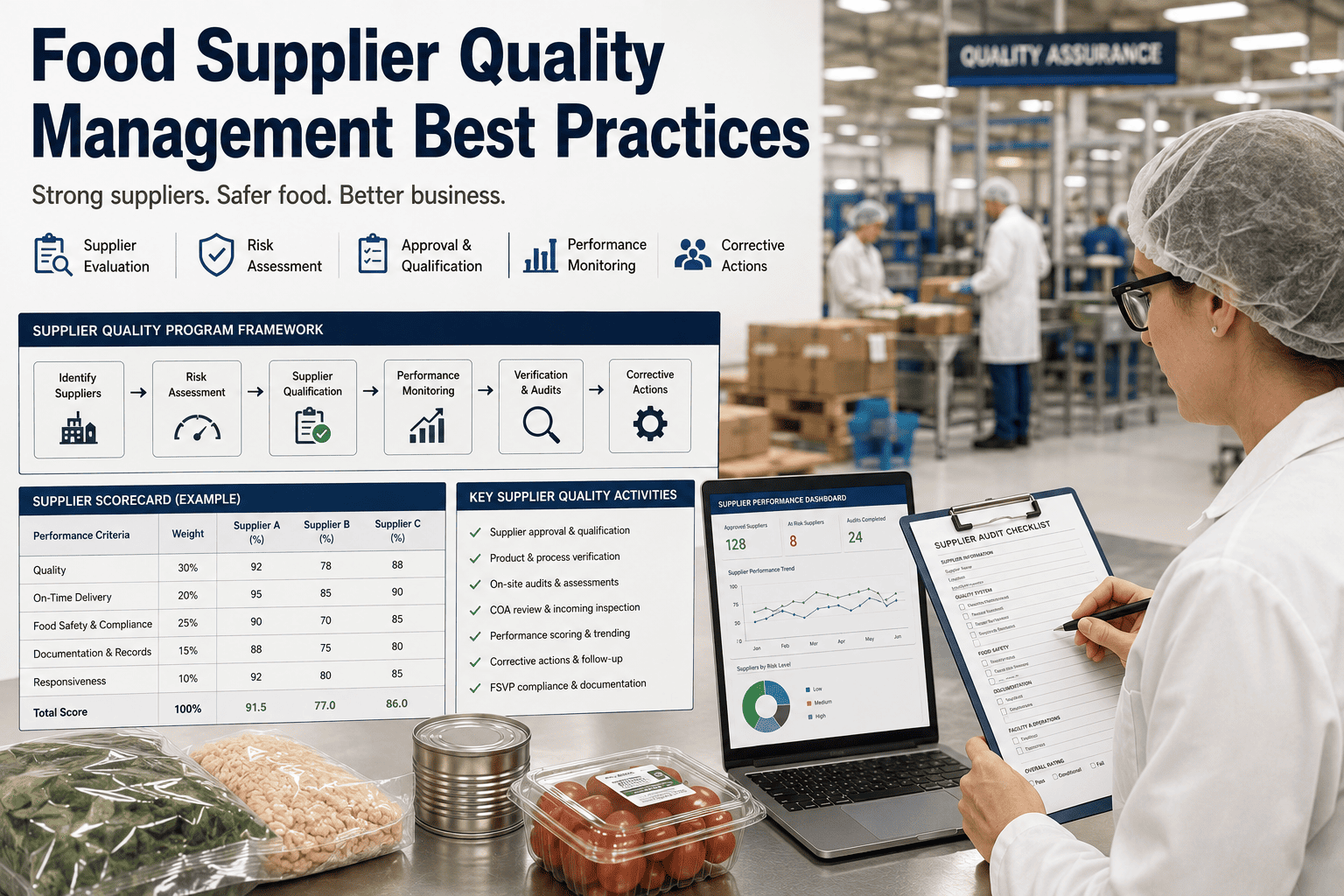
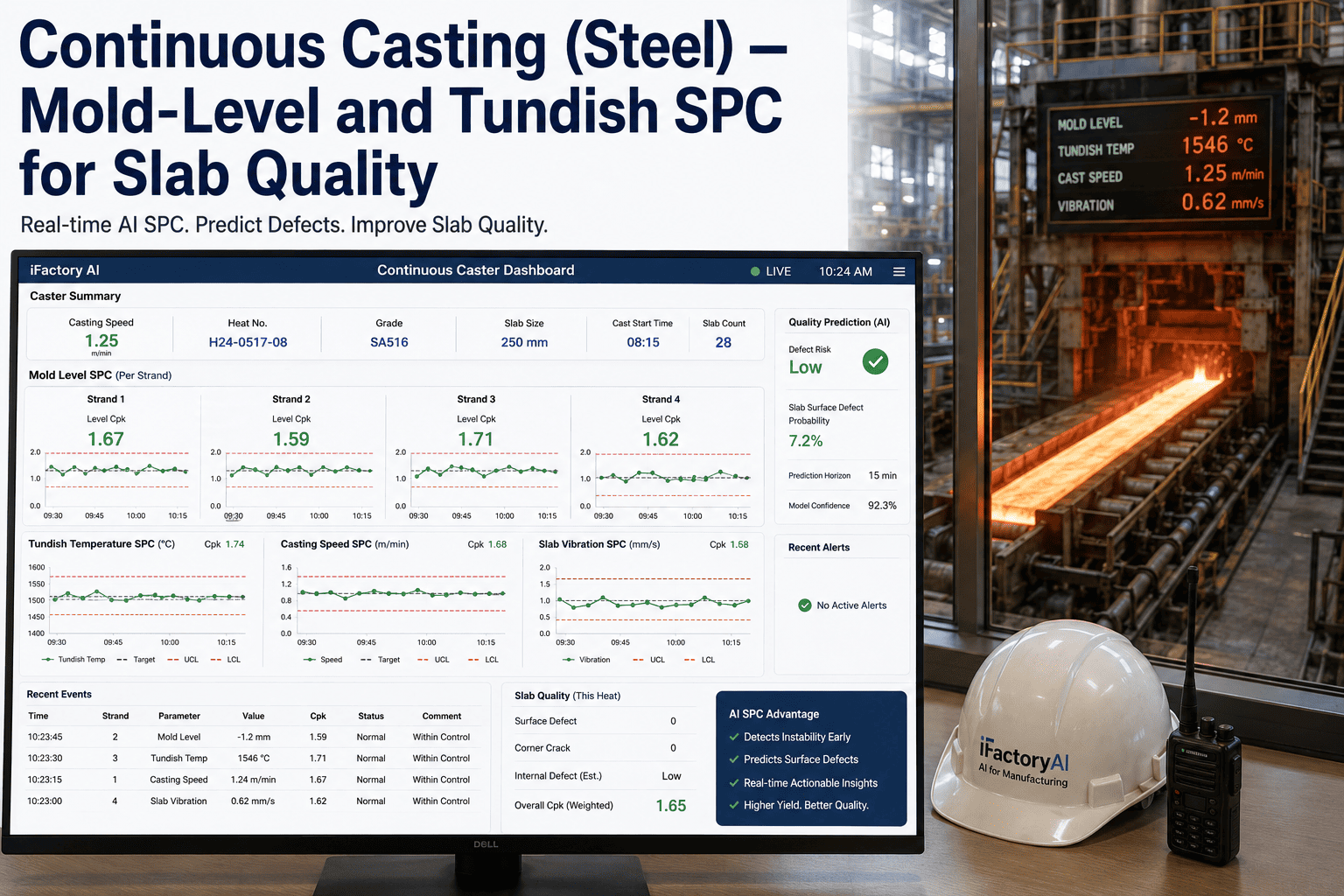
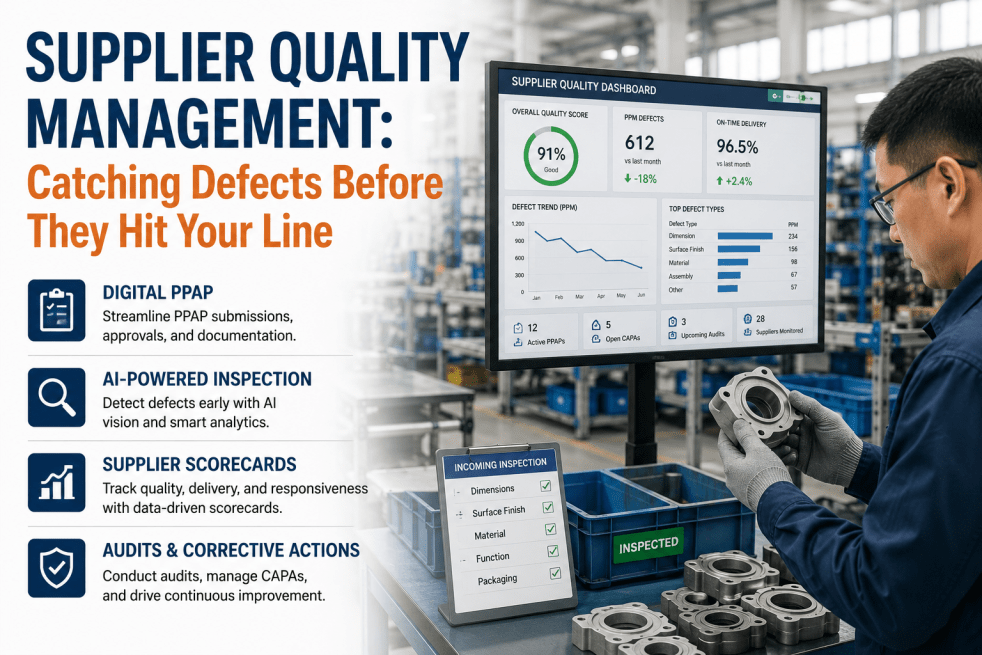
Quality and innovation are no longer separate pursuits—they are inseparable drivers of manufacturing excellence. Organizations treating quality as a strategic business initiative report a 23% return on investment, while poor quality costs the average company $49 million annually. With 94% of executives agreeing that quality management is a key driver of customer satisfaction and the continuous improvement tool market projected to reach $38.15 billion by 2024, the leadership imperative is clear: connect quality with innovation to build sustainable competitive advantage.
Leadership in Quality and Innovation
The manufacturing landscape has fundamentally shifted. Leaders who once viewed quality control as a cost center now recognize it as a strategic differentiator that fuels innovation. According to EY research only 12% of manufacturers have successfully delivered innovation at scale—those who do share a common trait: they've embedded quality management into every stage of the innovation process. This integration transforms quality from a compliance checkbox, into an engine for continuous improvement and market leadership.
Where Quality Meets Innovation
World-class manufacturers don't choose between quality and innovation—they leverage quality systems to accelerate innovation while reducing risk and cost.
Methods Executives Use to Link Quality with Product Innovation
Forward-thinking executives understand that quality and innovation share a symbiotic relationship. When quality systems capture data on defects, customer complaints, and process variations, they create a goldmine of insights for product improvement. Research shows that companies with effective quality management systems achieve 25% higher customer retention rates—and those retained customers become the foundation for successful innovation initiatives.
Data-Driven Innovation Pipeline
Quality data becomes innovation fuel. Every defect report, customer complaint, and process deviation contains insights for product improvement. Leaders who systematically analyze quality data identify innovation opportunities 3x faster than competitors relying on intuition alone.
Cross-Functional Quality Teams
Break down silos between R&D, manufacturing, and quality. When engineers work alongside quality professionals from concept to production, innovation cycles shorten and first-time-right rates improve dramatically.
Customer Voice Integration
Quality feedback loops capture the voice of customer. Leaders use complaint patterns, warranty data, and satisfaction metrics to guide innovation priorities—ensuring new products address real market needs.
Fail-Fast Quality Gates
Implement early-stage quality gates that catch issues before they become expensive. This approach allows teams to experiment boldly while maintaining quality standards—innovation accelerates when failure costs are minimized.
Predictive Quality Intelligence
AI-powered quality systems predict issues before they occur. 85% of companies using predictive AI report 20% improvement in forecast accuracy, enabling proactive innovation rather than reactive fixes.
The Quality-Innovation Integration Framework
How leading manufacturers connect quality excellence with breakthrough innovation
Discover
Mine quality data for innovation insights
Design
Build quality into new products from day one
Develop
Iterate with quality gates at each stage
Deploy
Launch with confidence, measure results
Improve
Feed learnings back into next cycle
Transform Quality into Your Innovation Engine
iFactoryApp helps manufacturing leaders connect quality systems with innovation processes for measurable competitive advantage.
Approaches to Sustain Excellence Across Plants
Scaling quality and innovation excellence across multiple manufacturing facilities presents unique challenges. What works in a flagship plant often struggles to replicate elsewhere. Yet research shows that organizations with mature quality management systems achieve higher on-time delivery rates and continuous improvement outcomes across their entire network. The key lies in building systems that balance standardization with local adaptation.
Multi-Plant ExcellenceThe Multi-Plant Challenge
The Excellence Solution
Four Pillars of Multi-Plant Excellence
Standardized Core Processes
Establish non-negotiable quality standards across all facilities. Create standard operating procedures for critical processes while allowing flexibility in execution. Business process standardization reduces costs by 15% and errors by 30%.
Connected Digital Infrastructure
Deploy cloud-based QMS that provides real-time visibility across plants. Enable instant data sharing, collaborative problem-solving, and centralized analytics. Cloud QMS adoption exceeds 50% market share in 2025.
Leadership Culture Cascade
Quality-centric culture starts at the top and permeates every layer. Leaders must embody attention to detail, precision, and continuous improvement. Manager quality accounts for 70% of variance in team engagement.
Continuous Learning Systems
Build knowledge transfer mechanisms that spread best practices across facilities. Capture lessons learned, document improvements, and celebrate successes. Organizations see 20% increased customer retention through effective training.
Understanding the Economics of Quality Leadership
The cost of poor quality (COPQ) can represent 15-35% of total business costs in regulated industries
Key Insight: Every 1% reduction in COPQ returns $1 million annually for companies with $100M revenue. World-class organizations achieve COPQ below 5% of revenue.
Scale Excellence Across Your Operations
Our platform enables consistent quality standards and continuous improvement visibility across all your manufacturing facilities.
Technology Enablers for Quality-Driven Innovation
Digital transformation is reshaping how manufacturers pursue quality and innovation simultaneously. The quality management software market is projected to grow at 11% CAGR through 2025, with AI and machine learning leading the transformation. Real-time anomaly detection in manufacturing processes is projected to reduce defects by 30% in 2025, while AI-driven inspection systems achieve up to 90% reduction in error rates.
Technology GridAI-Powered Quality
Predictive analytics identify quality issues before they occur. Machine learning algorithms analyze patterns across millions of data points to optimize processes automatically.
90% error reductionComputer Vision
Automated visual inspection ensures consistent, accurate product assessments. Systems analyze vast amounts of data in real-time, pinpointing even subtle defects and deviations.
Real-time detectionReal-Time Analytics
IoT-enabled dashboards provide instantaneous feedback on production line performance. Organizations report 15% operational efficiency gains with continuous monitoring.
15% efficiency gainDigital Traceability
Blockchain and advanced tracking systems provide complete product genealogy. Enable rapid root cause analysis and targeted recalls when issues arise.
Full supply chain visibilityRemote Quality Management
Cloud-based platforms enable global collaboration and digital audits. Quality teams work across time zones with real-time data access from anywhere.
Global collaborationProcess Automation
Robotic Process Automation handles repetitive quality tasks, freeing teams for strategic activities. Automation can cut labor costs by up to 30%.
30% cost reductionBuilding a Quality-Centric Innovation Culture
Technology alone cannot deliver sustainable excellence. Culture transformation is essential. Organizations with strong leadership development programs perform 25% better financially, and companies that prioritize leadership excellence achieve 21% higher profitability. The key is creating an environment where quality and innovation reinforce each other.
Culture ElementsLeadership Commitment
Leaders embody quality values and champion innovation
Employee Empowerment
Teams have autonomy to identify and solve quality issues
Continuous Learning
Ongoing training keeps skills current with evolving standards
Open Communication
Transparent feedback flows across all organizational levels
Recognition Systems
Quality achievements and innovations are celebrated
Long-Term Focus
Quality investments prioritized over short-term gains
Frequently Asked Questions
How can quality management drive innovation rather than slow it down?
Quality management accelerates innovation when properly integrated. Quality data reveals customer pain points and product improvement opportunities. Early-stage quality gates catch issues before they become expensive, allowing teams to experiment boldly. Companies with effective QMS achieve 25% higher customer retention, providing stable foundation for innovation investments. The key is treating quality as an enabler rather than a gatekeeper.
What is the ROI of investing in quality leadership development?
Quality leadership development delivers measurable returns. Organizations with strong leadership programs perform 25% better financially. Every pound invested in leadership development yields an average return of £7 (range: £3-£11). Executive coaching specifically delivers an average ROI of 580% within the first year. Manager quality accounts for 70% of variance in team engagement, making leadership the highest-impact quality investment.
How do we maintain quality standards while encouraging innovation risk-taking?
Successful organizations create structured innovation frameworks with clear quality boundaries. Implement fail-fast quality gates that minimize the cost of failure while enabling experimentation. Use stage-gate processes where quality requirements increase as investments grow. Separate exploratory innovation (where some failure is expected) from production quality (where standards are non-negotiable). This approach lets teams take calculated risks without compromising customer experience.
What technologies are most impactful for quality-driven innovation?
AI and machine learning lead the transformation—companies using AI-driven inspection achieve up to 90% error reduction. Real-time analytics with IoT sensors provide 15% operational efficiency gains. Computer vision enables automated visual inspection for consistent quality assessments. Cloud-based QMS platforms allow global collaboration and data sharing. Predictive analytics identify issues before they occur, with 85% of companies reporting 20% improvement in forecast accuracy.
How can we scale quality excellence across multiple manufacturing plants?
Multi-plant excellence requires four pillars: standardized core processes (reducing costs by 15% and errors by 30%), connected digital infrastructure (cloud QMS for real-time visibility), leadership culture cascade (quality commitment from top to bottom), and continuous learning systems (knowledge transfer mechanisms). Balance global standards with local flexibility—establish non-negotiable quality requirements while allowing execution adaptation for local conditions.
Lead the Quality-Innovation Revolution
Organizations that successfully connect quality with innovation achieve sustainable competitive advantage. With 23% ROI on quality investments and the opportunity to eliminate millions in poor quality costs, the business case is clear. The question is not whether to pursue quality-driven innovation, but how quickly you can transform your operations.
Start Your Transformation Today