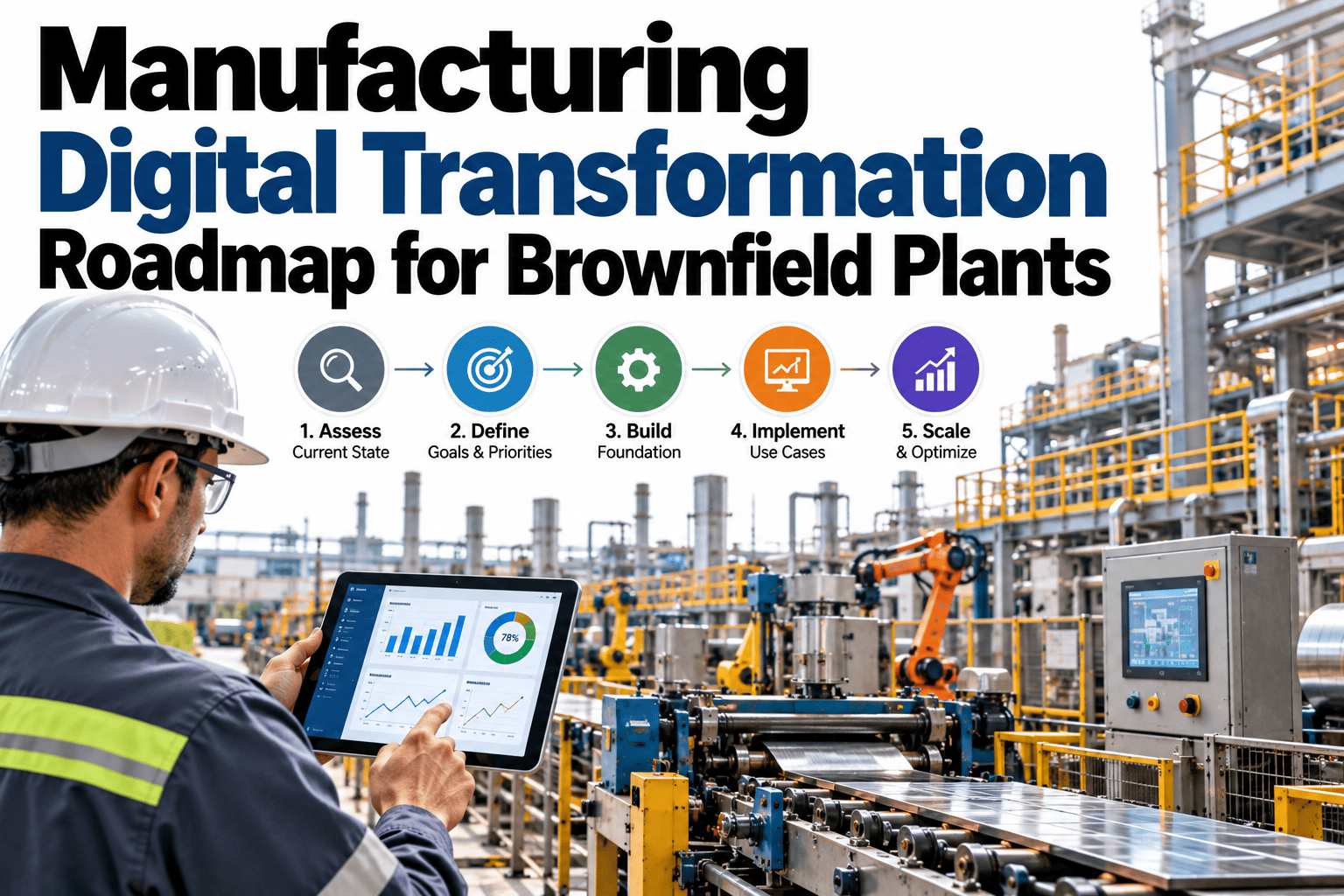
Most manufacturing plants running today are not greenfield builds with modern infrastructure baked in from day one. They are brownfield sites with a mix of decades-old PLCs, newer line additions, and whatever reporting tools got adopted department by department over the years. A digital transformation roadmap written for a clean-slate plant rarely survives contact with that reality, and plants that skip straight to a plant-wide rollout tend to stall on the same integration problems a phased approach would have caught early. Reviewing where your own plant sits on this roadmap is something teams can work through against their actual equipment mix in a short session.
A Brownfield Roadmap That Respects What's Already on the Floor
iFactory AI integrates with the equipment you already have, so the roadmap starts with connection, not replacement.
Why Brownfield Transformation Fails When It Skips Steps
The failures are rarely about the software itself. They are about assuming a greenfield sequence works on equipment, teams and data that were never designed to be connected in the first place.
| Common Mistake | Consequence | Fix |
|---|---|---|
| Rolling out plant-wide before piloting | Integration gaps surface everywhere at once | Pilot on one line, learn, then scale |
| Assuming all equipment speaks the same protocol | Legacy PLCs get left out of the data picture | Audit protocols before choosing a connection method |
| Skipping change management | Operators route around the new system | Train and involve floor teams from the pilot phase |
| Treating data cleanup as optional | Dashboards show numbers nobody trusts | Fix the data foundation before building analytics on top |
Find Out Which Phase Your Plant Is Actually In
Book a 30-minute session and iFactory AI will assess your current equipment mix and data readiness against this roadmap.
What Brownfield Actually Means in Practice
The term covers a wide range of situations, from a single aging machine on an otherwise modern line to a plant where most equipment predates any digital connectivity standard. The roadmap bends to fit that range rather than assuming a single starting point.
Readiness Checklist Before You Start
These three areas decide whether a transformation project has a foundation to build on, before a single dashboard goes live.
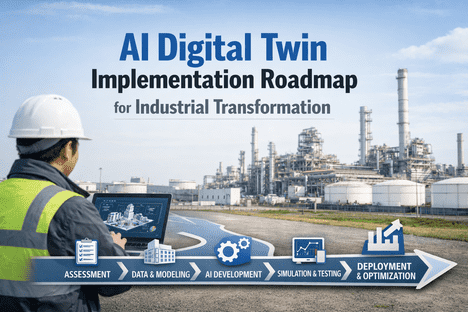
The Five-Phase Roadmap in Detail
Each phase has a clear exit condition before moving to the next, rather than a fixed calendar date.
Assess
Inventory equipment, protocols and current data flows. Exit condition: a clear map of what connects easily and what needs extra work.
Connect
Bring the pilot line's equipment, including legacy PLCs, into a unified data layer. Exit condition: reliable, validated data flowing continuously.
Pilot
Run analytics or AI models on the pilot line with operator involvement. Exit condition: measurable value and operator trust in the system.
Scale
Extend the proven approach to additional lines and sites, applying lessons from the pilot. Exit condition: consistent results across multiple lines.
Sustain
Build the practice into standard operations with ongoing training and governance. Exit condition: the system runs without constant external support.
Common Brownfield Integration Challenges
These four issues come up repeatedly across plants with a mixed equipment age.
Legacy Protocol Variety
Older PLCs often use proprietary or outdated protocols that need a gateway or adapter rather than a direct connection.
Mixed-Vintage Equipment
A single line can span decades of equipment purchases, each with different data capabilities to account for.
Limited IT Staff on the Floor
Plant IT teams are often stretched thin, making a turnkey approach more realistic than one requiring heavy internal build-out.
Resistance to Change
Operators who have worked around manual processes for years need a clear reason the new system makes their job easier, not harder.
Where iFactory AI Fits
iFactory AI is built to connect to the equipment already on your floor rather than require a rip-and-replace before value shows up.
Legacy Equipment Integration
Connects to existing PLCs and older equipment through appropriate gateways, instead of assuming modern connectivity.
Phased Rollout Support
Deployment follows the pilot-then-scale structure, proving value on one line before expanding plant-wide.
Data Foundation First
Data validation happens before analytics are built on top, so dashboards reflect numbers teams can trust.
Operator-Focused Training
Training is built into the rollout phase, not added afterward once adoption has already stalled.
Reviewed by iFactory AI's Implementation team for alignment with current brownfield deployment practice. The phase timeline shown is illustrative; actual duration depends heavily on equipment age, IT resourcing and organizational readiness, and should be scoped against your own plant during the assessment phase.
Frequently Asked Questions
How long does a typical brownfield rollout take?
It varies by equipment mix and organizational readiness, but a pilot-to-scale timeline commonly runs several months to a year for plant-wide rollout. The assessment phase is where a realistic timeline for your specific site gets set. Support can scope a timeline against your equipment list.
Do we need to replace legacy equipment to get started?
Not usually. Most legacy PLCs can be connected through a gateway or adapter rather than requiring replacement, and the assessment phase is where that decision gets made equipment by equipment rather than assumed up front.
How do we choose which line to pilot on?
A good pilot line has engaged operators, a clear pain point the project can address, and equipment that is reasonably representative of the rest of the plant, so lessons transfer when scaling up. Talk through pilot line selection for your specific floor.
What if operators resist the new system?
Resistance usually drops when operators see the system solve a problem they actually have, which is why involving them during the pilot phase matters more than training delivered after rollout. Early wins on the pilot line tend to build the trust that carries into scale-up.
How does this connect to our existing ERP and MES systems?
Integration is scoped during the connect phase and is built to feed your existing systems rather than replace them. Ask support how integration is scoped for your specific ERP and MES setup.
Start With One Line, Not the Whole Plant
iFactory AI builds a brownfield roadmap around the equipment you already have. Book a walkthrough to assess your own starting point.