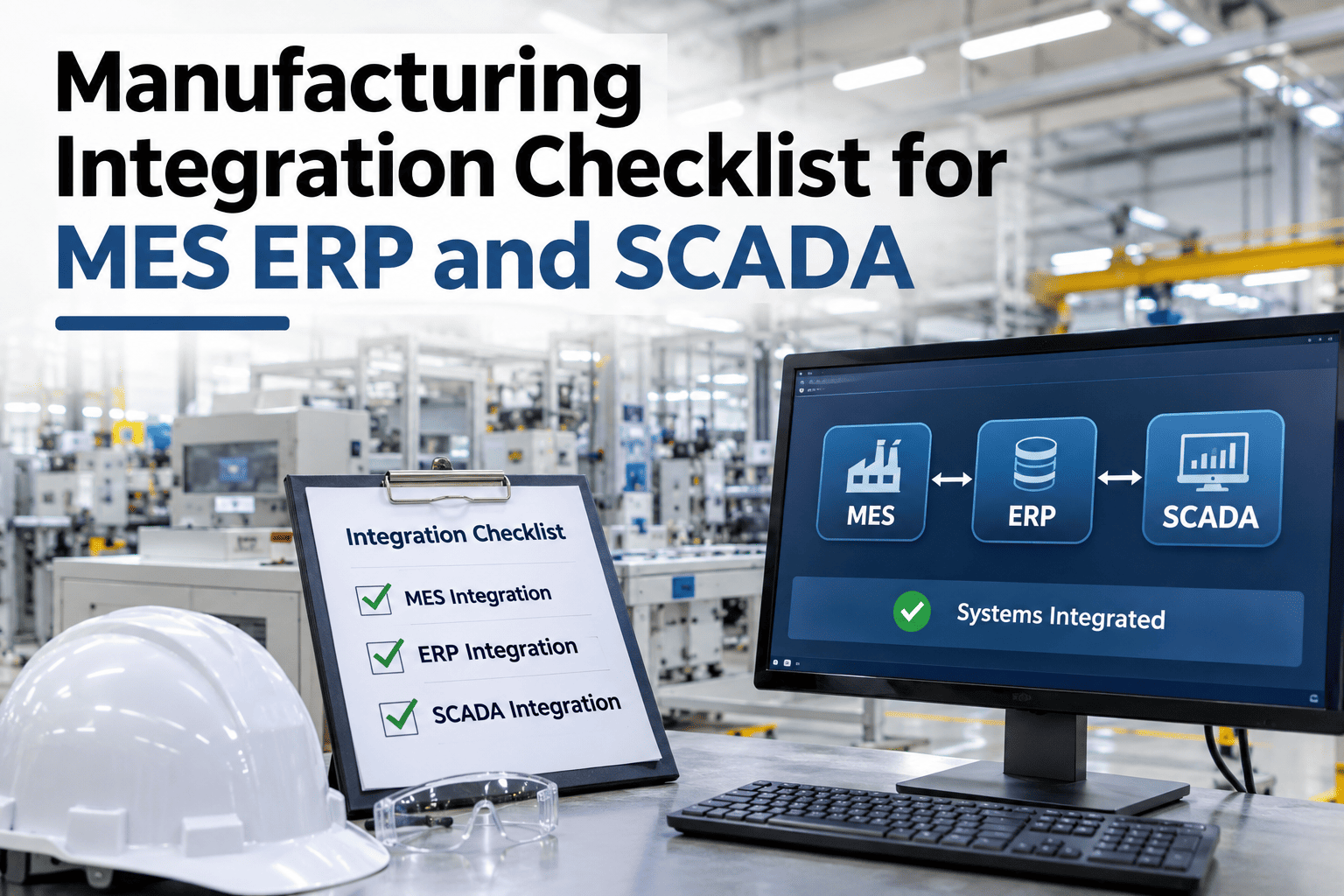
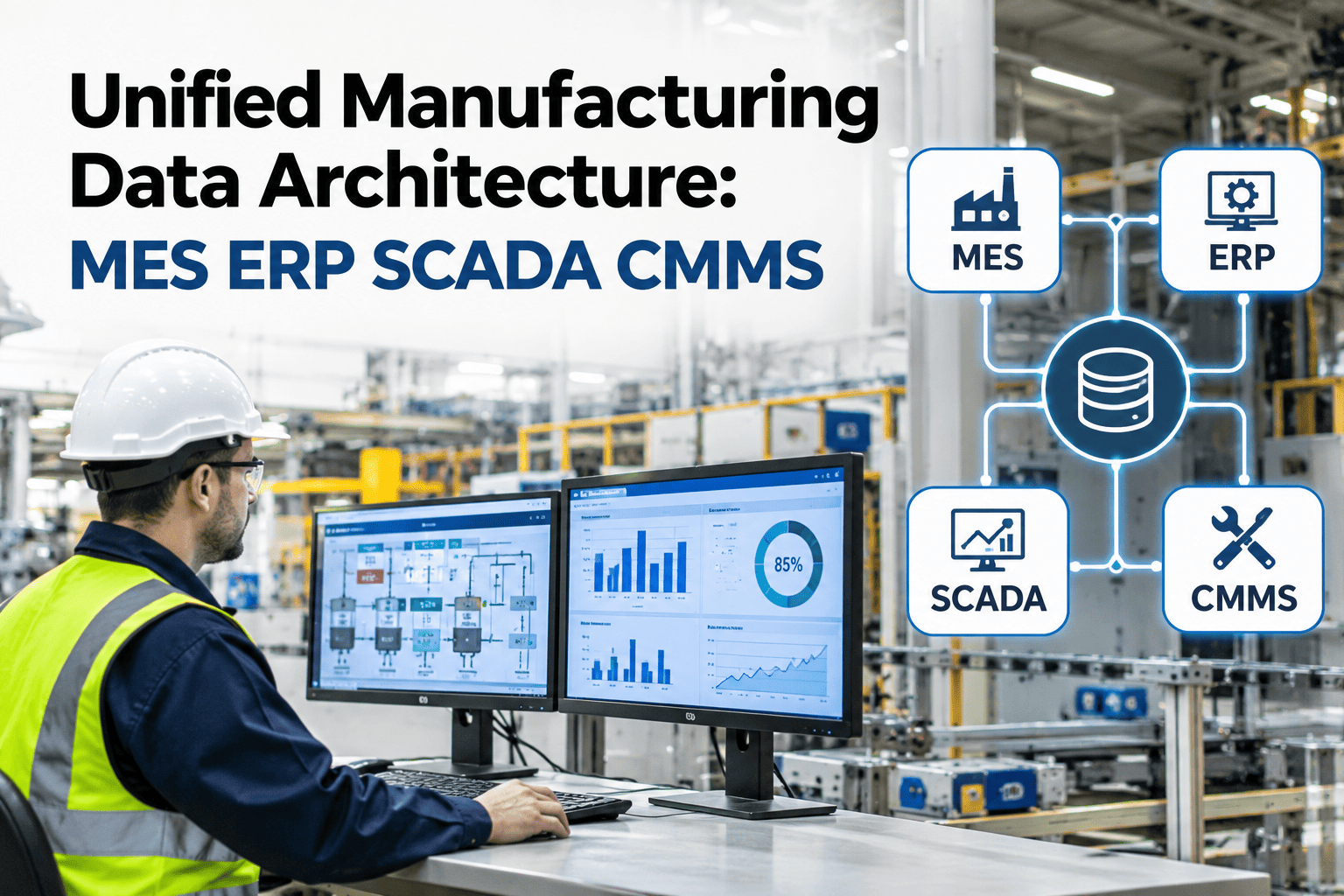
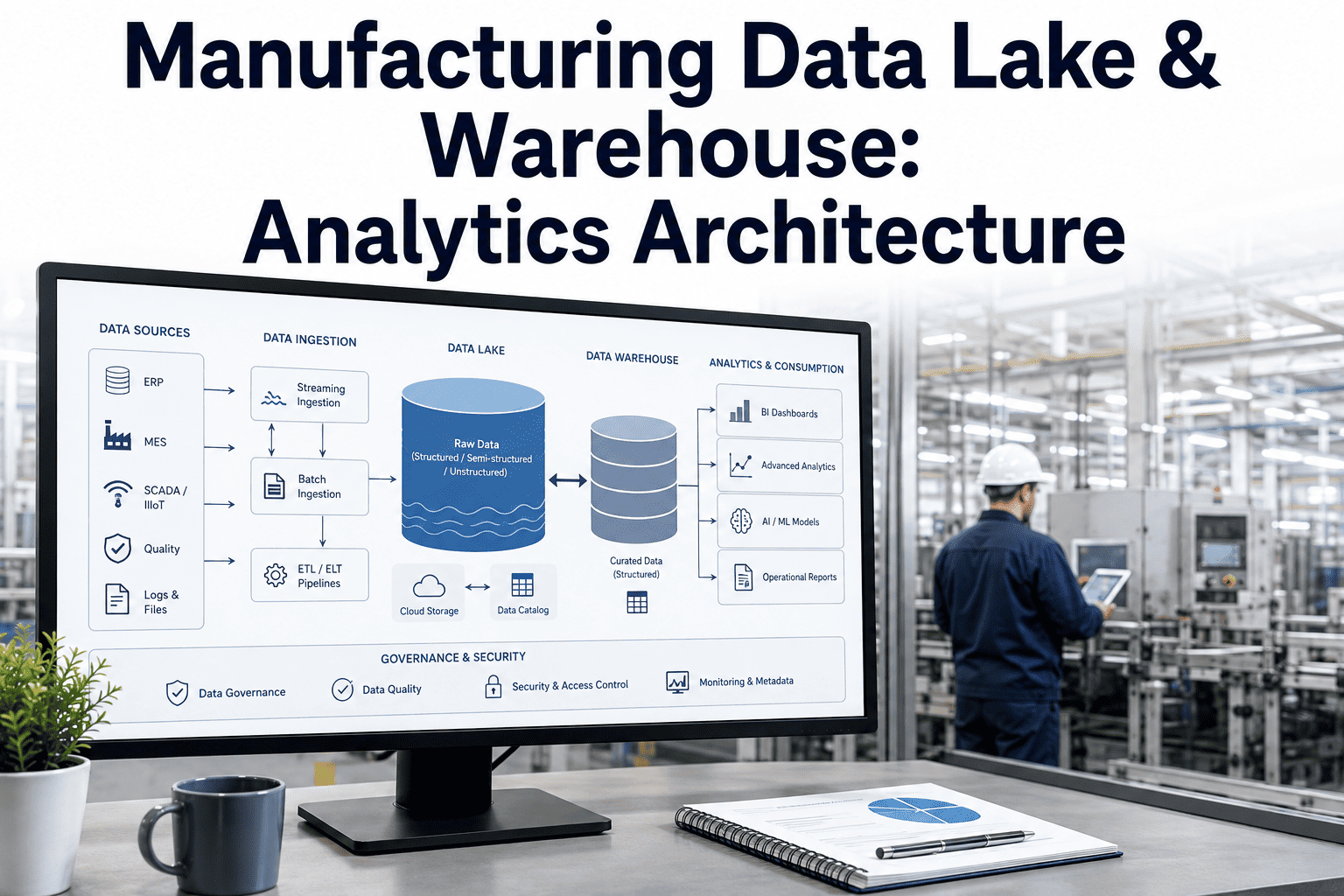
A manufacturing integration project that skips the planning checklist usually finds out what it missed the hard way — a protocol mismatch at go-live, an asset ID that doesn't map cleanly, or a security gap discovered during an audit. iFactory, an on-premise AI platform built on standards-based integration, has run this checklist across protocols, data models, and governance on real plant deployments. Teams planning their own MES, ERP, and SCADA integration can discuss their plant data and use case with our team.
Manufacturing Integration Checklist · MES, ERP, SCADA, 2026
Seven Categories to Cover Before You Write a Single Line of Integration Code
iFactory AI's integration planning covers protocols, asset IDs, data models, APIs, security, workflows, and testing — in that order, before anything goes live.
Protocols identified for every connection point
Asset ID scheme agreed across all systems
Shared data model defined and documented
API contracts versioned and governed
Security and access control designed in
Workflow and failure-handling logic mapped
Testing plan covers real production edge cases
Protocols
Start by Mapping What Each System Already Speaks
Before any integration design decision, inventory what protocol each system already supports natively — OPC UA, MQTT, REST, or a legacy serial or Modbus connection. Forcing a protocol a system doesn't support natively usually means an added gateway or adapter layer, which is fine as a deliberate choice but a problem if discovered after the design is already set.
Asset IDs and data model
The Two Items That Break Everything Downstream If Skipped
Asset ID scheme
One agreed identifier per physical asset, mapped consistently across every connected system.
Shared data model
Common naming and structure for products, orders, and quality results, not each system's own local convention.
APIs, security, workflow, and testing
The Remaining Four Categories, Side by Side
| Category | What to check | Common gap |
|---|
| APIs | Versioning, rate limits, and contract documentation | No versioning plan, so an update breaks every consumer at once |
| Security | Authentication, encryption, and least-privilege access | Security designed in after the connection already works |
| Workflow | What happens when a connected system is down or returns bad data | No failure-handling logic, so an outage cascades silently |
| Testing | Real production edge cases, not just the happy path | Testing only the clean-data scenario the demo was built on |
See What Your Current Integration Plan Is Missing
Share your current integration plan or architecture diagram, and iFactory AI will walk through this checklist against it.
Sequencing matters
Why This Order, Not a Different One
Protocols and data models come first because everything else depends on them — an API built before the data model is settled has to be rebuilt once the model changes, and a security design bolted onto a finished integration is always weaker than one designed alongside it. Testing comes last deliberately, since it should validate a design that's already sound, not discover a fundamental gap that should have been caught earlier.
Governance
Who Owns Each Checklist Item Once the Project Is Live
1
Asset ID scheme
Owned by whoever maintains the asset register, since new assets need consistent IDs going forward.
2
Data model
Owned by a cross-functional governance group, since every connected system's team has a stake in it.
3
API contracts
Owned by IT or the integration team, responsible for versioning and change communication.
4
Security policy
Owned by IT security, reviewed whenever a new system or connection is added.
Expert review
What an Integration Lead Checks First
A checklist earns its value when it's actually used before design decisions are made, not referenced retroactively to explain what went wrong.
Verdict
Strong when protocol and data model decisions are locked before any API or workflow design begins.
Watch for
Testing plans that only cover clean data from a demo environment, never the messy edge cases production data actually contains.
Do next
Walk your current or next integration project through each of the seven categories and flag any that haven't been explicitly addressed yet.
Frequently asked questions
What Teams Ask About the Integration Checklist
What's the single most commonly skipped item on this checklist?
A shared asset ID scheme is frequently assumed rather than explicitly agreed, which surfaces later as a mapping problem once two systems disagree on how to identify the same physical asset.
Discuss your current asset ID consistency.
Do we need to complete every category before starting any integration work?
Protocols and the data model should be settled first since everything else builds on them, but later categories like testing can be planned in parallel rather than waiting for every earlier item to be fully finished.
Ask support about sequencing for your project.
How do we test for edge cases we haven't seen yet?
Reviewing historical data for known anomalies — sensor dropouts, out-of-range values, unexpected machine states — gives a realistic starting set of edge cases rather than relying only on clean, idealized test data.
Discuss edge case testing for your systems.
Who should be in the room when the data model is being defined?
Representatives from every system that will connect to it — MES, ERP, SCADA, quality, maintenance — since a model defined by only one team tends to miss how other domains actually use the same data.
Ask support about data model workshops.
Does this checklist apply the same way to a small plant as a multi-site enterprise?
Check the boxes before you write the code
Plan Your MES, ERP, and SCADA Integration Against a Full Checklist
Book a session with iFactory AI to review your integration plan against protocols, data models, security, and testing.