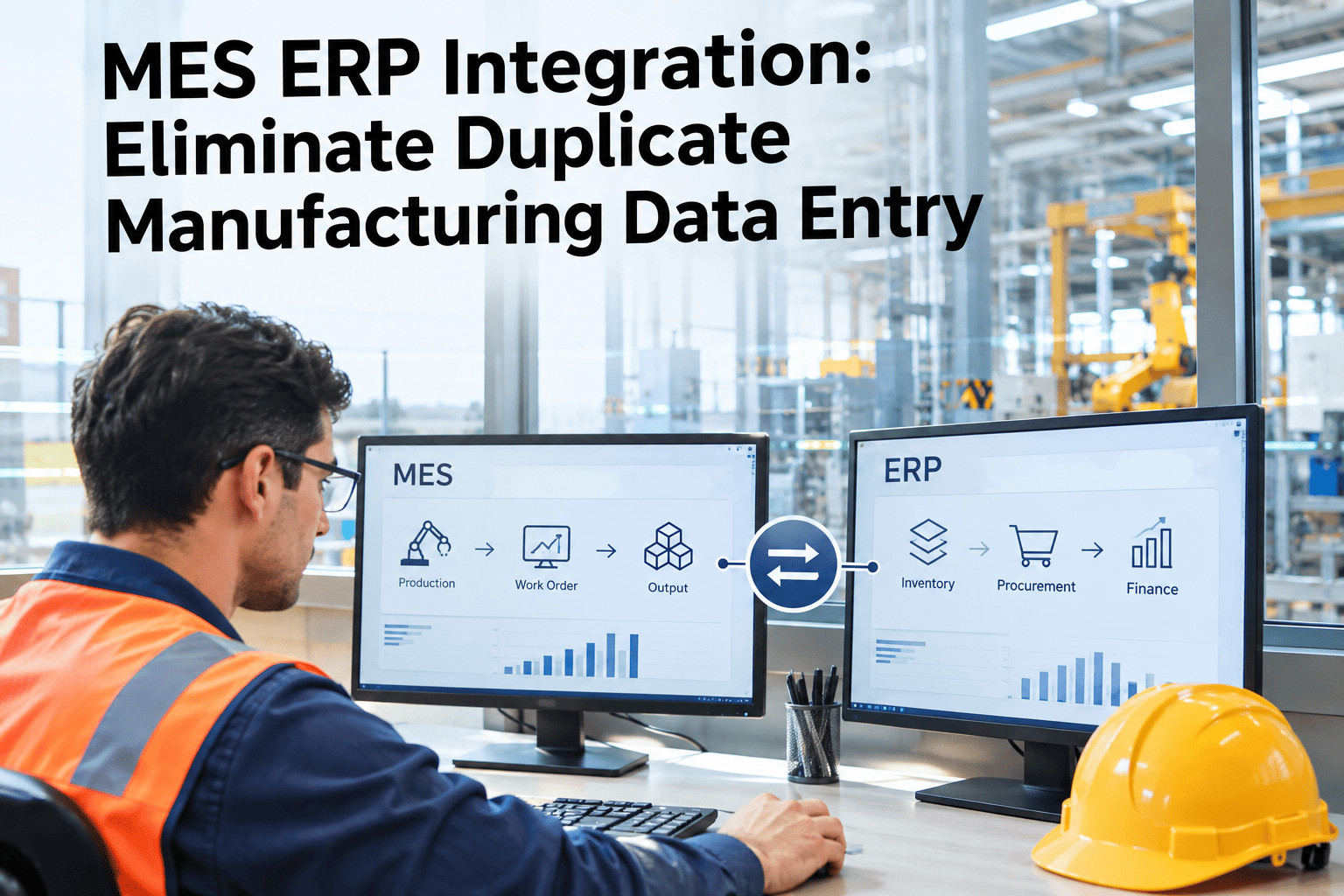
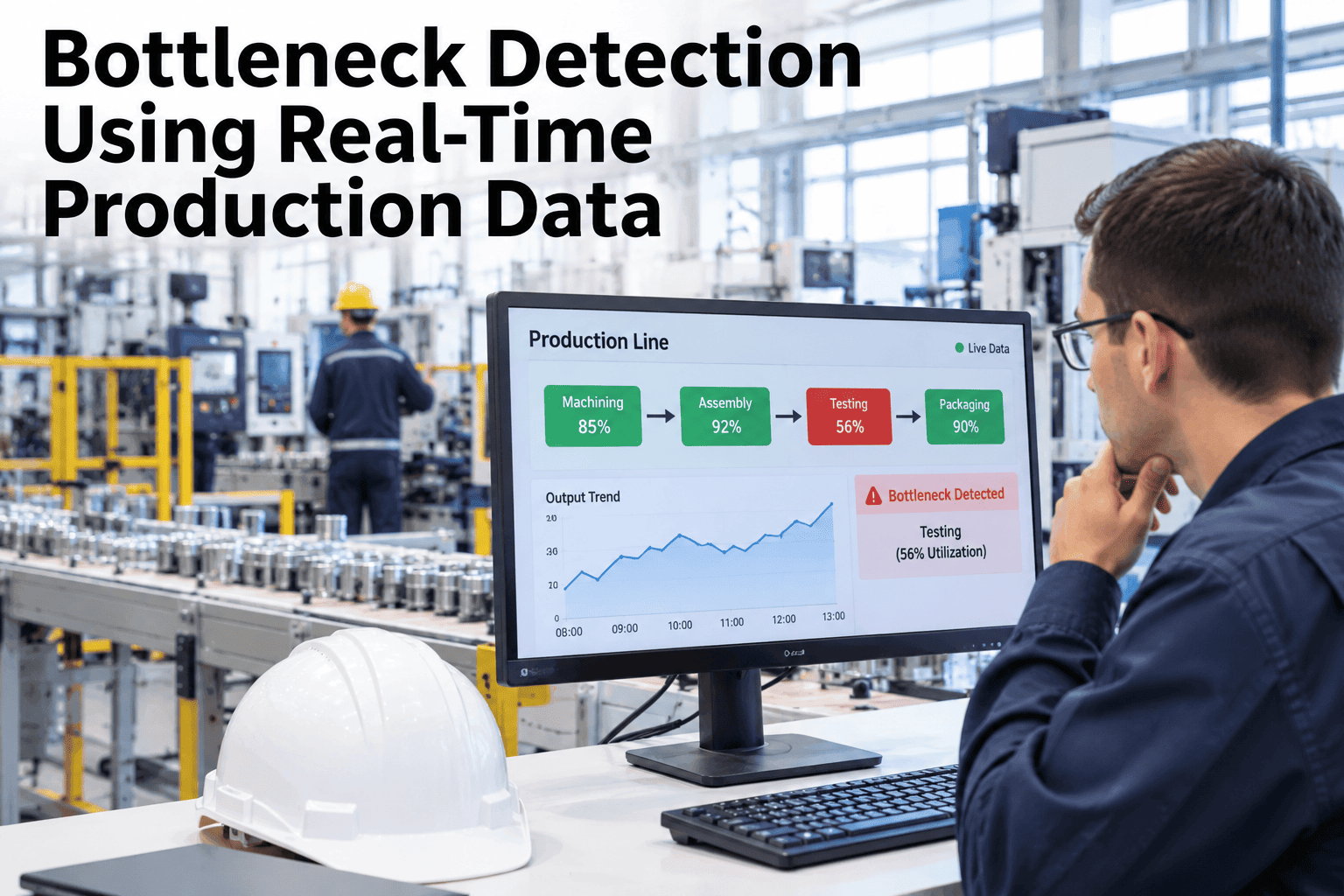
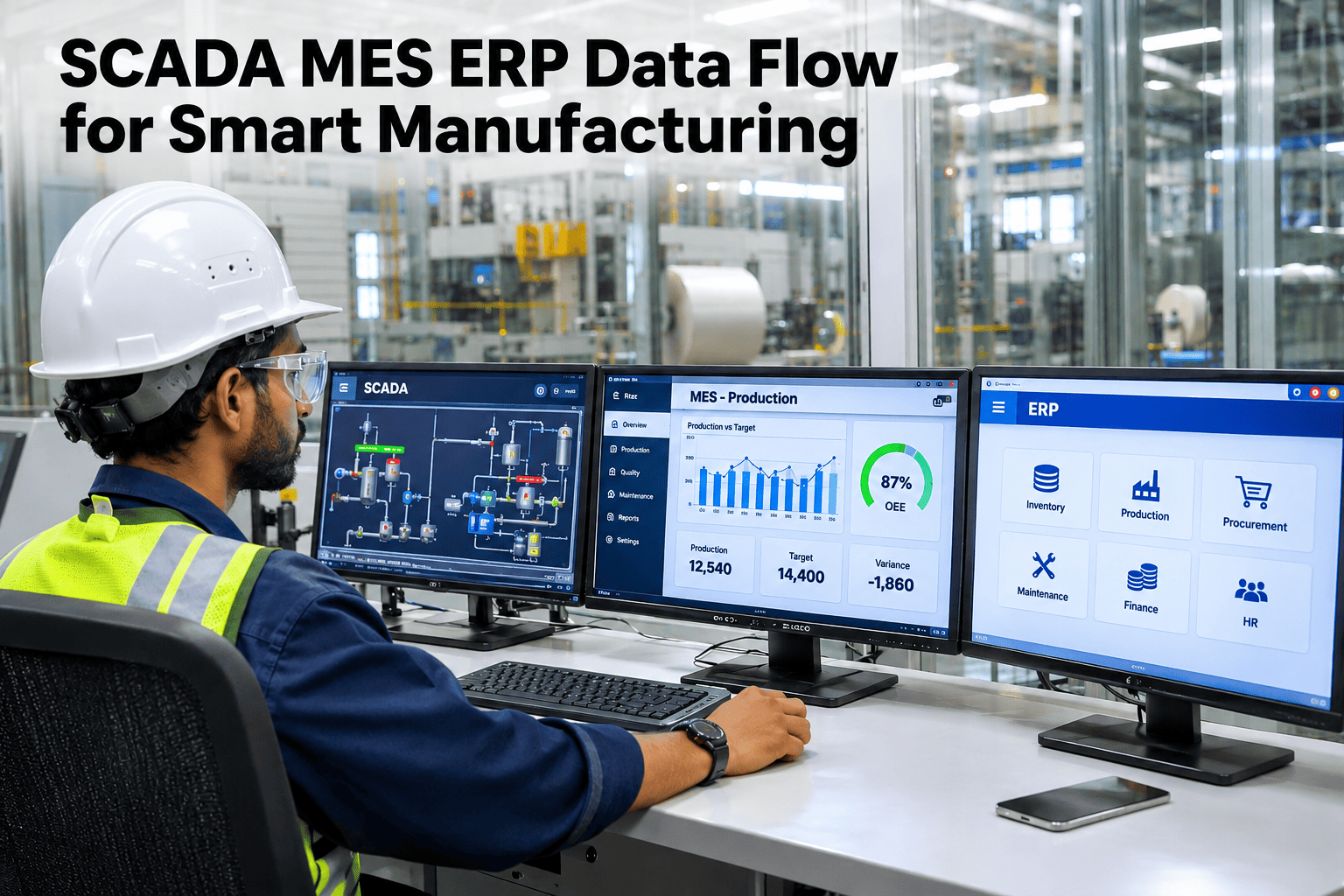
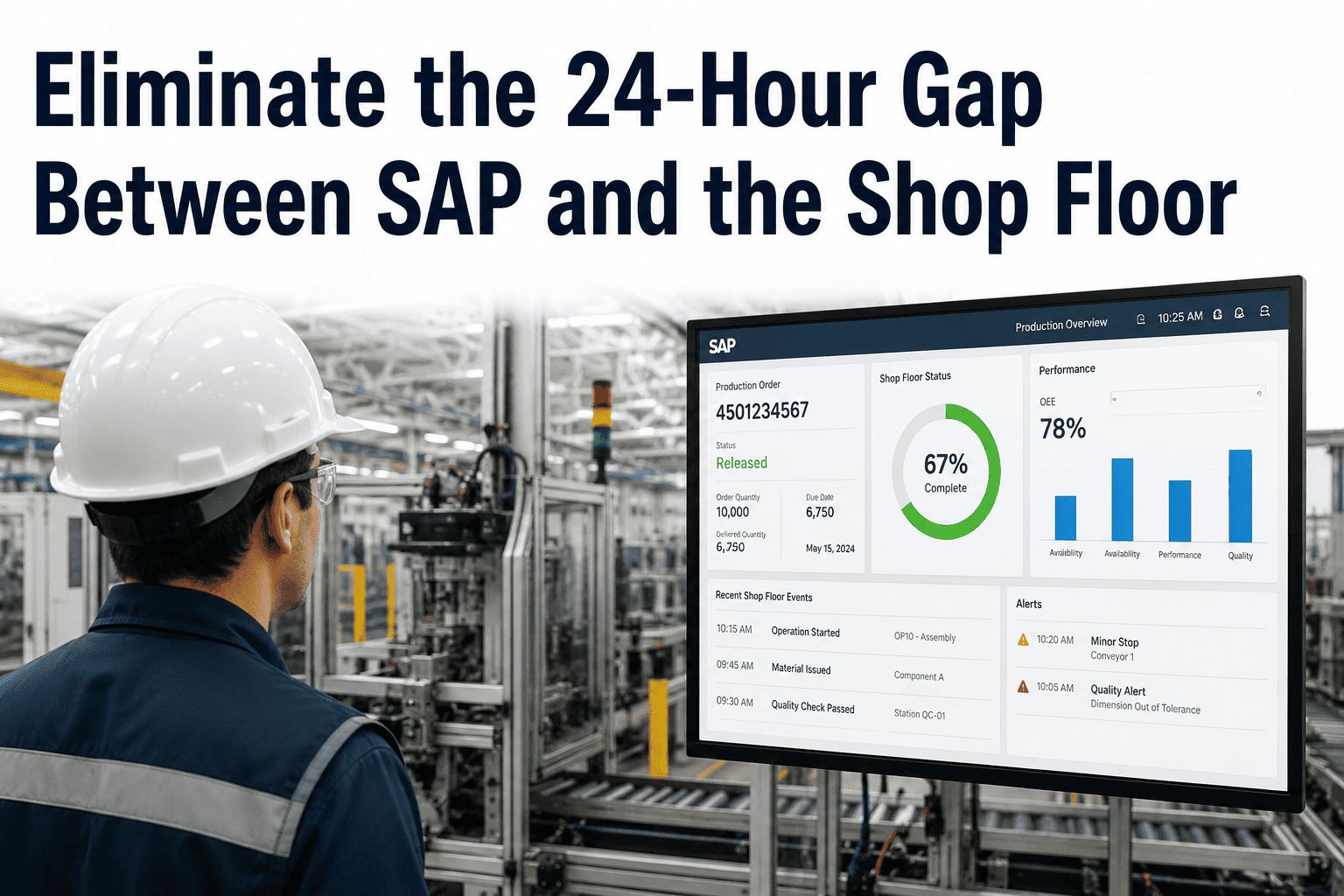
A supervisor closes a work order in MES, then opens a terminal and re-enters the same completion quantity into ERP by hand, because the two systems have never been told to talk to each other. Ninety-eight percent of manufacturers report data silos between ERP, MES and warehouse systems, costing an estimated €200,000 to €900,000 a year in lost productivity and inventory errors (industry systems integration analysis, 2026). The fix is not a new policy telling people to be more careful — it is removing the second entry entirely. You can see where duplicate entry is costing your plant with our team.
MES-ERP Integration, 2026
Every Re-Typed Number Is a Chance to Get It Wrong
iFactory, an on-premise AI platform for manufacturing execution (MES), syncs completions, scrap, labor and inventory movements directly to ERP, so a number entered once on the floor never needs to be typed again.
98%
Manufacturers reporting data silos between ERP, MES and WMS (industry analysis, 2026)
100x
More errors in manual entry vs. automated sync (DocuClipper, 2025)
What it is
What Does Eliminating Duplicate Data Entry Actually Involve?
Duplicate data entry happens whenever the same piece of information — a completion quantity, a scrap count, a labor hour — gets typed into more than one system because the systems are not connected. Eliminating it means building a direct sync so the number entered once on the shop floor automatically updates ERP, without a second manual step.
The direct labor cost of re-typing is the visible part. The larger cost is what happens when the re-typed number is wrong, late, or simply never gets entered at all — a planner working from stale ERP inventory can release the wrong work order before anyone notices the gap.
Where it hides
Four Places Duplicate Entry Shows Up Most Often
Completion quantities
Recorded in MES, then re-keyed into ERP for inventory and cost accounting.
Scrap and rework
Logged on the floor, then manually reconciled against ERP's material consumption.
Labor hours
Clocked in a time system, then separately entered for job costing in ERP.
Material consumption
Pulled from MES by actual usage, then manually backflushed into ERP inventory.
How it works
Four Steps to Removing the Second Entry
1
Identify every field currently typed into both MES and ERP for the same transaction.
2
Define which system is the system of record for each field, so there is one source of truth, not two competing entries.
3
Build the sync so the system of record pushes the value automatically, on completion of the transaction.
4
Retire the manual re-entry step and monitor for a period to confirm the sync is reliable before removing the old process entirely.
Comparison
Manual Re-Entry vs a Direct MES-ERP Sync
| Dimension | Manual Re-Entry | Direct Sync |
|---|
| Error rate | 96–99% accuracy, human-entered | 99.96–99.99% accuracy, automated |
| Timing | Delayed, batched at shift end | Immediate, on transaction completion |
| Labor cost | Hidden across multiple roles | Removed from the workflow entirely |
| Inventory accuracy | Drifts between entries | Stays current with the floor |
Expert review
What a Manufacturing IT Lead Would Check First
Holds up
Automated accuracy consistently outperforming manual data entry is well established across industries, not a manufacturing-specific claim — the gap just compounds faster on a busy shop floor.
Watch for
A sync that moves data one direction only — ERP pushing orders down with no automated path for actuals back up still leaves someone re-typing completions.
Do next
Start with the highest-volume re-typed field, usually completion quantities, since that is where the sync pays off fastest.
FAQ
What Manufacturing Teams Ask About Eliminating Duplicate Entry
How much does duplicate data entry actually cost a plant?
Estimates for mid-size manufacturers with disconnected ERP, MES and WMS systems range from roughly €200,000 to €900,000 a year in lost productivity and inventory errors, though the exact figure depends on plant size and transaction volume (industry analysis, 2026).
Estimate your own cost with our team.
Which field should be the system of record when MES and ERP disagree?
Generally, the system closest to where the transaction actually happens should be the system of record — MES for completion and scrap quantities, ERP for commercial and planning data like orders and pricing.
Ask how to assign system of record for your fields.
Is manual data entry really less accurate than automated sync?
Yes — compiled data entry research puts manual accuracy at roughly 96% to 99%, compared to 99.96% to 99.99% for automated systems, meaning manual entry produces on the order of 100 times more errors per batch of entries (DocuClipper, 2025).
Does eliminating duplicate entry require replacing our current ERP?
No — the goal is building a sync between your existing ERP and MES, not replacing either system. Most integration work connects what is already in place rather than forcing a platform change.
How long does it take to remove duplicate entry for one transaction type?
Connecting a single high-volume field, such as completion quantities, is often achievable in a matter of weeks once the system-of-record decision is made; a full plant rollout across every transaction type typically runs longer.
Discuss a realistic timeline for your plant.