Ask five people in a manufacturing plant to explain the difference between MES, ERP, and SCADA and you will likely get five different answers, because the boundaries between these systems have blurred as vendors expand feature sets and marketing language stretches to cover more ground. This confusion has real consequences — plants routinely buy the wrong system for the problem they are trying to solve, layer redundant functionality on top of what they already have, or leave a critical gap between production floor data and business planning that no single system was ever built to close. Understanding what each layer of the manufacturing software stack is actually responsible for, and where AI analytics fits alongside them rather than replacing them, is the first step to making a sound technology investment decision. iFactory AI is built to sit alongside your existing MES, ERP, and SCADA systems, adding the analytics and predictive intelligence layer that none of the three were designed to provide on their own. Book a Demo to see how it integrates with the systems you already run.
MES vs ERP vs SCADA — Understanding the 2026 Manufacturing Software Stack
A clear breakdown of what MES, ERP, and SCADA actually do, where they overlap, where the gaps are, and how AI analytics closes the visibility gap between shop floor data and business decisions.
Why Manufacturing Software Layers Get Confused So Often
The ISA-95 model was designed decades ago to describe a clean hierarchy from plant floor sensors up to business planning, but modern software vendors rarely respect those boundaries in their product marketing. An ERP vendor adds shop floor modules and calls it MES capability. A SCADA vendor adds historian analytics and calls it business intelligence. The result is that plants often end up evaluating systems against feature checklists rather than against the specific layer of decision-making each system was actually architected to serve, leading to expensive mismatches between the tool purchased and the problem it needed to solve.
SCADA, MES, and ERP — What Each Layer Is Actually Responsible For
Each of the three core systems in the manufacturing stack answers a fundamentally different question, operating at a different time horizon and level of abstraction. Understanding this separation of responsibility is the foundation for choosing the right system, or the right combination of systems, for your plant.
SCADA
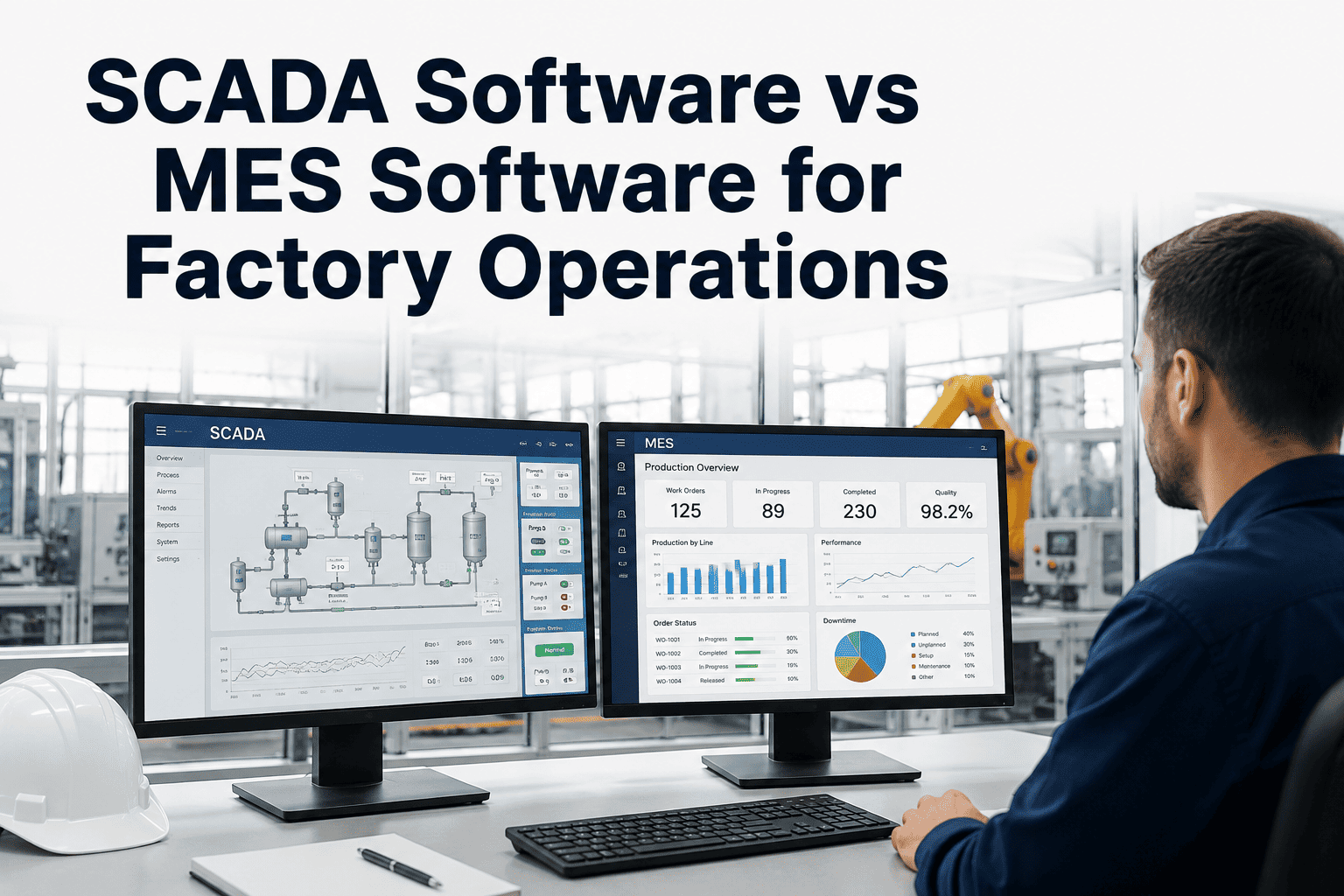
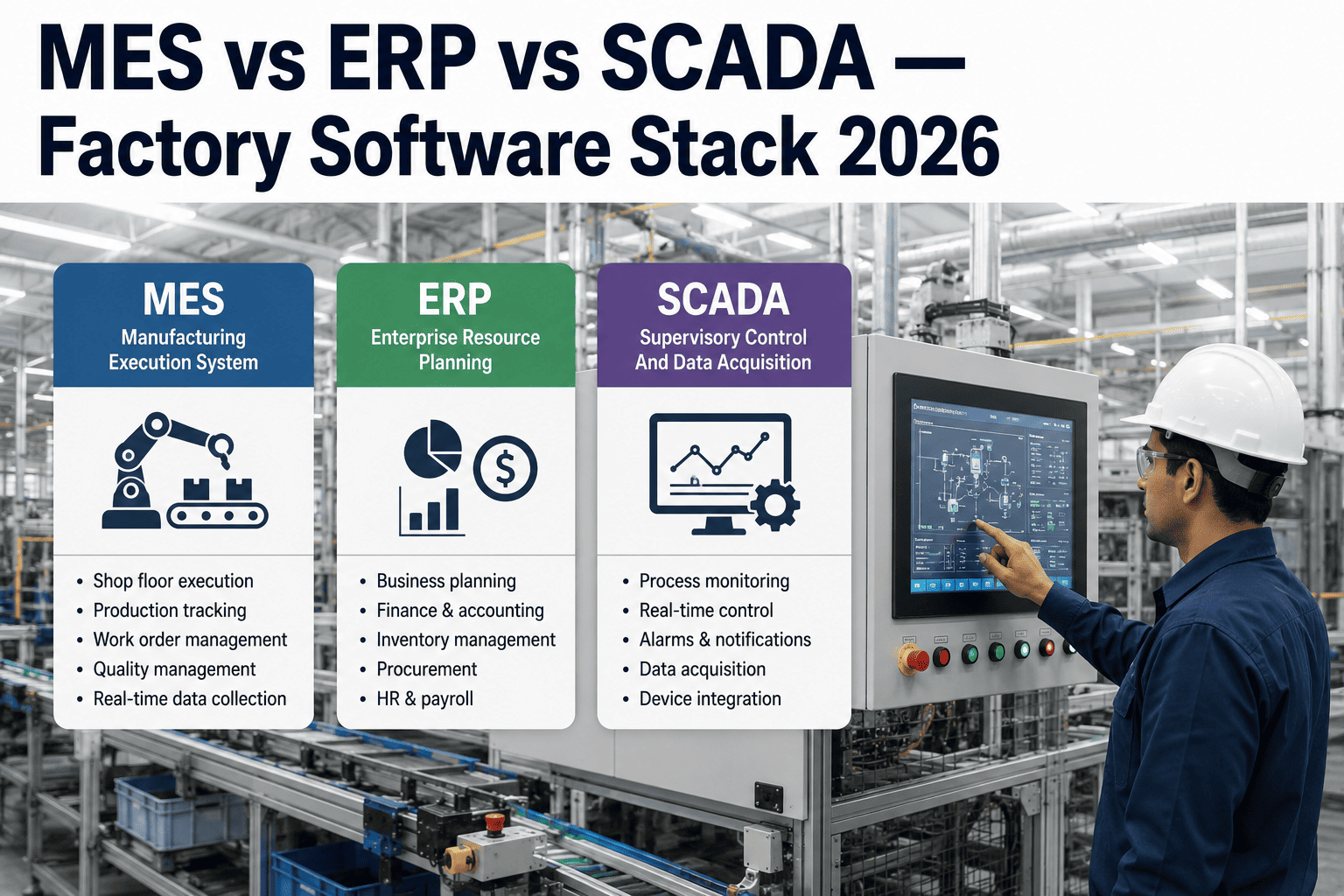
Supervisory control and data acquisition systems monitor and control physical equipment in real time — reading sensor values, controlling actuators, and giving operators direct visibility into machine and process status second by second.
MES
Manufacturing execution systems manage the production process itself — work orders, scheduling, genealogy, and quality tracking — connecting what SCADA sees on the floor to what the business plans need executed.
ERP
Enterprise resource planning systems manage the business functions of the company — finance, procurement, order management, and inventory planning — operating at a longer time horizon than daily production execution.
How the Three Layers Should Connect — And Where AI Fits
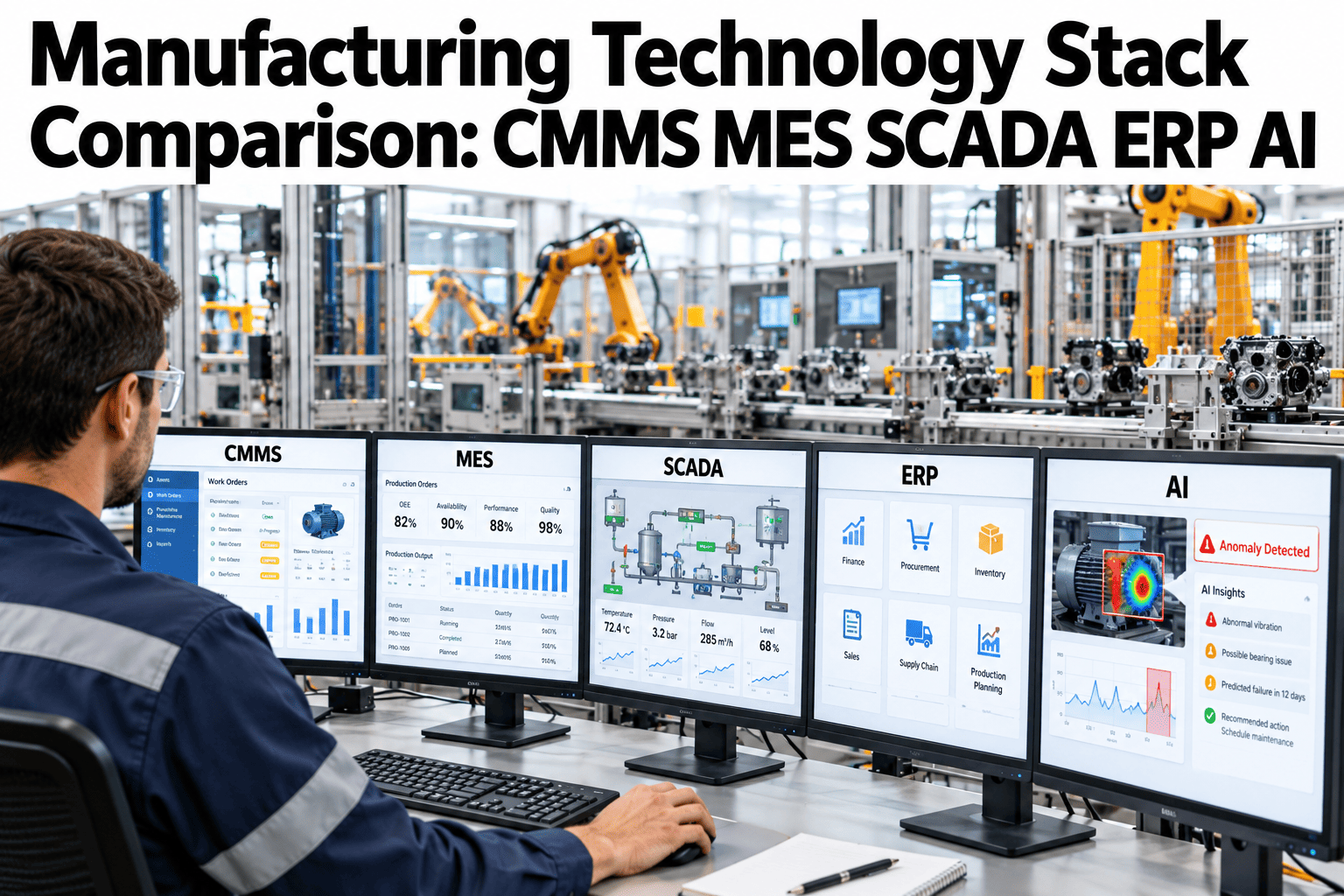
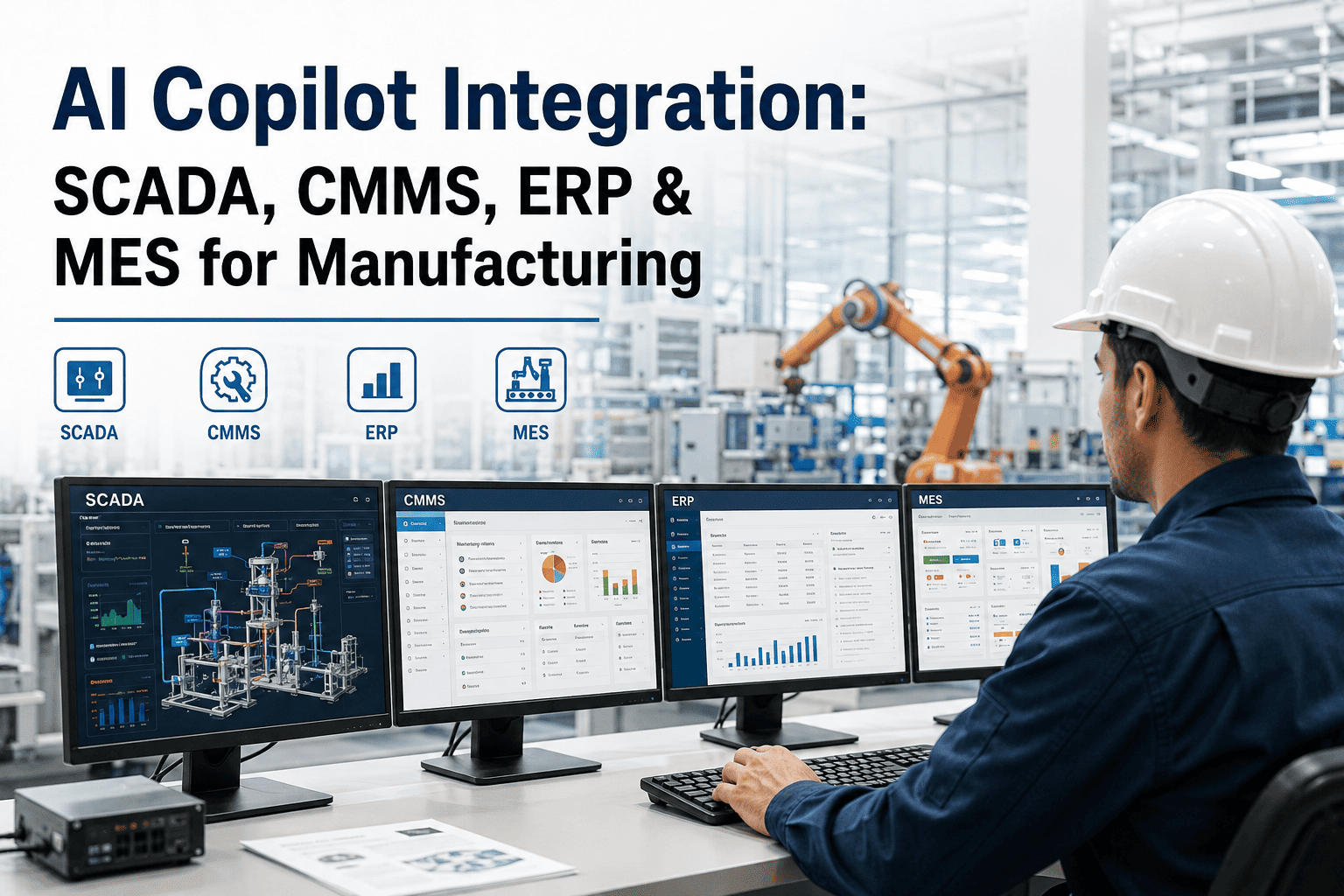
The value of MES, ERP, and SCADA multiplies when they are properly integrated rather than operating as isolated silos, but integration alone still leaves a gap — none of the three systems is designed to predict outcomes or recommend action from the combined data. That is the layer AI analytics adds.
SCADA Captures Real-Time Floor Data
Sensor readings, machine states, and process variables are captured continuously at the equipment level, forming the raw data foundation the rest of the stack depends on.
MES Structures Data Into Production Context
Raw floor data is organized into work orders, batches, and quality records, giving the data business meaning tied to what was actually produced, when, and by whom.
ERP Connects Production to Business Planning
Production execution data feeds into inventory, procurement, and financial planning, closing the loop between what the floor produced and what the business needs next.
iFactory AI Adds Predictive Intelligence Across All Three
AI analytics sits across SCADA, MES, and ERP data simultaneously, predicting equipment failures, quality deviations, and production bottlenecks that no single layer can see in isolation.
MES vs ERP vs SCADA — Side-by-Side Comparison
The table below summarizes the core distinguishing characteristics of each system, useful as a quick reference when evaluating where a specific capability gap in your plant actually belongs.
| Characteristic | SCADA | MES | ERP |
|---|---|---|---|
| Primary Focus | Equipment monitoring and control | Production execution and tracking | Business planning and resources |
| Time Horizon | Seconds to minutes | Shift to day | Weeks to quarters |
| Primary Users | Operators and control engineers | Production and quality managers | Finance, procurement, planning teams |
| Typical Data | Sensor values, alarms, machine states | Work orders, genealogy, quality records | Inventory, orders, financial transactions |
| Predictive Capability | Limited to threshold alarms | Limited to scheduled reporting | Limited to planning forecasts |
What Plant IT Leaders Say About Getting the Stack Right
We spent almost a year evaluating MES vendors before realizing our actual gap was not execution tracking, which our existing system already handled reasonably well, but the total absence of predictive intelligence connecting our SCADA and MES data. Once we reframed the problem that way, the decision got much simpler — we did not need to rip out and replace two working systems, we needed an analytics layer that could see across both of them and tell us what was about to go wrong before it did.
Add Predictive Intelligence Across Your Existing Manufacturing Stack
iFactory AI integrates with your existing SCADA, MES, and ERP systems to add the predictive analytics layer none of them were built to provide on their own.
MES vs ERP vs SCADA — Frequently Asked Questions
What is the simplest way to understand the difference between MES, ERP, and SCADA?
The simplest distinction is time horizon and scope: SCADA operates in real time at the equipment level, monitoring and controlling machines second by second. MES operates at the production level, managing work orders, scheduling, and quality tracking across a shift or day. ERP operates at the business level, managing finance, procurement, and planning across weeks or quarters. Each layer answers a different question, and confusion usually comes from vendors blending these boundaries in their marketing.
Do we need all three systems, or can one replace the others?
Most manufacturing operations benefit from having distinct systems at each layer, because each is architected for a different time horizon and user group that a single system rarely serves well simultaneously. Some smaller plants use a combined SCADA-MES or MES-ERP product, which can work for simpler operations, but larger or more complex plants typically see better outcomes maintaining separation between the three layers with proper integration between them.
Where does AI analytics fit if we already have MES, ERP, and SCADA?
AI analytics sits across all three layers simultaneously, which is a capability none of the individual systems is architected to provide on its own. SCADA can alarm on a threshold being crossed, but it cannot predict a failure days in advance using patterns across production and business data. AI analytics closes that gap by correlating data across the full stack to generate predictive insights and recommendations. Contact Support to discuss your specific system landscape.
How disruptive is it to add an AI analytics layer to an existing stack?
Adding an analytics layer is typically far less disruptive than replacing or upgrading an existing MES or ERP system, because it connects to your existing systems as a data consumer rather than replacing their core functionality. Most deployments integrate with existing historian, MES, and ERP data sources without requiring changes to how operators or planners currently use those systems day to day.
What is the right sequence for implementing or upgrading this stack?
A common and effective sequence is to first ensure SCADA data capture is reliable and complete, then confirm MES is accurately tracking production execution against that data, then integrate ERP for business planning visibility, and finally layer AI analytics on top once the underlying data foundation across all three is solid. Book a Demo to get a phased implementation plan specific to your current systems.