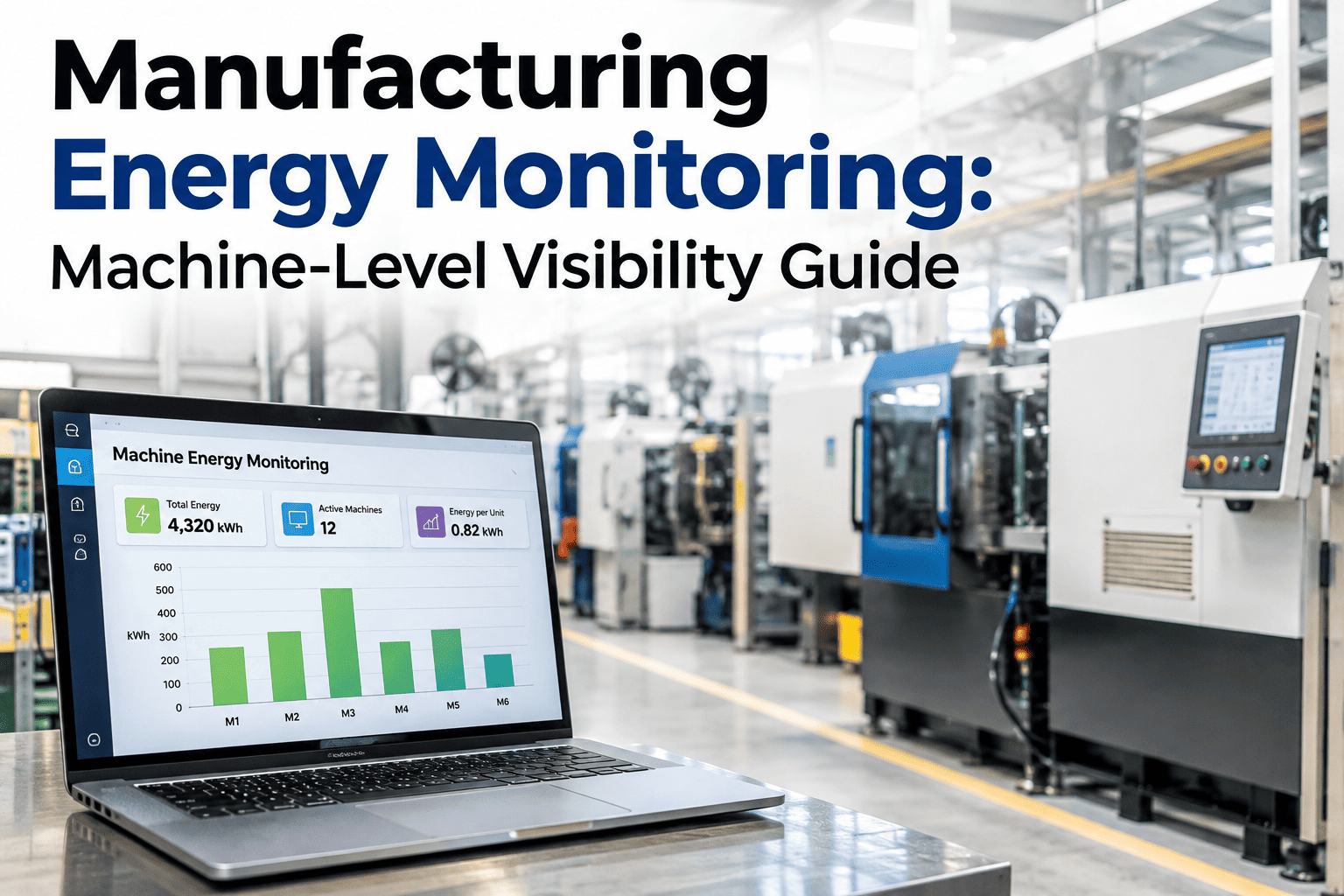
Many manufacturing electricity bills are driven as much by a single peak demand spike as by total consumption, since utilities often charge demand rates based on the highest sustained load recorded during the billing period. A plant can run efficiently all month and still pay heavily if several high-draw machines happen to start up at the same time and push demand to a new peak. Reducing that peak through machine-level monitoring, smarter load scheduling and production-aware timing is often one of the fastest ways to cut an electricity bill without changing a single process, and our team can walk you through how this works against your own demand charges.
Manufacturing electricity costs
Cut Your Electricity Bill by Managing the Single Highest Spike, Not Just Total Use
iFactory AI monitors machine-level load and helps schedule production-aware timing to reduce the peak demand spikes that drive a large share of your electricity cost.
Why peak demand matters
One Bad Fifteen-Minute Window Can Set Your Bill for the Month
Demand charges are typically based on the highest sustained load recorded during any short window in the billing period, which means a single unfortunate overlap of machine startups can set a cost that applies for the entire month regardless of how efficient the rest of your usage was.
Multiple machines start together
Several high-draw loads happen to overlap
Demand spikes briefly
Load peaks for a short window
Peak is recorded
The utility meter captures that moment as the period's peak
Bill reflects it all month
That single spike sets the demand charge for the whole period
Three reduction tactics
What Actually Reduces Peak Demand
Machine-level monitoring
Visibility into which machines contribute most to peak load moments.
Load scheduling
Staggering startup times so high-draw equipment does not activate simultaneously.
Production-aware optimization
Aligning energy-intensive steps with periods of naturally lower overall demand.
Review Your Own Peak Demand Pattern
Share your recent demand charge history and see where your peak moments are actually coming from.
Reduction table
Matching Tactic to the Type of Peak
| Peak pattern | Likely cause | Tactic to apply |
|---|
| Sharp spike at shift start | Multiple machines starting together | Stagger startup sequencing |
| Recurring midday peak | Energy-intensive process scheduled at the same time daily | Shift process timing where possible |
| Unpredictable occasional spikes | Unplanned overlap of high-draw equipment | Machine-level alerts on approaching thresholds |
Reduction pipeline
Four Steps to Lowering Your Peak Demand
1
Identify peak moments
Review past demand data to find when peaks actually occur.
2
Trace contributing machines
Use machine-level data to see which equipment drove each peak.
3
Reschedule or stagger
Adjust startup timing or process scheduling to avoid overlap.
4
Monitor and alert
Set alerts for approaching demand thresholds going forward.
Common pitfalls
Three Mistakes That Keep Peak Demand High
1
No visibility into what caused past peaks
Without machine-level data, the spike's cause remains a mystery.
2
Startup sequencing left to chance
Machines are turned on whenever convenient, not with demand in mind.
3
No real-time alert before a new peak forms
A preventable spike happens because nobody saw it building in time to act.
Expert review
Peak demand reduction is often the fastest energy cost win available because it does not require changing any process, only when that process happens to run. Before investing in efficiency upgrades, check whether simple scheduling changes could cut the bill first.
Watch for
Recurring peak charges tied to the same time of day or shift transition month after month.
Do next
Pull your last several months of demand data and identify the exact timing of each peak before changing anything.
— iFactory energy specialists
Frequently asked questions
What Plants Ask About Reducing Peak Demand
How much can peak demand reduction actually save?
The savings depend heavily on your specific utility rate structure and how much of your bill is driven by demand charges versus total consumption, so reviewing your own rate and demand history gives the clearest picture.
Ask about your specific rate structure.
Does staggering machine startups slow down production?
Staggering is usually a matter of seconds to minutes of offset timing rather than a meaningful delay, so in most cases it has little to no impact on overall production schedules.
Discuss your startup sequence.
How do we know which machines caused a past peak?
Machine-level monitoring data, if available for the time of the peak, can show which equipment was drawing load at that exact moment, making it possible to trace the spike back to specific machines.
Talk through your monitoring data.
Can real-time alerts actually prevent a peak before it happens?
An alert that fires as demand approaches a threshold gives operators a window to delay a non-critical load, which can prevent an avoidable spike that would otherwise set the period's peak.
Ask about real-time alerting.
Is this approach different for plants on time-of-use rates?
Yes, time-of-use rates add another dimension since the cost of a given demand level varies by time of day, so scheduling decisions need to account for both avoiding peaks and avoiding expensive rate windows.
Discuss your rate schedule.
From one costly spike to a managed peak
Cut Your Demand Charges Without Changing a Single Process
Book a session with iFactory AI to review your demand data and build a plan to reduce your peak electricity charges.