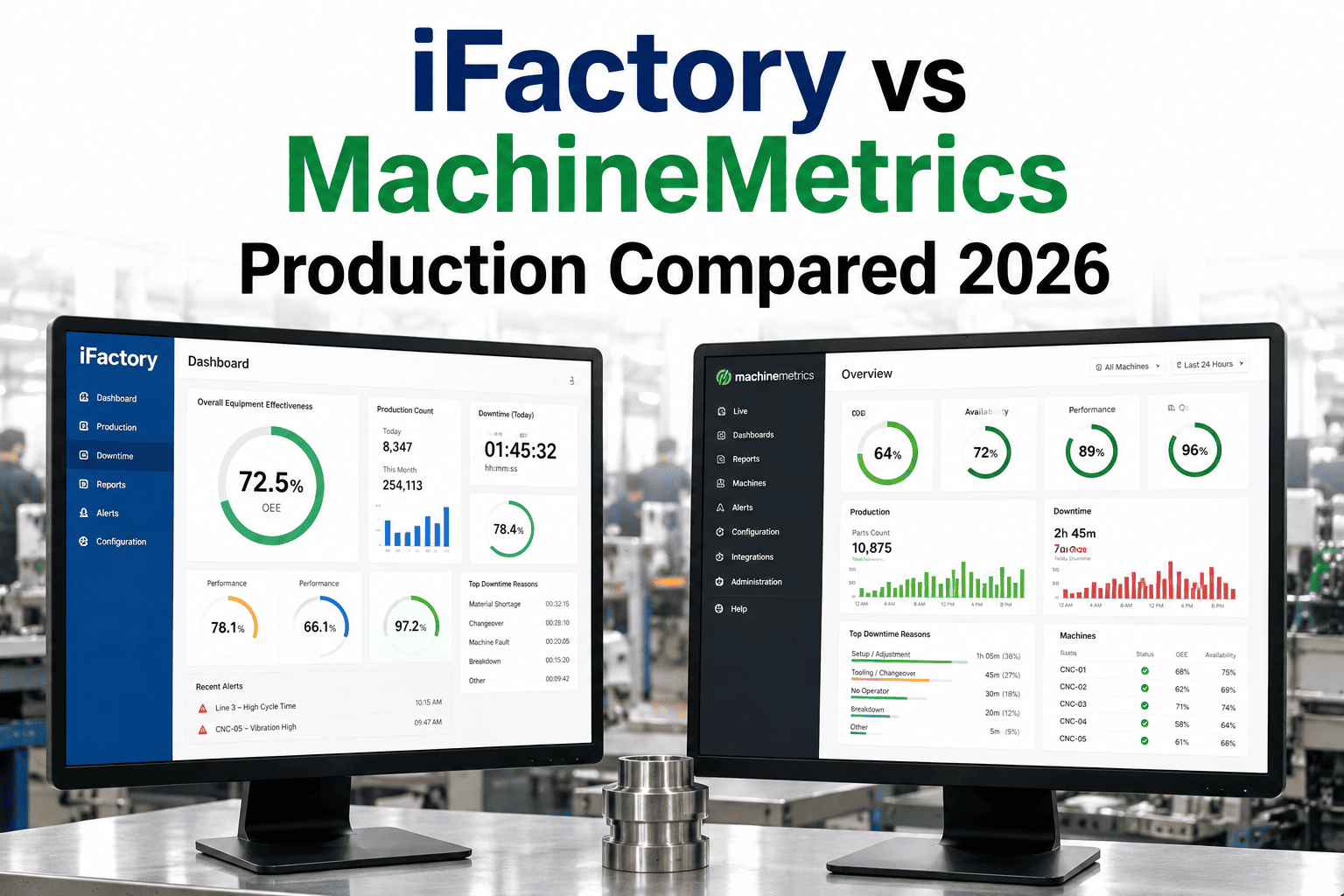
Procurement teams evaluating factory software often start by asking which platform has more features, but the more useful question is which platform matches the actual problem you're trying to solve. MachineMetrics built its reputation on machine monitoring and OEE tracking, connecting to PLCs and pulling clean production data into dashboards operators and supervisors already trust. iFactory approaches the same factory floor from a different angle, layering AI vision inspection, predictive maintenance, and golden-run OEE optimization on top of the monitoring layer rather than stopping at visibility alone. This comparison walks through both platforms criteria by criteria so you can weigh the difference honestly, and teams can book a demo to see where iFactory fits your specific stack.
PLATFORM COMPARISON · 2026
iFactory vs MachineMetrics: A Criteria-Based Look
Full AI suite versus machine monitoring platform, compared across capabilities, deployment, and integration depth.
The Core Difference in One View
MachineMetrics
Machine Monitoring & OEE Visibility
Strong at connecting to shop-floor machines and surfacing production data through dashboards, built primarily for visibility rather than autonomous AI decision-making.
iFactory
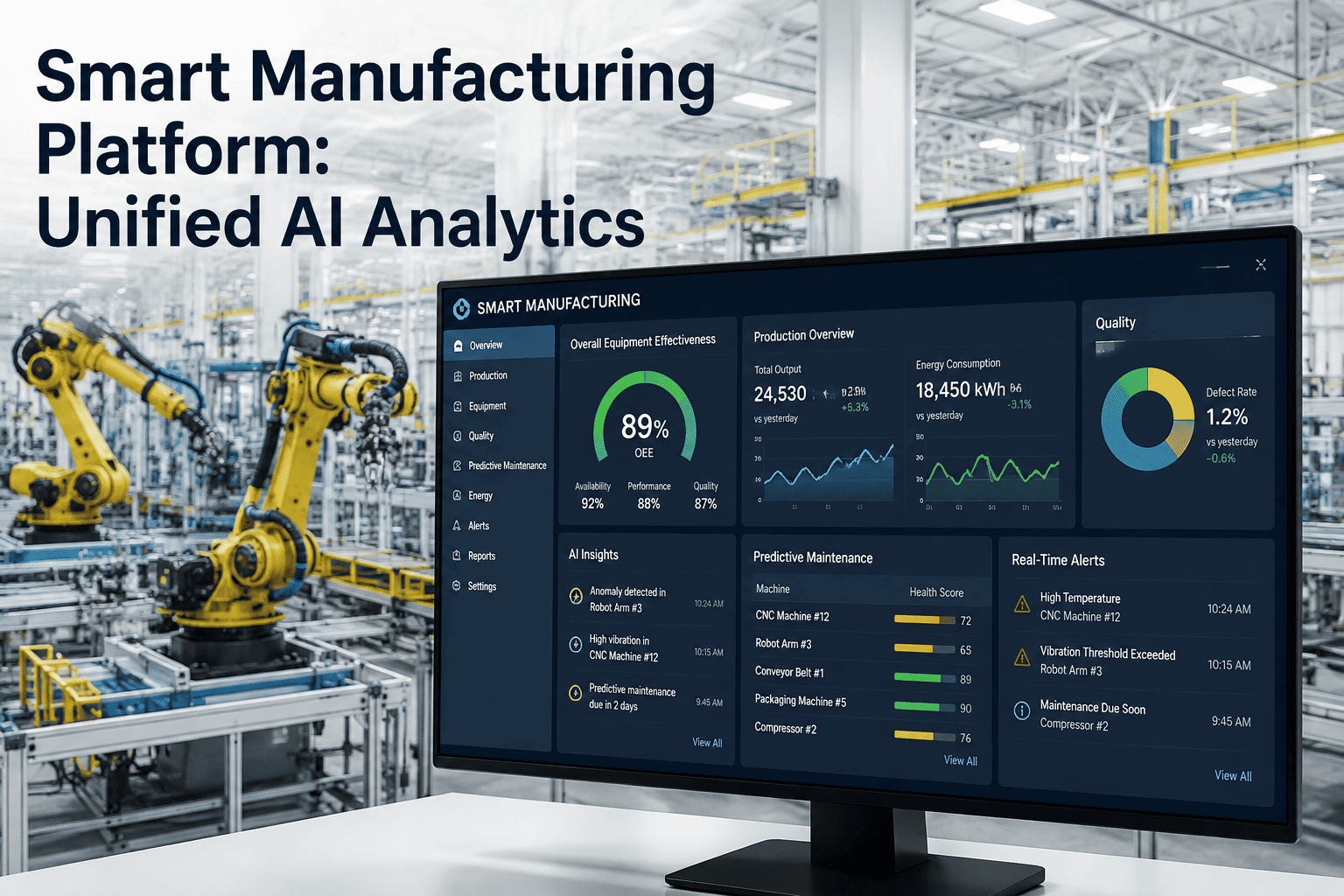
AI Vision, Predictive Maintenance & OEE Optimization
Combines monitoring with active AI models for defect detection, failure prediction, and golden-run performance targets, moving beyond dashboards into automated decisions.
Capability-by-Capability Comparison
See the AI Layer MachineMetrics Doesn't Cover
Watch a live walkthrough of vision inspection and predictive maintenance running alongside standard OEE tracking.
Which Platform Fits Which Situation
Choose Monitoring-First
If your immediate need is simply getting reliable, standardized production data out of aging or mixed-vendor machines into a dashboard, a monitoring-focused platform solves that specific problem well.
Choose an AI-Native Platform
If the goal extends beyond visibility into actively catching defects, predicting failures, and closing the gap between average and best-ever shift performance, an AI-native platform addresses the decision layer monitoring alone leaves untouched.
Where MachineMetrics Has an Edge
A fair comparison means acknowledging trade-offs both ways. MachineMetrics has a longer track record specifically in CNC and discrete manufacturing monitoring, with broad out-of-box machine connector support built over many years in that niche. Plants with a narrow, well-defined monitoring need and minimal appetite for AI model management may find that simplicity valuable rather than a limitation.
Questions Procurement Teams Ask
Can iFactory replace MachineMetrics entirely, or does it need to run alongside it?
iFactory includes its own machine connectivity and OEE tracking layer, so it's designed to function as a full replacement rather than requiring a separate monitoring tool underneath it. Teams currently on MachineMetrics can review a migration path and data continuity plan through
support.
How long does a typical migration from an existing monitoring platform take?
Migration timelines depend heavily on machine count and existing connector complexity, but most single-plant migrations complete within a defined multi-week window covering connectivity validation, historical data import, and a parallel-run period before cutover. A detailed timeline specific to your machine inventory is available in a
demo session.
Does iFactory support the same machine and PLC types as MachineMetrics?
iFactory supports common industrial protocols and PLC brands used across discrete and process manufacturing, and connector compatibility for specific legacy or uncommon equipment is confirmed during a technical evaluation call rather than assumed from a general compatibility list.
Is the AI vision and predictive maintenance functionality optional or bundled?
Deployment can start with the monitoring and OEE layer alone and add vision inspection or predictive maintenance modules later as priorities and budget allow, rather than requiring the full suite from day one. This phased approach is common for plants transitioning from a pure monitoring tool.
How do the two platforms compare on total cost of ownership?
Total cost depends on module scope, machine count, and whether AI capabilities are included, so a direct dollar comparison requires matching feature scope rather than comparing list prices in isolation. A scoped cost comparison based on your current monitoring spend can be built during an evaluation call.
Integration and Ecosystem Fit
Beyond core capability, procurement teams need to know how each platform slots into an existing technology stack, since a poor integration fit can quietly undermine even a strong feature set.
Evaluation Questions Worth Asking Both Vendors
About Current Capability
Ask for a live demo against your own machine data rather than a generic sample dataset, and request specific latency numbers for any real-time features being evaluated.
About Future Roadmap
Ask how each vendor's roadmap addresses AI-driven capability over the next 12 to 24 months, since a monitoring-only platform's plan to add prediction or vision matters as much as what exists today.
Get a Side-by-Side Evaluation for Your Plant
Compare capabilities against your specific machine inventory and current monitoring setup.

.jpeg)
