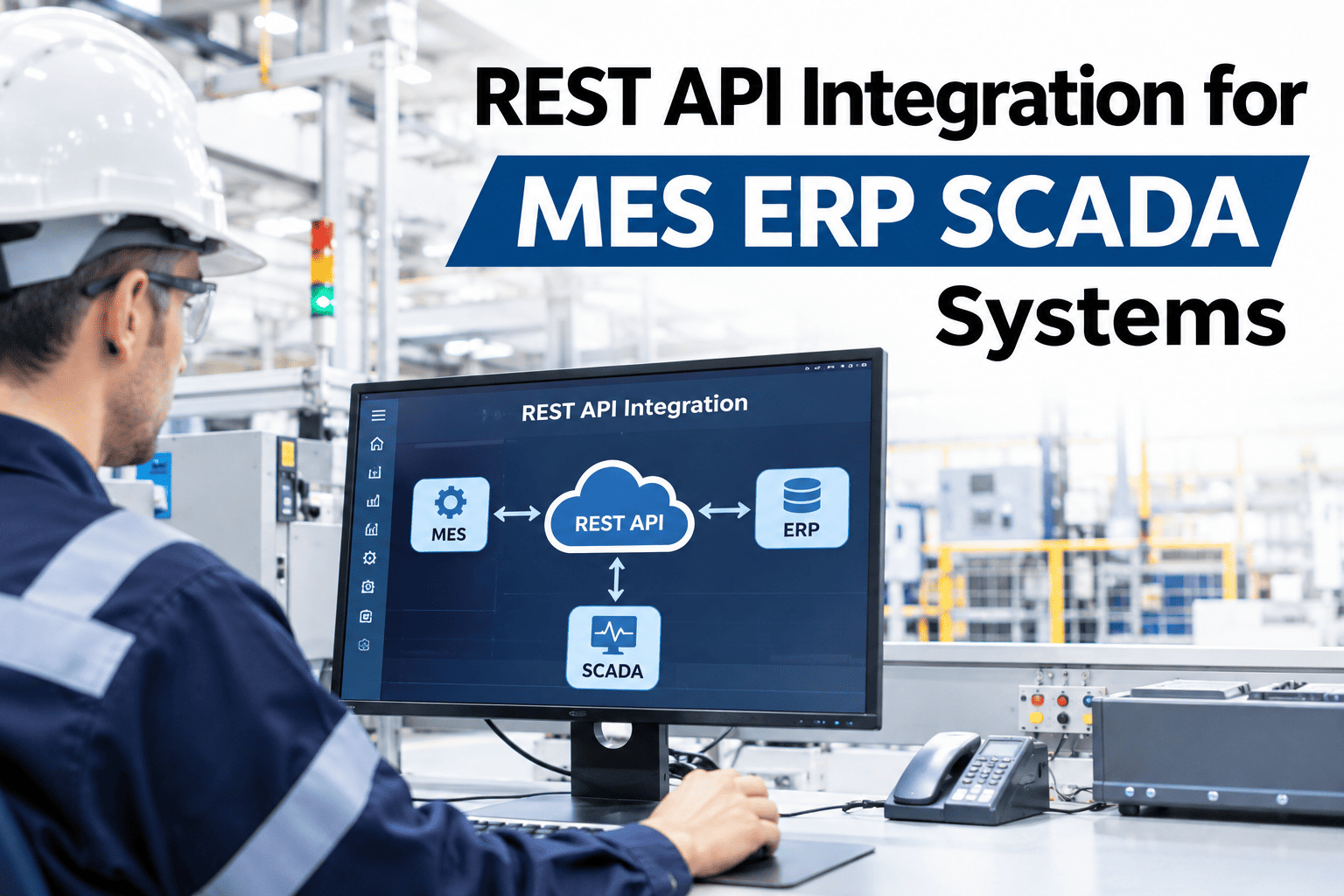
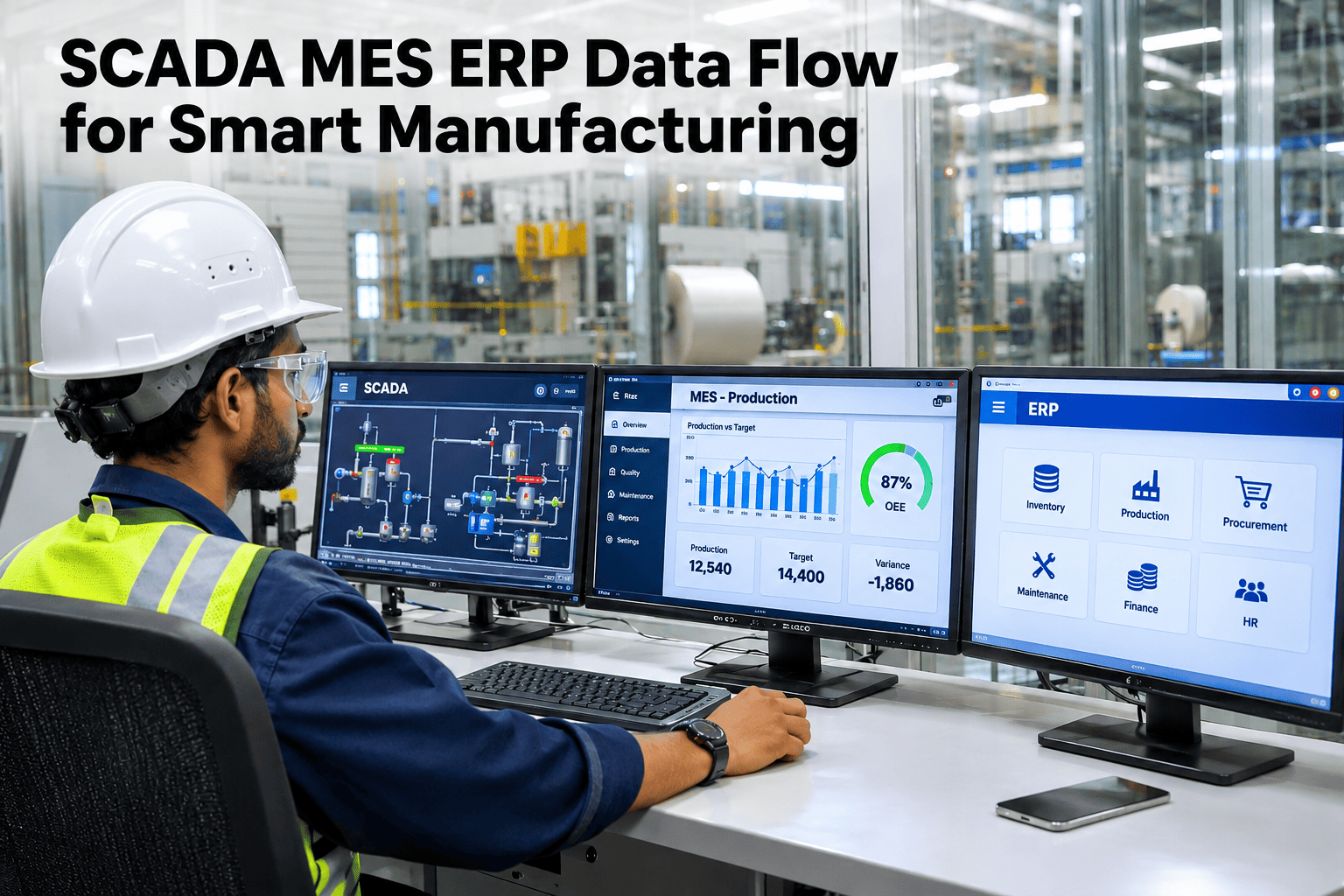
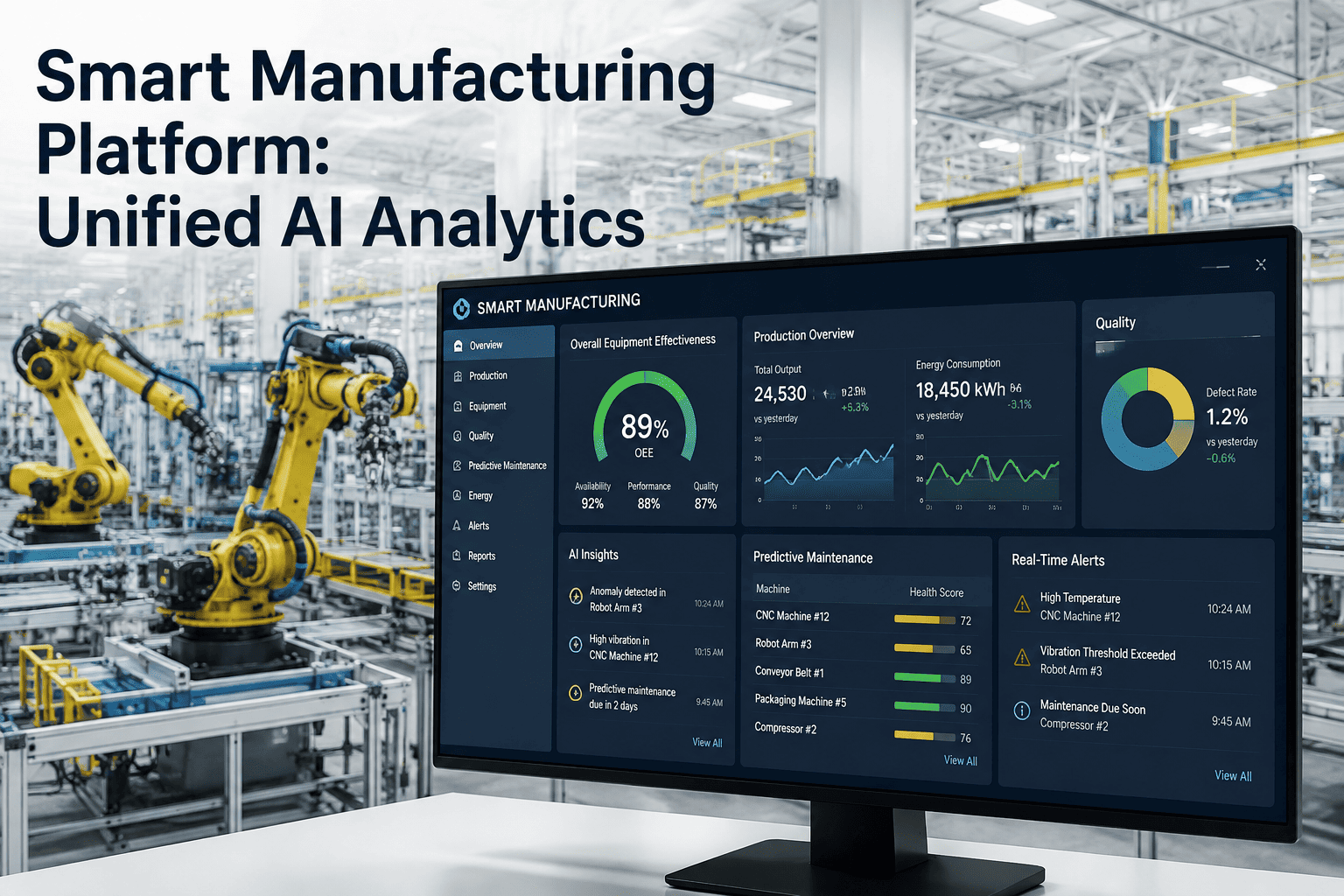
Every point-to-point connection between MES, ERP, and SCADA systems is its own maintenance obligation — it breaks quietly whenever either system on either end gets updated, and nobody notices until a report comes back wrong. iFactory, an on-premise AI platform built on standards-based integration, connects these systems through REST APIs instead of fragile custom links. Manufacturing IT and operations teams who want to see this architecture applied to their own systems can request a demo with our team.
REST API Integration · MES, ERP, SCADA, 2026
A Point-to-Point Link Breaks Quietly. An API Layer Fails Loudly, in One Place.
iFactory AI connects MES, ERP, SCADA, and quality systems through REST APIs organized by ISA-95 layer, so one integration pattern replaces a tangle of custom connections.
L2 → L3
SCADA to MES — OPC UA
L3 → L4
MES to ERP/BI — REST API
Edge → L3
IIoT sensors — MQTT/Sparkplug B
Why point-to-point fails at scale
Every Custom Connection Is a Debt That Compounds
A single custom integration between two systems is manageable. Ten of them, each written by a different person at a different time, with no shared pattern between them, becomes a web where nobody fully understands what breaks when any one system changes. Industry surveys on manufacturing AI readiness name legacy integration and data silos as the top barrier to adoption, ahead of model quality or compute cost (industrial IoT integration survey, 2026).
Which protocol fits which layer
REST, OPC UA, and MQTT Solve Different Problems
| Protocol | Best fit | Why |
|---|
| OPC UA | PLC/SCADA to MES (L2 → L3) | Carries industrial semantics, subscriptions, and type information natively |
| REST API | MES to ERP/BI (L3 → L4) | Cacheable, well-governed, and the standard pattern for enterprise web integration |
| MQTT/Sparkplug B | Edge sensors to aggregator | Lightweight, event-driven, scales to high sensor counts |
What a well-designed API layer looks like
Three Properties That Separate a Durable Integration From a Fragile One
Idempotent commands
Repeating a request doesn't cause duplicate work orders or double-counted production.
Versioned endpoints
A system update doesn't silently break every consumer of its API.
Shared data model
Every system refers to the same asset, product, and order IDs, not its own local naming.
See How Many Point-to-Point Links Are Already in Your Architecture
Share a map of your current MES, ERP, and SCADA connections, and iFactory AI will show where a standardized API layer would reduce fragility.
Migrating without a rip-and-replace
Most Plants Integrate Around Legacy Systems, Not Instead of Them
Few manufacturers can justify replacing a working MES or ERP just to simplify integration. A middleware or API gateway layer sitting between legacy systems and newer applications is the more common path — it lets existing systems of record stay in place while giving every new application a single, modern interface to connect through.
Common integration mistakes
Four Patterns That Create the Debt in the First Place
1
Building each connection as a one-off
No shared pattern means every new integration starts from scratch.
2
Skipping a shared data model
Each system keeps its own asset IDs, requiring a mapping table that drifts out of sync.
3
No ownership of the integration itself
A connection nobody is accountable for is a connection nobody notices breaking.
4
Treating security as an afterthought
API authentication bolted on later rather than designed in from the first connection.
Expert review
What a Manufacturing IT Architect Checks First
An integration layer earns its keep when a system update no longer means tracing through a dozen custom scripts to see what else might break.
Verdict
Strong when protocol choice follows the ISA-95 layer it's crossing, rather than one protocol forced everywhere.
Watch for
A shared data model that exists on paper but isn't actually enforced at every integration point.
Do next
Map every current point-to-point connection between your MES, ERP, and SCADA systems and note who maintains each one.
Frequently asked questions
What Manufacturing IT Teams Ask About API Integration
Do we need to replace our existing MES or ERP to do this properly?
Why not just use REST everywhere instead of OPC UA for PLC data?
OPC UA carries industrial semantics, subscriptions, and type information that a generic REST call doesn't natively support, which is why it remains the standard for PLC and SCADA connectivity even as REST dominates higher-layer integration.
Ask support about protocol selection for your layers.
How big a barrier is integration debt to AI adoption specifically?
Industry surveys on manufacturing AI readiness consistently name legacy integration and data silos as the top barrier, ahead of model quality or compute cost (industrial IoT integration survey, 2026).
Discuss your own integration readiness for AI.
What does versioning an API endpoint actually prevent?
It prevents a system update from silently breaking every other system that depends on the old response format, since consumers can migrate to a new version on their own timeline rather than being forced to update simultaneously.
Ask support about versioning practices.
How long does a typical integration layer project take?
Replace the tangle with one pattern
Connect MES, ERP, and SCADA Through a Standard API Layer
Book a demo to see how iFactory AI replaces fragile point-to-point links with standards-based integration.