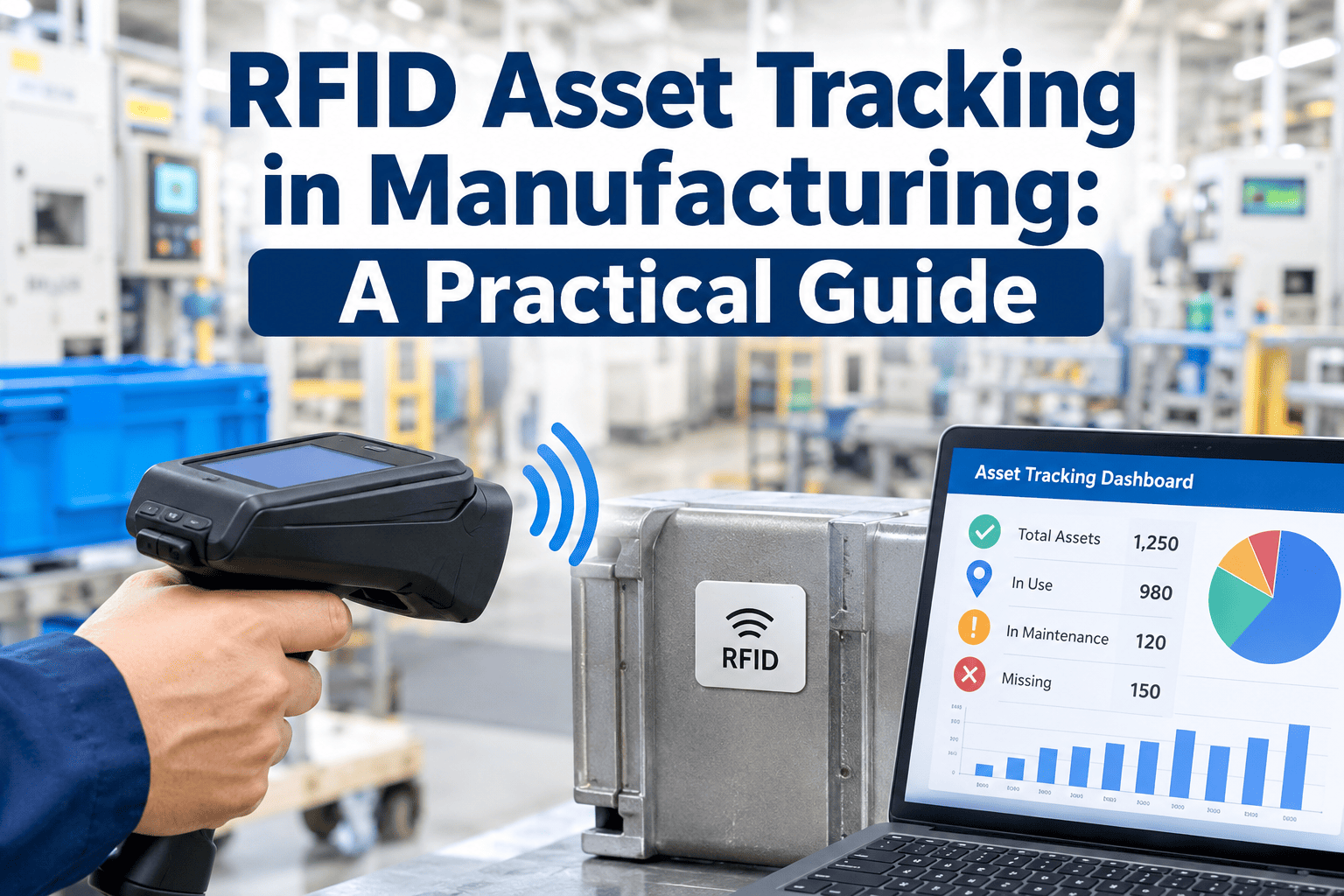
RFID Asset Tracking in Manufacturing: A Practical Guide

By James Smith on November 13, 2026

rfid-asset-tracking-manufacturing-guide

Manufacturers using RFID report inventory accuracy as high as 99.9 percent, compared with 60 to 80 percent for traditional barcode systems (Auburn University RFID Lab, 2026). That gap compounds across a shop floor with thousands of tools, parts, and in-process assets moving between stations every shift. iFactory, an on-premise AI platform with parts and inventory management built in, connects RFID reads directly into the same system tracking work orders and asset history. Plant teams who want to see what RFID visibility looks like on their own floor can request a demo with our team.

RFID Asset Tracking · Manufacturing, 2026

Know Where Every Tool, Part, and Asset Actually Is — Without Scanning Anything

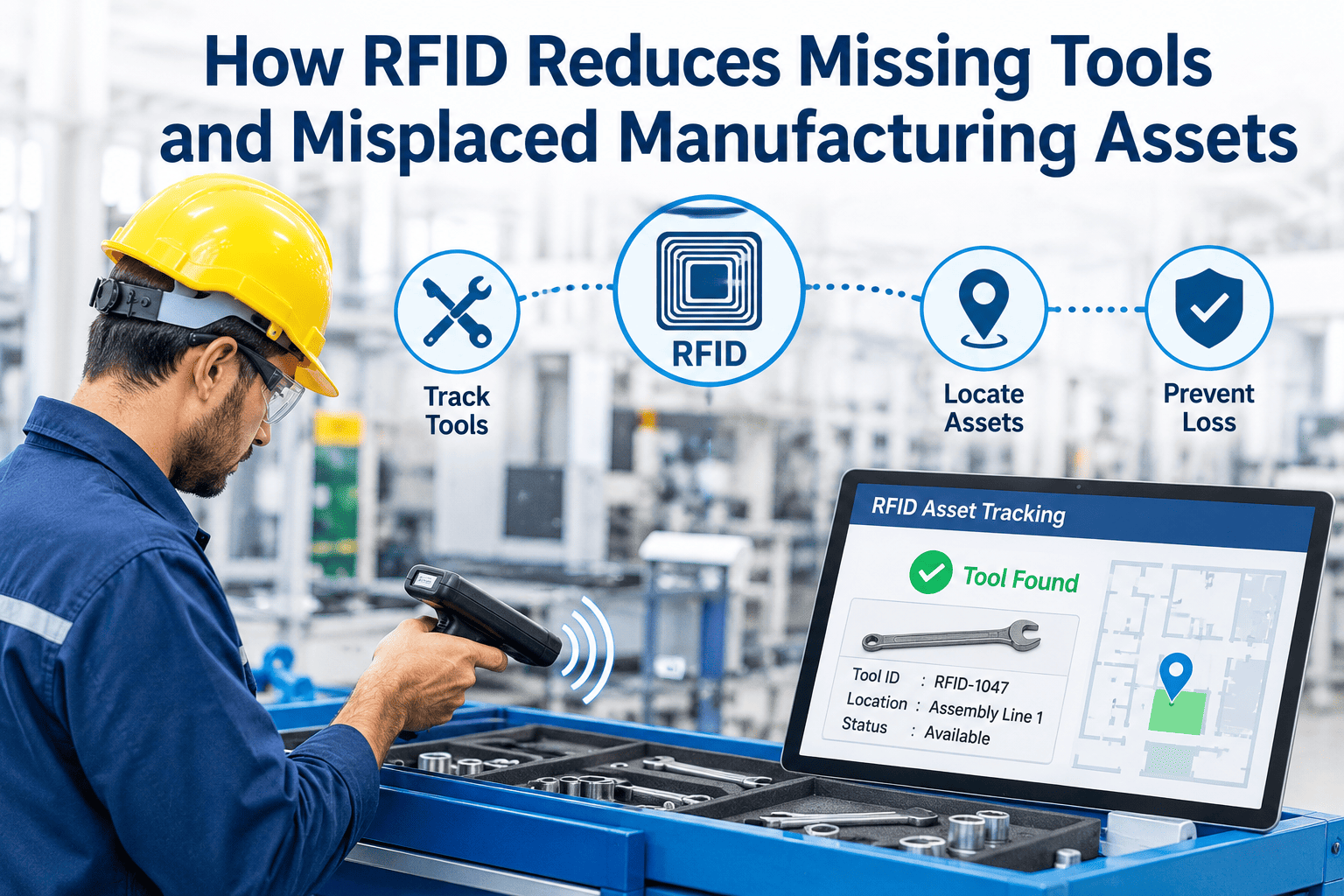
iFactory AI reads RFID tags automatically as assets pass fixed readers on the floor, turning location tracking into a background process instead of a manual task.

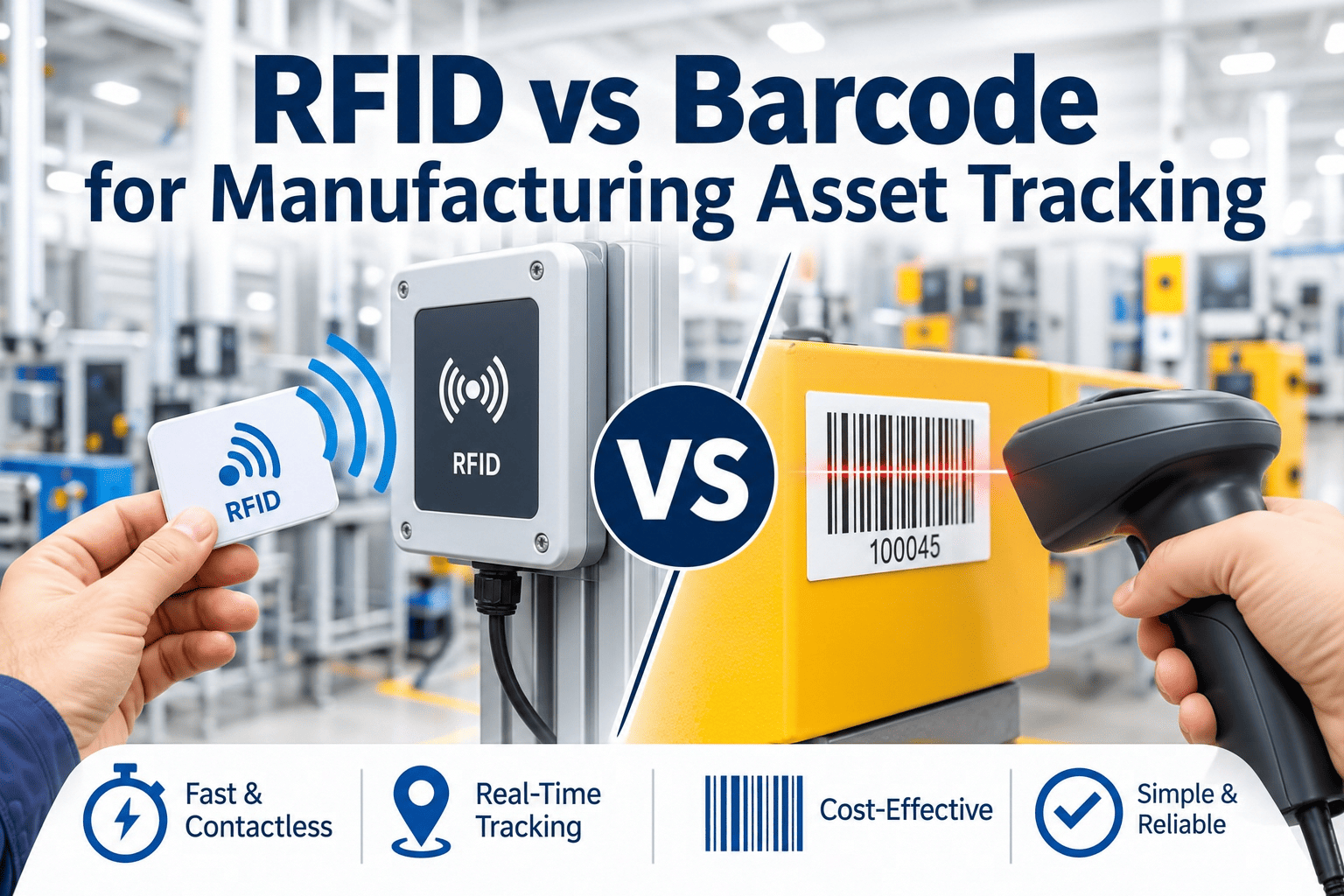
Barcode accuracy

60–80%
RFID accuracy

up to 99.9%
How it actually works

Fixed Readers Capture Movement Without a Scan

An RFID tag on a tool, container, or component is read automatically as it passes a fixed reader mounted at a dock door, a station entry, or a rack — no line-of-sight and no manual scan required. Dozens of tags can be captured in a single pass, which is what separates RFID from a barcode system that still processes one item at a time.

Where RFID adds the most value

Four Use Cases Where Automatic Capture Pays Off

Tool tracking
High-value or frequently shared tools are located instantly instead of searched for by memory.
Work-in-process tracking
A component's position in the process is known continuously, not reconstructed from scan logs.
Receiving and staging
Material entering the plant is captured automatically at the dock door reader.
Cycle counting
A rack full of tagged items is counted in seconds rather than scanned one at a time.
What a deployment actually needs

Three Components of an RFID Asset Tracking Setup

ComponentWhat it doesTypical placement
Passive RFID tagsAttached to each tracked asset, battery-free and low costTools, containers, components, pallets
Fixed readersCapture tag reads automatically as assets passDock doors, rack entries, line checkpoints
Handheld readersSupplement fixed readers for ad hoc checks and auditsCarried by staff for spot checks

See What RFID Would Catch on Your Current Floor Layout

Share your plant layout and current asset tracking process, and iFactory AI will walk through where fixed readers would deliver the most value.

The labor side

Fewer Manual Scans, Less Audit Time

Beyond accuracy, the labor saved by eliminating manual scanning is a significant part of the RFID case — research estimates labor cost reductions of up to 50 percent from reduced manual scanning and audit time (Deloitte, 2026). A cycle count that used to take a technician an afternoon can be completed in a single walkthrough of a tagged storage area.

RFID vs barcode, briefly

When RFID Is the Right Call, and When It Isn't

Barcode fits better when
Asset counts are modest and audits infrequent
Budget constraints rule out reader infrastructure
Line-of-sight scanning is already fast enough
RFID fits better when
High-value tools go missing or get searched for regularly
WIP needs continuous, not periodic, visibility
Bulk reads at checkpoints would eliminate a real bottleneck
Connecting to existing systems

RFID Reads Are Only Useful Linked to Asset Records

A tag read on its own is just a timestamp and an ID — the value comes from linking that read to the asset's record in the same system tracking its maintenance history, work order status, and location history. Most deployments connect RFID data directly into the CMMS or MES rather than running it as a separate standalone tracking layer.

Expert review

What a Plant Operations Manager Checks First

RFID asset tracking earns its cost when reader placement actually covers the chokepoints where assets are currently getting lost or mis-tracked, not just the easiest points to install.
Verdict
Strong when tag reads are linked directly into the same system that already tracks work orders and maintenance history.
Watch for
Tagging everything uniformly instead of starting with the specific assets that actually go missing or get searched for repeatedly.
Do next
List the three tools or asset types that cause the most search time on your floor and check whether a fixed reader at their typical storage point would solve it.
Frequently asked questions

What Plant Teams Ask About RFID Asset Tracking

How much more accurate is RFID really compared to barcode?
Manufacturers using RFID report inventory accuracy as high as 99.9 percent, compared with 60 to 80 percent for barcode systems (Auburn University RFID Lab, 2026). See what this means for your inventory process.
Do we need to tag every single asset on the floor?
No — most deployments start with high-value or frequently searched-for assets and expand coverage from there, rather than tagging everything on day one. Ask support how to prioritize what to tag first.
How does RFID handle a metal or liquid-heavy manufacturing environment?
Tag type and reader placement both need to account for RF interference from metal and liquid, which is a standard part of an RFID deployment plan in industrial settings. Discuss your specific plant environment.
What's the realistic payback period for an RFID investment?
Payback depends heavily on current search time, audit labor cost, and asset loss rate, so it varies significantly by plant rather than being a fixed figure. Ask support for a payback estimate based on your current costs.
Can this coexist with our existing barcode system during a transition?
Yes — most plants run RFID and barcode side by side during a phased rollout, converting high-value or high-churn asset categories first rather than switching everything at once. Talk through a phased rollout for your plant.
Stop searching, start reading automatically

Connect RFID Reads Directly Into Your Asset Records

Book a demo to see how iFactory AI turns automatic RFID capture into real-time asset visibility for your plant.

Share This Story, Choose Your Platform!