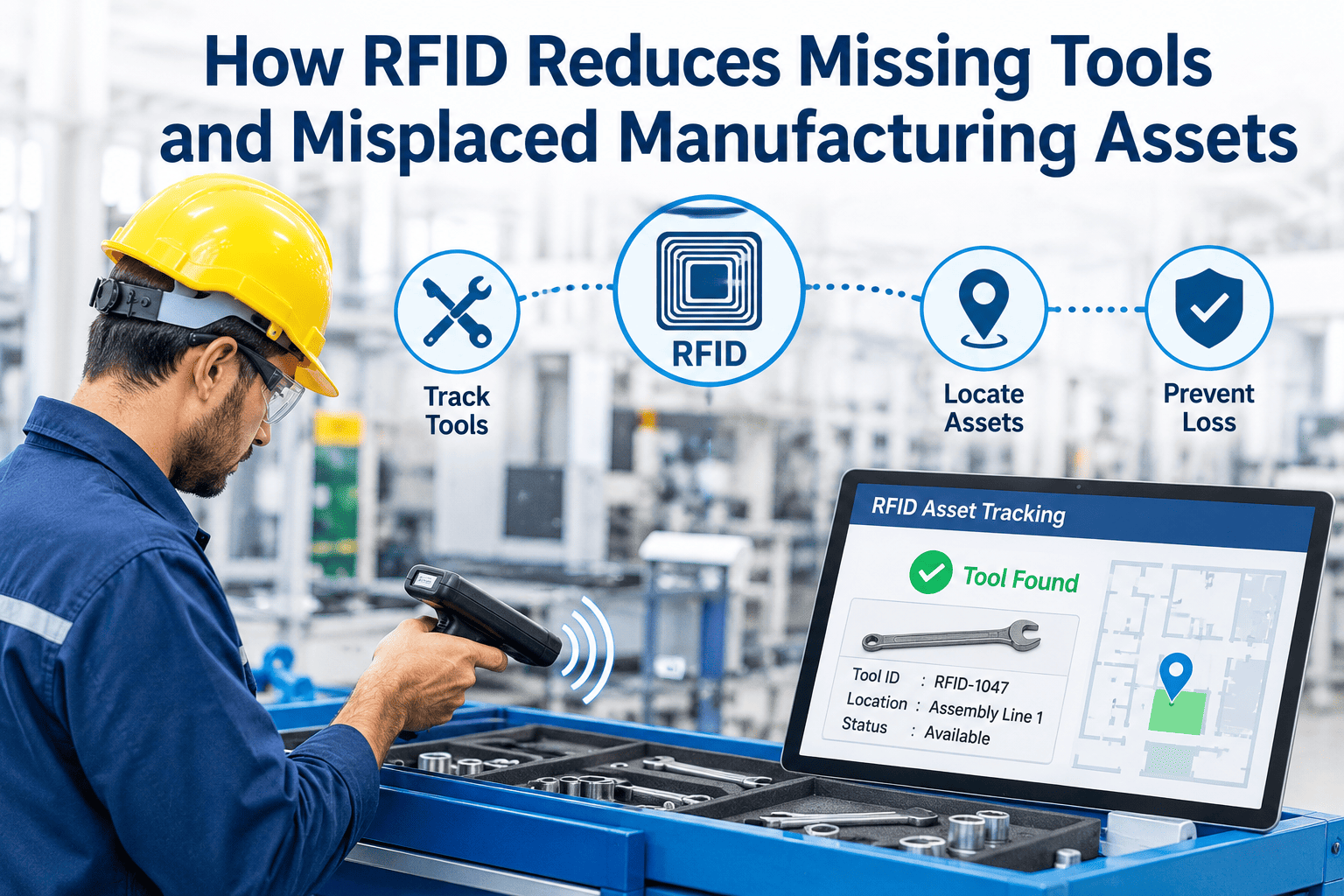
A missing tool rarely stays missing forever — it's usually sitting in the wrong toolbox, the wrong station, or the back of a cabinet, and someone eventually finds it after burning twenty minutes of search time. iFactory, an on-premise AI platform with parts and inventory management built in, connects tagged tools to a live location record, so "missing" becomes "last seen at Station 4, 9:42 AM." Plant teams who want this visibility on their own tool crib can request a demo with our team.
RFID Tool Tracking · Missing Assets, 2026
A Tool Isn't Missing. It's Just Not Where the System Last Saw It.
iFactory AI tags high-value and frequently shared tools, so every search starts with a last-known location instead of a walk around the plant.
Tool crib
7:15 AM
→
Station 2
8:40 AM
→
Station 4
9:42 AM
→
Last seen here
Current
Where tool search time actually goes
The Hidden Cost of "Someone Probably Has It"
Search time for a missing tool rarely gets tracked as its own cost center, which is exactly why it persists — a technician spending twenty minutes looking for a torque wrench doesn't show up on any downtime report, even though that time is lost production capacity just the same as a machine stop.
What accountability looks like
Three Things RFID Adds That a Sign-Out Sheet Can't
Automatic capture
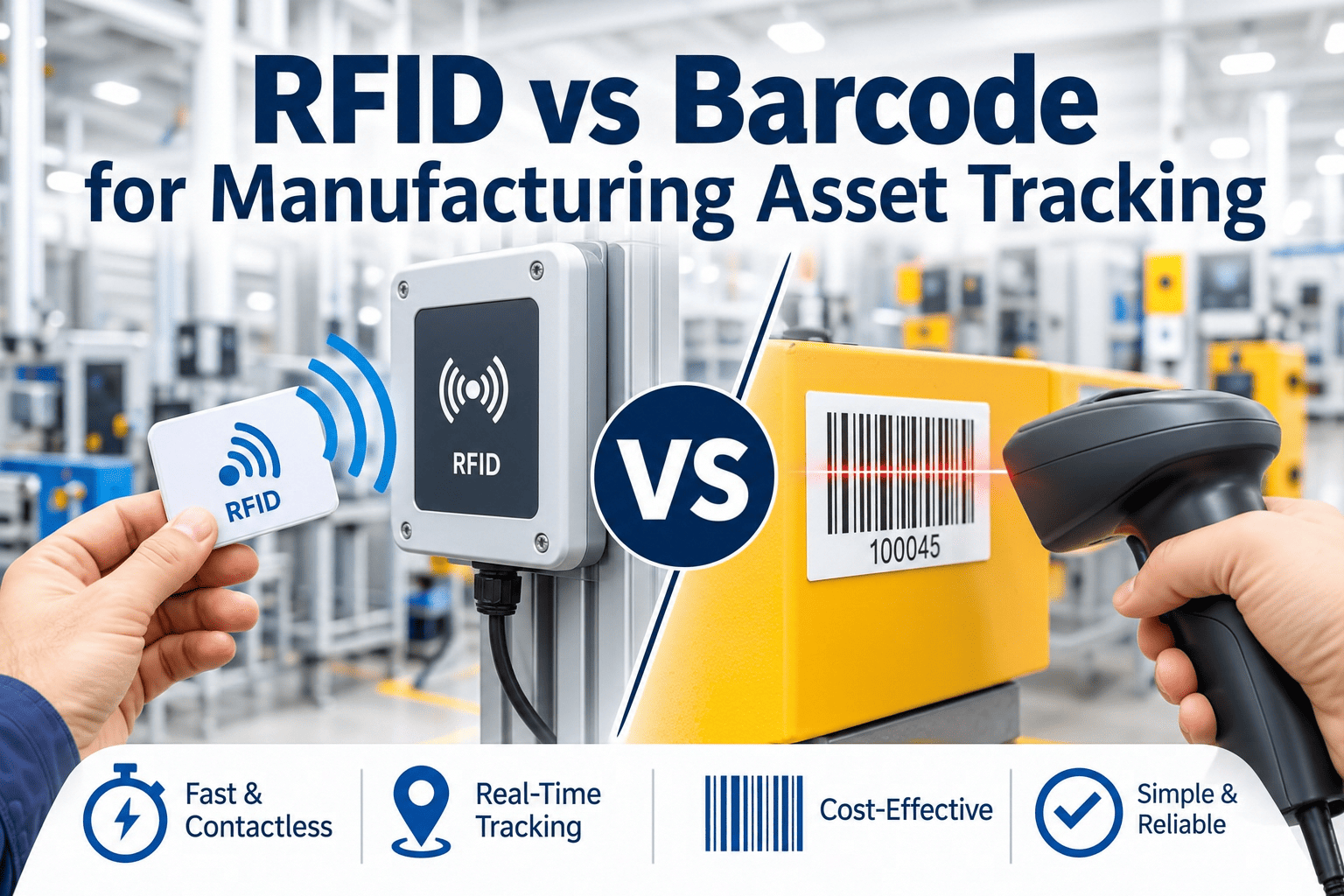
Location updates happen as the tool passes a reader, with no dependency on someone remembering to log it.
Last-known location
A search starts from where the tool was last read, not from scratch.
Usage history
A pattern of a specific tool frequently ending up at the same station points to a real workflow fix, not just a one-off loss.
Which tools to tag first
Not Every Tool Needs a Tag on Day One
| Tool category | Tag priority | Why |
|---|
| High-value calibrated instruments | High | Replacement cost and recalibration lead time both make loss expensive |
| Shared tools across stations | High | The most common source of "who has it" search time |
| Single-station dedicated tools | Low | Rarely leaves its home station, so tracking value is limited |
| Low-cost consumable tools | Low | Replacement is cheaper than the tag and reader infrastructure |
See Which of Your Tools Are Costing the Most Search Time
Share your current tool crib inventory and recent search or replacement incidents, and iFactory AI will show where tagging would pay off fastest.
Connecting physical and digital records
Why the Tag Needs to Link to Something
A tag read is only as useful as the record it's tied to — linking a tool's RFID tag to its maintenance history, calibration due date, and current custodian turns a location ping into something a planner can actually act on, rather than just a dot on a map with no context.
What changes operationally
Four Steps From a Missing Tool to a Found One
1
Technician needs the tool
Instead of asking around, they check the tool's last recorded location.
2
Location is current
If a reader recently captured the tag, the location is trusted and the search ends quickly.
3
Location is stale
An older last-read time narrows the search to the time window since, rather than the entire plant.
4
Pattern reviewed later
Repeated loss of the same tool type triggers a workflow or accountability review.
Expert review
What a Maintenance Supervisor Checks First
Tool tracking earns its place when it actually shortens search time in practice, not just when it looks good as a dashboard feature nobody checks during a real search.
Verdict
Strong when reader placement covers the actual chokepoints tools pass through, not just the tool crib entrance.
Watch for
Tagging tools without training staff to actually check the system before starting a manual search.
Do next
Track how much time your team actually spent searching for tools last month, even informally, to build the case for which tools to tag first.
Frequently asked questions
What Plant Teams Ask About RFID Tool Tracking
How much time does tool search actually cost a plant?
Search time for missing tools rarely gets tracked as its own line item, which is exactly why it's hard to quantify plant to plant — most teams discover the real cost only once they start logging it explicitly for a few weeks.
Discuss how to measure this on your floor.
Does a found tool automatically get checked back into the system?
Yes — a passive RFID tag updates its location automatically as it passes any reader, with no manual check-in step required from whoever finds or returns it.
Ask support how automatic updates work.
What if a tool ends up somewhere with no reader coverage?
The system shows the tool's last recorded location and timestamp, which narrows a manual search significantly even without full plant-wide reader coverage.
Discuss reader coverage for your layout.
Can this help identify which tools go missing most often?
Yes — tracking location history over time surfaces patterns, such as a specific tool repeatedly ending up at the same station, which often points to a workflow fix rather than a one-off loss.
Ask support about pattern reporting.
Does this connect to tool calibration schedules as well as location?
Turn "missing" into "last seen"
Give Every High-Value Tool a Live Location Record
Book a demo to see how iFactory AI reduces tool search time with automatic RFID capture.