SAP's push into agentic AI marks a real shift in how production planning gets done inside the ERP. Instead of dashboards that wait for a human to notice a problem and act, SAP is rolling out autonomous agents that watch production master data, scheduling exceptions, and alert queues, then take action on their own within rules you define. For manufacturers already running SAP S/4HANA, this changes what the planning team's day actually looks like. iFactory helps SAP shops translate this new agent layer into shop-floor-ready workflows, and you can book a demo to see how it fits your environment.
SAP's AI Agents Are Coming to the Factory Floor
Autonomous agents for master data cleanup, schedule adjustment, and alert triage are moving from SAP's roadmap into production. Here is what they do and what it means for your plant.
What "Agentic AI" Actually Means in SAP
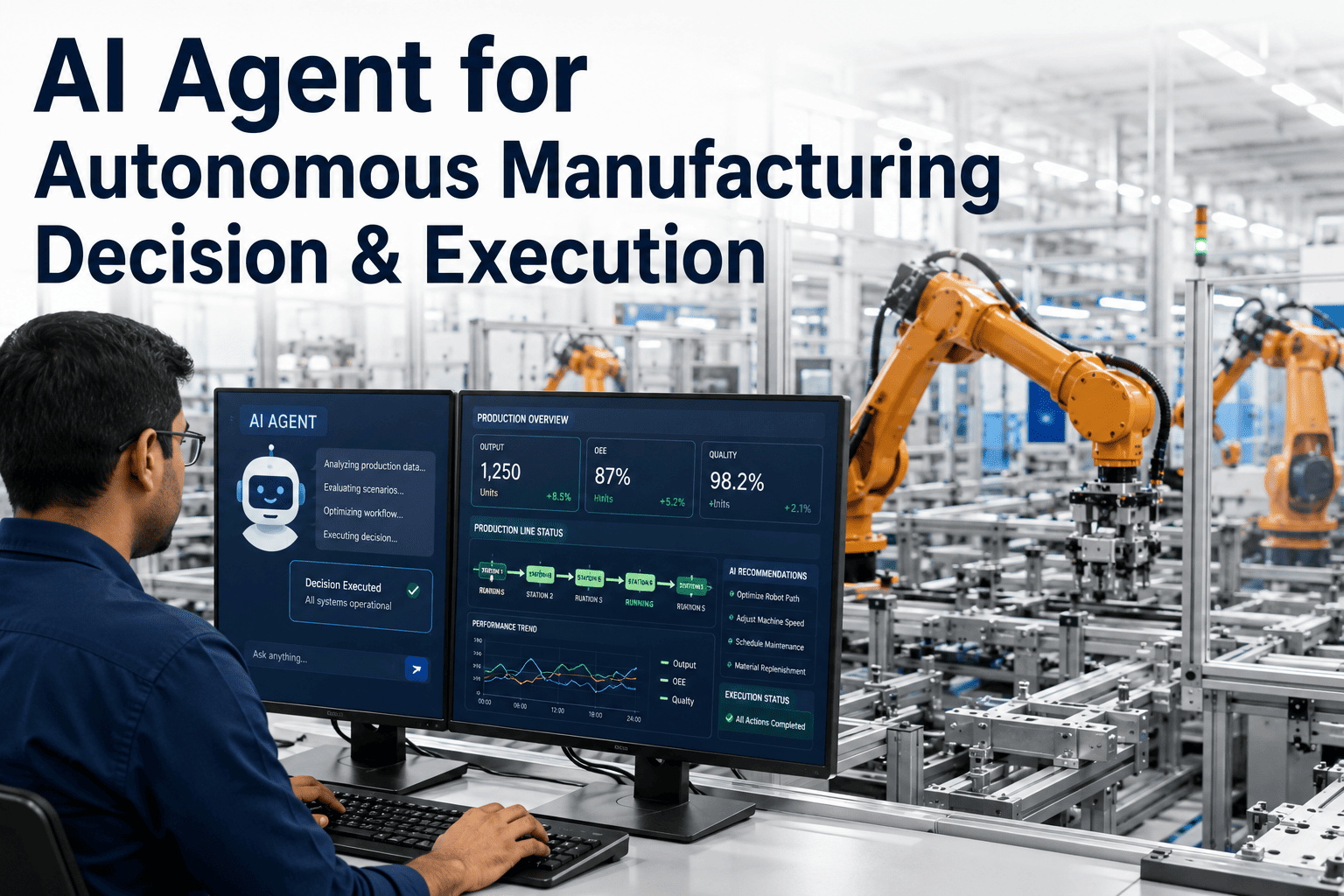
Unlike a chatbot that answers questions or a report that flags anomalies, an agentic system is designed to complete a multi-step task with limited human involvement. In SAP's manufacturing context, that means an agent can review a master data record, identify an inconsistency, propose a correction, and in approved cases apply it, all within a governed workflow rather than a single prompt-response exchange.
Production Master Data Agent
Continuously scans routings, bills of material, and work center data for inconsistencies, flags duplicate or conflicting entries, and proposes standardized corrections for review before they touch a live order.
Scheduling Agent
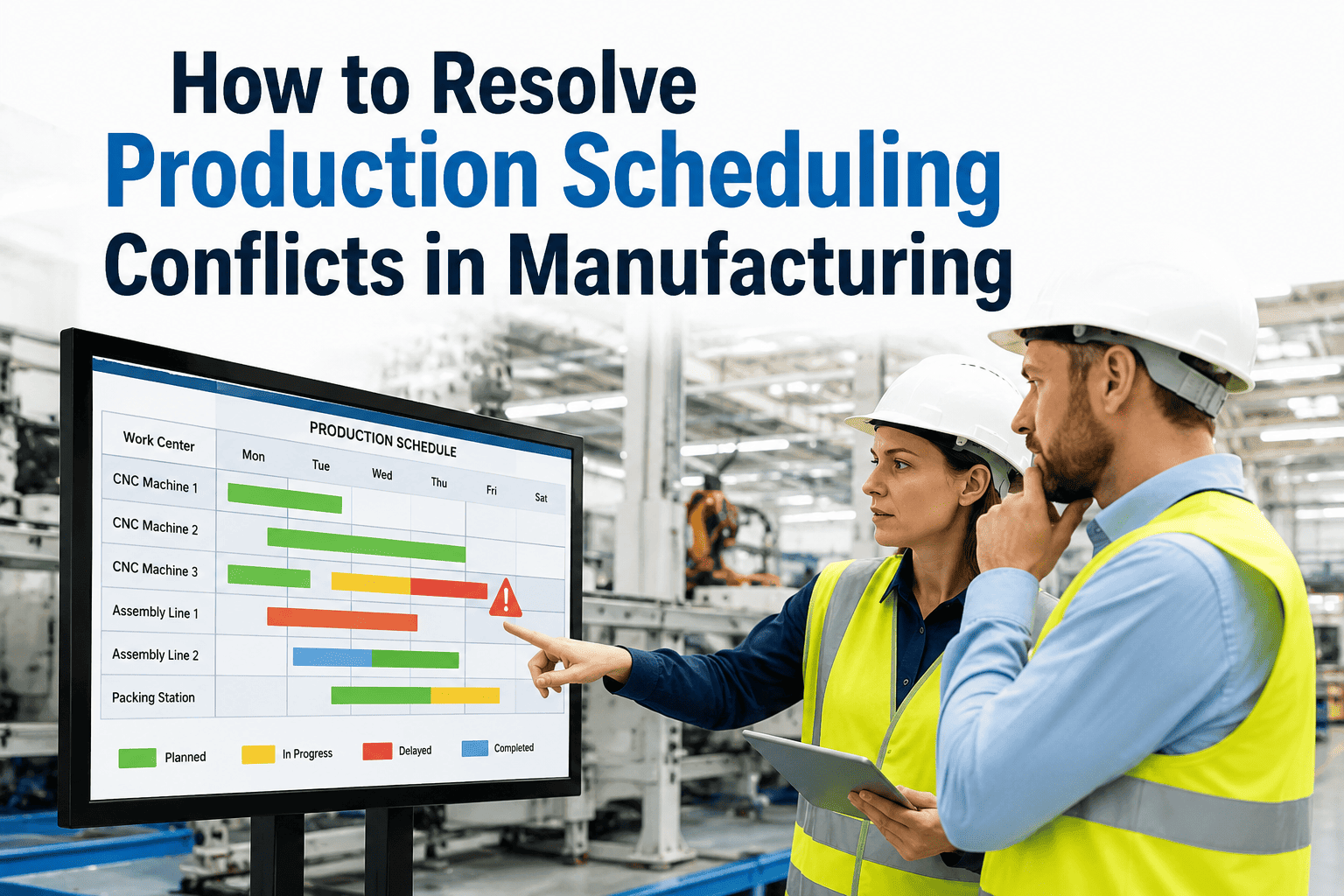
Monitors capacity constraints and order priorities, then proposes resequencing when a bottleneck emerges, working within the guardrails your planners configure rather than overriding decisions outright.
Alert Processing Agent
Triages the flood of exception messages that SAP generates daily, grouping related alerts, suppressing noise, and escalating only the exceptions that meet a defined severity threshold to a human planner.
Joule-Based Conversational Layer
SAP's Joule assistant sits on top of these agents, letting planners ask natural-language questions about schedule status or master data quality and receive answers grounded in live SAP data.
Where Agentic AI Reduces Planner Workload
Early SAP customer reports and industry benchmarks point to the heaviest time savings in the most repetitive planning tasks, the ones that consume hours but require little actual judgment.
Where iFactory Fits Alongside SAP's Agents
SAP's agents work with the data already inside S/4HANA. The gap most manufacturers still face is getting clean, real-time shop floor data into SAP in the first place, since an agent is only as good as the master data and transaction stream it operates on.
Feeding Clean Machine Data
iFactory's edge collectors validate and structure machine data before it posts to SAP, giving the master data agent a cleaner starting point instead of raw, noisy inputs to reconcile.
Closing the Confirmation Loop
Real-time production confirmations mean the scheduling agent works from current capacity data rather than estimates, which materially improves the quality of its resequencing suggestions.
Enriching Alert Context
Machine-level context attached to each SAP exception, such as which sensor or station triggered it, gives the alert agent more signal to correctly prioritize and route issues.
How This Fits SAP's Broader AI Roadmap
SAP has been building toward this moment for several release cycles. Joule launched first as a conversational assistant layered across S/4HANA modules, giving users a natural-language way to query orders, inventory, and financial data. The agentic capabilities announced more recently extend that same Joule framework from answering questions to taking bounded actions, a shift SAP has framed as moving from "co-pilot" to "autonomous teammate" within defined guardrails.
For manufacturing customers specifically, this matters because production planning has always been one of the most manual, judgment-heavy parts of the SAP footprint. Finance and procurement have had automation tooling for years. Production scheduling, by contrast, has largely remained a spreadsheet-and-experience exercise layered on top of SAP's transactional backbone. Agentic AI is SAP's attempt to close that gap, and early customer pilots suggest the biggest wins come first in the areas with the most repetitive, rules-based work: data cleanup, exception routing, and first-pass scheduling drafts that a planner still reviews before releasing to the floor.
Get Your SAP Environment Agent-Ready
Agentic AI performs only as well as the data it operates on. Make sure your shop floor data pipeline is ready before you turn these agents loose.
Governance Questions Every Plant Should Ask
Before letting an agent take autonomous action inside a production system, plant and IT leadership need clear answers to a short list of governance questions.
What can the agent change without approval?
Define exactly which fields and transactions an agent may modify autonomously versus which require a human sign-off, and revisit that boundary as trust in the agent's accuracy grows.
Is every agent action logged and reversible?
Every automated change should be traceable to a specific agent decision with a clear audit trail, and critical transactions should support rollback if an agent's recommendation turns out to be wrong.
How is agent accuracy monitored over time?
Set up a review cadence where planners spot-check agent decisions against outcomes, so drift in accuracy gets caught before it affects a full production schedule.
Frequently Asked Questions
Do we need the latest SAP S/4HANA release to use these agents?
SAP is rolling agentic features out progressively across its cloud releases, and availability depends on which modules and license tier your organization runs. Most on-premise customers on older ECC versions will need to plan a migration path before these specific agents become available. Our team can help assess where your current SAP landscape stands relative to what is required. Contact support for a landscape review.
Will an agent ever change a schedule without anyone noticing?
No properly governed deployment allows silent changes to production-critical transactions. Every agent action generates a log entry, and organizations typically configure approval gates for anything touching committed orders or customer delivery dates during the initial rollout period. Full autonomy is usually only extended after months of validated accuracy on lower-risk tasks like data cleanup.
How does iFactory work differently from SAP's native agents?
iFactory operates upstream of SAP, focused on capturing and validating shop floor data at the source before it ever becomes a transaction. SAP's agents then operate on that data inside the ERP. The two are complementary rather than competing, since better input data directly improves what any downstream agent can accurately decide. Book a demo to see the data flow end to end.
What is the realistic timeline for adopting agentic scheduling?
Most manufacturers start with the lower-risk master data and alert triage agents, building confidence over two to three months before extending autonomy to scheduling decisions. Rushing straight to autonomous scheduling without that trust-building period is the most common reason early agentic rollouts stall or get walked back by plant leadership.
Does this replace our production planners?
The intent is to remove repetitive, low-judgment work from planners' days, not to remove the planners themselves. Exception handling, supplier negotiation, and cross-functional tradeoffs still require human judgment that current agentic systems are not designed to replace. Planners typically shift toward reviewing agent recommendations and handling the exceptions that genuinely need experience.
Prepare Your Shop Floor Data for the Agentic Era
SAP's AI agents are only as good as the data feeding them. Let iFactory make sure your production data is agent-ready.