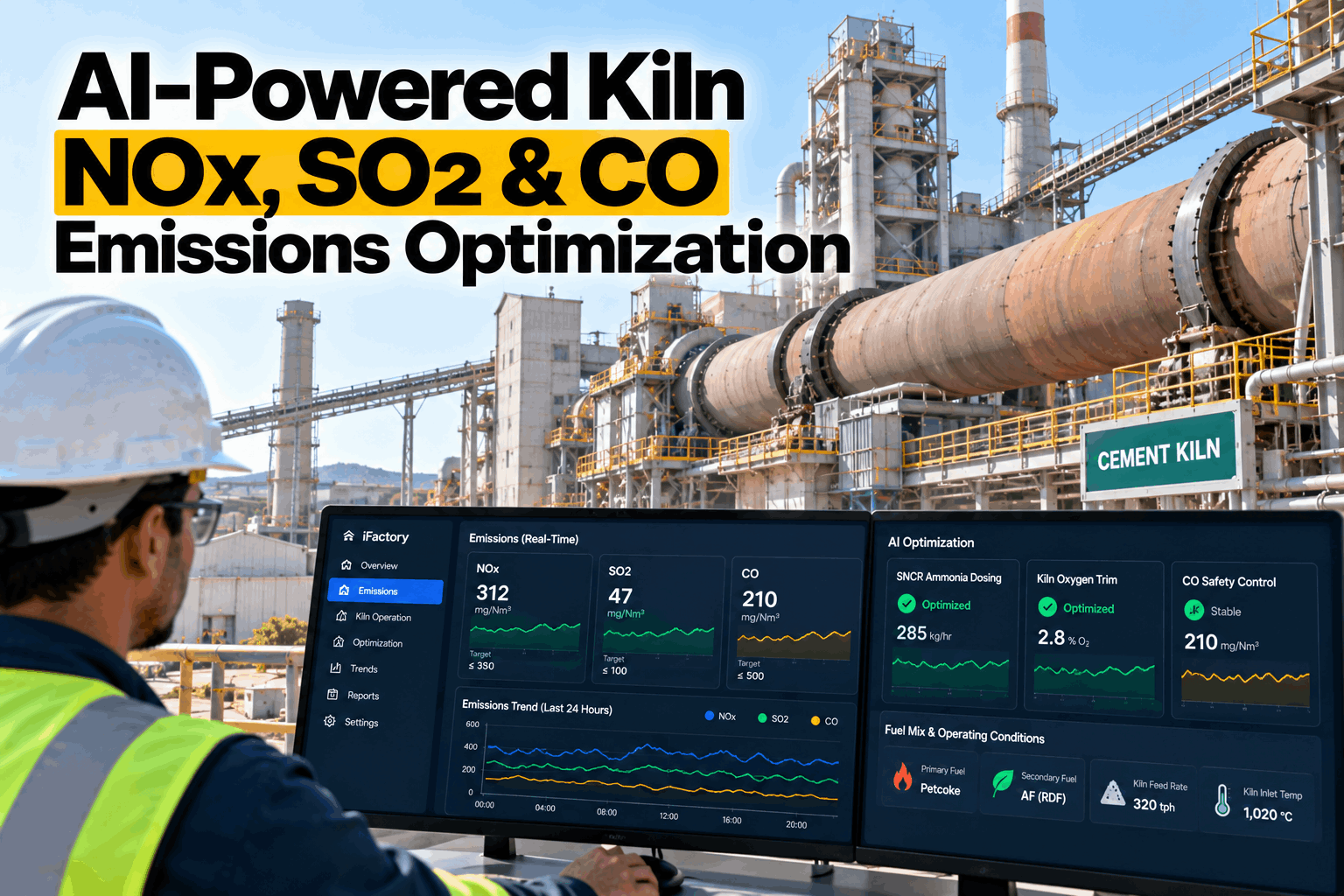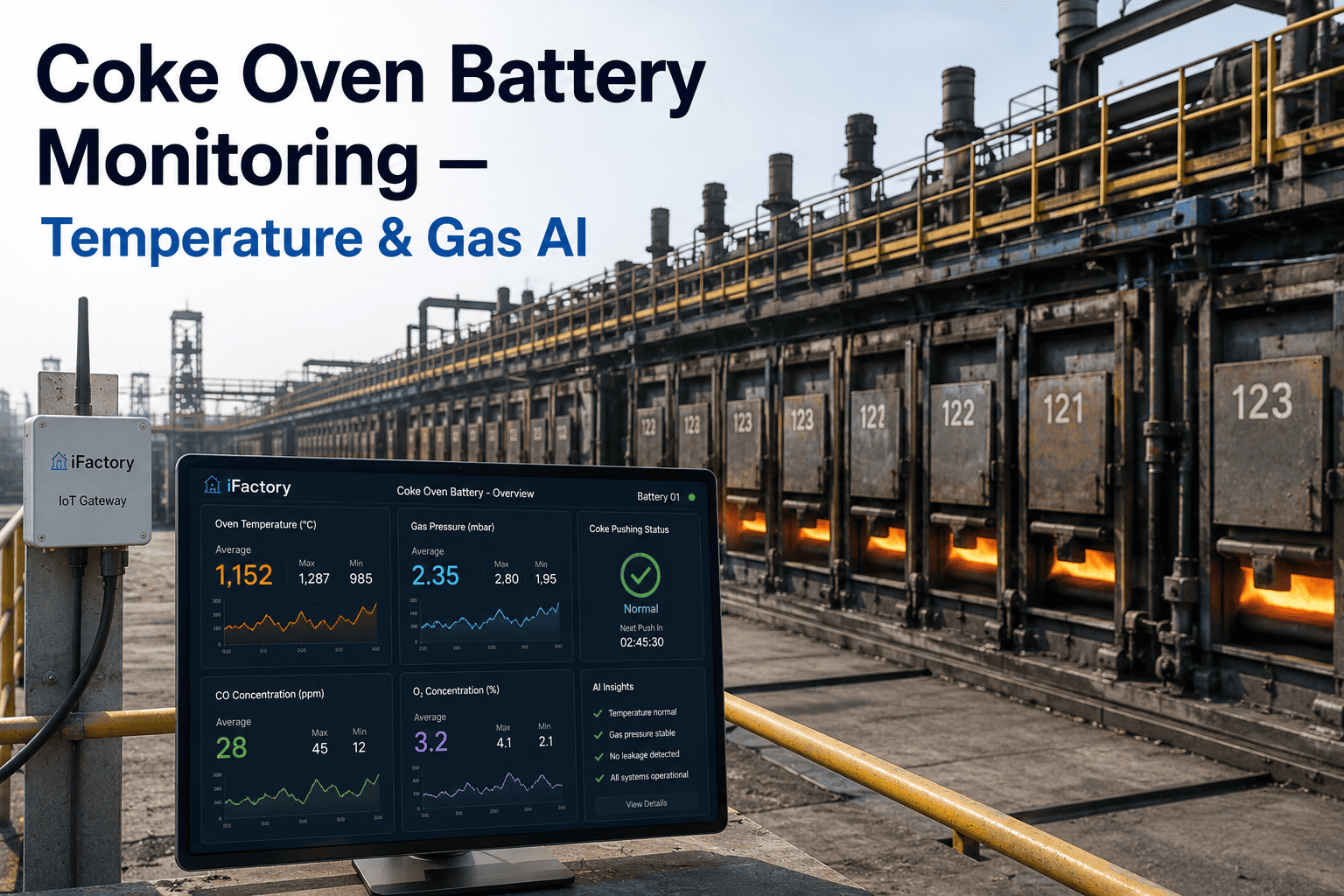
In the demanding environment of a modern steel plant, few assets are as operationally critical and financially consequential as the coke oven battery. This massive, high-temperature array of carbonization chambers converts metallurgical coal into coke, the essential fuel and reducing agent for blast furnace ironmaking. However, the inherent thermal and mechanical stresses of the coking process—combined with fugitive emissions, refractory degradation, and scheduling complexities—make battery management a formidable challenge. Industry 4.0 and artificial intelligence now offer a transformative solution: continuous, multi-modal monitoring of oven temperature profiles, real-time gas leak detection, and predictive optimization of pushing schedules. By deploying an integrated AI platform like iFactory, plant operators can extend battery service life by three to five years, reduce benzol emissions by up to 40 percent, and unlock significant operational savings. This comprehensive guide provides a technical deep-dive into the strategies, sensors, and algorithms that underpin next-generation coke oven battery management. For a personalized evaluation of your battery's digital readiness, Book a Demo with our industry experts.
Transform Your Coke Oven Battery Operations with AI-Powered Monitoring
Unprecedented visibility into temperature profiles, gas emissions, and pushing dynamics — all in one unified platform.
The Technical Anatomy of a Coke Oven Battery
A typical coke oven battery comprises 30 to 100 individual ovens arranged in parallel rows, each oven being a narrow, tall chamber lined with silica refractory bricks. During the coking cycle, pulverized coal is charged through top ports, sealed, and heated indirectly via flues that run between ovens. Temperatures inside the oven reach 1000–1200°C, driving off volatile matter and leaving behind a porous, high-carbon coke. The process generates a rich by-product gas stream containing hydrogen, methane, carbon monoxide, and various hydrocarbons, which is collected via the ascension pipe and sent to the by-product plant. Critical to battery health is the uniformity of heating across and along each oven; temperature differentials as small as 20°C can cause uneven coking, excessive thermal stress, and premature refractory failure. iFactory's platform integrates thermocouple arrays, optical pyrometers, and gas chromatographs to create a high-resolution thermal map of the entire battery, updated every 10 seconds.
Oven Temperature Profiling
Deploy a network of type-K thermocouples and infrared cameras to capture temperature gradients across each oven wall. AI models detect hot spots and cold zones, enabling targeted flue adjustments.
Gas Leak Detection
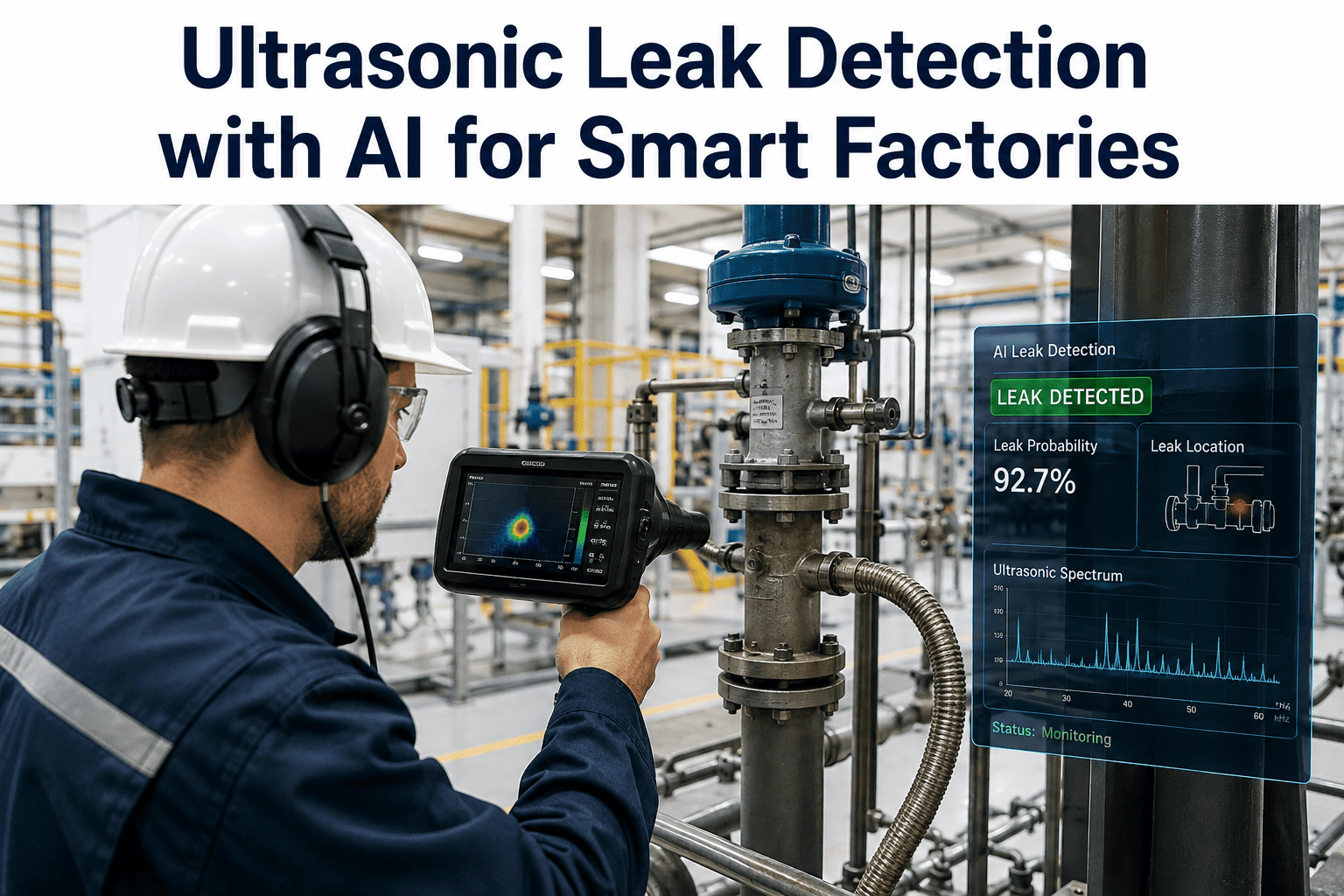
Continuous monitoring of door seals, ascension pipes, and stands using electrochemical sensors and optical gas imaging. Alerts for benzene, SOx, NOx, and particulate matter.
Pushing Schedule Optimization
Reinforcement learning algorithms balance oven residence time, battery heat input, and downstream demand for coke. Minimizes green pushes and reduces emissions.
Refractory Health Analytics
Track thermal cycling and creep in silica bricks. Predictive models forecast remaining useful life and recommend maintenance windows.
Implementation Roadmap for AI-Driven Battery Monitoring
Sensor Layer Deployment
Install thermocouple grids, gas detectors, and flow meters across the battery. Edge gateways aggregate data with sub-second latency.
Digital Twin Construction
Create a physics-based model of the battery using historical and real-time data. Calibrate with machine learning to reflect actual behavior.
Predictive Analytics Engine
Train models for CSR prediction, coke end-point detection, and leak classification. Deploy on-premise or cloud.
Optimization & Control
Integrate with DCS to adjust flue pressure, coal blend, and pushing cadence automatically. Closed-loop control.
Ready to Extend Your Battery Life by 3–5 Years?
Discover how iFactory's AI platform can reduce emissions, improve coke quality, and lower operating costs.
Coal Blend Optimization and Its Impact on Battery Performance
The quality of coke produced is directly tied to the blend of coals charged into the oven. Properties such as volatile matter, ash content, sulfur, and vitrinite reflectance determine coke strength after reaction (CSR) and coke reactivity index (CRI). iFactory's AI models analyze real-time coal quality data from online analyzers and adjust blend proportions to maintain target CSR within ±1%. This not only improves blast furnace performance but also reduces thermal load on the battery, as optimal blends require less heat input. Furthermore, the system tracks volatile matter evolution during the coking cycle, predicting when the oven has reached full carbonization. This allows for precise push timing, eliminating green pushes that cause emissions and damage to machinery.
Key Performance Indicators for Coke Oven Battery Monitoring
| KPI | Measurement Method | Target Range | AI Benefit |
|---|---|---|---|
| Oven Temperature Uniformity | Thermocouple array | ±10°C | Reduced thermal stress |
| Flue Gas O2 | Zirconia sensor | 2–4% | Combustion efficiency |
| Door Emissions | OPC-FTIR | <5 ppm benzene | Real-time leak alerts |
| Coke Moisture | Microwave meter | <3% | Quench optimization |
| Pushing Force | Load cells | <150 kN | Predictive maintenance |
| By-Product Yield | Gas chromatograph | Tar: 3–5%, Benzol: 1% | Recovery maximization |
Stamp Charging Analytics
Monitor coal bulk density and stamping energy to ensure consistent cake quality. AI predicts oven wall pressure to prevent refractory damage.
Coke Dry Quenching (CDQ) Optimization
Control cooling gas flow and temperature to maximize heat recovery while maintaining coke quality. Reduces water consumption.
By-Product Recovery Tracking
End-to-end monitoring of tar, benzol, and ammonium sulfate production. AI adjusts scrubber parameters for maximum yield.
Machinery Health Monitoring
Vibration and temperature sensors on pusher, door machine, and coke guide. Predictive models prevent unplanned downtime.
Frequently Asked Questions
How does AI improve coke oven battery life?
AI extends battery life by continuously monitoring thermal profiles and detecting early signs of refractory degradation. The platform identifies hot spots and cold zones that cause uneven expansion and contraction, leading to cracks. By adjusting flue gas flow and pushing schedules in real time, thermal stress is minimized. Additionally, predictive models forecast when a specific oven requires maintenance, preventing catastrophic failures. This proactive approach can add 3 to 5 years of operational life. For a detailed assessment of your battery, Book a Demo.
What sensors are required for temperature profiling?
A comprehensive temperature profiling system uses a combination of type-K thermocouples installed at multiple heights in each flue, infrared pyrometers aimed at oven walls, and thermal imaging cameras for full-battery scans. The thermocouples provide accurate point measurements, while cameras capture spatial gradients. Data is aggregated every 10 seconds and fed into the AI engine. iFactory supports integration with existing sensor infrastructure or can recommend a turnkey sensor package. For technical specifications, Contact Support.
Can the system detect gas leaks in real time?
Yes, the platform integrates electrochemical sensors for benzene, SOx, and NOx, as well as optical gas imaging cameras that visualize hydrocarbon leaks. When a leak is detected, the system triggers an alarm and pinpoints the exact location on a 3D model of the battery. Maintenance crews receive mobile alerts with repair instructions. Over time, AI learns leak patterns and suggests preventive sealing schedules, reducing benzol emissions by up to 40%. Learn more about our emission monitoring capabilities by booking a demo.
How does pushing schedule optimization work?
The optimization engine uses reinforcement learning to balance multiple objectives: maintaining consistent coke quality, minimizing energy consumption, and reducing emissions. It considers current oven temperatures, coal blend properties, and downstream blast furnace demand. The model recommends a push sequence that avoids green pushes (incomplete coking) and over-coking. This reduces volatile matter emissions and prevents damage to oven walls. The system can operate in advisory mode or closed-loop with the DCS. For a case study, Contact Support.
What is the ROI of implementing AI monitoring?
Typical ROI includes a 15% reduction in energy costs, 40% decrease in benzol emissions, 3–5 year extension of battery life, and 10% improvement in coke CSR. The payback period is often less than 18 months. These savings come from reduced refractory replacement, lower maintenance costs, and higher by-product recovery. Additionally, improved environmental compliance avoids regulatory fines. For a customized ROI analysis for your plant, Book a Demo.
Take Control of Your Coke Oven Battery Performance
Leverage AI-driven insights to extend battery life, reduce emissions, and optimize production — all from a single platform.