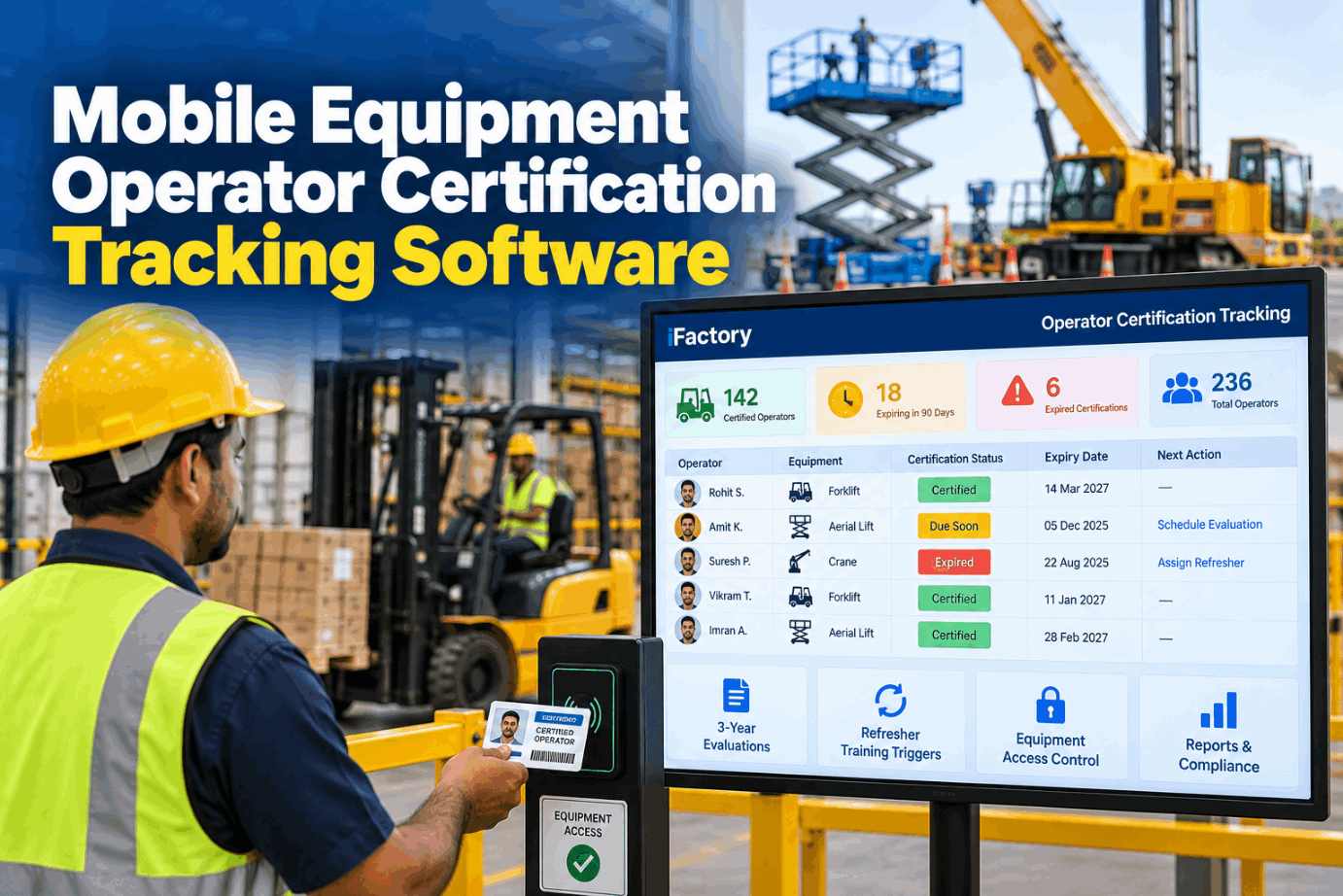
Mobile Equipment Operator Certification Tracking Software

By James C on October 27, 2026

mobile-equipment-operator-certification-tracking-software

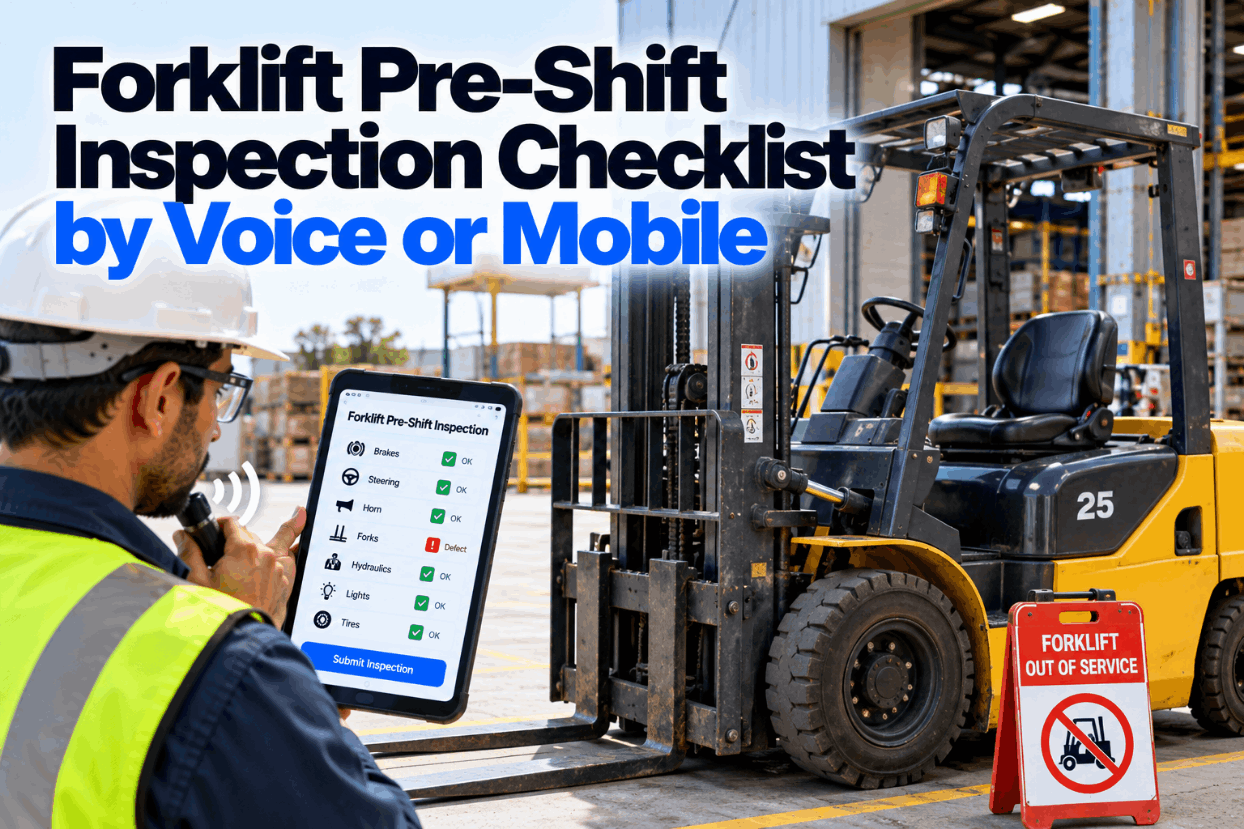
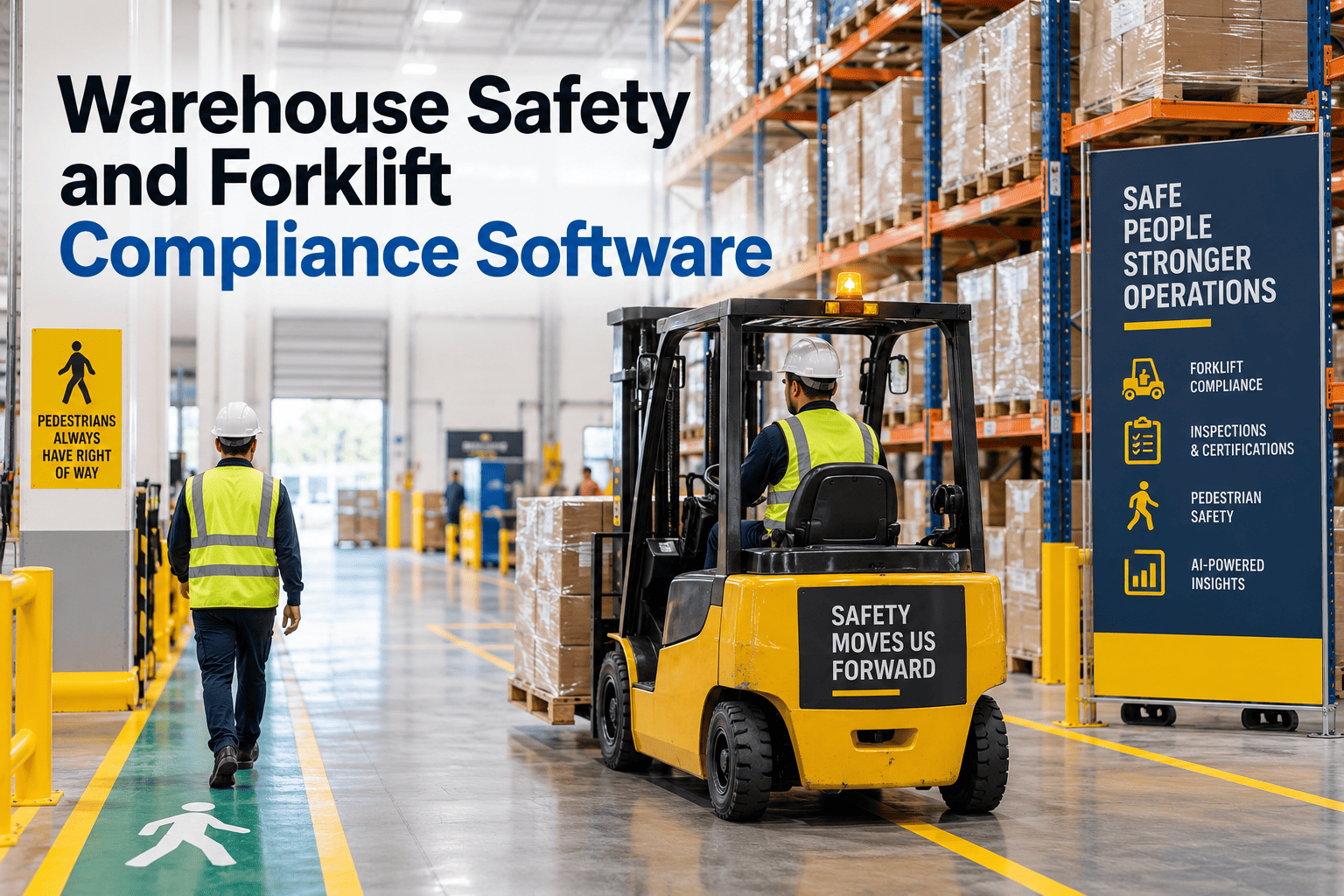
A forklift card in a drawer proves someone was trained once. It does not say whether the three-year evaluation is due next month, whether last week's near miss triggered a refresher, or whether the same person is cleared for the boom lift and the overhead crane. Operator certification tracking puts every operator's status in one place, by equipment type, with due dates and refresher triggers. Linked to telematics or keypads, it can also stop a truck starting for someone who is not cleared. See it on a sample roster in a short demo.

CERTIFICATION TRACKER · MOBILE EQUIPMENT

Know Who Is Cleared to Drive, Lift and Hoist Before They Start

iFactory Certification Tracker holds evaluation due dates, raises refresher triggers after incidents and checks operator status at the equipment through telematics or keypads. Forklifts, aerial lifts and cranes sit on one roster.

R. AlvarezEval due in 12 days
Forklift · counterbalance, Class IV and V
Last evaluated Nov 2023 · evaluation booked for 4 Nov
K. OseiCard valid
Aerial lift · MEWP Group B, Type 3
Trained Mar 2025 · familiarized on both site boom lifts
D. MoreauAccess blocked
Overhead crane · Bay 2, pendant
Refresher pending after near miss on 21 Oct · keypad paused
THREE RULE SETS

Forklifts, Aerial Lifts and Cranes Follow Different Rules

One tracker has to hold three kinds of logic. The forklift standard is explicit about evaluation intervals and refresher triggers. Aerial lift rules are short in OSHA and detailed in the ANSI/SAIA standards. Crane rules depend on whether the work falls under construction or general industry. Check how your fleet maps to these with our EHS team.

Equipment
Main rule
Who qualifies the operator
Interval
Refresher or re-evaluation
Forklifts and other powered industrial trucks
OSHA 1910.178(l)
Employer trains, evaluates and certifies
Evaluation at least every 3 years
Unsafe operation, accident or near miss, poor evaluation, different truck type, changed conditions
Aerial lifts (MEWPs)
OSHA 1910.67(c)(2)(ii), 1926.453 in construction, ANSI/SAIA A92.22 and A92.24
Qualified trainer, then model familiarization authorized by the user
No fixed OSHA interval
Set by site policy, often mirroring the forklift triggers
Mobile and tower cranes in construction
OSHA 1926.1427
Certified by an accredited testing organization or audited employer program, plus employer evaluation
Certification valid 5 years
Retraining when an evaluation shows a need, then re-evaluation
Overhead and gantry cranes, general industry
OSHA 1910.179(b)(8)
Designated by the employer as qualified
No fixed OSHA interval
Set by site policy, with ANSI B30.2 as a common reference
THREE YEAR EVALUATION

The Forklift Clock, Stage by Stage

Under 1910.178(l)(4)(iii), each operator's performance must be evaluated at least once every three years. Under (l)(6), the employer certifies each operator was trained and evaluated, with the operator's name, the training date, the evaluation date and who did the training or evaluation. A 2005 OSHA interpretation notes the three-year evaluation covers both knowledge and skills. Set your reminder windows in a roster walkthrough.

Trained
Formal instruction, practical training and a first evaluation
Certified
Record holds name, dates and the trainer or evaluator
Reminder
Window opens at 90 days out, a site choice, not a rule
Due
Evaluation on the operator's own truck in their own workplace
Overdue
Access paused until the evaluation is done, if your site rule says so
REFRESHER TRAINING TRIGGERS

Five Events That Restart Training

The three-year clock is only the minimum. 1910.178(l)(4)(ii) lists five situations that require refresher training, and each one needs a reliable signal source or it will be missed. Most plants catch the evaluation dates and miss the near misses. Map your signal sources with our support team.

01
Unsafe operation seenSignal: supervisor observation, or a vision event a supervisor has reviewed
02
Accident or near missSignal: incident and near-miss reports that name the operator
03
Poor evaluationSignal: the evaluation result recorded against the operator
04
Different type of truckSignal: a new assignment or a new truck class arriving on site
05
Changed conditionsSignal: a layout change or management-of-change record for the area
EQUIPMENT AUTHORIZATION

Status Checked at the Truck, Not in the Office

Many fleet telematics units and keypads already ask for a badge or code before a truck starts, and some can limit access by certification. Certification Tracker feeds them each operator's current status by equipment type. Plan what happens on a failed check: a clear reason on the display, a supervisor override that is logged, and a rule for emergencies. See a blocked start in a live demo.

1Badge or codeOperator signs in at the truck, lift or crane keypad
2Status checkEquipment type, evaluation date and open triggers
3DecisionStart allowed, or blocked with the reason shown
4LogEvery start, block and override recorded
5Follow-upA block opens a task to book the training

Refresher Triggers That Raise Themselves

When a near miss names an operator, Certification Tracker opens the refresher, flags the record and, where your site rule says so, pauses access at the keypad or telematics unit until a trainer signs it off.

Bay 2 · Shift supervisor and iFactory
SupervisorWhy can't Dana start the Bay 2 crane?
iFactoryA near miss was logged on 21 Oct with Dana as operator. Your site rule pauses crane access until a refresher is done.
SupervisorWhen can we get that done?
iFactoryThe crane trainer is free Thursday at 9:00. I can book it now and restore access once the trainer signs off.
OPERATOR CARDS

What Each Operator Record Should Hold

A wallet card is a convenience. The record behind it is what an auditor asks for. 1910.178(l)(6) sets the minimum for forklifts, and 1926.1427(f)(6) asks crane evaluation records to show the operator, the evaluator's name and signature, the date, and the make, model and configuration of the equipment. Add the fields that make tracking work. Ask our support team for the field list.

OperatorName, badge number, department
Equipment classesCounterbalance, reach truck, MEWP Group A Type 3
TrainingDate, content and trainer
EvaluationDate, evaluator, truck or crane used
Next dueEvaluation date and reminder window
Open triggersNear miss, reassignment or poor evaluation
FamiliarizationEach MEWP make and model, with date
Access statusAllowed or blocked per equipment class
AERIAL LIFT TRAINING

Training Is General, Familiarization Is Model by Model

OSHA's general industry rule says only trained persons may operate an aerial lift, and the construction rule limits operation to authorized persons. ANSI/SAIA A92.24 sets out the training and A92.22 the safe use. Under them, a trained operator still needs familiarization on each specific model before using it, which is where paper records usually fall apart. Track it by model in a guided session.

T
Operator trainingTheory plus a practical evaluation from a qualified trainer, by MEWP group and type
F
FamiliarizationControls, features, limits and manuals of the specific model, recorded with names, date, make and model
S
Supervisor trainingPeople who supervise MEWP operators have their own training content
R
Rescue planA site and equipment-specific plan for reaching an operator stuck at height
CRANE OPERATOR QUALIFICATION

Construction Certification vs General Industry Designation

The same plant can have both. A mobile crane brought in for a construction project falls under 1926 Subpart CC, while the overhead cranes in the production bays fall under 1910.179. The tracker has to hold both logics side by side and show which applies to each piece of equipment. Talk through your crane list with our lifting specialists.

CONSTRUCTION · 1926.1427
  • Certification from an accredited testing organization or an audited employer program
  • Certification valid for five years
  • Employer evaluation on the equipment assigned, documented
  • A certificate alone does not make an operator qualified
GENERAL INDUSTRY · 1910.179
  • Only designated personnel may operate the crane
  • Designated means chosen or assigned by the employer as qualified
  • OSHA has pointed to ANSI B30.2 when reading what qualified means
  • Review interval set by your own policy
OPERATOR CERTIFICATION TRACKING EXAMPLES

Three Records, Three Outcomes

These illustrations show how tracking changes the outcome. They are not case studies. Walk through your own roster in a sample review.

Evaluation coming due
Booked before the deadlineThe reminder opens at 90 days, the evaluator books a slot, and the record is renewed with days to spare.
Move to a reach truck
Different truck, new trainingThe keypad allows counterbalance trucks only until training and evaluation on the reach truck are recorded.
A new boom lift arrives
Familiarization before first useThe new model is added to the fleet list, and each operator's familiarization is recorded before access opens.
OPERATOR CERTIFICATION TRACKING BEST PRACTICES

A Records Check Before the Auditor Asks

Run this check once a quarter. Tick each item on screen as you confirm it. Any item you cannot tick is a gap to close before an inspector finds it. Ask our EHS team for a printable version.

ARecords
BAccess
OPERATOR CERTIFICATION TRACKING COST AND ROI

Put Your Own Numbers on Roster Admin Time

The real value is the unqualified operator who never gets on a truck, and that should not be turned into a money figure without your own data. The part you can measure is admin time. The example uses assumed inputs to show the arithmetic only. Build your own case in a sizing call.

Operators on the roster180, assumed
Equipment classes per operator1.5 on average, assumed
Authorizations to track180 × 1.5 = 270
Minutes per authorization per year on chasing dates and checking cards20, assumed
Hours per year on authorizations270 × 20 = 5,400 min = 90 h
Keypad list reconciliations12 per year × 3 h = 36 h, assumed
Admin hours in the example90 + 36 = 126 h per year

Put your own hourly cost against the hours if you want a money figure. Leave injury and claim costs out until your own records can back them.

TURNKEY AI DEPLOYMENT

Certification Tracker, Access Links and AI Server in One Package

iFactory delivers Certification Tracker as a turnkey bundle. A pre-configured NVIDIA AI server ships racked and ready with the tracker and its trigger AI pre-loaded, so near-miss reports and reviewed vision events are matched to operators inside your network. You rack it, plug in power and Ethernet, and the AI is live. Scope it with our deployment team.

What's Included
  • Pre-configured NVIDIA AI edge server, racked and ready
  • Certification Tracker set up with your equipment classes and rules
  • Import of existing training records and operator cards
  • Links to the telematics units and keypads you already run
  • Trigger rules for near misses, evaluations and reassignments
  • Network setup, supervisor and EHS team training
  • 24×7 remote monitoring of models and hardware
Live in 6–12 weeks
Wk 1–4
Load and Map

Records imported, equipment classes and site rules mapped, server installed and networked.

Wk 5–8
Connect and Shadow

Telematics and keypad links tested in report-only mode, with no starts blocked yet.

Wk 9–12
Enforce

Access checks switched on area by area, supervisors trained, first quarterly records check.

HOW iFACTORY FITS

Operator Certification Tracking Software for Mixed Fleets

iFactory keeps forklift, aerial lift and crane qualifications on one roster and checks them where the work starts. See it with your equipment list in a short session.

1
Tracks evaluation due dates. Three-year forklift evaluations and your own intervals for lifts and cranes.
2
Raises refresher triggers. Near misses, poor evaluations and reassignments open training tasks automatically.
3
Checks access at the equipment. Status flows to telematics and keypads, so blocked operators cannot start.
4
Keeps audit-ready records. Names, dates, evaluators and equipment for every class.
1000+
Industrial clients running iFactory
99.9%
Platform uptime across sites
6-12 wks
From racked server to live access checks
FREQUENTLY ASKED QUESTIONS

What EHS Managers Ask About Operator Certification Tracking

How often must forklift operators be evaluated?
At least once every three years under 1910.178(l)(4)(iii). Refresher training is also required after unsafe operation is observed, an accident or near miss, a poor evaluation, assignment to a different type of truck, or a change in workplace conditions that could affect safe operation. You can see the reminder logic on a sample roster.
Does an aerial lift card expire?
OSHA sets no fixed interval for aerial lift training, so the interval is a site policy decision. What does not expire is the need for model familiarization under ANSI/SAIA A92.22 and A92.24 before an operator uses a model for the first time. Most sites record each model as it arrives.
Do overhead crane operators need a certification?
In general industry, 1910.179(b)(8) requires operators to be designated by the employer as qualified, rather than certified by a testing body. Construction cranes under 1926.1427 need certification plus an employer evaluation. Our support team can help you sort which rule applies to each crane.
Can the tracker stop someone using a truck?
Yes, where the truck has a telematics unit or keypad that accepts operator lists. The tracker sends current status by equipment class, and the device allows or blocks the start. Most sites run report-only mode first, then switch on blocking area by area.
What happens after a near miss?
When a near-miss report names an operator, the tracker opens a refresher task, flags the record and, if your site rule says so, pauses access until a trainer signs off. To watch that flow end to end, book a 30-minute demo.
What does an implementation look like?
Records are imported and equipment classes mapped first, then telematics and keypad links run in report-only mode, then access checks switch on area by area. The full rollout takes 6 to 12 weeks. To plan yours, walk through it with our team.

One Roster for Every Truck, Lift and Crane

Track evaluation dates, raise refresher triggers after incidents and check status at the equipment before every start. The full system is delivered turnkey and goes live in 6 to 12 weeks.
Example roster check · Mobile equipment
Classes trackedForklift, MEWP, crane
Due in 30 daysListed with booked dates
Open triggersEach with an owner
Access checksKeypads and telematics
Status checked before every start

Share This Story, Choose Your Platform!