In a steel mill or a foundry, the hazards aren't abstract. They're molten metal moving overhead, a ladle crane carrying tons of liquid iron, a confined space that has to be entered for relining, and a hot work permit that stands between a spark and a fire. Heavy industry doesn't have small mistakes — it has consequences measured in lives. And yet at most plants, the systems that control these hazards are the least modern thing on site: a JSA in a binder, a hot work permit on a clipboard, a LOTO procedure in a folder nobody can find during an audit. When the highest-risk work in the building is managed on paper, visibility disappears exactly where it matters most. Bringing job safety analyses, energy isolation, hot work, and confined space entry into one live system doesn't just make the audit easier — it puts a supervisor's eyes on every high-risk task while it's still being planned, not after something goes wrong. iFactory's Heavy Industry Safety Suite is built for exactly this environment.
iFactory Heavy Industry Safety Suite
Molten Metal, Cranes, and Confined Spaces — Controlled in One System
JSAs, LOTO, hot work permits, and confined space entry, unified and live. Every high-risk job planned, authorized, and logged in one place built for steel and metal plants.
One
system for every permit
Live
high-risk job visibility
The Hazards That Define Heavy Metal Work
Steel, foundry, and fabrication work carry a hazard profile most industries never touch. Each of these needs a controlled, documented process every single time — not a form filled in from memory after the fact.
Molten Metal
Pouring, tapping, and transfer expose crews to burns, splash, and explosion risk from moisture contact.
Control: task-specific JSA before every pour
Overhead Cranes
Ladle and coil cranes carry immense loads over people; a single lift failure is catastrophic.
Control: lift plans, inspections, exclusion zones
Confined Spaces
Furnaces, ladles, and pits require entry for relining and repair — atmosphere and engulfment risk throughout.
Control: permit entry, gas testing, attendant
Hot Work
Cutting, welding, and grinding near combustibles and gas lines is a leading cause of industrial fire.
Control: hot work permit, fire watch, monitoring
Energy Isolation
Stored electrical, hydraulic, and thermal energy on massive machinery makes LOTO non-negotiable.
Control: lockout/tagout, verified de-energization
The Problem Isn't Awareness — It's Paper
Nobody in a steel plant underestimates these hazards. The failure point is almost always the system used to manage them: disconnected, manual, and invisible until an auditor or an incident forces it into the light.
Scattered across binders
JSAs, permits, and LOTO procedures live in different places, so no one can see the full risk picture for a shift.
No live visibility
A supervisor can't tell which high-risk jobs are active right now, or whether a hot work permit's fire watch is still in place.
Certifications expire silently
Crane, confined space, and hot work qualifications lapse with no alert until someone unqualified is already on the task.
Audits become a scramble
Proving compliance means digging through paper for records that may or may not exist, under time pressure.
One System for Every High-Risk Permit
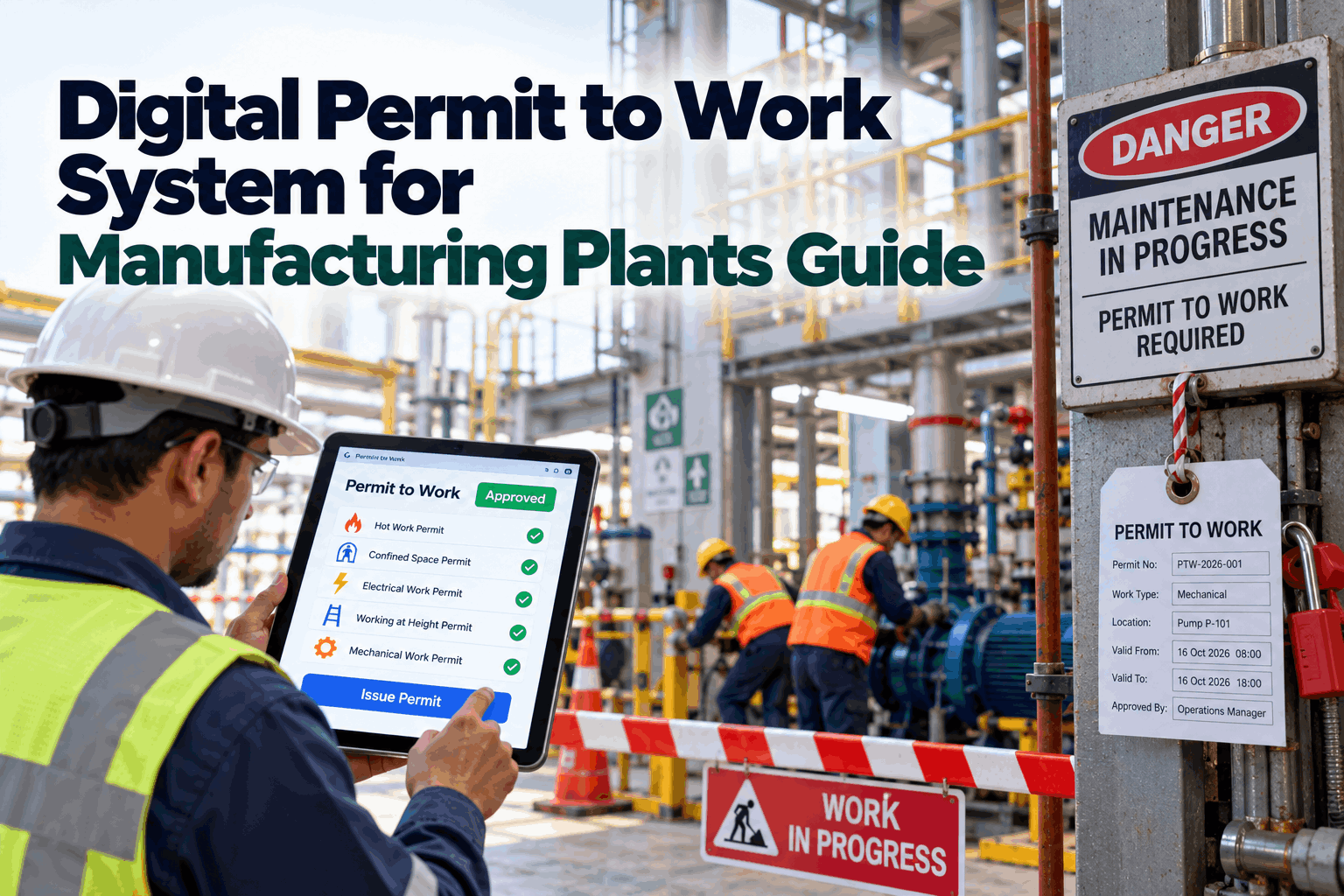
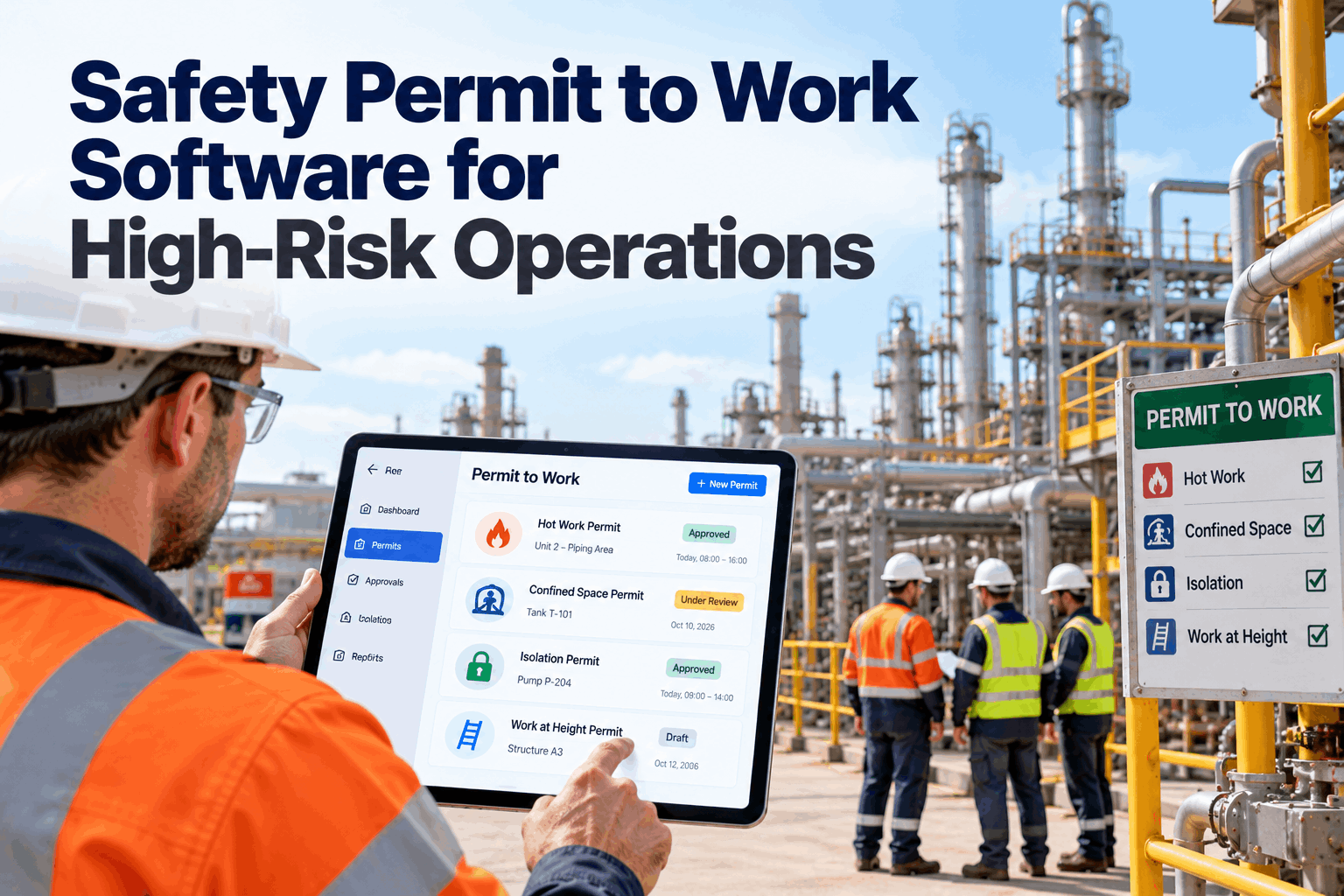
The suite brings the four controls that govern heavy-industry safety into a single connected workflow — so planning, authorizing, and documenting a dangerous job all happen in one place, visible to everyone who needs to see it.
Job Safety Analysis
Build and reuse task-specific JSAs, tie them to the crew and equipment, and require sign-off before work starts.
Lockout / Tagout
Digital LOTO procedures with verified isolation steps, group lockout, and a live record of what's locked and by whom.
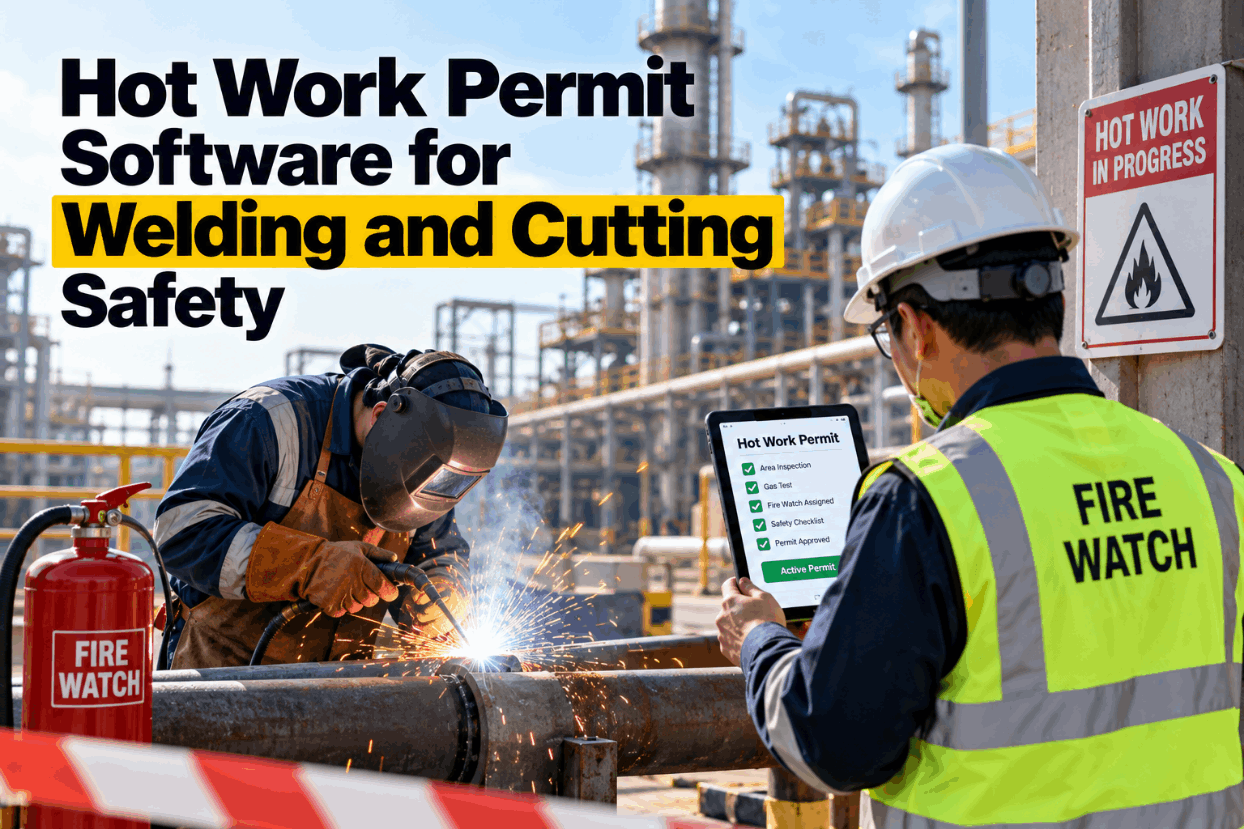
Hot Work Permits
Issue, track, and time-box hot work permits with fire-watch assignment and automatic expiry.
Confined Space Entry
Entry permits with gas-test logging, attendant tracking, and rescue readiness on every space.
How a High-Risk Job Moves Through the System
Every dangerous task follows the same controlled path — requested, assessed, authorized, monitored while live, and closed with a permanent record. Nothing high-risk happens without it.
01
Request
Crew initiates the permit or JSA from the floor on mobile, tied to the specific task and location.
02
Assess
Hazards identified, controls attached, required qualifications and gas tests verified automatically.
03
Authorize
The right supervisor approves with full context — no work starts without a live, valid authorization.
04
Monitor
Active jobs show on a live board; permits with fire watch or attendants are tracked to expiry.
05
Close & Log
The job closes with a complete, timestamped record — instantly available for the next audit.
What Unified Safety Delivers
Bringing high-risk work into one system pays back in the currency that matters most in heavy industry — fewer incidents, faster audits, and a supervisor who can see risk before it becomes harm.
Fewer
Serious incidents
controls enforced before work starts
Live
Risk visibility
every active high-risk job on one board
Minutes
Not days to audit
every permit logged and searchable
Zero
Expired quals in use
alerts before a lapse reaches the floor
Want to see how your highest-risk jobs would look on one live board? Book a demo — bring your current permit process and we'll map it.
Frequently Asked Questions
Does it handle all our permit types, or just one?
All of them, in one place. JSAs, lockout/tagout, hot work permits, and confined space entry run through the same connected system, so a supervisor sees every high-risk job on a single board instead of chasing four separate paper processes. Additional permit types common to metal plants can be configured the same way.
Can crews use it on the floor, not just in the office?
Yes. The whole point is capturing safety where the work happens. Crews initiate permits, complete JSAs, and log gas tests from a phone or tablet on the floor, and supervisors authorize from wherever they are. It's built for a plant environment, not a desk.
How does it help with certification and qualification tracking?
It ties qualifications to the work. When a permit requires a crane operator, confined space entrant, or fire-watch certification, the system checks that the assigned person is current before the job can be authorized — and it alerts you ahead of an expiry, so a lapse never reaches the floor unnoticed.
Will it make audits and OSHA readiness easier?
Substantially. Because every JSA, permit, and LOTO event is logged with a timestamp and a full trail, producing records for an audit or inspection is a search, not a scramble. You can show exactly what controls were in place for any job on any date.
Can we start with one area of the plant?
Yes. Most plants start with their highest-risk area — often the melt shop or a hot work-heavy zone — prove the workflow there, then roll it across the site. Book a demo and we'll scope the first area around your operation.
Get your highest-risk work off paper.
See the Heavy Industry Safety Suite on Your Plant
Bring your current permit and JSA process. We'll show every high-risk job — molten metal, cranes, confined spaces, hot work, LOTO — on one live board, with the full record ready for your next audit.