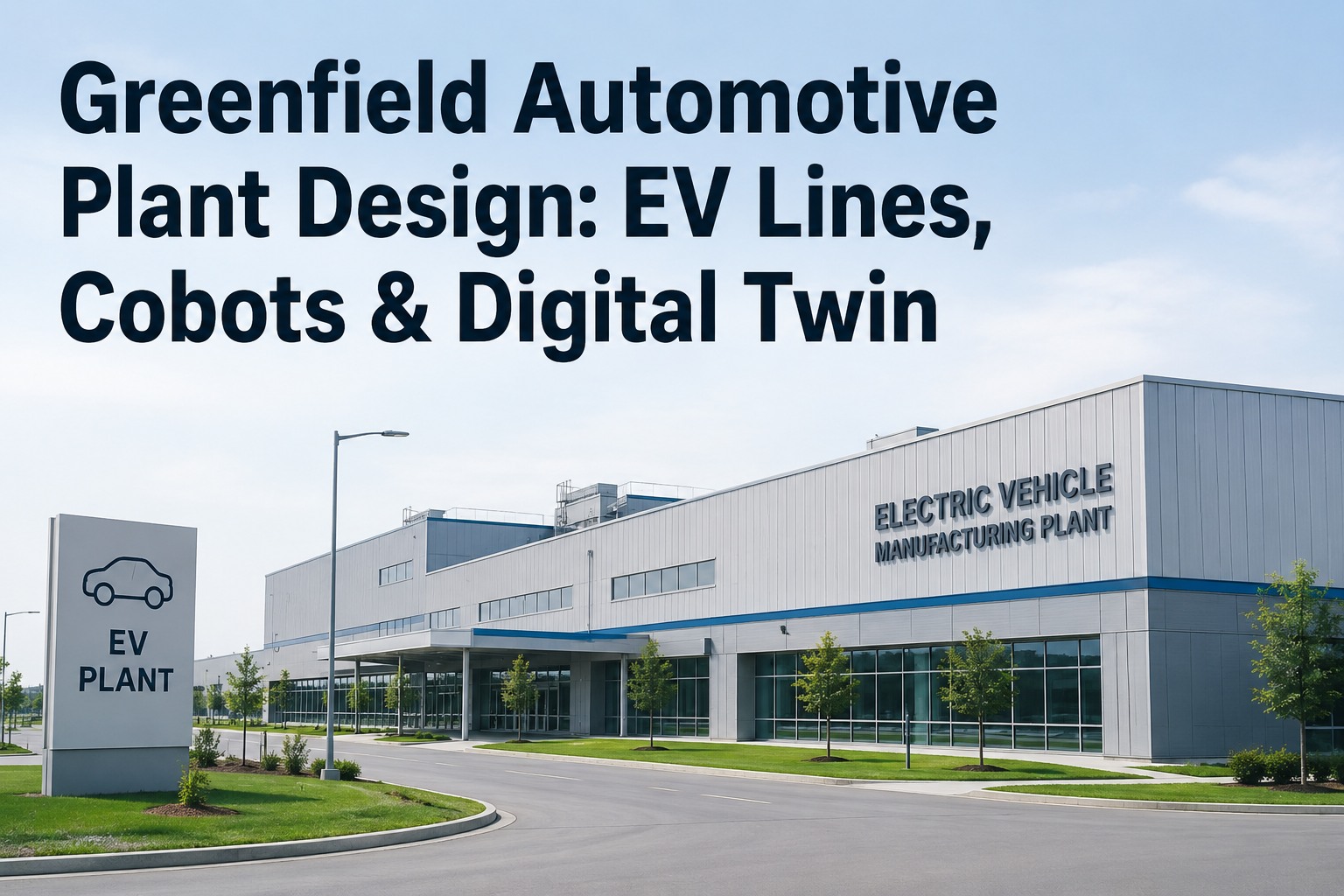
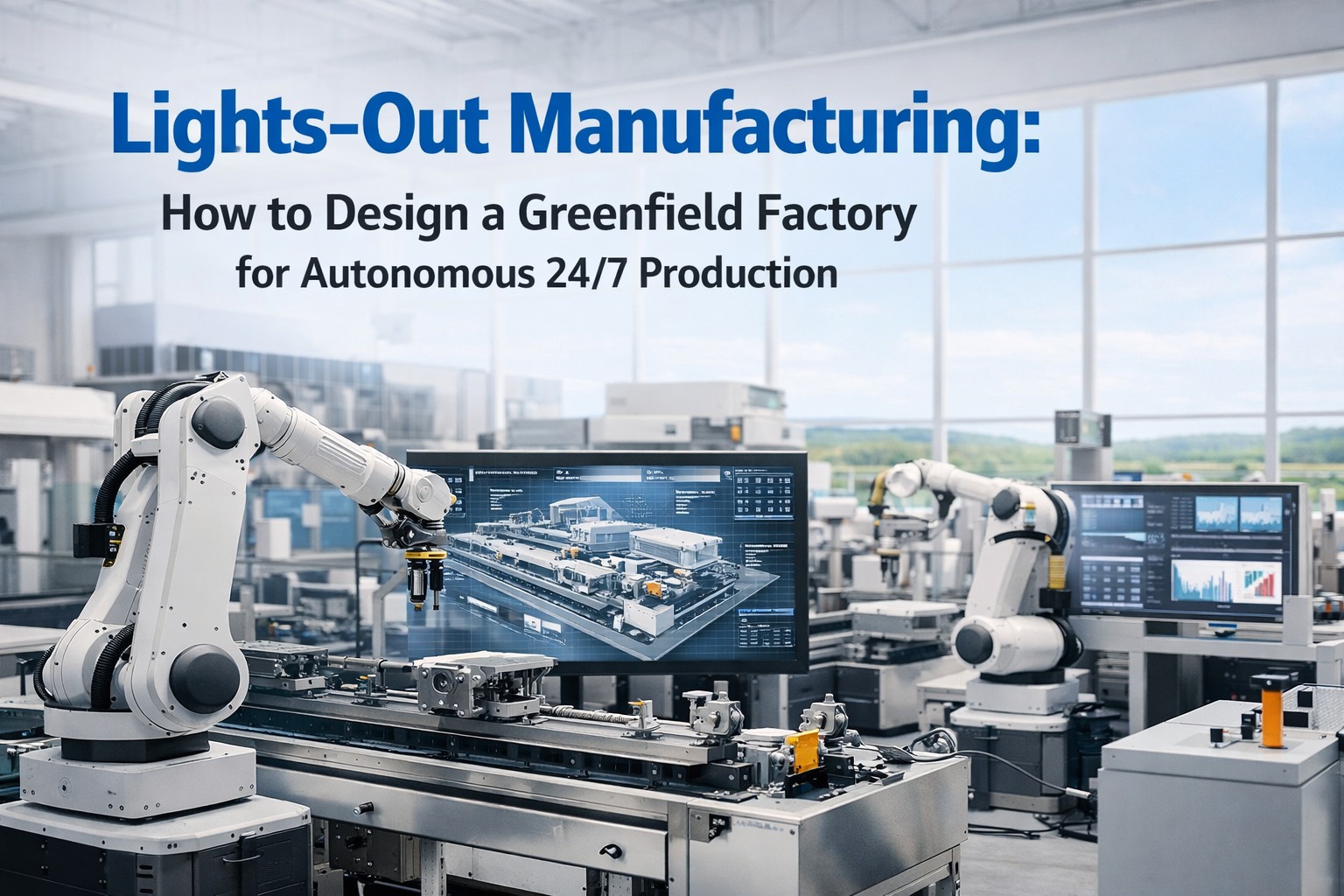
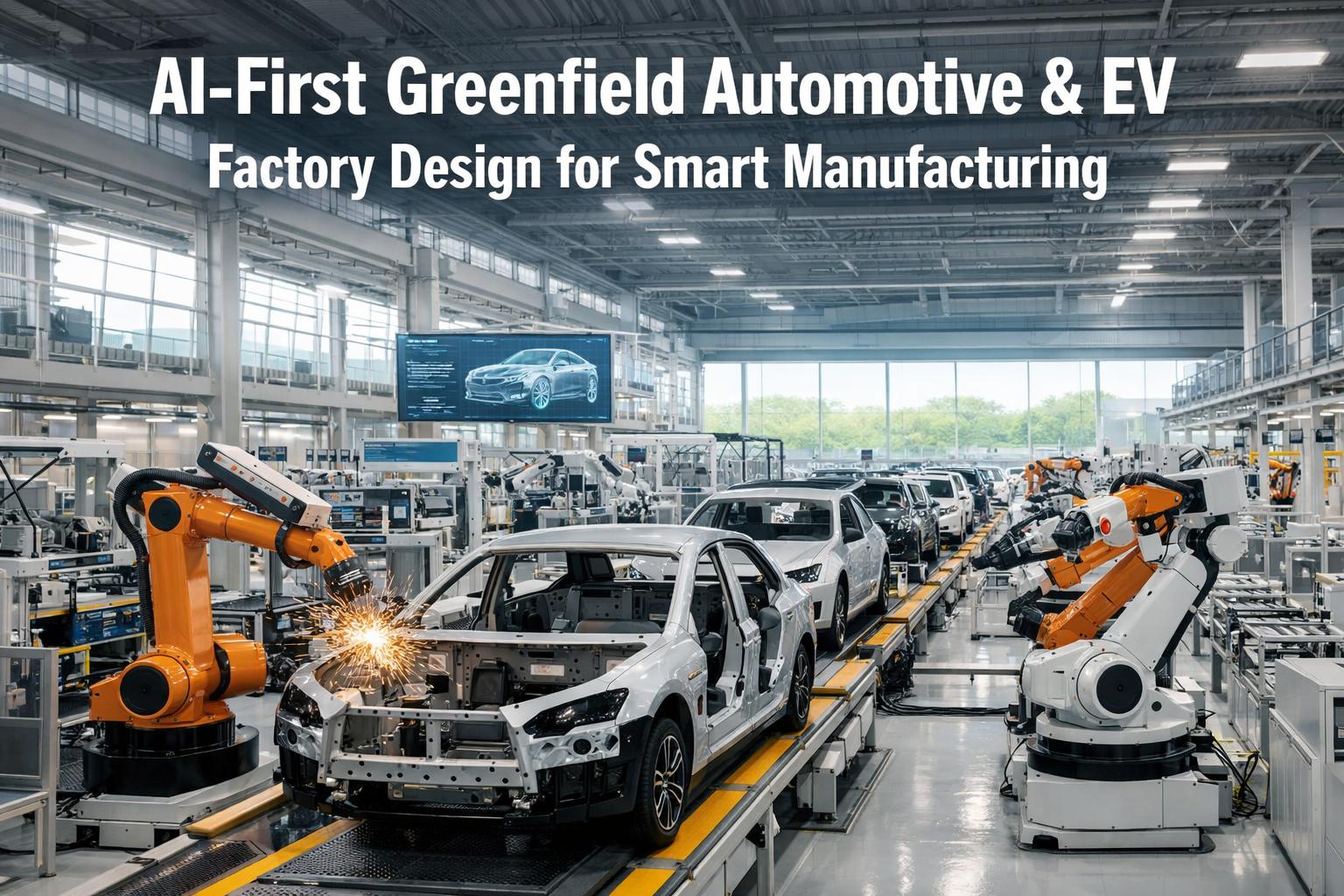
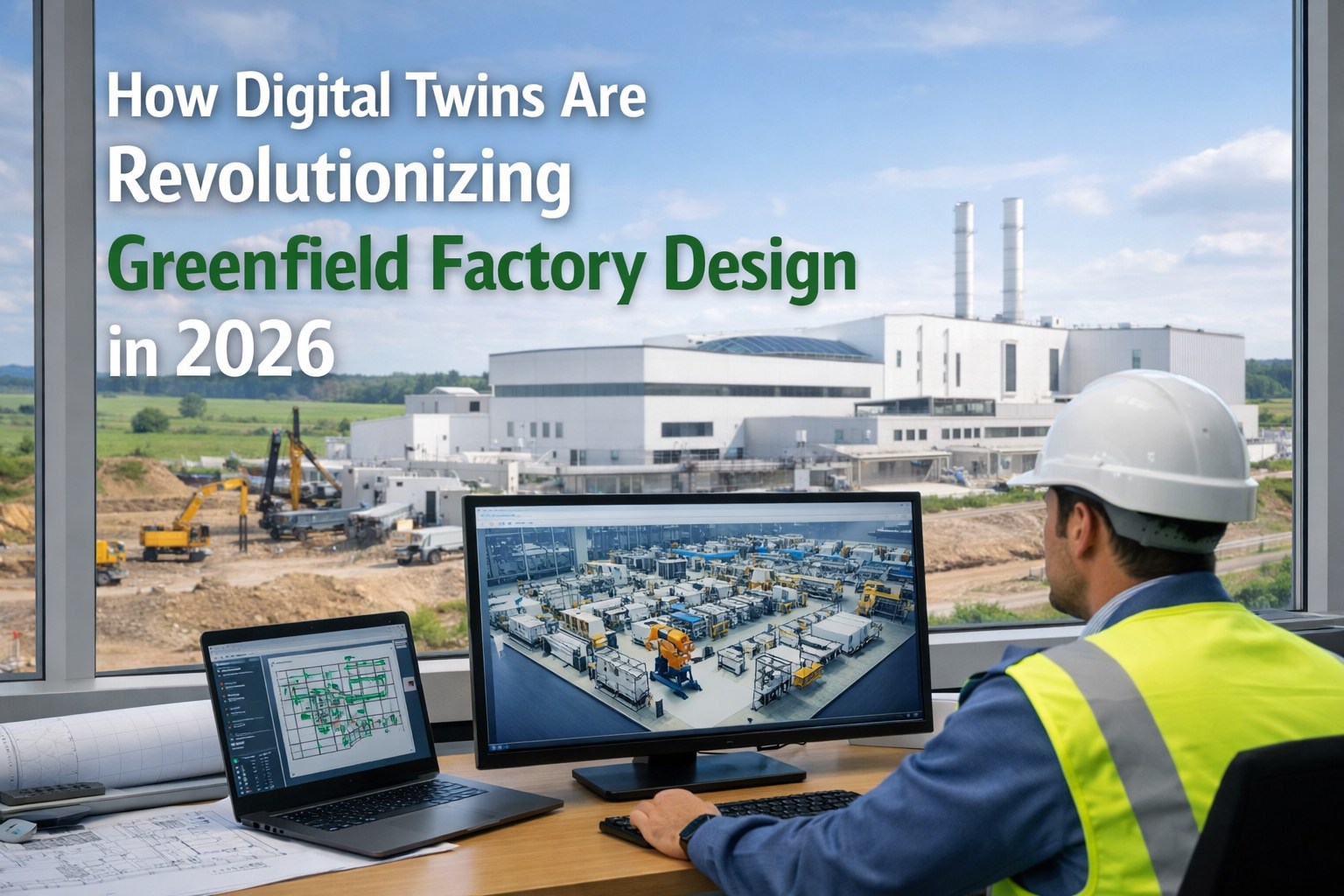
The automotive factory of 2026 looks nothing like its predecessor. Electric vehicle production demands battery assembly zones, megacasting facilities, and high-voltage infrastructure that didn't exist a decade ago. With 57% of assembly lines now using cobots, digital twins cutting commissioning time by 50%, and AI vision achieving 98% defect detection accuracy, greenfield plants have a once-in-a-generation opportunity to build for the future. This comprehensive guide shows you exactly how to design an automotive factory that's ready for EV, ICE and hybrid production from day one—and how iFactory's platform ties it all together.
Greenfield Automotive Design 2026
EV Lines + Cobots + Digital Twin
The Complete Blueprint for Future-Ready Automotive Manufacturing
01
Digital Twin
Virtual commissioning & simulation
02
Cobot Fleet
Human-robot collaboration
03
AI Vision
98% defect detection accuracy
57%
Assembly Lines Using Cobots
50%
Faster Virtual Commissioning
98%
AI Defect Detection Rate
$73B
Digital Twin Market 2027
The Modern Automotive Factory: 5-Layer Technology Stack
World-class automotive plants integrate five technology layers that work together seamlessly. BMW's Debrecen facility was designed entirely with this approach—validated virtually before a single foundation was poured.
5
Digital Twin & Simulation
Virtual commissioning
Process optimization
Predictive analytics
50% Faster Launch
4
AI Quality & Computer Vision
Defect detection
Surface inspection
Paint analysis
98% Accuracy
3
Cobot & Robot Integration
Assembly assist
Welding
Material handling
57% Adoption
2
MES & Production Control
Real-time scheduling
Traceability
OEE tracking
100% Visibility
1
Smart Infrastructure & IoT
Sensors
Edge computing
Network backbone
Foundation
Want to see how these layers integrate in a real automotive plant? Book a technology stack walkthrough with our automotive team.
EV vs ICE: Production Zone Comparison
Electric vehicle production requires fundamentally different facilities than traditional ICE manufacturing. The smartest greenfield plants—like Volvo's Torslanda—design for flexibility, running EV and ICE on the same final line with dedicated zones for powertrain-specific operations.
Body Shop
Megacasting for large structural parts
Traditional stamping & welding
Flexible
Powertrain
Battery pack + E-motor assembly
Engine block + Transmission
Separate
Paint Shop
Standard automotive coating
Standard automotive coating
Shared
Final Assembly
HV safety + Battery marriage
Engine drop + Fuel system
Flexible
Quality
Battery diagnostics + HV testing
Emissions + Dyno testing
Separate
EV:Megacasting for large structural parts
ICE:Traditional stamping & welding
Flexible
EV:Battery pack + E-motor assembly
ICE:Engine block + Transmission
Separate
EV:Standard automotive coating
ICE:Standard automotive coating
Shared
EV:HV safety + Battery marriage
ICE:Engine drop + Fuel system
Flexible
EV:Battery diagnostics + HV testing
ICE:Emissions + Dyno testing
Separate
Battery Assembly
Climate-controlled (±2°C), dry room capable
Megacasting
6,000+ ton press, aluminum handling
High Voltage
Safety barriers, arc flash protection
Charging Test
DC fast charge validation stations
Planning an EV or Flexible Production Line?
Our automotive experts help you design facilities that handle EV, ICE, and hybrid production on the same line—with iFactory's MES tying it all together.
Cobot Integration: Maximum ROI Applications
With 57% of automotive assembly lines now using cobots and 8-14 month payback periods, collaborative robots have moved from pilot projects to production essentials.
Dashboard mounting, interior trim, door installation, fastening
20%
Cycle Time Reduction
Spot welding, seam welding, adhesive application, rivet insertion
28%
Defect Reduction
Part presentation, bin picking, kitting, line-side delivery
15%
Labor Cost Savings
Surface scanning, gap measurement, paint verification
100%
Inspection Coverage
35-50%
Lower Cost vs Traditional
37%
Fewer Safety Incidents
Ready to integrate cobots into your production line? Calculate your cobot ROI with our automotive team.
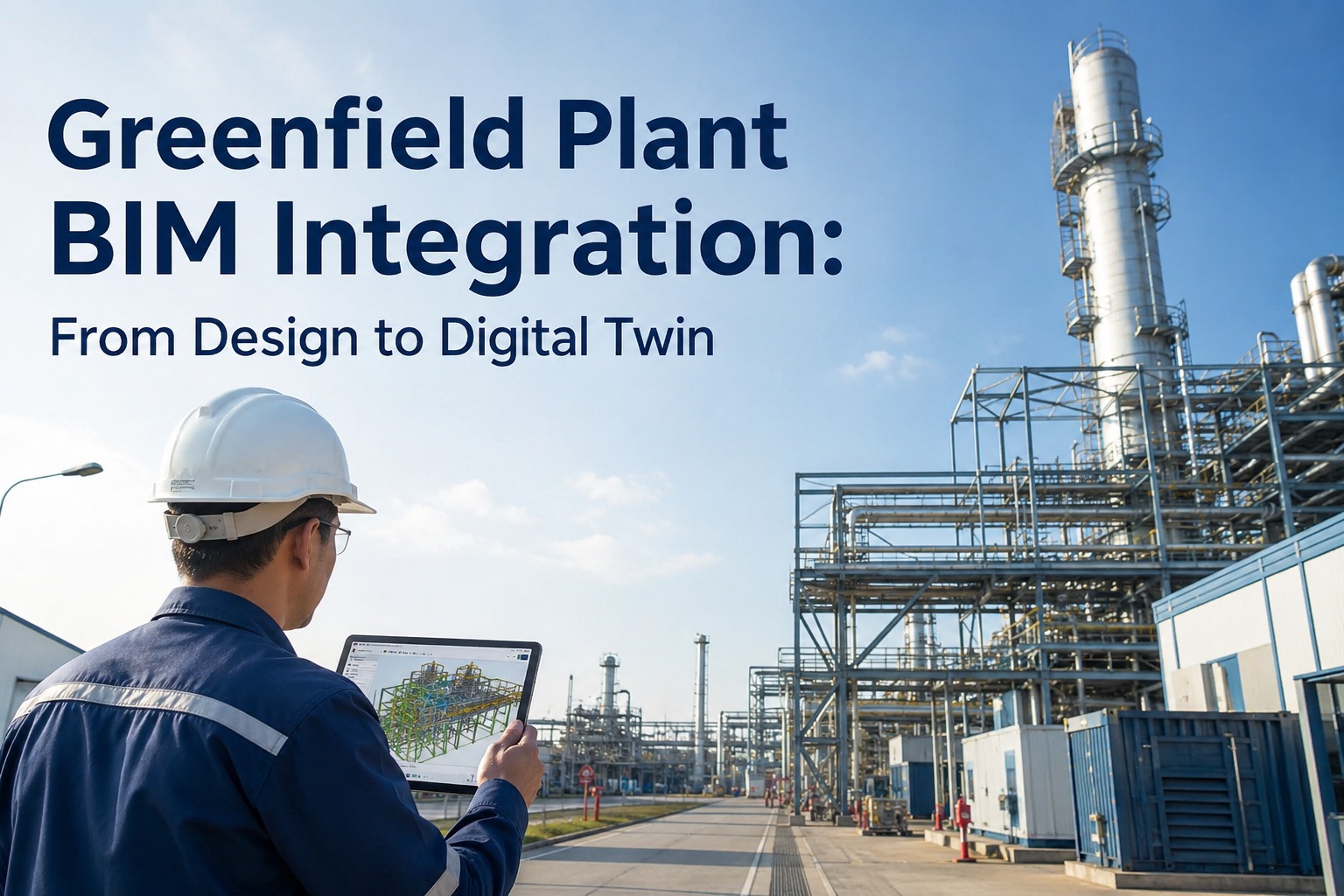
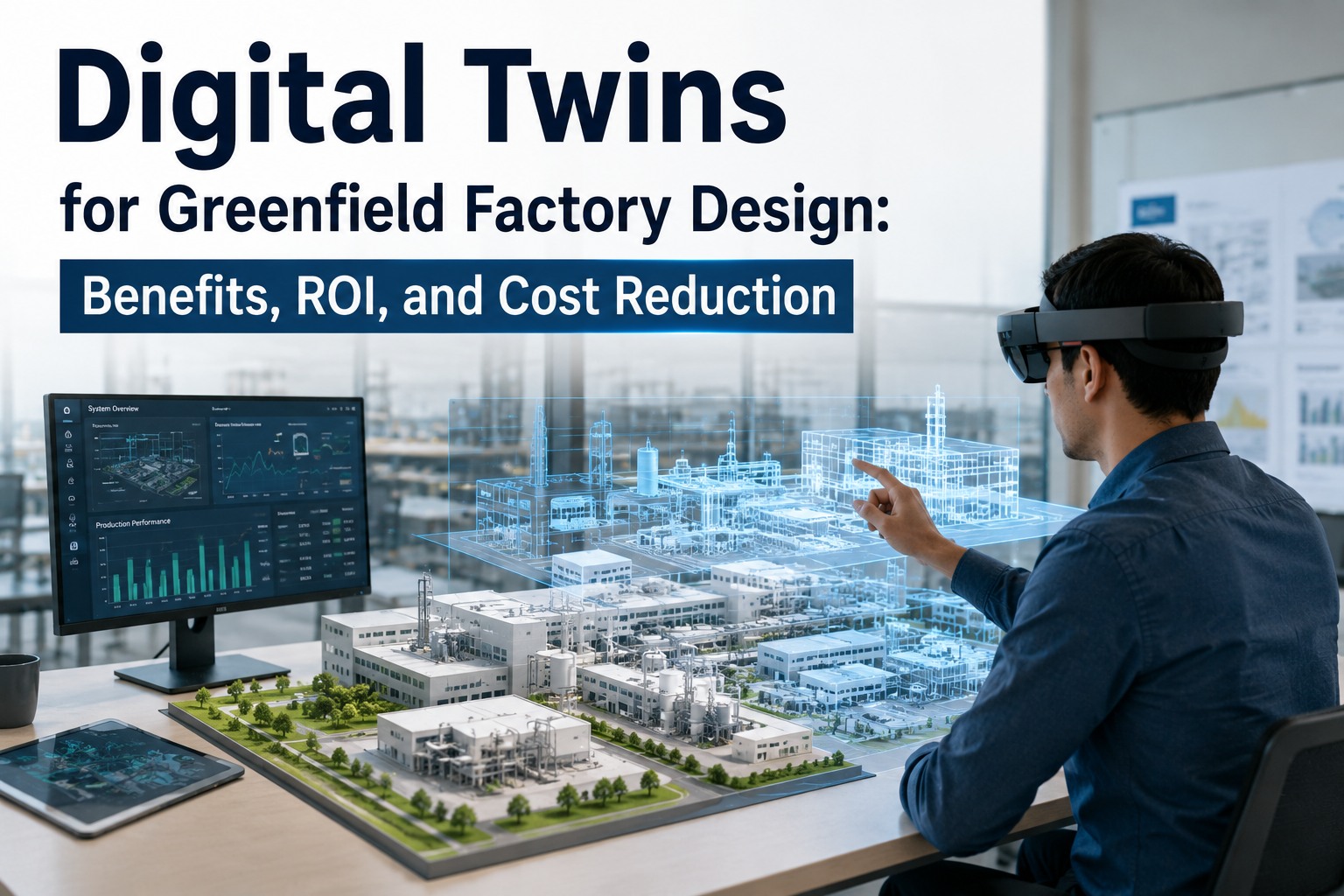
Digital Twin: Design, Simulate, Validate
BMW designed its Debrecen facility entirely in virtual space before breaking ground. Digital twin technology has moved from competitive advantage to competitive necessity—with the market projected to reach $73 billion by 2027.
1
Design
Create virtual replica of entire factory layout
→
2
Simulate
Test robot paths, cycle times, material flow
→
3
Validate
Debug PLC code, catch design flaws virtually
→
4
Build
Commission with confidence—50% faster
90%
PLC Code Validated Before Physical Test
Days→Min
Concept Alignment Time
88-97%
RUL Prediction Accuracy
30-50%
Faster Commissioning
Ready to see how digital twin simulation works for automotive? Schedule a digital twin demonstration with our team.
AI Quality Inspection: Zero-Defect Manufacturing
Machine learning-powered vision now achieves 95-98% defect detection accuracy in live automotive production. For an industry where a single escaped defect can cost $45,000+ in recalls, AI inspection is essential.
→
AI Analysis
CNN Deep Learning
→
Pass/Reject
98.7% Accuracy
Paint Shop
Orange peel, runs, sags, dust inclusions
97.2%
Body-in-White
Weld porosity, spatter, gaps, misalignment
96.8%
Stamping
Scratches, dents, cracks, anomalies
98.1%
Final Assembly
Gap/flush, missing parts, label errors
99.2%
Success Story
"After deploying iFactory AI vision across four stamping lines, we detect surface anomalies as small as 0.3mm with 97% accuracy. System inspects 100% of production at 185 parts per minute."
2.8% → 0.2%
Customer Rejection Rate
— Automotive Tier-1 Stamping Supplier
See How We Did It →
Frequently Asked Questions
QHow long does it take to build a greenfield EV plant?
Greenfield automotive plants typically take 2-3 years from ground-breaking to production. BMW's Debrecen facility used extensive digital planning to compress timelines. Brownfield EV conversions take 3-4 years while maintaining existing production.
QWhat's the ROI on cobots in automotive manufacturing?
Automotive cobots typically achieve ROI in 8-14 months with 35-50% lower deployment costs than traditional robots. They deliver 20% cycle time reduction, 34% efficiency gains in welding, and 37% fewer safety incidents.
QDo I need separate lines for EV and ICE vehicles?
Not necessarily. The best greenfield designs use flexible final lines that handle both powertrains, with dedicated zones for battery assembly, megacasting, and e-motor integration.
QWhat accuracy can AI quality inspection achieve?
Modern AI vision systems achieve 95-98% defect detection accuracy in live production, with some configurations reaching 98-100%. They detect surface anomalies as small as 0.2mm at speeds of 240+ parts per minute.
QHow does iFactory support automotive manufacturing?
iFactory provides integrated MES, predictive maintenance, and AI quality inspection specifically designed for automotive production. Our platform connects to your digital twin, cobot fleet, and production equipment.
Ready to Design Your Future-Ready Automotive Factory?
Get expert guidance on EV production lines, cobot integration, digital twin implementation, and AI quality inspection—all integrated with iFactory's manufacturing platform.