Most "smart factory" ambitions stall not because the technology is missing, but because nobody wrote down which layer does what — so a new AI vision system gets bolted onto the same disconnected stack as the last five point tools. A working blueprint separates data capture, integration, analysis and decision layers clearly, so each new capability has an obvious place to plug in. Auto OEM directors scoping this for their own plant can review a reference architecture against their current systems with iFactory AI's team.
A Smart Factory Ambition Needs a Blueprint, Not Just a Budget
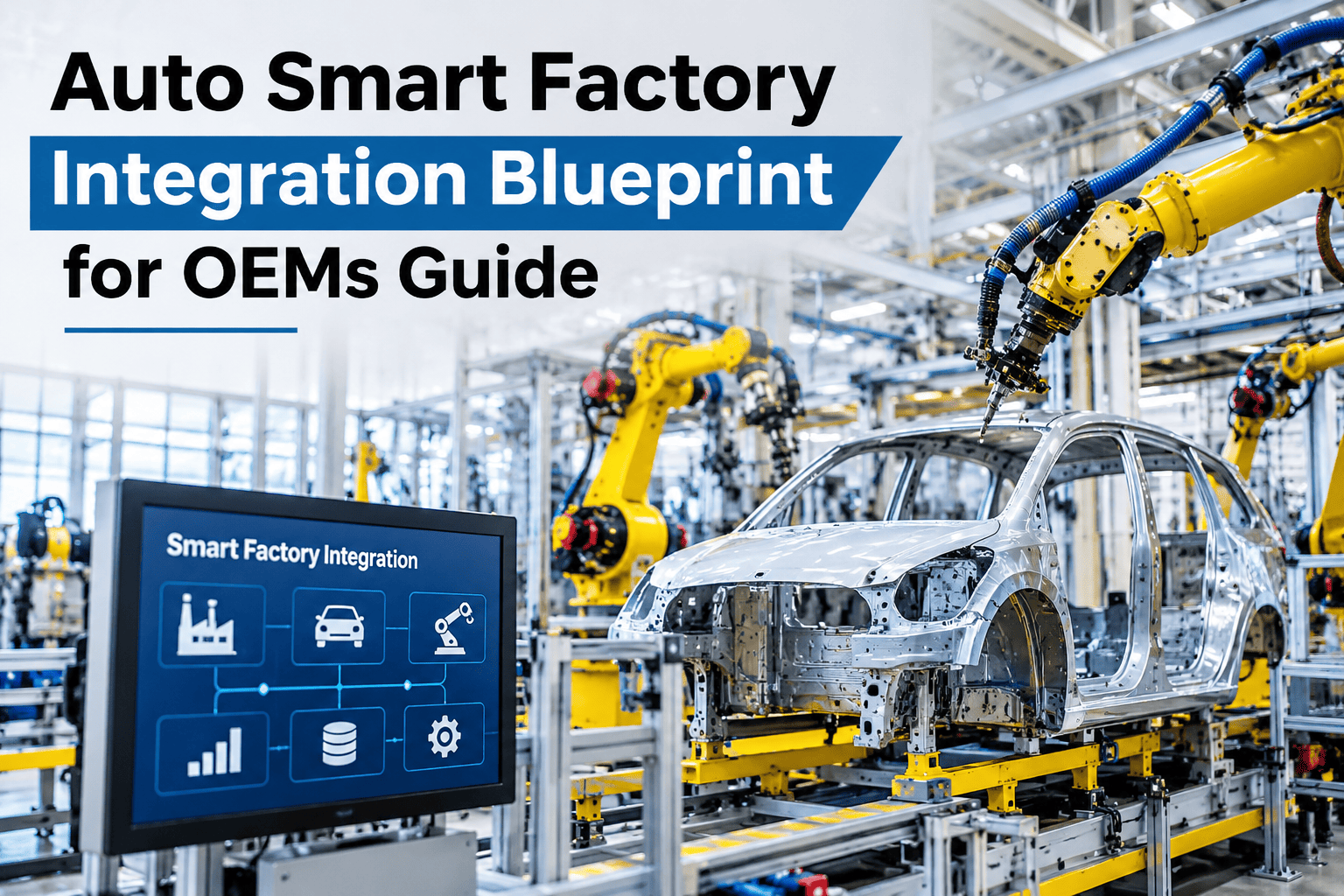
iFactory AI lays out a layered integration architecture — capture, integrate, analyze, decide — so every new capability has a clear place to connect instead of becoming another disconnected tool.
The Four Layers Every Smart Factory Stack Needs
Each layer depends on the one beneath it. Skipping a layer — jumping straight from raw sensor data to an AI decision, for example — is where most pilots quietly fail once they try to scale past one line.
What Each Layer Actually Needs to Work
| Layer | Depends on | Common failure point |
|---|---|---|
| Capture | Reliable sensors and consistent tagging | Inconsistent naming across lines |
| Integrate | A common data model across systems | Each system kept in its own silo |
| Analyze | Clean, validated data from the layer below | Models built on unvalidated raw feeds |
| Decide | Trust built through accurate, explainable analysis | Recommendations nobody acts on |
See Where Your Current Stack Actually Sits
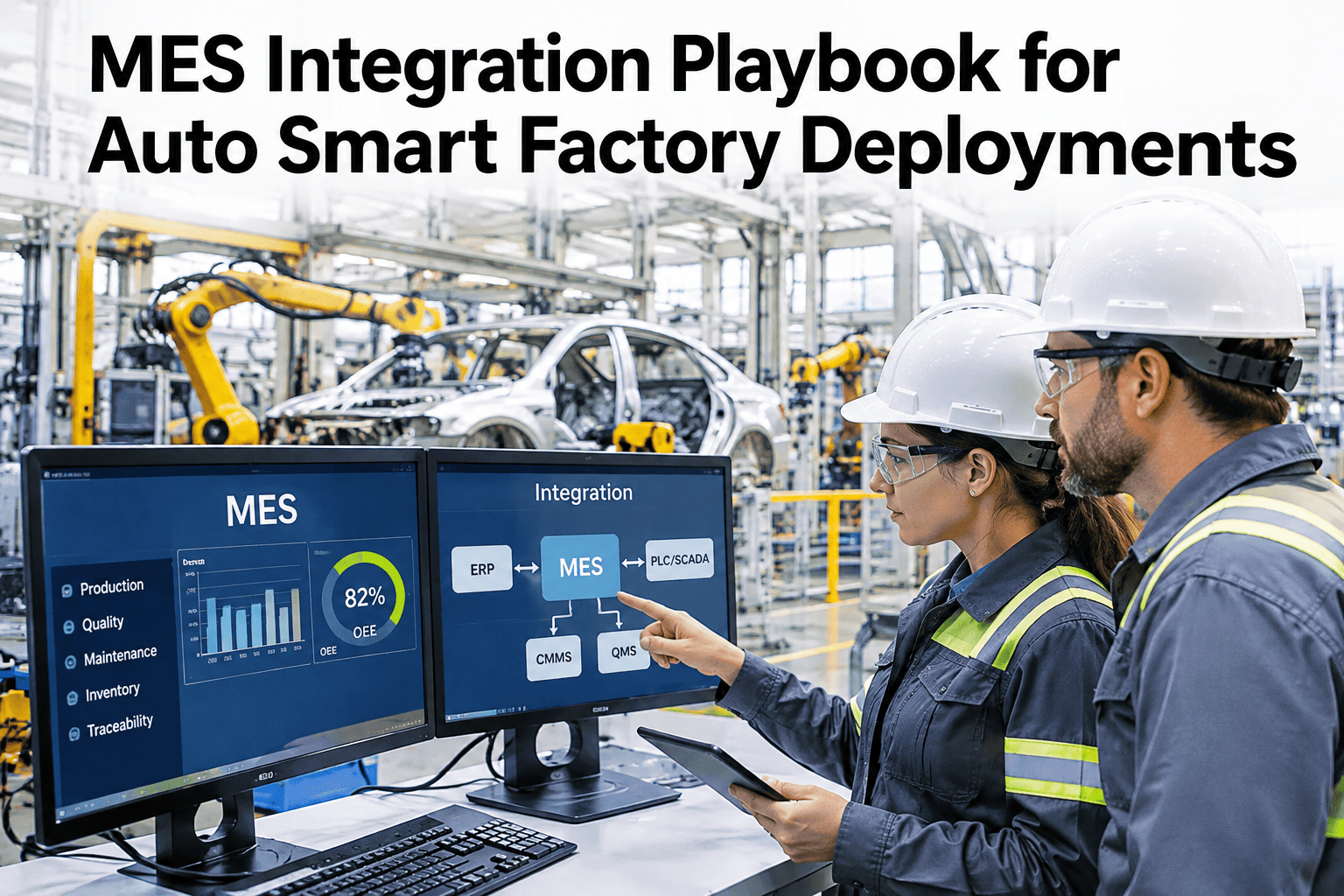
Walk through your existing PLC, MES and ERP connections against this layered model to find the real gap before adding anything new.
A Phased Rollout That Avoids a Big-Bang Rebuild
A Composite Scenario: The Pilot That Could Not Scale
An OEM plant ran a successful AI vision pilot on one line, with strong accuracy numbers that leadership wanted replicated plant-wide within a quarter. The rollout stalled because each line used different tag naming for the same stations, so the integration layer that worked for the pilot line had to be rebuilt by hand for every new line rather than extended. Standardizing tag naming across the plant before continuing the rollout turned a six-month manual integration effort into a repeatable template, a step iFactory AI's team can help plan before a plant-wide rollout begins.
Choosing the Right Pilot Line for the First Phase
The best pilot line is not necessarily the one with the worst problems — it is one with reasonably clean existing data, an engaged team willing to standardize tagging, and a defect or downtime issue specific enough that success is easy to measure. A pilot chosen purely because it is the loudest complaint often comes with too many confounding issues to prove the architecture is working.
Once the pilot line's integration pattern is validated, it becomes the template every subsequent line follows, which is what makes phase two and three move faster than phase one did.
Who Needs to Be in the Room Before Phase One Starts
A smart factory blueprint spans IT, OT, quality and plant operations, and skipping any one of those groups in the planning stage tends to surface as a blocked integration months later. IT needs to agree on data governance and network segmentation; OT needs to confirm which PLC and sensor data is actually accessible; operations needs to confirm the plan will not disrupt production during rollout.
Frequently Asked Questions
Build the Blueprint Before the Next Pilot
iFactory AI helps OEM plants design a layered integration architecture that scales past one line. Book a walkthrough with your current systems.