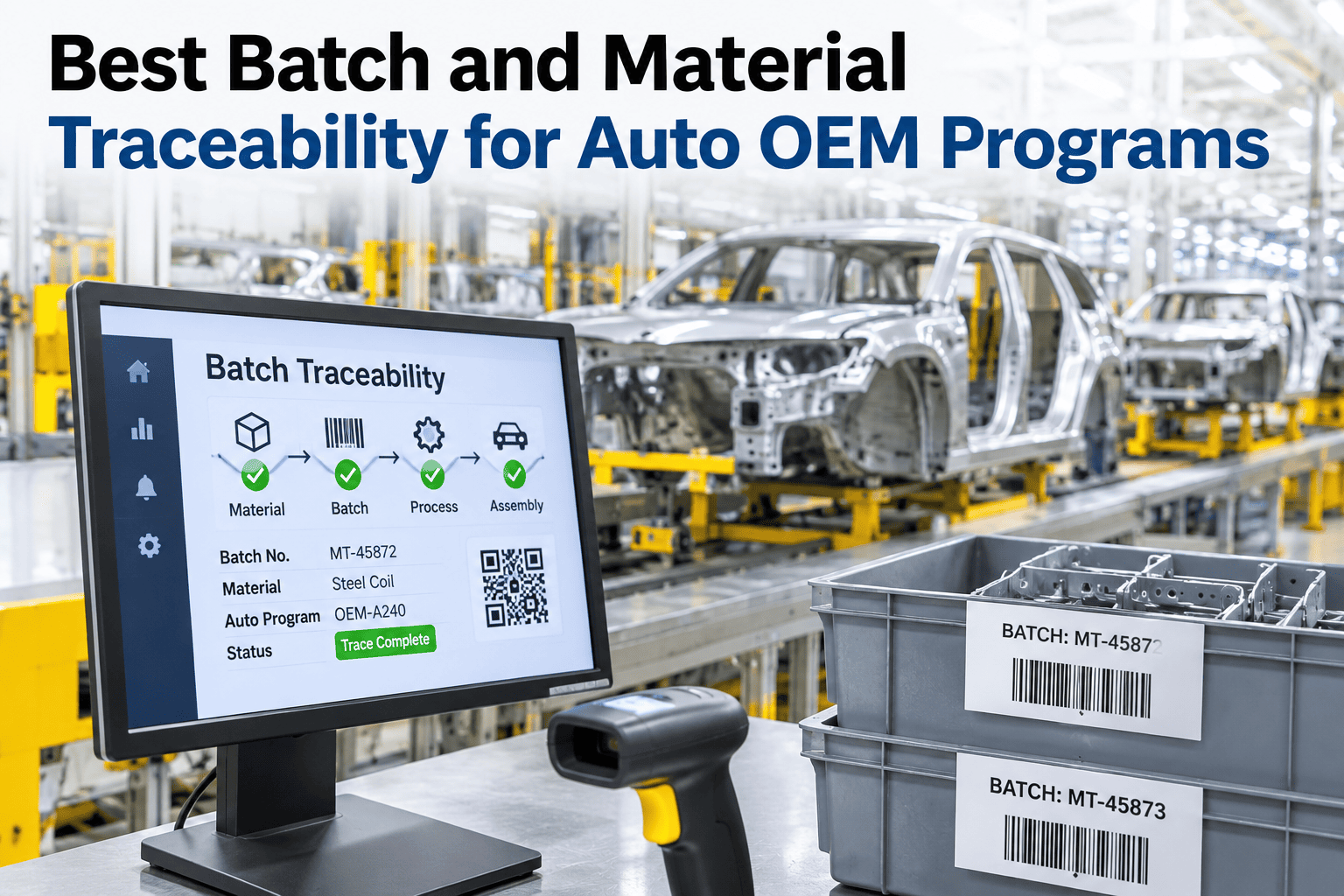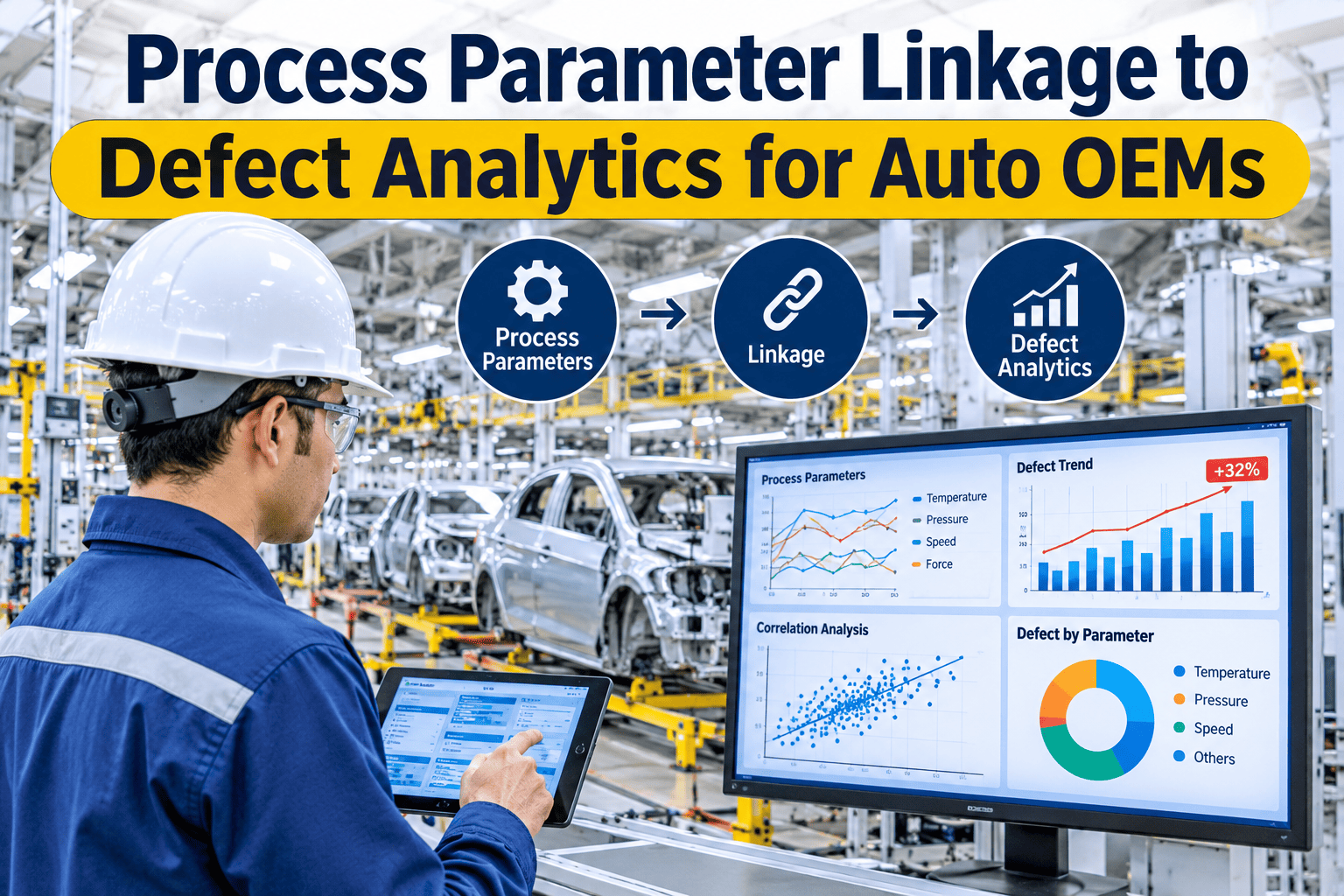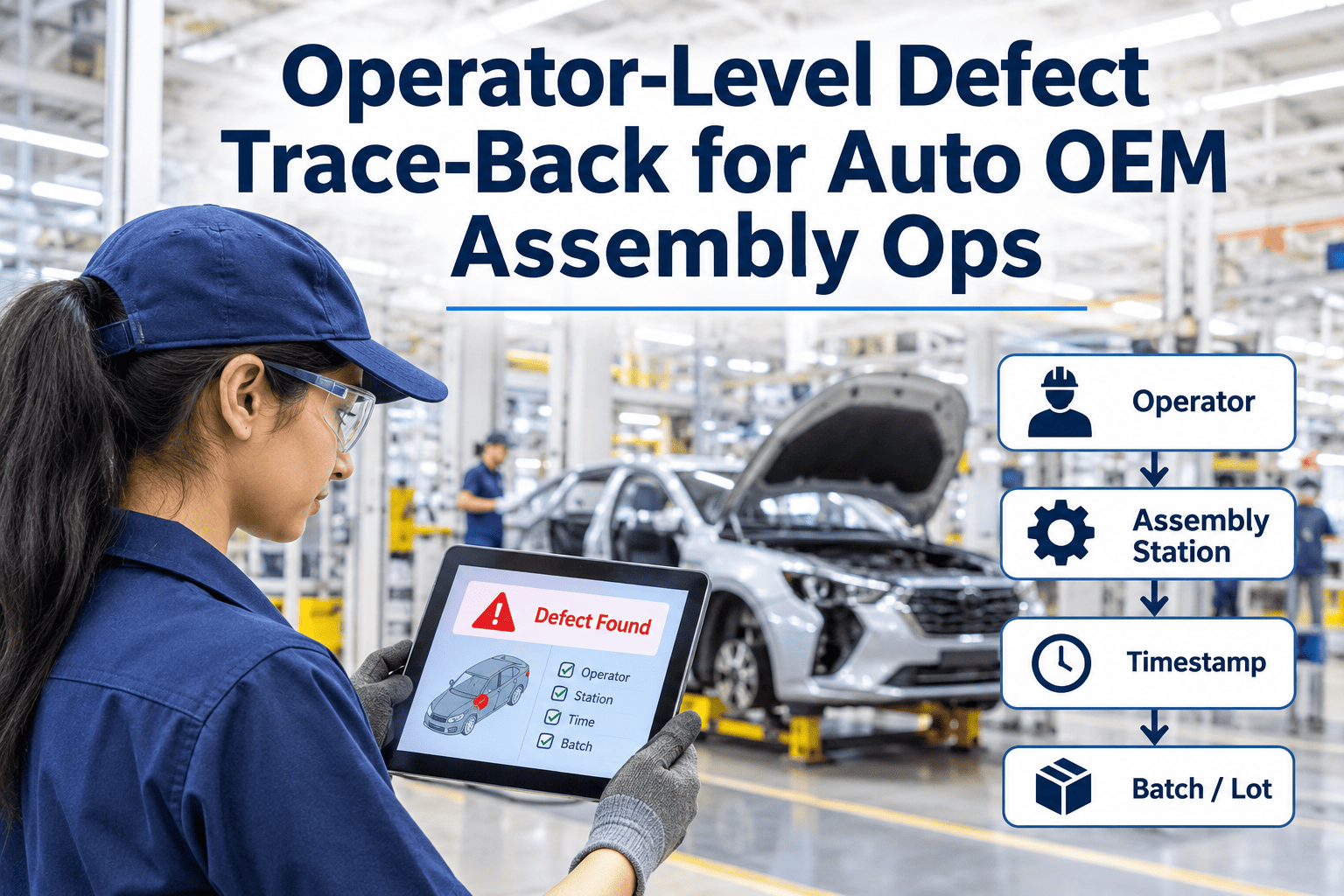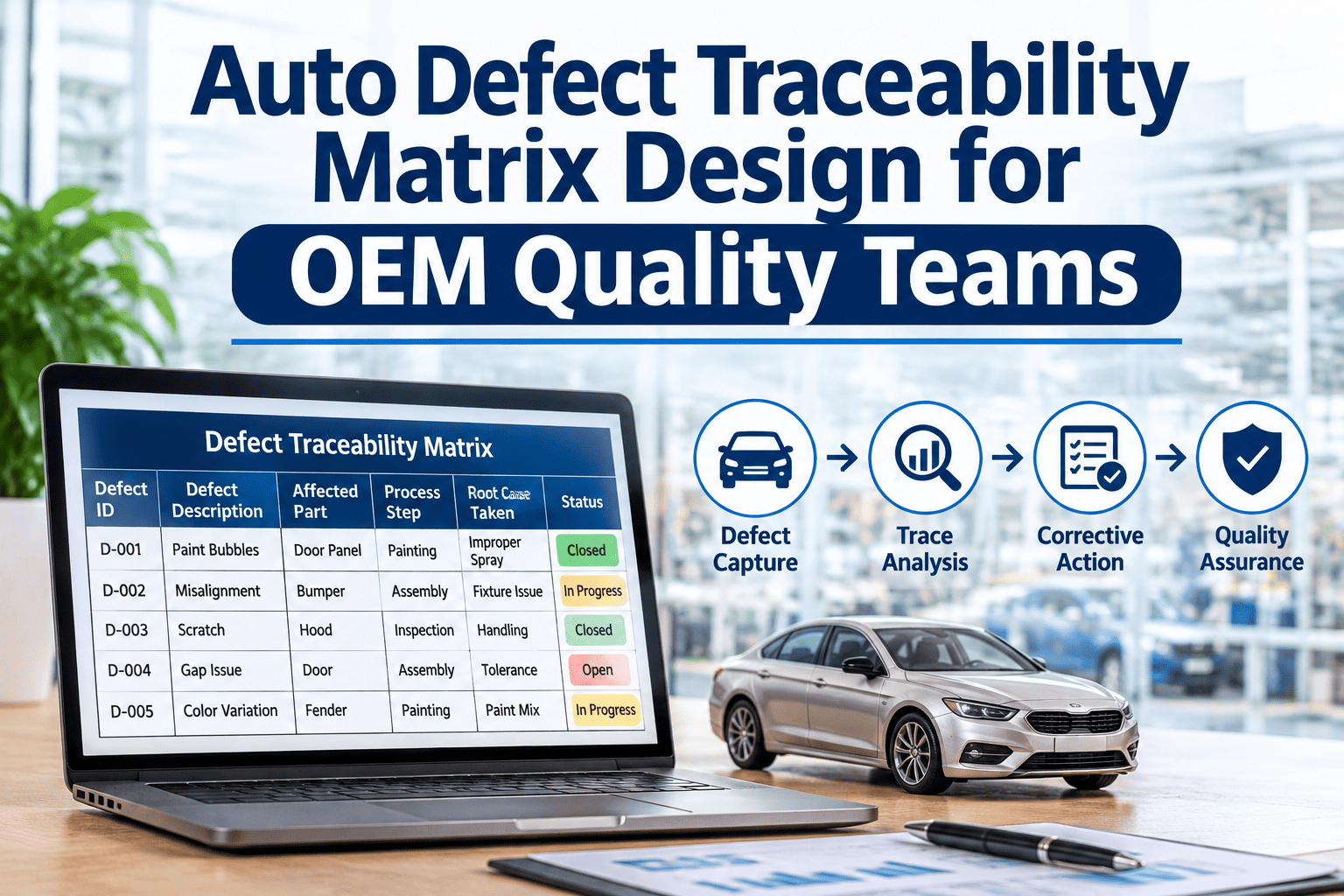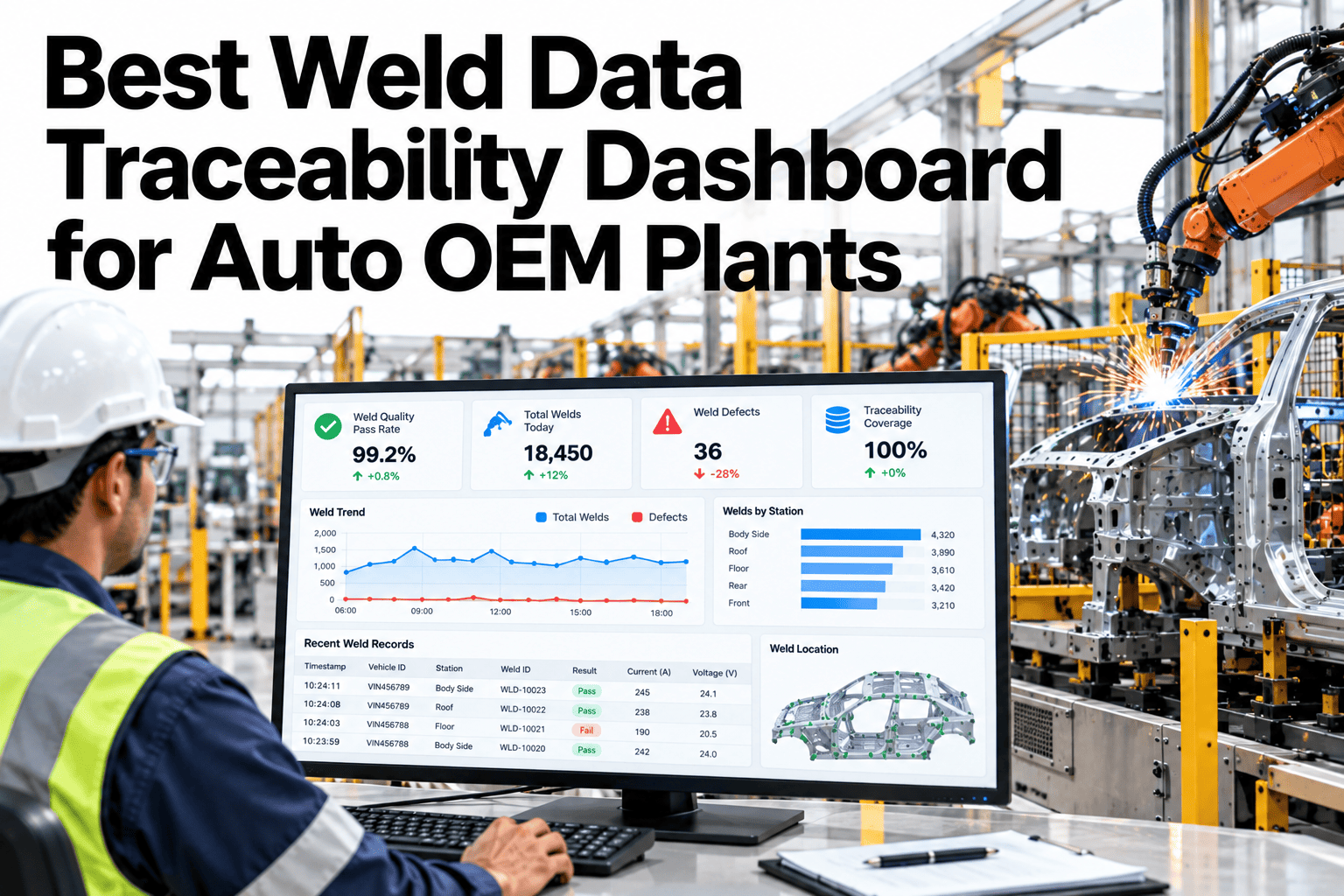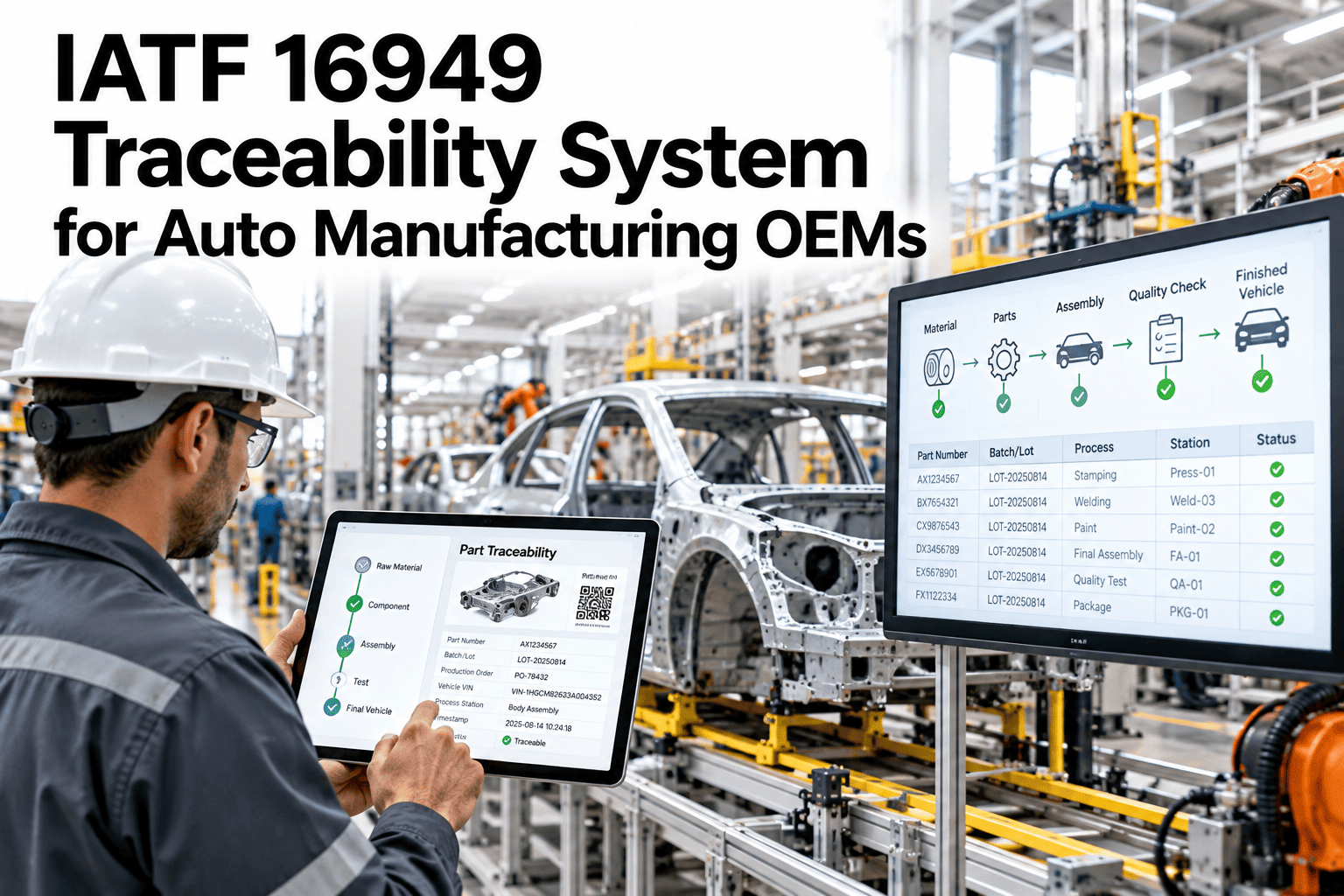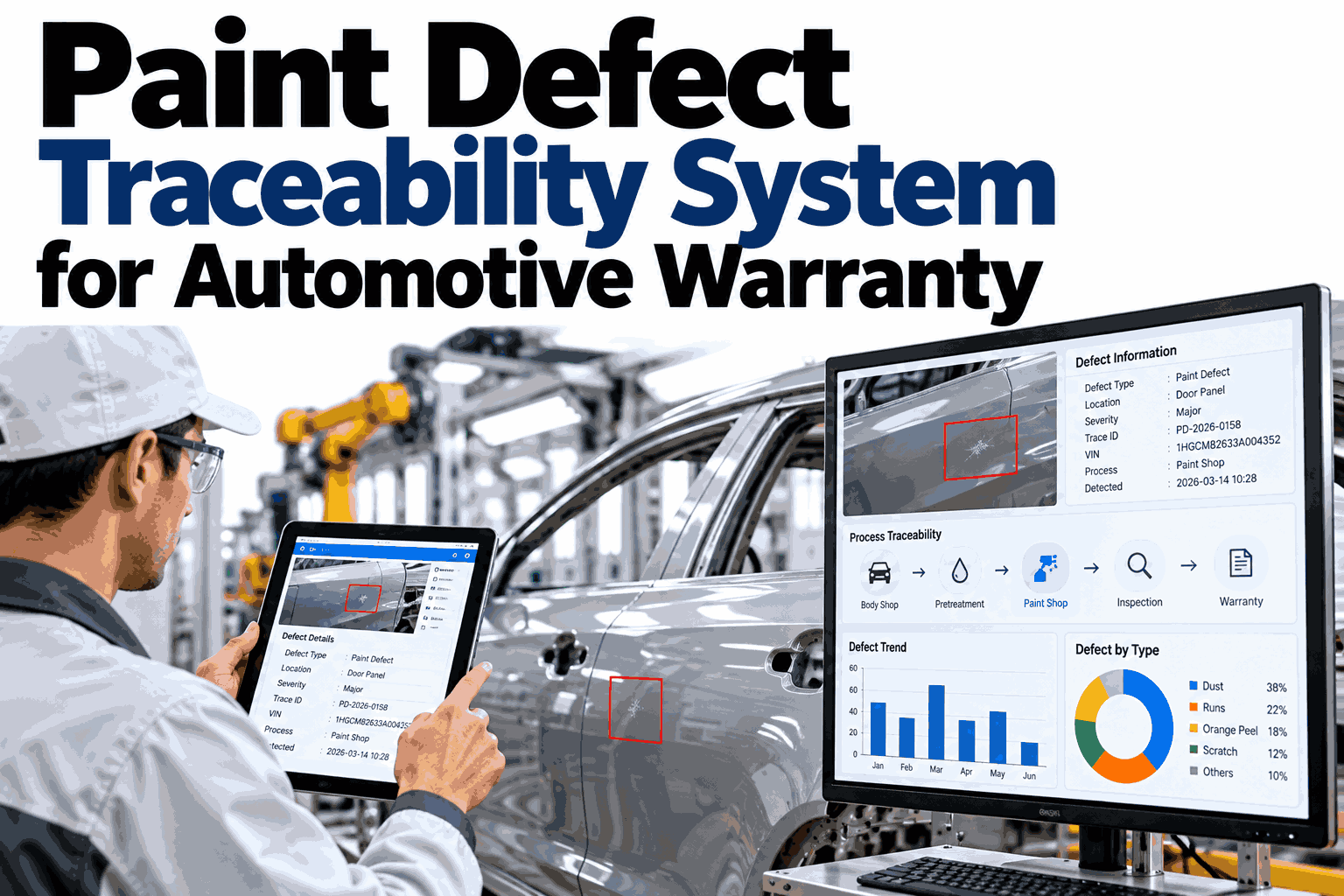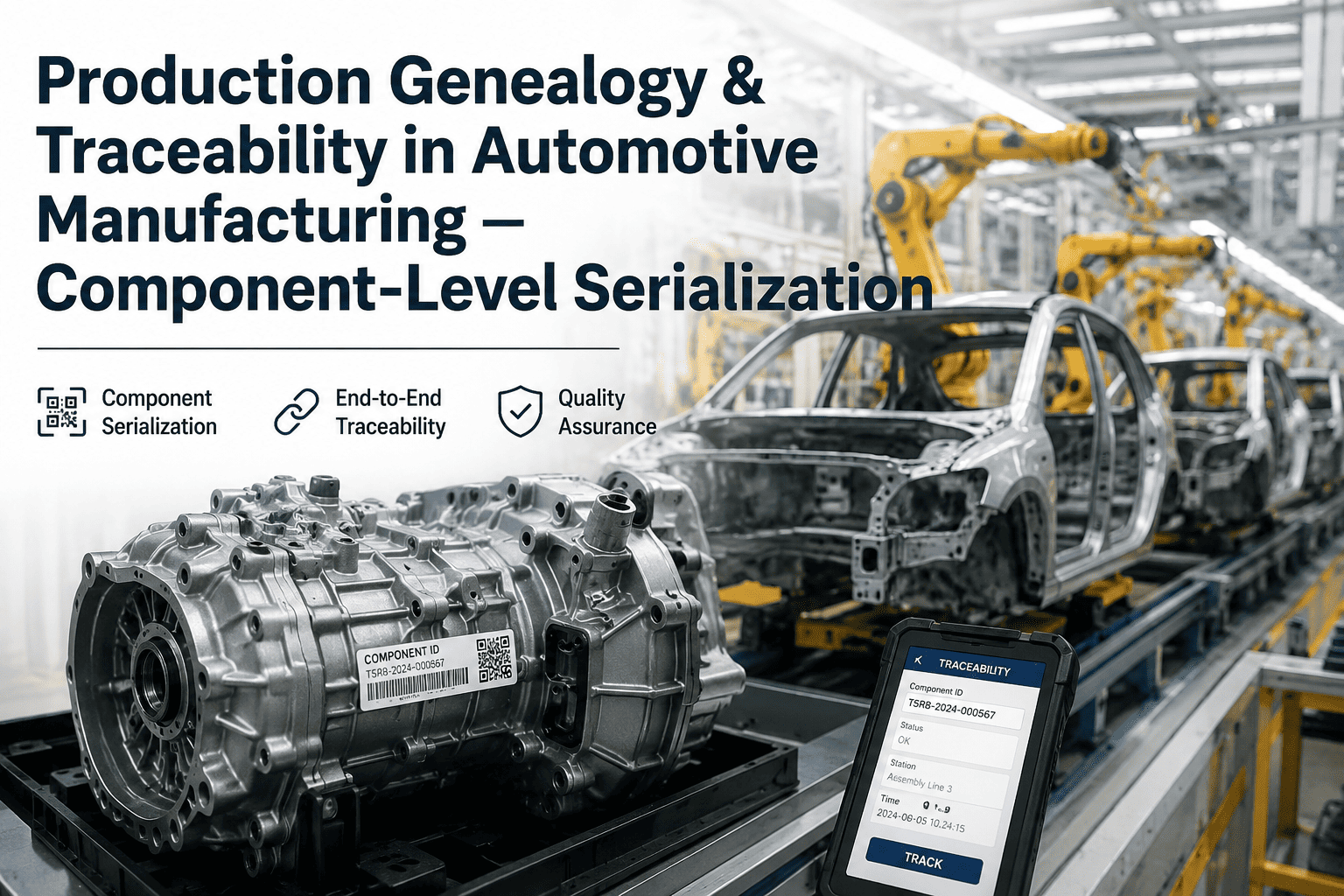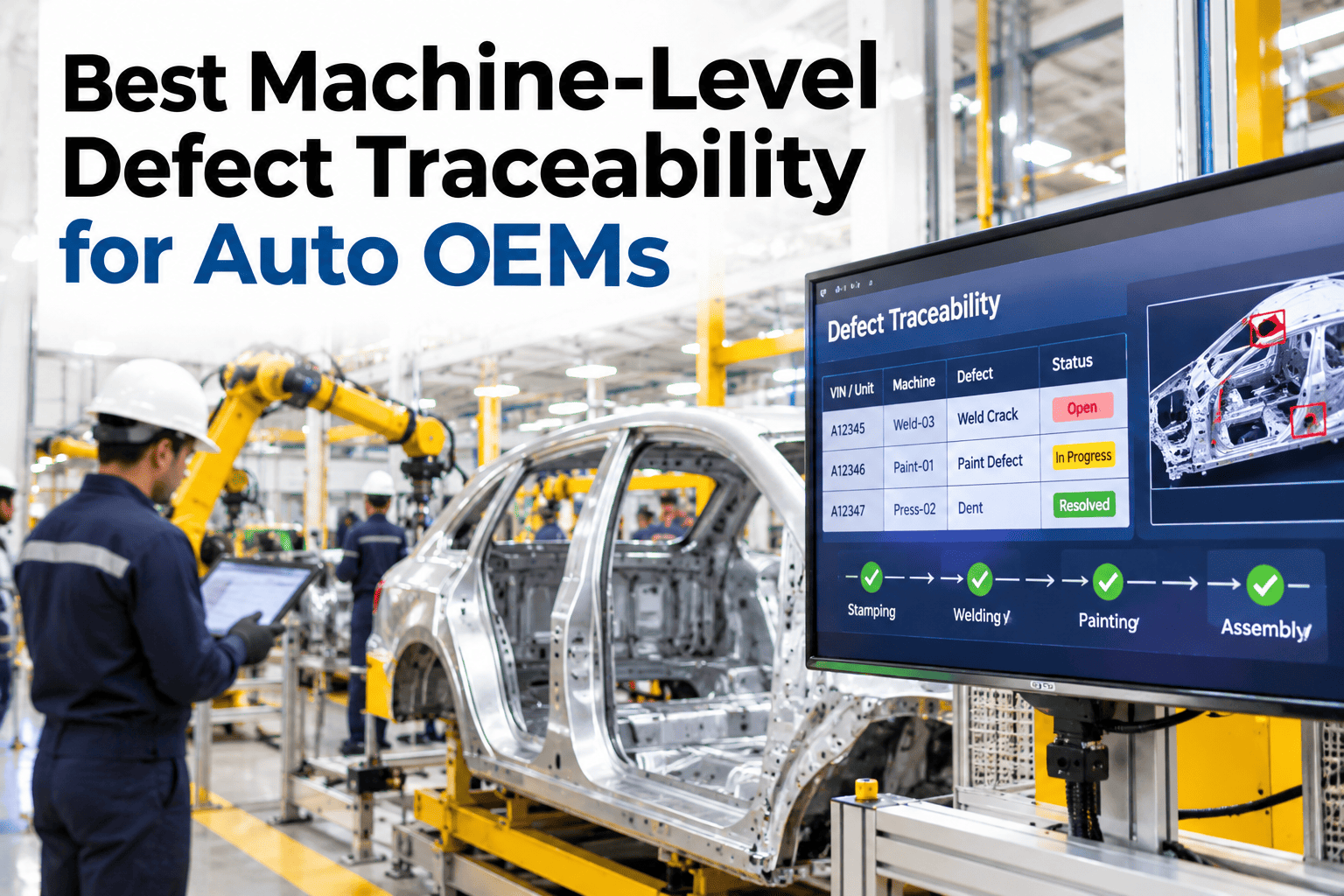
When a defect surfaces in the field, the question that actually matters is backward: what machine, operator and shift produced this part. A traceability system that only answers forward, where did this part go, is broken by design for containment purposes. Machine-level defect traceability links asset serialization, machine-state capture and defect linkage into one queryable record, so a containment scope can be narrowed to the exact units at risk, not an entire production run. OEM quality teams who want their own traceability architecture reviewed can review a machine-level traceability design with iFactory.
Precise Scoping Is Cheaper and More Likely to Reach the Right Vehicles
iFactory, an on-premise AI platform for automotive quality, links machine ID, process parameters and inspection results into one defect history per part.
What Machine-Level Traceability Actually Answers
A traceability system that only handles one direction is broken by design. Both queries have to work, and they answer different containment questions.
Asset Serialization: Giving Every Machine an Identity
Just as a part needs a serial number, every machine, station and tool needs a stable identifier the traceability system can reference. Without it, a machine-state reading has no home to attach to.
Machine-State Capture: What Actually Needs Recording
A PLC holds machine states and process values, a scanner identifies the part, a vision system produces an inspection result. None of these systems was designed to work with the others.
| Record Type | Captures |
|---|---|
| Process parameters | Machine settings, speeds, temperatures, cycle data |
| Inspection results | Pass/fail data, measurements, operator sign-off |
| Machine and operator log | Equipment ID, shift, operator, timestamp |
Time a Scoping Query Against Your Own Data
Share your current traceability setup, and iFactory will show how fast a containment scope could be narrowed.
The Defect Linkage Pattern That Narrows Containment
A genuinely useful record connects a defect to the specific machine window, lot and process deviation that produced it, then runs the same query forward to find every other unit sharing that risk.
A Composite Scenario: 847 Parts in Four Minutes
A defect surfaced that could plausibly have come from any unit produced in a multi-week window. With serial-linked genealogy, the affected population was narrowed to 847 specific parts in a few minutes.
This kind of scenario is illustrative. The exact population size and lookup time depend on how granular your own capture already is.
Common Mistakes in Traceability Architecture
| Mistake | Consequence |
|---|---|
| Movement-only capture, no condition data | Answers where a unit went, not what state it was in |
| Lot-level only, no serial capability designed in | Containment scope stays wide even when it shouldn't |
| Systems treated as five separate projects | No single query can span machine, part and inspection data |
How OEM Requirements Tighten the Bar
IATF 16949 requires traceability at a level that enables nonconforming product to be identified, and every major OEM has interpreted that into its own specific requirement.
| OEM Requirement | What It Specifies |
|---|---|
| Ford Q1 / CSR | Individual-part traceability on critical features |
| GM BIQS | Serial-level traceability for safety and emissions-critical parts |
| Stellantis MOPS | Named process-event capture at tightened granularity |
Where iFactory AI Fits
iFactory links component serialization, process data and inspection results into one queryable genealogy record, so a containment query runs in minutes, not days.
Asset-Level Serialization
Every machine, cell and tool carries a stable, queryable ID.
Connected Machine State
PLC, scanner and vision data joined into one record.
Forward and Backward Queries
Both directions supported from the same genealogy record.
Frequently Asked Questions
Do all parts need serial-level traceability?
No, safety-critical parts generally warrant it, while lower-criticality components may only need lot-level tracking. Review your part criticality list with us.
What is the difference between traceability and serialization?
Serialization gives a unique identifier, while traceability connects that identifier to the process, inspection and machine data behind it. Ask support about your current gap.
How does this reduce recall scope specifically?
Identifier-linked scoping narrows containment to the units that actually share the risk, instead of a wide date-range sweep. See scoping modeled on your data.
How long should traceability records be retained?
Several major OEM customer-specific requirements call for retention periods of 15 years for safety and emissions-critical parts. Confirm retention for your parts.
Can this connect systems that were never designed to talk to each other?
Yes, that is the core integration work, treating PLC, scanner and vision data as one workflow rather than five separate projects. Map your current systems with the iFactory team.
Scope Your Next Containment to Minutes, Not Days
Book a session with iFactory and see your machine, part and inspection data linked into one queryable traceability record.