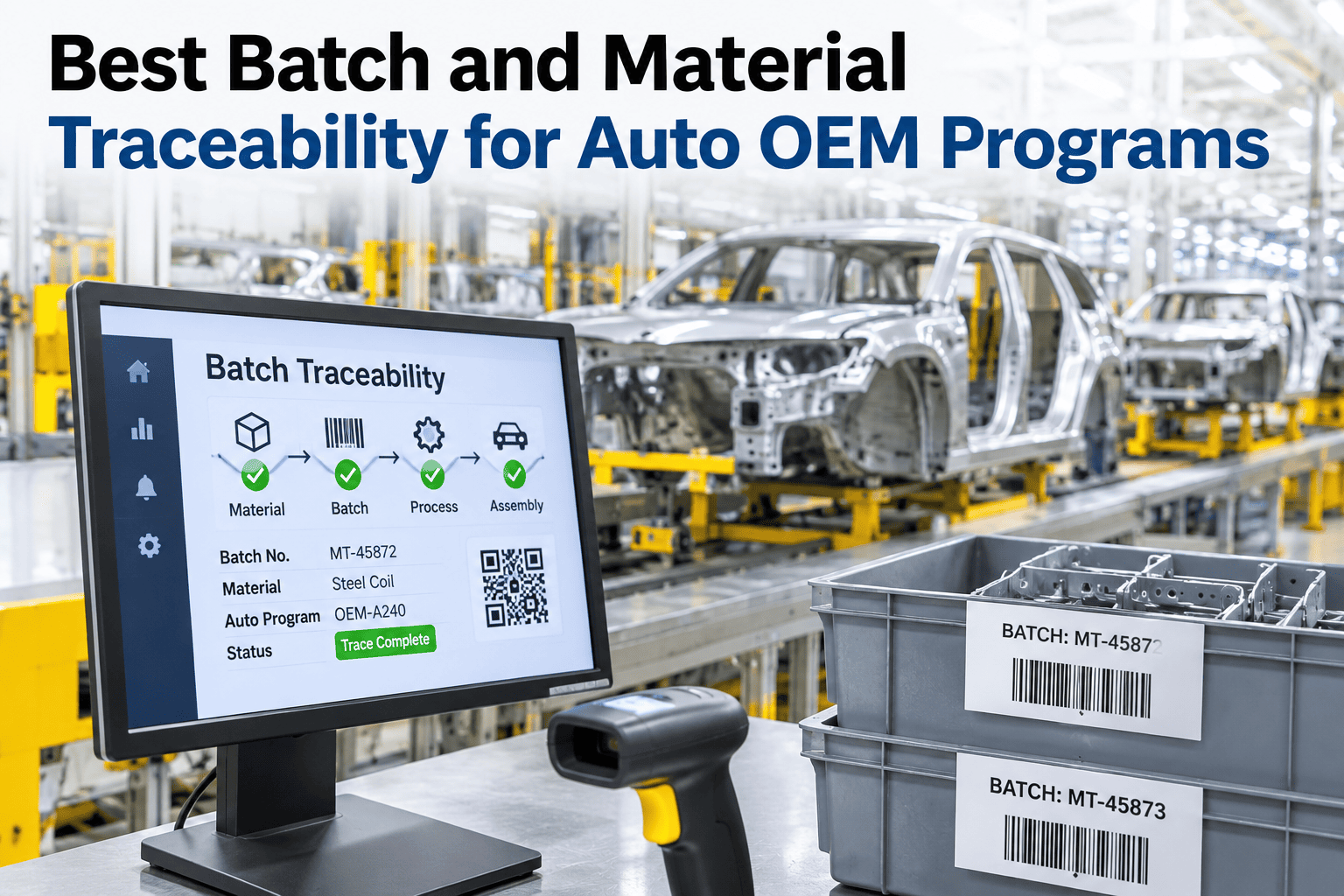
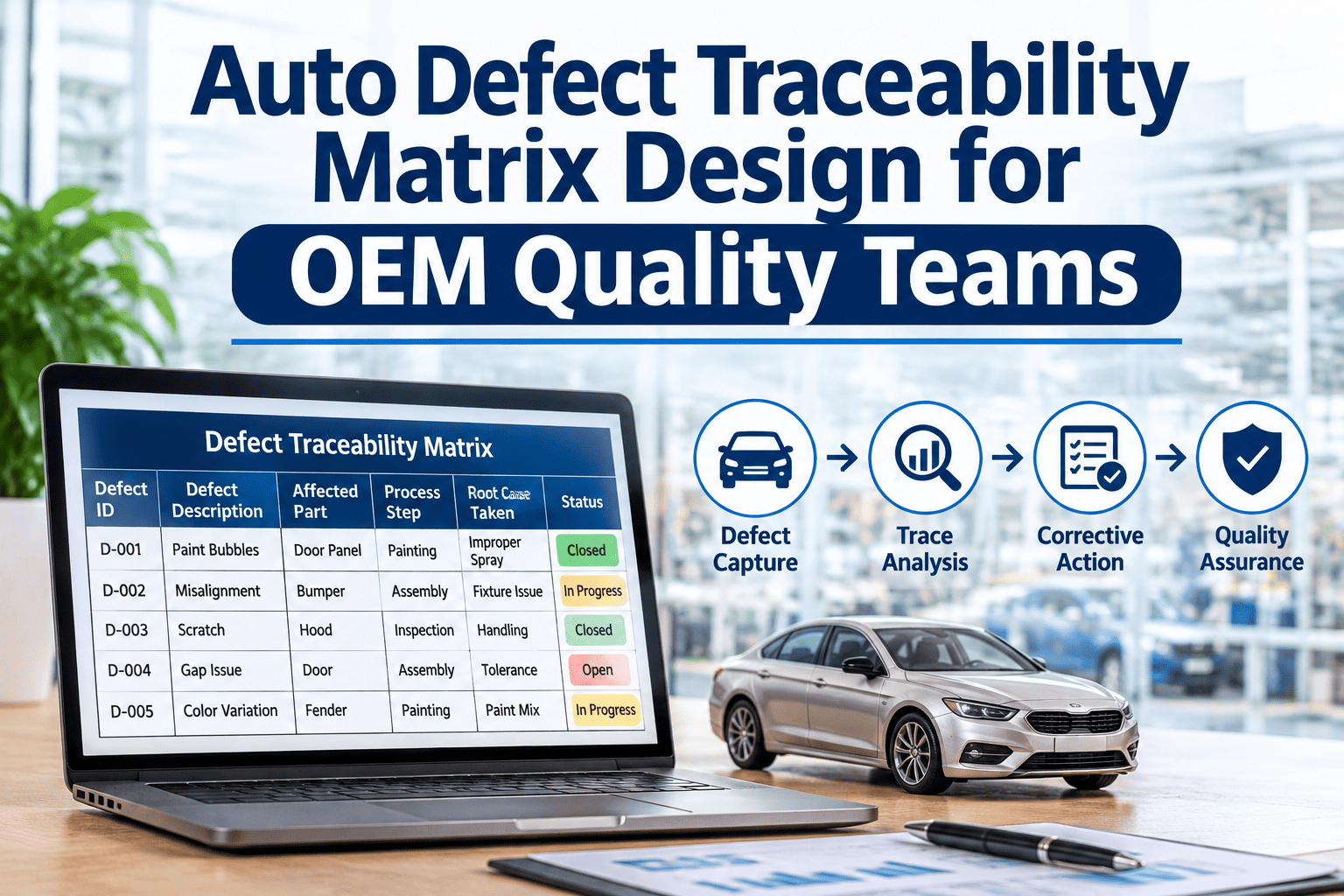
When a defect shows up on the line or, worse, after a vehicle has shipped, the first question an OEM program asks is simple: which batches are affected. If supplier lot numbers, material certificates and production records live in separate spreadsheets or separate supplier systems, that question can take days to answer and the honest answer is often "we are not fully sure." Batch and material traceability built for automotive programs captures supplier lot data at receipt, correlates it against defects as they occur, and keeps a material genealogy that can be queried in minutes, and our team can walk through how this maps to your current supplier data.
Automotive OEM programs, supplier quality
Know Exactly Which Batches Are Affected Before the Question Is Even Asked
iFactory AI captures supplier lot data, correlates batches against defects, and keeps a full material genealogy so a scope question has a fast, confident answer.
Three pillars this page covers
Lot captureDefect correlationMaterial genealogy
The scope problem
Why Most Programs Cannot Answer "Which Batches" Quickly
Supplier lot numbers arrive on paper certificates, in emails, or in a supplier portal that does not talk to the plant's own production records, so the moment a defect appears, someone has to manually reconstruct which incoming material went into which run.
Lot data scattered
Certificates, emails and portals, not one system
Manual reconstruction
Someone pieces together receipt and usage records by hand
Slow, partial answer
Scope takes days and still carries uncertainty
Recall scope widens
Uncertainty pushes the program toward a broader, costlier recall
A connected batch and material system removes the manual reconstruction step entirely, because the lot-to-build link is already there the moment it is needed.
Three pillars
What a Traceability System Actually Needs to Capture
Supplier lot capture
Lot number, supplier, certificate data and receipt date tied to every incoming shipment.
Batch-defect correlation
Defects logged on the line are automatically linked back to the material lots used in that build.
Material genealogy
A queryable chain from raw material lot through every process step to the finished unit.
Each pillar answers a different question, but they only become powerful together: lot capture tells you what came in, correlation tells you what went wrong, and genealogy tells you exactly where else that material ended up.
Map Your Current Lot Data Sources
Share how supplier lot information reaches your plant today, whether by certificate, portal or EDI, and see how it would feed into a connected traceability record.
Capture table
What Gets Captured, Where and Why It Matters
| Data type | Capture point | Why it matters |
|---|
| Supplier lot number | Goods receipt or incoming inspection | Anchors every downstream record to a specific shipment |
| Material certificate | Supplier document at receipt | Confirms material meets spec before it enters the line |
| Build or work order link | Point of use on the line | Ties the lot to the exact units it went into |
| Defect record | Quality inspection or field report | Feeds correlation back to the originating lot |
| Downstream shipment record | Finished goods dispatch | Closes the loop from raw material to shipped unit |
From receipt to decision
Four Steps From Incoming Material to a Scoped Decision
1
Capture at receipt
Lot number and certificate data are logged as material arrives.
2
Link at point of use
The lot is tied to the specific build or work order it feeds.
3
Correlate on defect
A logged defect is automatically matched back to the lots in that build.
4
Query the genealogy
Every affected unit across every downstream location is listed in minutes.
The value of this chain shows up exactly when you need it most, which is also the moment you have the least time to build it manually.
Where gaps appear
Traceability Gaps Cluster at Predictable Handoff Points
Most programs do not lose traceability everywhere equally. The gaps tend to concentrate at specific handoffs between systems or teams.
Receipt to plant systemElevated
Plant system to lineLow
Line to finished goodsModerate
Finished goods to fieldHigh
The receipt-to-system handoff and the finished-goods-to-field handoff are where most programs lose the thread, because those are the two points where data most often has to cross from one organization's system into another's. To review where your own handoffs stand, ask our team about a traceability gap assessment.
Recall scope impact
Confident Scoping Keeps a Recall Narrow Instead of Broad
When scope is uncertain, programs understandably err toward caution, which means pulling in more units, more time periods and more suppliers than the actual defect touched.
Partial records, manual check
This illustrative scale shows relative recall scope, not a measured figure for any specific program.
Common pitfalls
Five Problems That Undermine Batch Traceability Programs
1
Lot numbers captured but never linked to builds
Receipt data exists but nobody connects it to the work order it fed.
2
Different formats across suppliers
Each supplier sends lot data differently, so nothing merges cleanly.
3
Defects logged without a lot reference
A quality record exists but was never tied back to the material that caused it.
4
Genealogy stops at the plant gate
The chain is solid internally but breaks once units ship to the next tier.
5
No one reviews the chain until a crisis hits
Gaps are discovered for the first time during an actual recall scoping effort.
Maturity path
From Paper Certificates to a Queryable Chain
Level 1: Paper and emailLot data exists but is not searchable
Level 2: Digitized receiptLot numbers logged in a system at receipt
Level 3: Linked to buildLots tied to specific work orders and units
Level 4: Full genealogyQueryable chain from raw material to shipped unit
Most programs already sit at Level 1 or 2 for most suppliers, and the jump to Level 3 is usually the highest-value step since it is what makes defect correlation possible at all. To plan your next step, discuss a traceability maturity review with our team.
Who relies on this
Batch Traceability Serves More Than One Team
Supplier quality
I need to know which supplier and lot a defect traces to.
Plant quality
I need to scope affected builds fast when a defect is found.
Program management
I need a defensible answer when the OEM asks about scope.
Field quality
I need to know exactly which shipped units are affected.
Expert review
Traceability is only as strong as its weakest handoff. Before trusting any genealogy query, check where data actually crosses from one system or organization to another, because that is where chains quietly break.
Watch for
A chain that looks complete internally but has never been tested against a real multi-tier scoping exercise.
Do next
Run a mock scoping exercise on one supplier and one defect type before relying on the chain in a real event.
— iFactory automotive specialists
Frequently asked questions
What Automotive Programs Ask About Batch and Material Traceability
How does supplier lot data actually get into the system?
Lot data can be captured from supplier certificates, EDI feeds or portal exports depending on what each supplier already sends, and the goal is to bring whichever format they use into one consistent record at receipt.
See how lot capture works.
Can this correlate a defect back to a specific supplier lot automatically?
Yes, once lots are linked to the builds they fed, a logged defect on a unit can be automatically matched back to every material lot used in that build, rather than requiring a manual lookup each time.
Ask about defect correlation.
Does the genealogy extend past our own plant?
The chain can extend to downstream shipment records so affected units can be traced into the field, though how far it reaches depends on what shipment and dealer data your program has access to.
Discuss your downstream data.
What if different suppliers send lot data in different formats?
Mismatched formats are one of the most common reasons traceability breaks down, so mapping each supplier's format into one common structure is usually an early and necessary step before correlation works reliably.
Ask about supplier format mapping.
How fast can a scope question actually be answered once this is in place?
With lots linked to builds and defects linked to lots, a genealogy query typically returns an answer in minutes rather than the days a manual reconstruction usually takes.
Talk through your current scoping time.
From incoming lot to scoped decision
Answer "Which Batches" in Minutes, Not Days
Book a session with iFactory AI to review your current supplier data and see how batch and material traceability fits your OEM program.