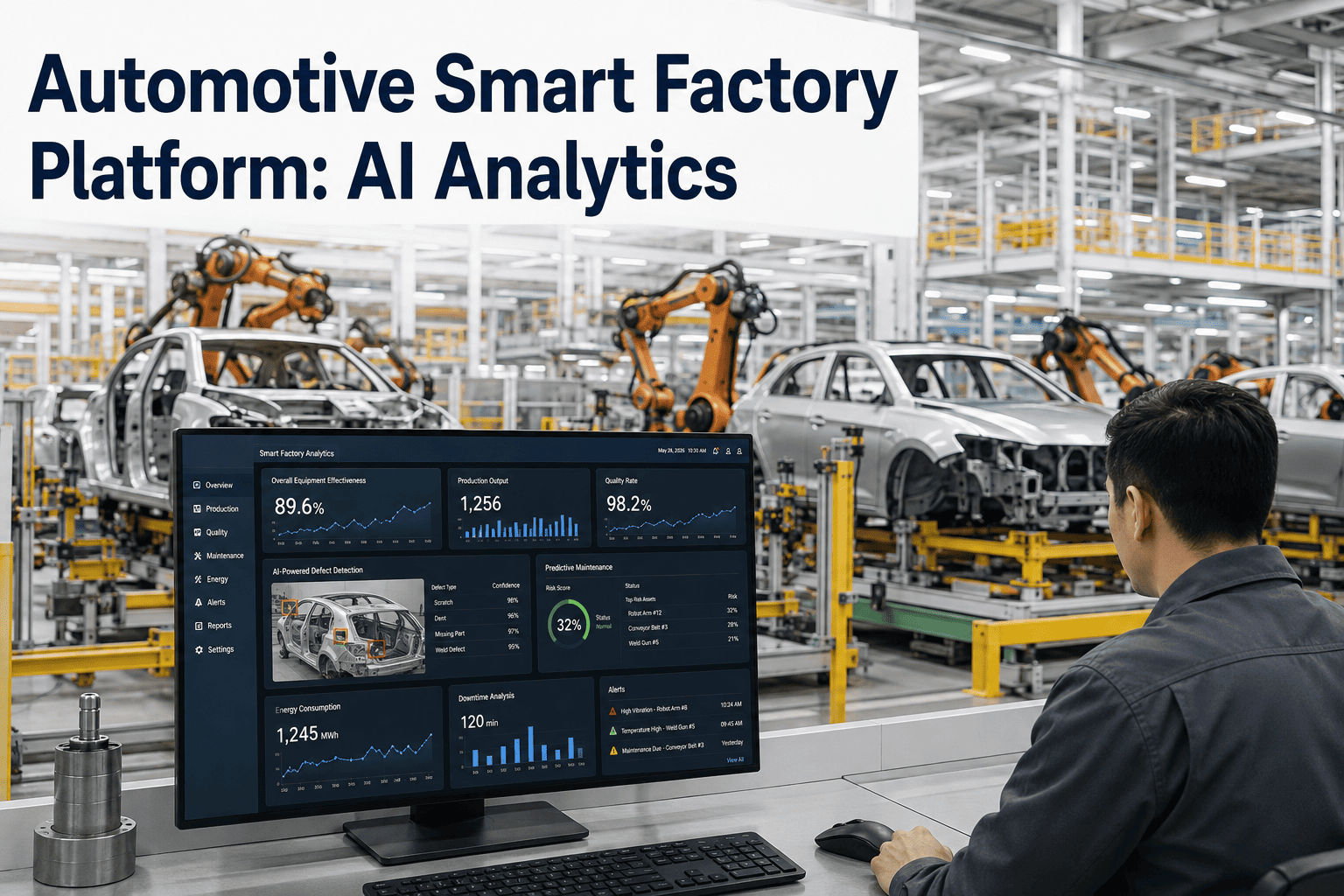
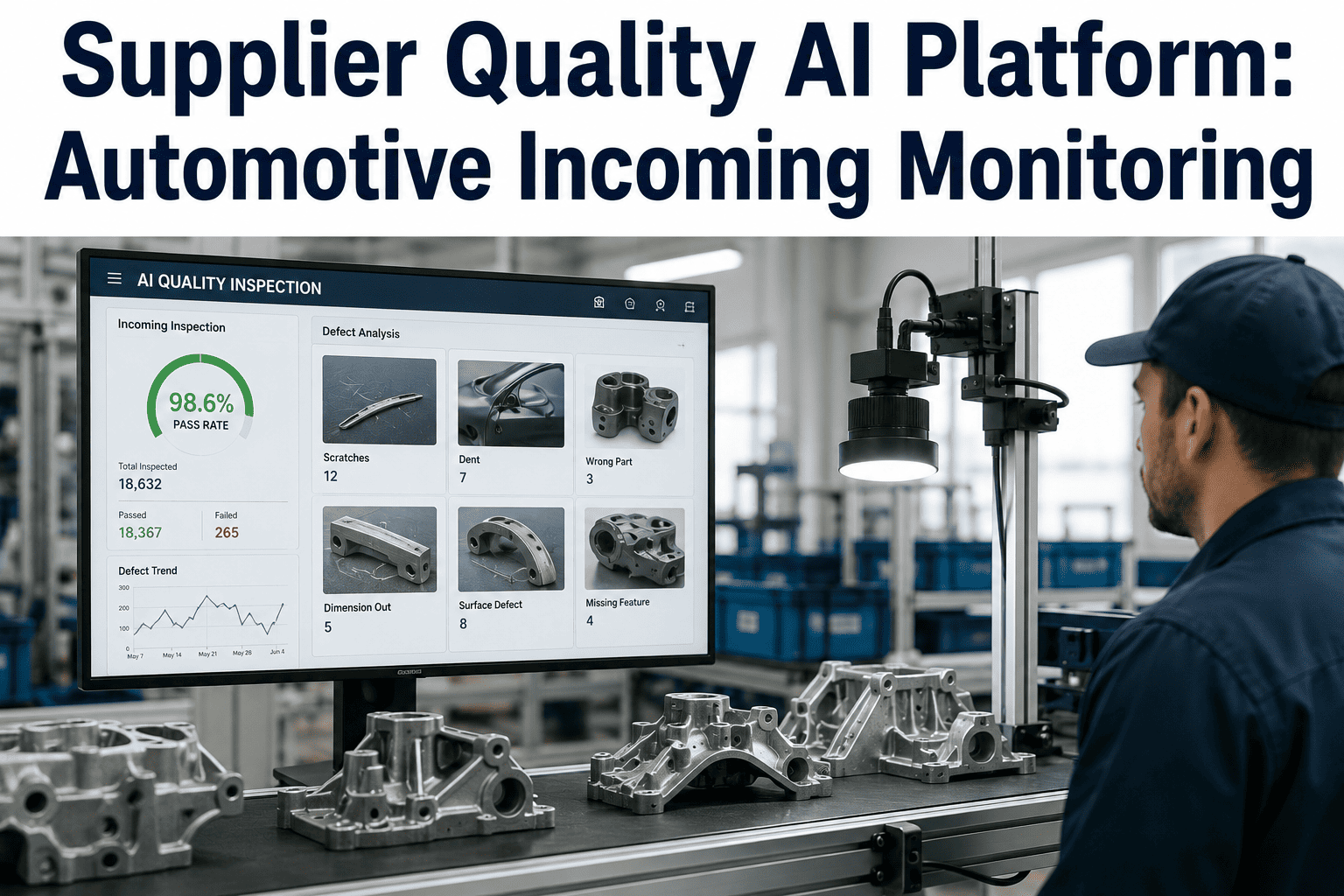
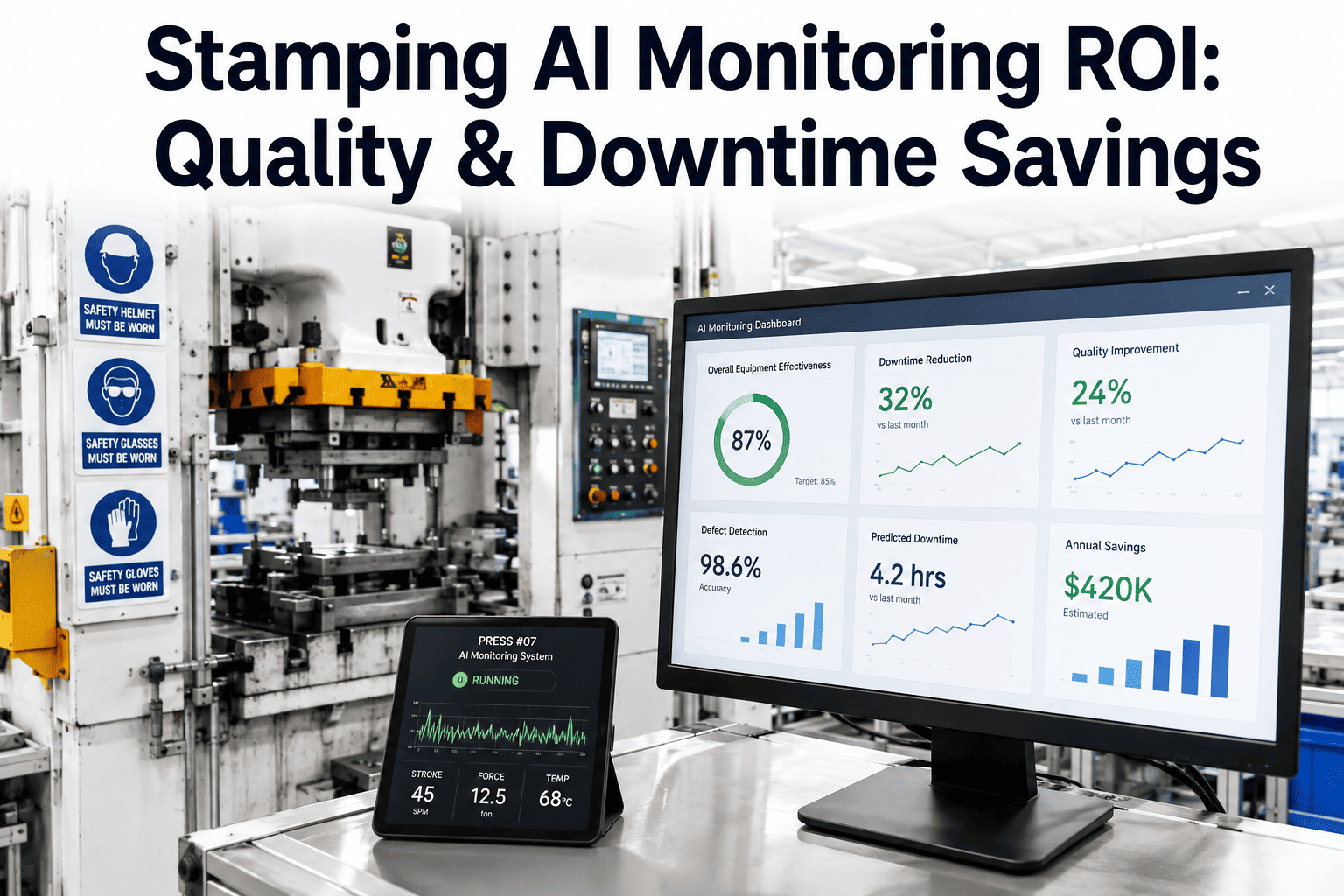
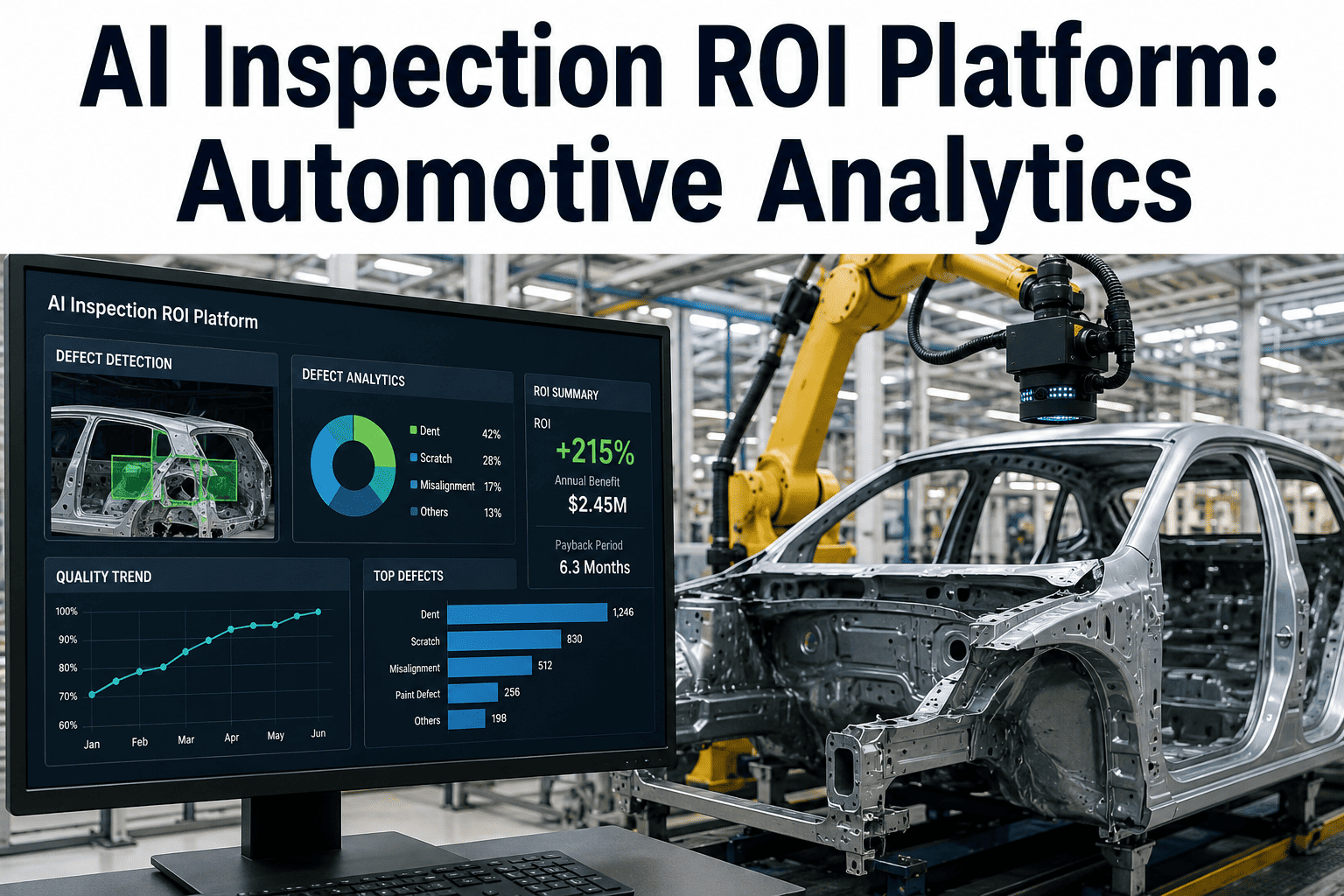
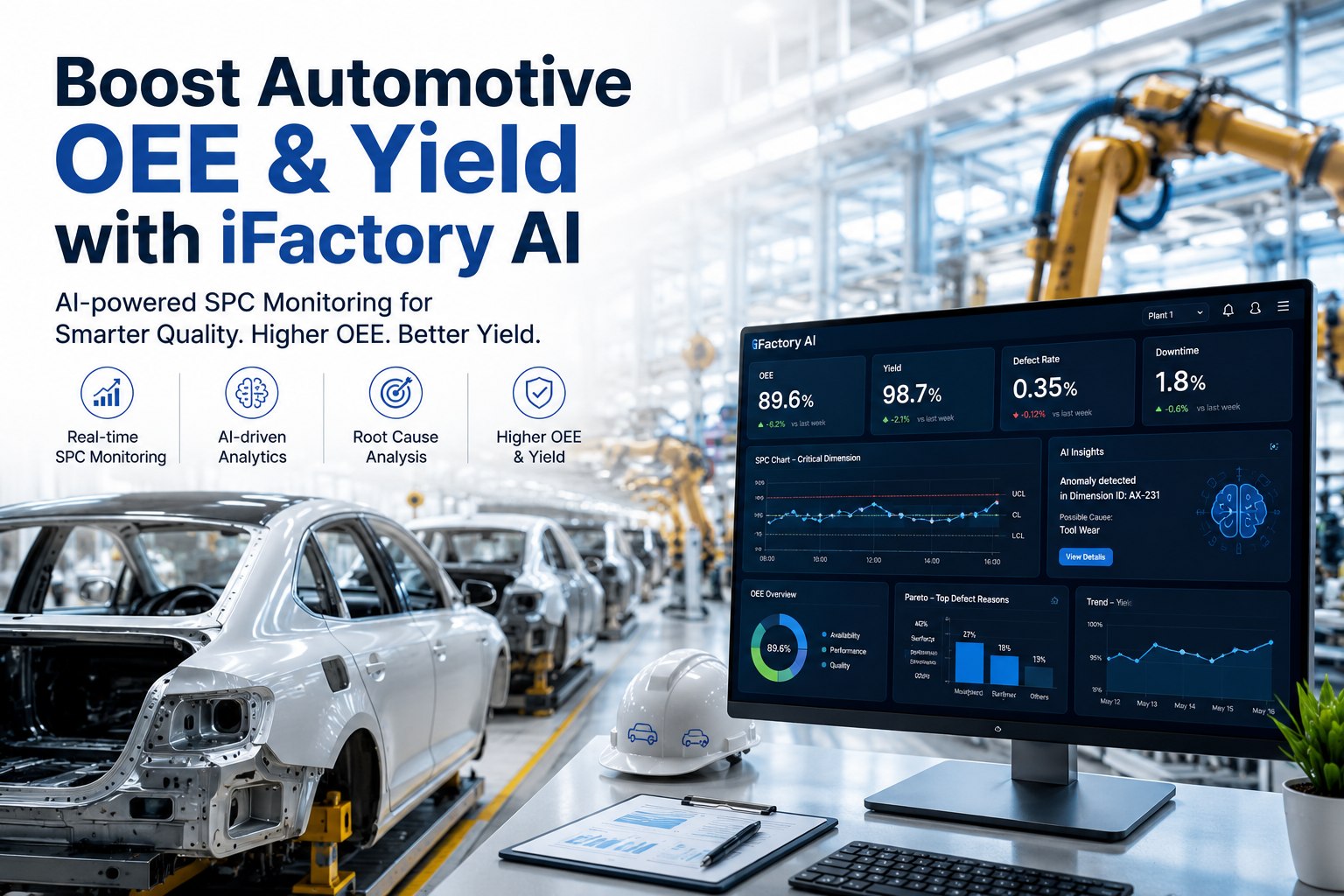
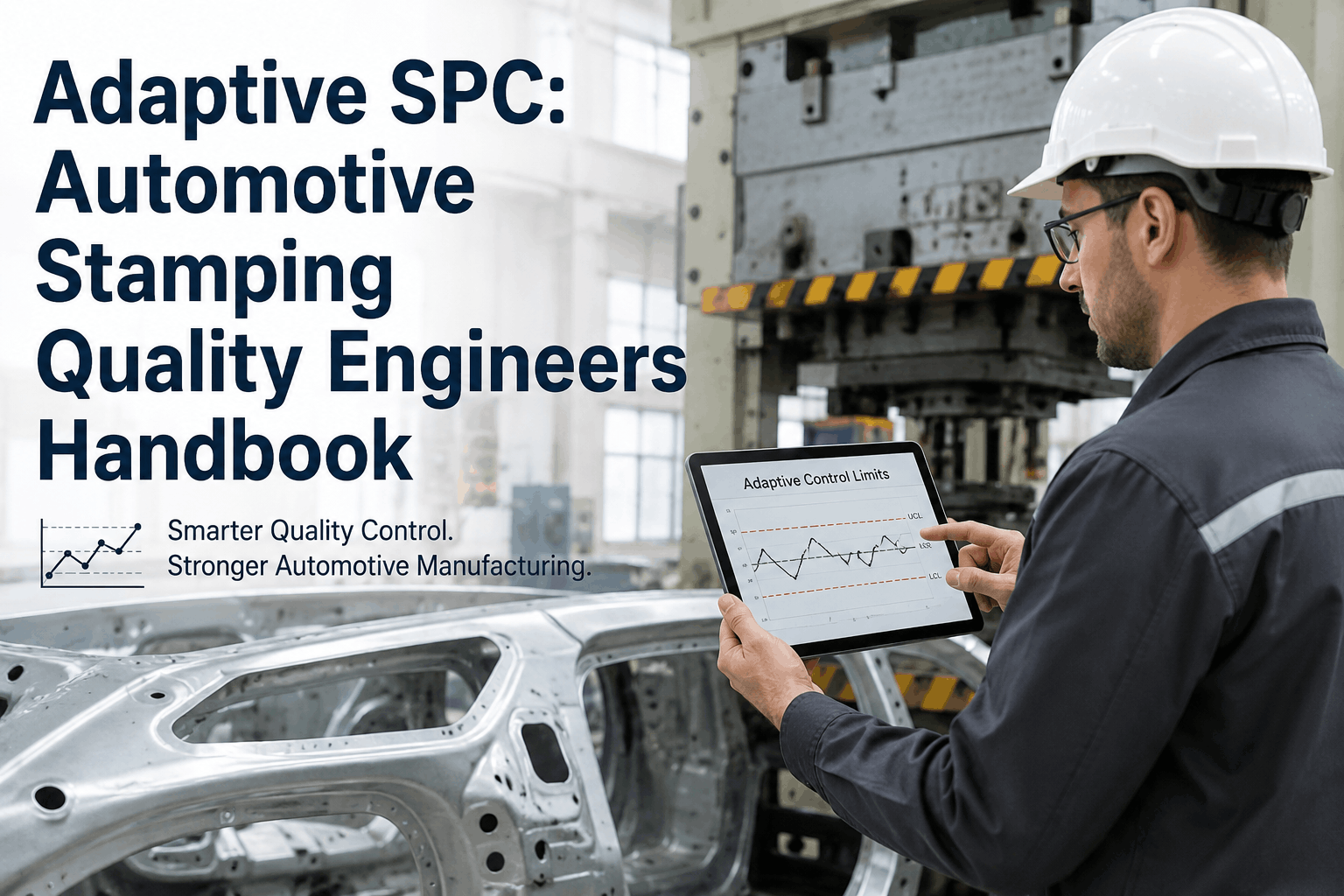
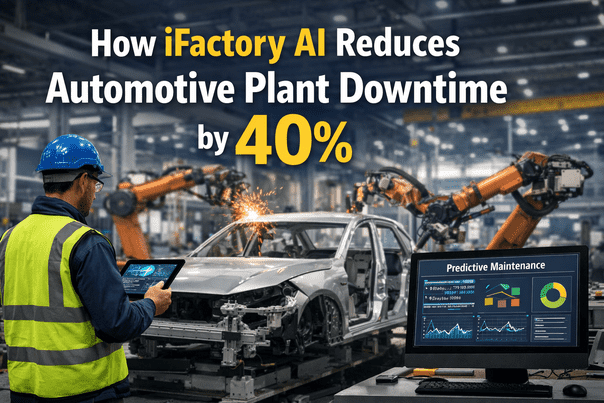
Most automotive plants already run separate tools for OEE tracking, downtime logging, quality inspection, and maintenance scheduling, and each tool does its own job reasonably well in isolation, but nobody on the floor gets a single view that connects them, so decisions get made on partial information more often than anyone would like to admit. A line manager might see an OEE dip without knowing whether quality, maintenance, or changeover is driving it, while the answer is sitting in three different screens they would need to open separately. iFactory brings OEE, downtime analytics, quality AI, and predictive maintenance into one connected platform, and you can book a demo to see your own plant's data unified this way.
SMART FACTORY PLATFORM · AUTOMOTIVE AI
One Platform Instead of Four Disconnected Screens
iFactory unifies OEE monitoring, downtime analytics, quality AI, and predictive maintenance into a single connected view, so a floor decision is made with the full picture instead of one slice of it.
OEE
Downtime Analytics
Quality AI
Predictive Maintenance
THE COST OF DISCONNECTED TOOLS
Every Extra System Is an Extra Delay in Understanding What Happened
A plant running separate point solutions for each function is not necessarily behind on technology, most automotive plants have invested heavily in each individual tool, but the gap between the tools is exactly where diagnostic time gets lost. Someone has to notice the OEE dip, then go check downtime logs, then check the quality system, then check maintenance history, and by the time all four pieces are assembled manually, the shift that caused the problem is long over.
4 tools
Typical count of separate systems a floor manager checks to diagnose one issue
Manual
Assembly of cross-system context usually falls to whoever notices the problem
Delayed
Diagnosis often lands after the causal shift has already ended
THE FOUR PILLARS, CONNECTED
What Each Piece Does and Why It Matters Together
01
OEE Monitoring
Real-time availability, performance, and quality rates tracked continuously across lines and shifts.
02
Downtime Analytics
Every stoppage categorized and tracked, surfacing recurring causes instead of treating each event as isolated.
03
Quality AI
Vision-based inspection results feeding directly into the same view as production and reliability data.
04
Predictive Maintenance
Condition data flagging developing equipment issues before they turn into unplanned downtime.
See What One Connected View Actually Looks Like
iFactory brings your OEE, downtime, quality, and maintenance data into a single platform built for automotive lines.
BEFORE AND AFTER UNIFICATION
What Changes When the Four Pillars Share One View
Disconnected Point Solutions
OEE dip investigated by checking four separate systems
Quality drift and maintenance events tracked independently
Diagnosis depends on someone remembering to cross-check
Insight often arrives after the causal shift has ended
iFactory Unified Platform
OEE, downtime, quality, and maintenance shown in one view
Correlations surfaced automatically across all four pillars
Diagnosis available to any team member without cross-checking
Insight available while the shift is still active
MODULE COVERAGE
What Each Team Actually Sees Day to Day
| Role |
Primary View |
| Line Supervisor |
Real-time OEE alongside active downtime and any live quality flags |
| Maintenance Planner |
Predictive condition alerts cross-referenced with downtime and repair history |
| Quality Manager |
Vision inspection results linked to the production and maintenance context around each escape |
| Plant Manager |
Consolidated performance view across all lines, shifts, and the four connected pillars |
WHO THIS FITS
Automotive Plants Running Multiple Point Solutions Today
Multi-Line Assembly Plants
Compare performance and reliability across lines from one consolidated view instead of line-by-line reports.
Tier 1 Component Suppliers
Connect quality data directly to the production conditions that produced each batch.
Growing Multi-Shift Operations
Give every shift the same connected view instead of relying on handoff notes between teams.
Plants Modernizing Legacy Systems
Add a connected analytics layer over existing point solutions without a full system replacement.
FREQUENTLY ASKED QUESTIONS
What Plants Ask Before Unifying Their Systems
Do we need to replace our existing OEE, quality, or maintenance tools to use this platform?
No, the platform is designed to connect to your existing systems and unify the data they already produce, rather than requiring you to replace tools your teams are already trained on and depend on daily. Integration happens at the data layer so existing workflows continue running underneath the unified view.
Book a demo to see how your current systems would connect.
How long does it take to get all four pillars connected and producing useful correlations?
Timelines vary by how many systems need connecting and how clean the existing data is, but OEE and downtime data typically show useful results quickly since those data structures are usually well established, while richer quality and predictive maintenance correlations build progressively as more data accumulates in the connected view.
Contact our support team to scope a realistic rollout timeline for your plant.
Can different teams have different views of the same underlying data?
Yes, role-based views are standard, so a line supervisor sees the real-time production and quality context relevant to their shift while a plant manager sees a consolidated view across all lines, with everyone drawing from the same underlying connected data rather than separate exports that can drift out of sync.
Book a demo to see the view relevant to your specific role.
Is this platform specific to automotive or does it apply to any manufacturing sector?
The underlying platform applies across manufacturing sectors, but automotive deployments are configured specifically around the assembly, stamping, and paint process context common to vehicle production, including the fastener and surface inspection use cases typical of that industry.
Contact our support team to discuss automotive-specific configuration.
Does adding predictive maintenance require new sensors across the plant?
Many plants already have usable condition data from existing equipment instrumentation that can feed the predictive maintenance pillar directly, and additional sensors can be added incrementally on the assets where deeper visibility is worth the investment, rather than requiring a full sensor rollout before any value is realized.
Book a demo to review what your current instrumentation already supports.
Bring Your Plant's Data Into One Connected Platform
iFactory unifies OEE, downtime, quality AI, and predictive maintenance so every decision is made with the full picture.