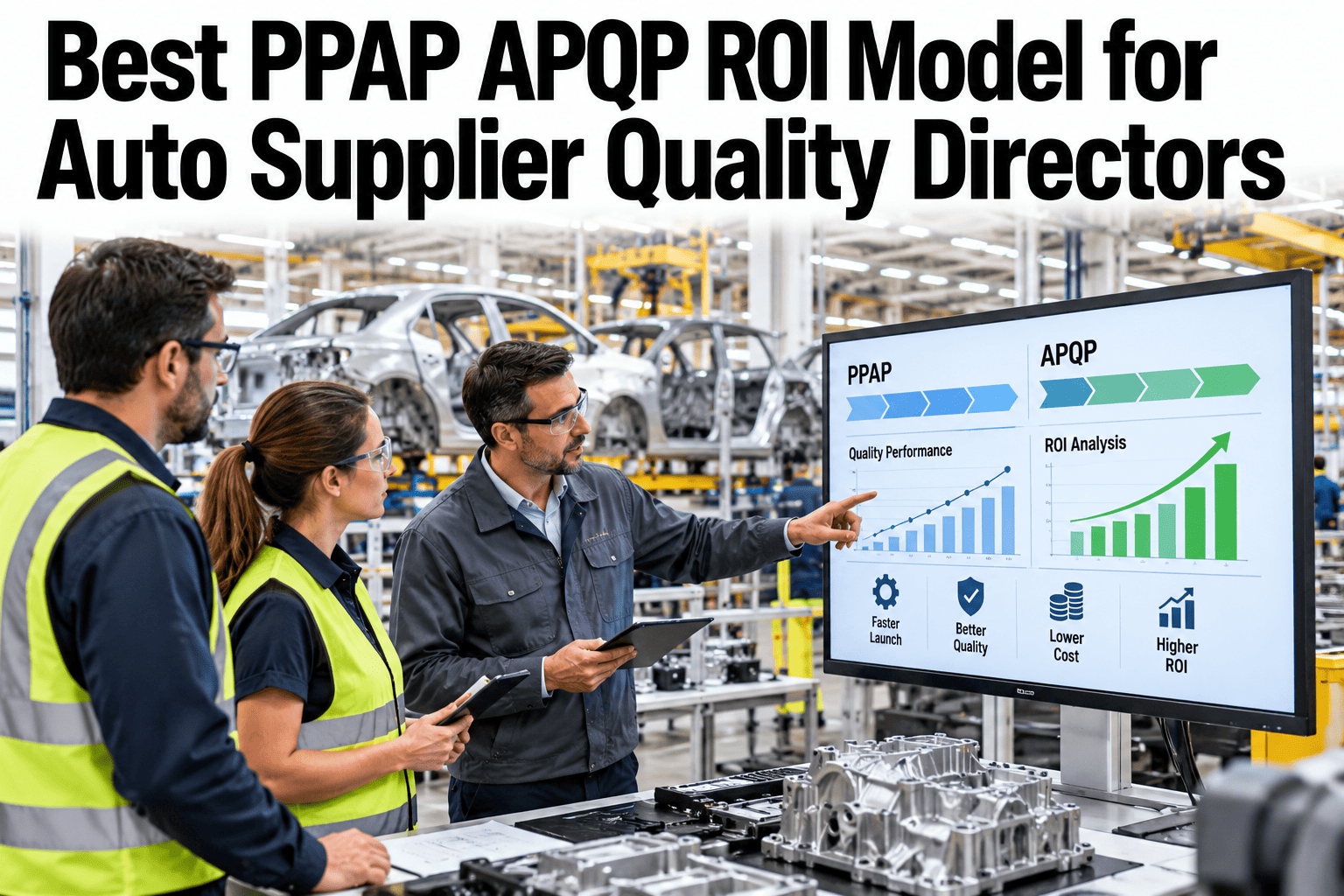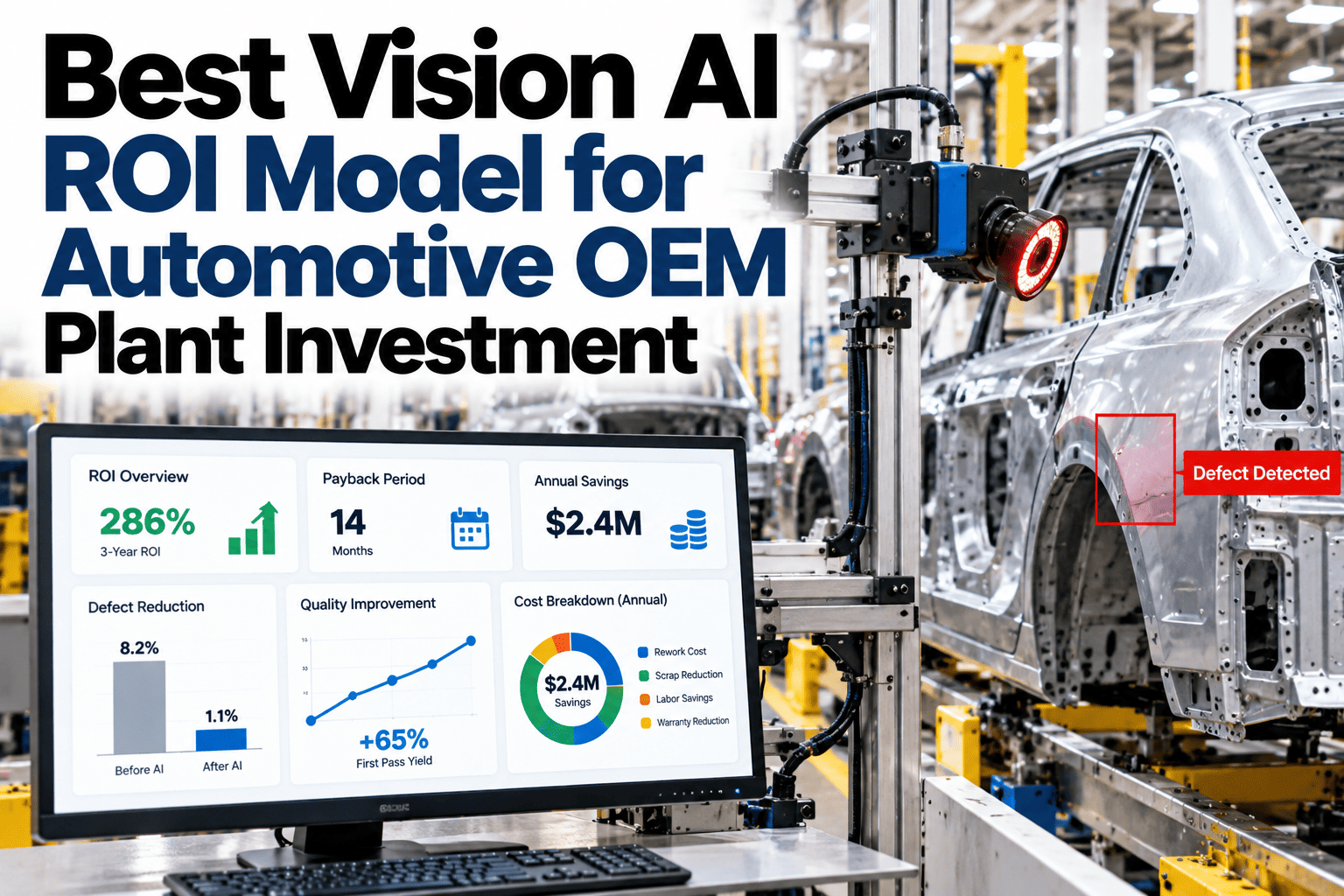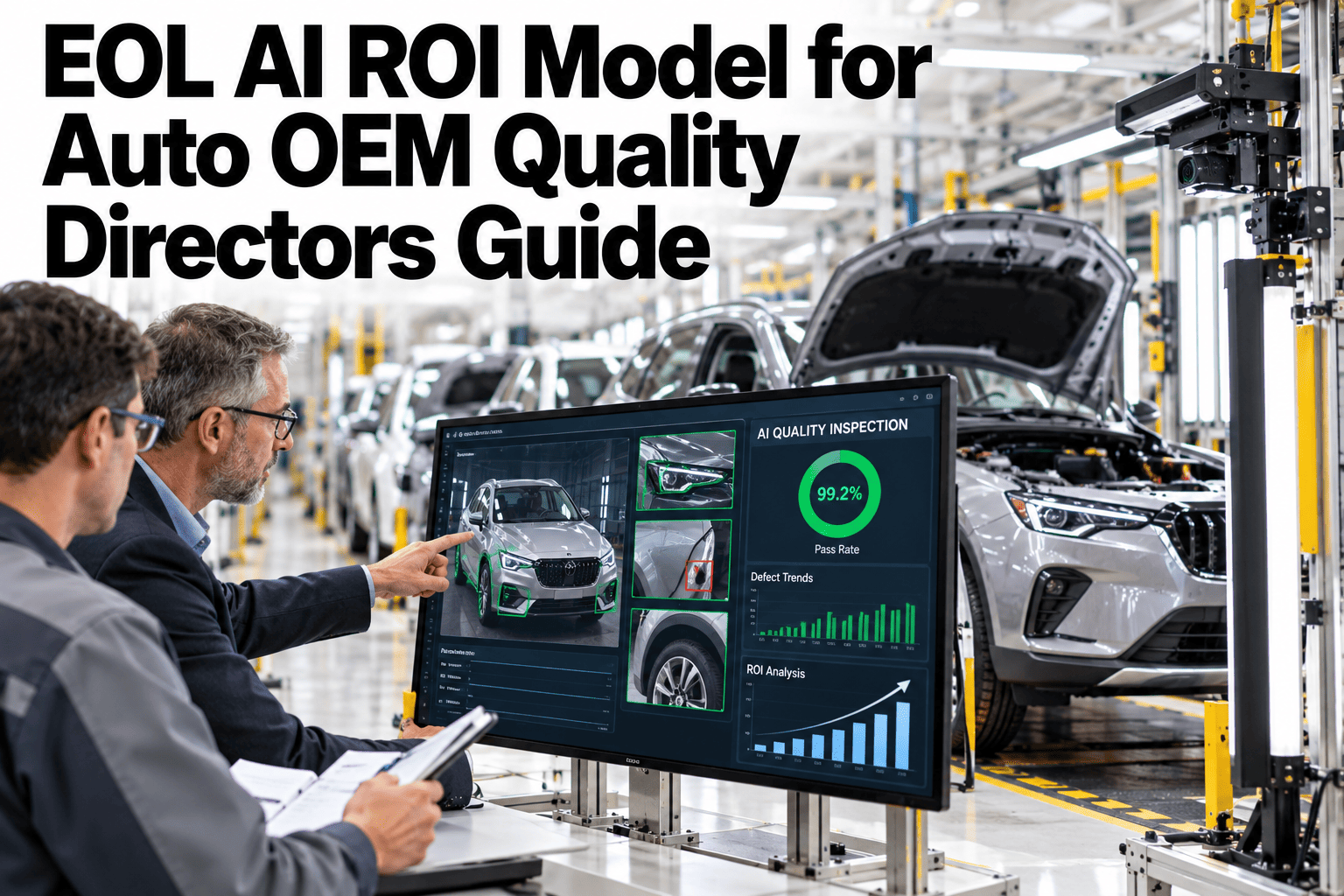
A quality director proposing an EOL AI investment usually has a strong intuitive case and a weak financial one, because labor savings get estimated casually, warranty cost avoidance gets left out entirely as too speculative to quantify, and throughput uplift never makes it into the model at all. A finance team reviewing that proposal sees a request built on confidence rather than numbers, and confidence rarely survives a capital approval committee on its own. A defensible ROI model stacks all three value streams, labor savings, warranty cost avoidance and throughput uplift, into a single three-year payback case built from the plant's own data. Quality directors can build their own ROI case with iFactory AI before the next budget cycle closes.
A Strong Intuitive Case Rarely Survives a Capital Approval Committee
iFactory AI stacks labor savings, warranty cost avoidance and throughput uplift into a defensible three-year payback case.
Why EOL AI Proposals Struggle in Budget Review
The value of EOL AI is genuinely real at most plants that have deployed it, but the proposals that make the case for it often leave the strongest arguments either unquantified or buried in a qualitative appendix nobody on a finance committee reads closely.
Inspection time reduction is estimated roughly instead of calculated from actual data.
Treated as too speculative to include, even though historical data usually supports it.
Faster, more consistent inspection rarely gets translated into a production value.
A single-year estimate undersells a benefit that compounds over the system's life.
The Three Value Streams and How to Quantify Them
| Value Stream | How to Quantify It |
|---|---|
| Labor savings | Current inspection labor hours multiplied by hourly cost, reduced by the expected efficiency gain |
| Warranty cost avoidance | Historical warranty claims traced to defect types the system is expected to catch, multiplied by average claim cost |
| Throughput uplift | Reduced inspection bottleneck time converted into additional units produced per period |
Build Your Own Three-Year Case With Real Plant Data
Bring your current inspection and warranty figures to a 30-minute working session.
From Raw Figures to a Defensible Case
Labor hours and warranty history are pulled from existing records.
Each value stream is projected using cautious, defensible assumptions.
Costs and savings are modeled across the system's expected useful life.
Every number traces back to a documented source, not a guess.
A Scenario: The Proposal That Got Sent Back Twice
Picture a quality director submitting an EOL AI proposal built around a rough labor savings estimate and a single line about warranty benefits, sent back twice by finance for lacking supporting detail.
The third version of the same proposal, built from actual inspection labor hours, a documented warranty claim trace-back and a throughput calculation tied to current bottleneck data, gets approved in a single review cycle. The underlying investment case had not changed, only the quality and traceability of the numbers behind it had, which is usually the actual difference between a proposal that stalls and one that moves forward.
Rough Estimate vs Traceable Model
What a Finance Reviewer Actually Checks
Why Warranty Cost Avoidance Deserves More Confidence Than It Usually Gets
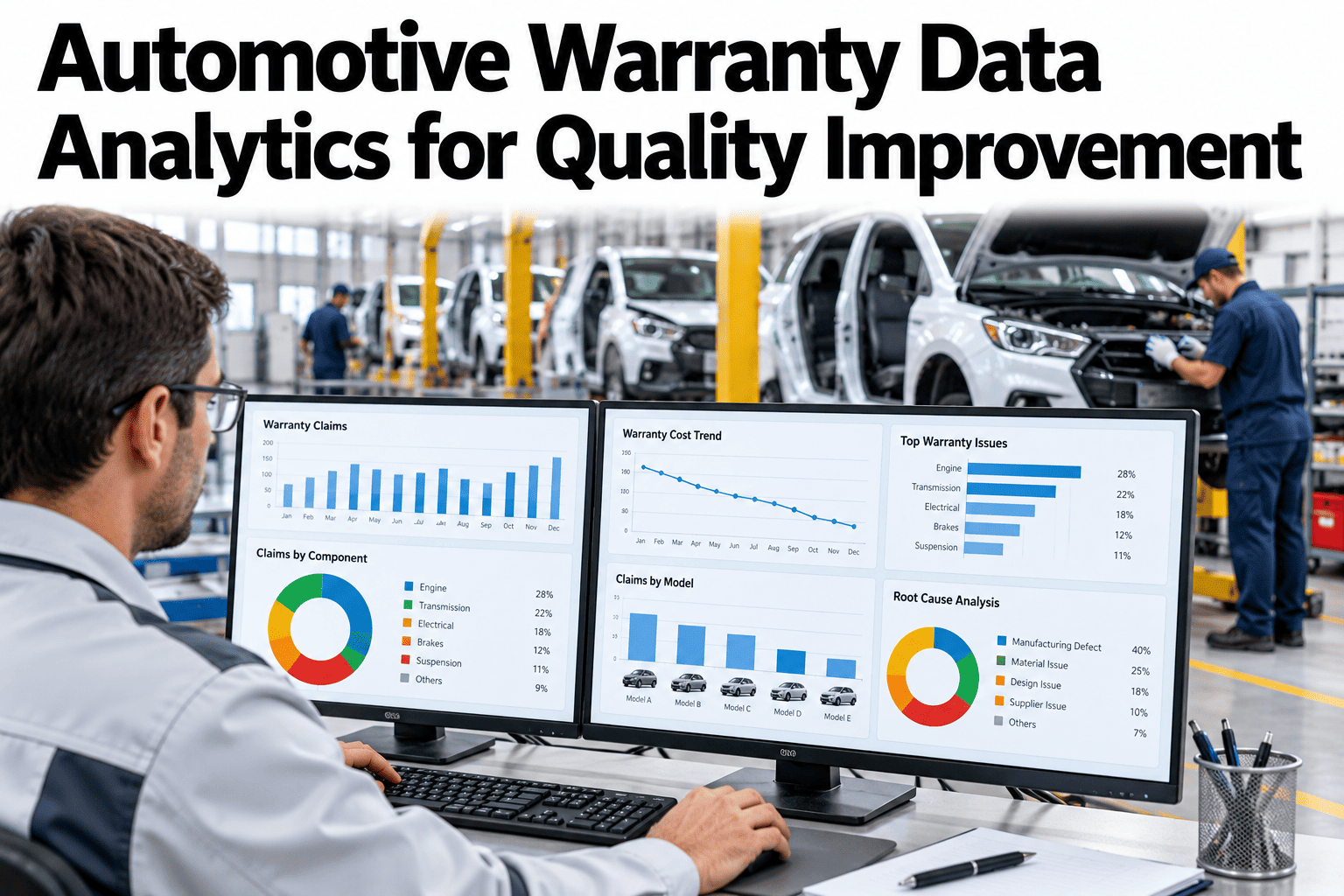
Warranty avoidance often gets left out of ROI models because it feels less certain than a direct labor cost reduction, but a defect type with a clear historical claims pattern is frequently one of the more predictable value streams in the entire model, not the least.
Tracing specific defect classes the EOL system is expected to catch back to their historical claim frequency and average cost turns an abstract benefit into a number with the same kind of supporting evidence a labor savings calculation relies on, which is usually enough to satisfy even a skeptical finance reviewer.
Common Pitfalls That Weaken an Otherwise Strong Case
A handful of recurring mistakes account for most of the pushback a solid EOL AI proposal receives during review. Avoiding these upfront saves a round or two of revision.
Assuming full efficiency gain from day one instead of a realistic ramp-up period.
Leaving out integration, training and change management time and cost.
Counting the same efficiency gain under both labor savings and throughput uplift.
Missing any reference to results from a similar deployment elsewhere.
Presenting the Case in a Format Finance Actually Uses
A proposal built around technical detail that finance has to translate into their own framework adds friction a strong case does not need. Presenting the model in the format a finance team already works with speeds approval considerably.
Where iFactory AI Fits
Baselines current costs
Pulls actual labor and warranty figures from existing plant data.
Traces warranty linkage
Connects defect types to historical claims and their actual cost.
Quantifies throughput value
Converts inspection speed gains into production output value.
Builds the three-year case
Documents every assumption behind the full payback timeline.
Expert Review
A manufacturing finance and operations perspective, reviewed for accuracy before publication: the gap between an EOL AI proposal that gets approved quickly and one that stalls in review is rarely about whether the investment is genuinely worthwhile, it is almost always about whether the numbers behind it trace back to real data a reviewer can independently check. Building that traceability in from the start saves far more time than the rework a vague proposal eventually requires. Building your own case against real plant figures is the fastest path to a proposal that holds up under review. Confirm specific feature capabilities against your plant's systems before relying on any workflow.
Frequently Asked Questions
What is a typical payback period for EOL AI inspection?
Payback period varies significantly by plant, defect volume and warranty history, with many plants landing somewhere within a multi-year window depending on how all three value streams stack together. Discuss a realistic payback estimate for your own plant.
How is warranty cost avoidance calculated without overstating it?
A conservative approach traces only defect types with a clear historical claims pattern and applies a cautious estimate of detection improvement, rather than assuming the system will catch every possible instance. Ask about a conservative approach to warranty avoidance in your model.
Should ongoing costs be included in the ROI model?
Yes, a defensible model includes ongoing maintenance, support and any recurring software costs alongside the upfront investment, since a payback period calculated against upfront cost alone overstates the true return. Explore building ongoing costs into your own model.
How does throughput uplift actually get quantified?
Throughput uplift is typically calculated by identifying how much current inspection time constrains line speed, then converting a reduction in that constraint into additional units produced over a given period. Talk through quantifying throughput uplift for your own line.
What if actual results underperform the model's projections?
A well-built model includes a sensitivity view showing how the payback period shifts under more conservative assumptions, which gives a reviewer confidence the case holds up even if results come in below the base estimate. See how a sensitivity view would look for your case.
Build a Case That Survives the Review Committee the First Time
iFactory AI stacks labor, warranty and throughput value into a defensible three-year case. Build your own ROI case.