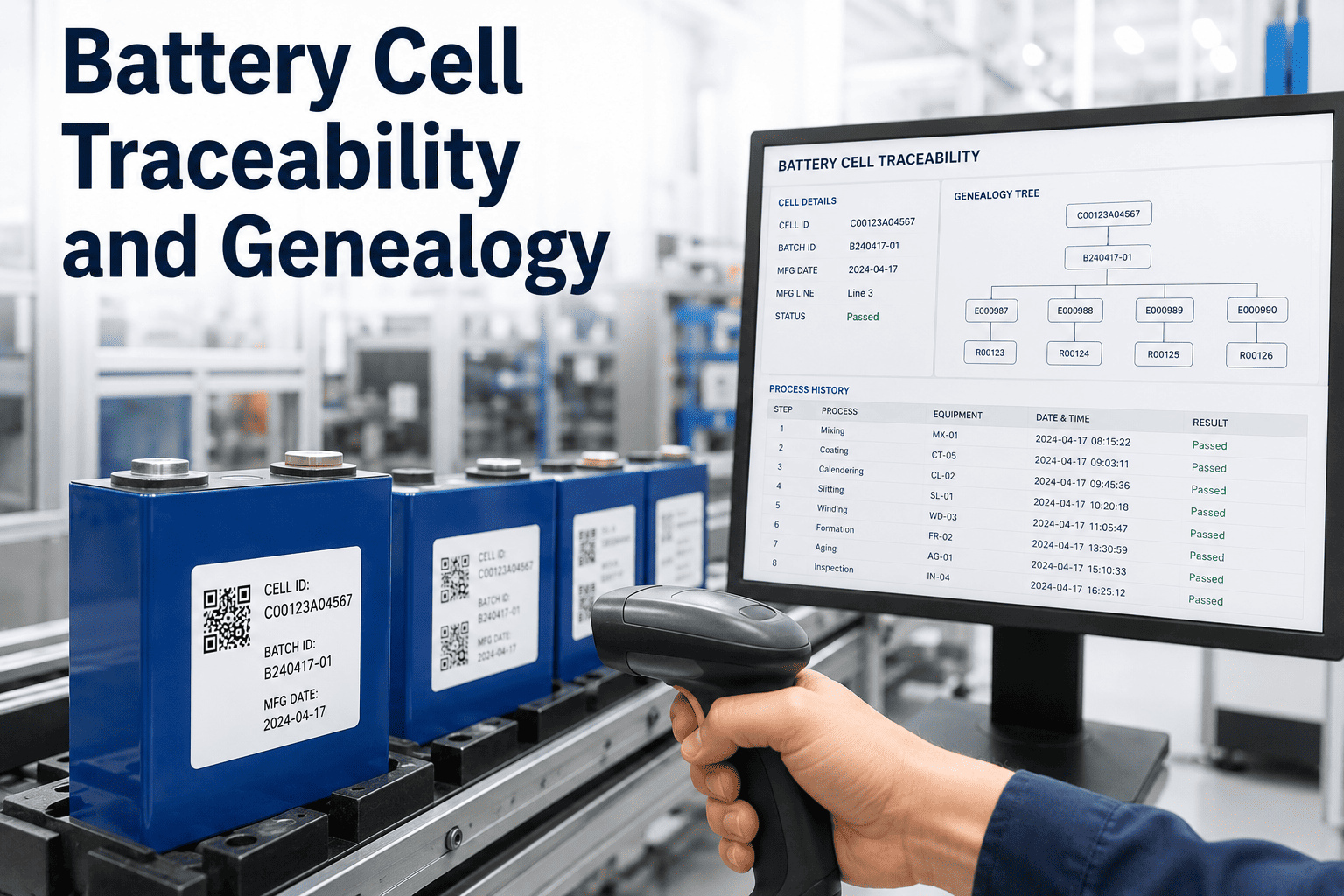
A single mine-to-pack traceability exercise for one EV battery can involve hundreds of documents scattered across tier one, tier two, and tier three suppliers — purchase orders, invoices, delivery records, and origin certificates, often in different languages and formats. Operations directors running this process on spreadsheets and supplier surveys are not just slow, they are structurally unable to keep pace with production volume. The European Commission is expected to publish formal due diligence guidelines under the EU Battery Regulation by July 26, 2026, and the digital Battery Passport becomes mandatory for EV batteries starting February 2027 — which means the traceability infrastructure needs to already be operating when that deadline arrives. Book a demo to see this running against your own tier supplier network.
EV & Battery Manufacturing
EV Manufacturing Supply Chain — Critical Mineral Traceability & Battery Passport Compliance
15 min read
4 Minerals
Cobalt, lithium, nickel, and natural graphite subject to mandatory due diligence and traceability under the EU Battery Regulation
Feb 2027
Digital Battery Passport becomes mandatory for EV, industrial, and light transport batteries above 2 kWh
10 Years
Minimum record retention period required for traceability documentation under the regulation's due diligence provisions
Tier N
Depth of supplier traceability now expected as a compliance baseline, not just tier one visibility
Why Tier One Visibility Is No Longer Enough
Battery supply chain visibility used to mean knowing whether a tier one cell supplier could deliver on time, at cost, and to quality standard. That definition has expanded significantly — today, regulatory and OEM expectations extend beyond the cell manufacturer to cathode and anode material producers, lithium compound refiners, precursor chemical suppliers, and in a growing number of cases, the mine itself. Traceability through tier N suppliers, not just tier one, is rapidly becoming the expected compliance baseline across forced labor, environmental, and battery mineral regulatory regimes.
The operational reality this creates is a data quality problem more than a policy problem. Manufacturers have generally succeeded in mapping their tier one relationships; the uncertainty concentrates in tier two, tier three, and raw material origin, where evidence is fragmented, inconsistently formatted, and often stale by the time it reaches a compliance review.
What AI Actually Changes About Traceability Data Collection
Traditional approaches rely on supplier surveys and manually compiled spreadsheets, which struggle to scale against the volume of documentation a modern battery supply chain generates continuously. AI-driven extraction and reconciliation changes the mechanics of the problem rather than just the interface around it. Start free trial to see document extraction and reconciliation tested against your own supplier documentation.
Automated Document Extraction
Supplier names, batch numbers, purchase order references, and origin information pulled directly from unstructured, multilingual documentation without requiring every supplier to adopt a shared template.
Cross-Record Reconciliation
Purchase orders, invoices, delivery records, and production records automatically compared to confirm they consistently reference the same material batches, flagging mismatches for review.
Supplier Relationship Inference
Upstream supplier relationships mapped from invoice data, customs records, and corporate registry information, extending visibility beyond what direct supplier participation alone would reveal.
Staleness Detection
Supplier declarations flagged when the underlying evidence chain has aged past a defensible window or when a known upstream change — like an ownership shift — makes a prior declaration unreliable.
Operations Director Note
A battery mineral declaration that was accurate at onboarding can become indefensible without anyone doing anything wrong. A subcontracting change at a tier three supplier, or an ownership shift further upstream, silently invalidates a previously clean record — which is why static, point-in-time supplier files are increasingly treated as a compliance risk rather than a compliance asset.
The Regulatory Timeline Operations Teams Need to Plan Against
From Raw Traceability Data to ESG Reporting Output
Traceability data collection and ESG reporting are related but distinct functions — the traceability layer tracks material and product flow through supplier tiers with chain-of-custody verification as its core purpose, while ESG reporting consumes that data to produce the disclosures investors, regulators, and OEM customers actually require. Operations directors evaluating traceability infrastructure need both functions working together, since a traceability system that cannot feed clean data into ESG reporting still leaves someone manually reconciling the gap. Book a demo to see traceability and ESG reporting connected in one workflow.
Why Manufacturers Building This Now Are Ahead, Not Just Compliant
Major automakers now require tier one through tier three suppliers to demonstrate carbon footprint data, responsible sourcing certification, and digital traceability as conditions for contract renewal — meaning traceability infrastructure has become a commercial requirement independent of direct regulatory enforcement. Manufacturers with sustainable, traceable supply chains report meaningfully lower compliance costs and faster audit cycles compared to those still assembling documentation reactively for each individual audit or customer request.
Get Ahead of the July 2026 Guidance Before It Arrives
iFactory's AI extraction and reconciliation engine pulls supplier data from unstructured documentation across your tier network, flags stale or inconsistent records, and feeds a clean, audit-ready traceability layer into your ESG and battery passport reporting.
What Manufacturers Report After Deploying AI-Driven Traceability
25%
Lower Compliance Costs
Reported by manufacturers with established sustainable, traceable supply chain infrastructure
30%
Faster Audit Cycles
When traceability records are continuously maintained rather than reconstructed per audit request
Tier N
Depth of Visibility
Extended beyond tier one to cathode, anode, and raw material origin without requiring full supplier participation
Fewer
Manual Reconciliations
Automated cross-record matching replacing manual document comparison across purchase orders and delivery records
Frequently Asked Questions
QDoes the EU Battery Regulation apply to manufacturers producing batteries outside the EU?
Yes, the regulation applies to any company placing batteries on the EU market regardless of where production actually takes place, which means non-EU manufacturers exporting into the European market face the same due diligence, traceability, and battery passport obligations as EU-based producers. This scope is a common point of confusion for operations teams that assume the regulation only affects EU-domiciled manufacturers, when in practice it is market access to the EU that triggers the obligation rather than manufacturing location.
Book a demo to assess how the regulation's scope applies to your specific production and export footprint.
QHow does AI-driven traceability handle suppliers who have not adopted a common data template or digital system?
This is precisely the gap AI-based document extraction is designed to close — rather than requiring every supplier across multiple tiers to adopt a shared reporting template, extraction models are built to identify supplier names, batch numbers, and origin information directly from whatever documentation format the supplier already produces, including scanned paper records and multilingual files. This matters operationally because requiring template adoption across a global, multi-tier supplier base has historically been one of the slowest and most resistance-prone parts of building traceability infrastructure, and extraction-first approaches sidestep that adoption barrier entirely.
QWhat is the practical difference between a traceability platform and an ESG reporting platform, and do we need both?
A traceability platform is built around tracking material and product flow through supplier tiers with chain-of-custody verification as its core function, while an ESG reporting platform consumes that underlying data to produce the actual disclosures and reports regulators and investors require. Most operations teams need both functions connected, since traceability data alone is not a report, and an ESG reporting tool without a solid traceability data layer beneath it ends up relying on manually compiled or incomplete sourcing data.
Start free trial to see how traceability data flows directly into reporting output rather than requiring a separate manual step.
QHow quickly can a manufacturer expect to move from spreadsheet-based tracking to AI-driven tier N traceability?
Timeline varies significantly based on how many tiers deep visibility currently extends and how fragmented the existing documentation is, but the extraction and reconciliation approach is specifically designed to accelerate this compared to a survey-first rollout, since it does not depend on waiting for supplier template adoption before useful data starts flowing. Manufacturers starting from strong tier one visibility with weaker tier two and three coverage typically see faster initial gains than those starting with minimal digital records at any tier, since there is more existing structured data for the system to build from immediately.
QWhat happens if a supplier declaration was accurate when submitted but becomes outdated due to a change further upstream?
This is one of the most underestimated compliance risks in current ESG and battery mineral due diligence — a declaration that was genuinely accurate at the time of submission can become unreliable following a subcontracting change, an ownership shift, or a supply route change that nobody proactively reported. Continuous monitoring approaches address this by tracking when underlying evidence has aged past a defensible window or when corroborating data sources suggest a change may have occurred, flagging the record for refresh rather than treating a one-time declaration as permanently valid.
Build Traceability Infrastructure Before the Passport Deadline Forces It
iFactory connects AI-driven document extraction, tier N supplier mapping, and staleness detection into a traceability layer that feeds directly into your ESG and battery passport reporting — built for the volume a modern gigafactory supply chain actually generates.