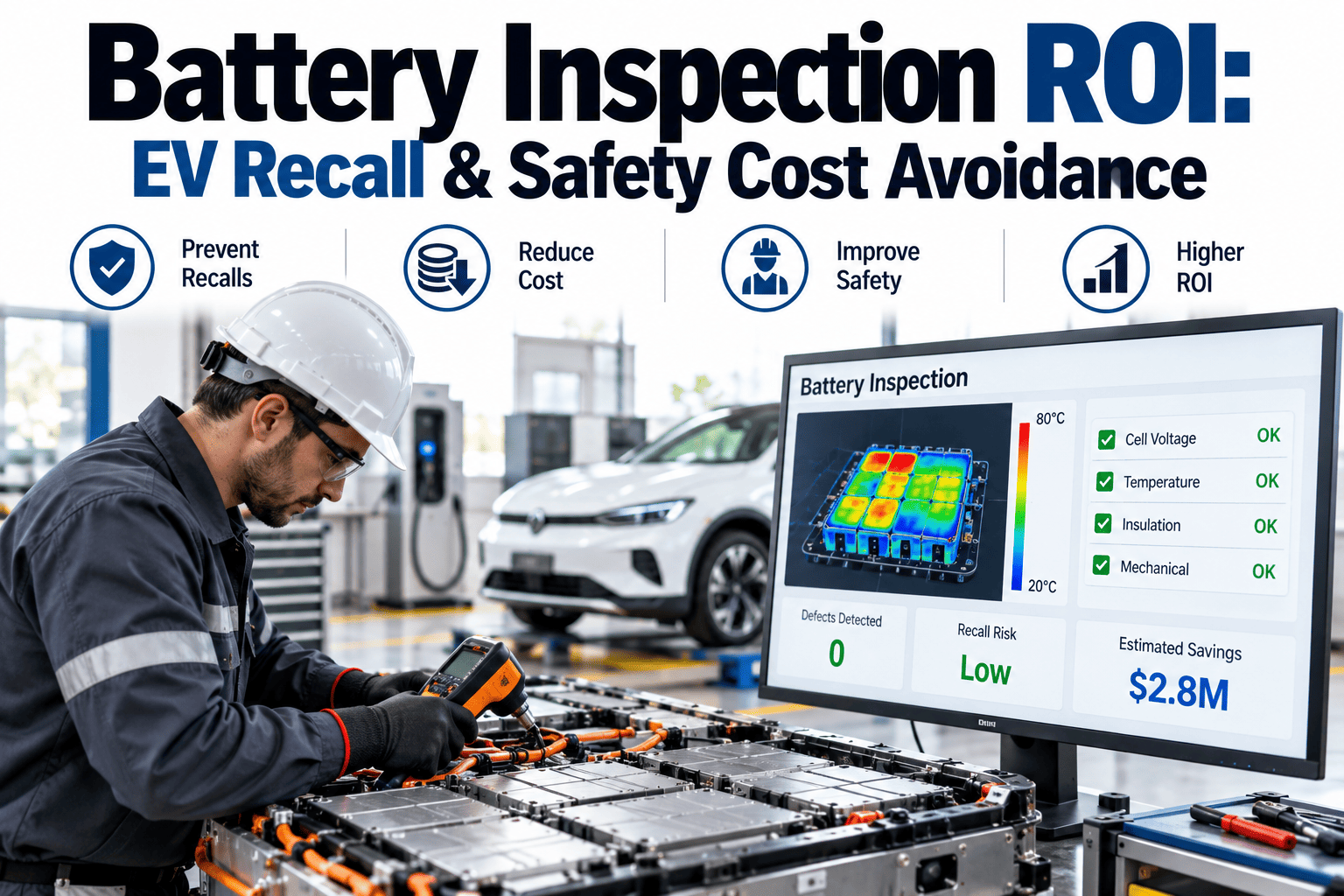
A battery pack that fails a single UN38.3 transport test, or that reaches final certification only to have an auditor flag a gap in IECQ process documentation, does not just cost the retest fee — it can stall an entire production ramp while engineering and quality teams scramble to trace the gap back to its source. Battery manufacturing compliance across UN38.3, IECQ, and UL2580 is not a paperwork exercise layered on top of production, it is a set of verification requirements that need to be built into the inspection and test workflow from the first cell assembled, not assembled after the fact from disconnected records. Manufacturers structuring a compliance program around these standards can start with a conversation with iFactory support about integrating verification into existing inspection stations.
Three Standards, One Inspection Workflow, Zero Gaps at Audit
UN38.3 transport safety, IECQ process certification, and UL2580 safety standard verification, integrated directly into the stations already inspecting every pack.
Why Three Different Standards Apply to the Same Pack
UN38.3, IECQ, and UL2580 are not competing or redundant standards — each addresses a different dimension of battery safety and quality, and a production program serving global markets typically needs to satisfy all three simultaneously rather than choosing among them. UN38.3 is a transport safety standard, verifying that a battery pack can survive shipping conditions such as altitude simulation, thermal cycling, vibration, and short circuit testing without becoming a hazard in transit. IECQ is a quality management certification system specific to electronic components, verifying that the manufacturing process itself meets a defined quality standard rather than testing the finished product directly. UL2580 is a product safety standard specific to batteries for electric vehicles, covering electrical, mechanical, and environmental safety requirements the finished pack must meet before it can be installed in a vehicle sold in regulated markets.
The practical challenge is that these three standards touch different points in the production process and require different types of evidence, yet all three ultimately need to be traceable back to the same physical pack and the same production lot. A manufacturer treating each standard as a separate compliance workstream, verified by a separate team using separate documentation systems, ends up with exactly the kind of disconnected record trail that turns a routine audit into a multi-week scramble.
Mapping Each Standard to Where It Gets Verified in Production
Building compliance into the inspection workflow starts with understanding exactly which production stage generates the evidence each standard actually requires, so verification happens as a natural byproduct of the inspection already occurring rather than a separate testing pass added afterward.
Cell & Pack Test Lab
Altitude simulation, thermal cycling, vibration, shock, external short circuit, and overcharge testing performed on representative samples from each production lot, with results tied to the specific lot for traceability.
Process Documentation & Audit
Ongoing verification that the documented manufacturing process is actually being followed at each station, supported by inspection records showing consistent execution rather than a one-time certification snapshot.
Pack-Level Safety Verification
Electrical isolation testing, mechanical integrity checks, and environmental exposure verification performed at final pack assembly, confirming the finished product meets the safety requirements for vehicle installation.
See Compliance Verification Built Into Your Inspection Stations
Book a 30-minute walkthrough and we will show how UN38.3, IECQ, and UL2580 evidence gets captured automatically at your existing stations.
The Documentation Gap That Fails Most Audits
Compliance failures rarely stem from the underlying manufacturing process actually being unsafe or out of spec. Far more often, a failed audit traces back to a documentation gap — a record that exists somewhere but cannot be produced quickly, a verification step that was performed but not logged in a way that ties back to the specific unit or lot being questioned, or a process change that was made correctly on the floor but never updated in the certified documentation an auditor is comparing against.
| Common Gap | Standard Affected | Why It Happens | How Integrated Verification Closes It |
|---|---|---|---|
| Lot traceability broken | UN38.3 | Test results recorded separately from production lot data | Test data automatically tagged to lot ID at time of test |
| Process deviation undocumented | IECQ | A floor-level process change made without updating certified docs | Inspection station flags deviation from certified process automatically |
| Safety test result unlinked to pack serial | UL2580 | Test lab records kept in a separate system from assembly records | Serial-level record links test result directly to the finished pack |
| Sampling rate too low for audit confidence | IECQ / UL2580 | Manual sampling covers too small a percentage of production | AI vision inspection provides full-coverage verification at each station |
A Composite Scenario: The Audit That Took an Afternoon Instead of a Month
A battery pack manufacturer preparing for an IECQ recertification audit had historically spent several weeks assembling documentation ahead of the audit date, pulling records from separate test lab systems, floor inspection logs, and a document management system that was updated inconsistently across shifts. The prior audit cycle had resulted in a finding related to an undocumented process deviation that took the quality team nearly a month to trace back to its source once the auditor flagged it.
After integrating inspection verification directly into the assembly line's AI vision stations, with results automatically tagged to lot and serial data, the following audit cycle looked markedly different. When the auditor requested traceability for a specific production lot, the quality team pulled a complete record — process verification, test results, and inspection data all linked to the same lot ID — within the same afternoon rather than over several weeks of manual assembly. The audit closed with zero findings related to documentation gaps, a first for the program.
Common Mistakes in Multi-Standard Compliance Programs
Treating Each Standard as a Separate Workstream
Assigning UN38.3, IECQ, and UL2580 compliance to entirely separate teams with separate documentation systems creates the exact fragmentation that fails audits when a traceable, unified record is requested.
Relying on Sampling for Safety-Critical Verification
A sampling rate sufficient for a general quality metric is often not sufficient for the level of confidence a safety standard like UL2580 implicitly expects across full production volume.
Updating the Process Without Updating the Documentation
A floor-level improvement made without a corresponding update to certified process documentation is one of the most common findings in an IECQ audit, even when the change itself improved quality.
Preparing for Audits Reactively Instead of Continuously
A compliance posture that only gets assembled in the weeks before a scheduled audit is fragile. Continuous, automatically captured verification data holds up far better under an unannounced or expanded audit scope.
Is Your Compliance Program Ready for Integration
You can currently trace a finished pack back to its cell and module lot data
If this trace currently requires manually cross-referencing multiple systems, that gap is the first thing worth closing before layering additional compliance requirements on top.
Your test lab data and floor inspection data live in separate systems today
This is the most common fragmentation point across the three standards, and connecting these two data sources is usually the highest-value integration step to start with.
You have a defined process for updating certified documentation when the floor process changes
Where this process does not exist formally, it is worth establishing before or alongside any inspection technology integration, since automated verification only helps if the certified baseline it checks against stays current.
Building a Unified Traceability Record Across All Three Standards
The technical foundation that makes multi-standard compliance manageable is a single traceability key — typically a serial number or lot identifier — that every piece of evidence across all three standards gets tagged against, regardless of which system originally generated that evidence. A test lab result from a UN38.3 procedure, an inspection record from an IECQ-relevant process step, and a safety verification from UL2580 final testing should all be retrievable by querying that one identifier, rather than requiring a quality engineer to manually cross-reference three separate databases every time a question arises.
Establishing this unified key is often less about new technology and more about aligning existing systems around a common identifier scheme. Many manufacturers already generate serial numbers at pack assembly and lot numbers at cell production, but those identifiers are not always propagated consistently into the test lab's own record-keeping system, which was frequently built or purchased independently and on its own timeline. Closing this gap is usually the single highest-leverage step in building a genuinely unified compliance record, ahead of any inspection technology upgrade.
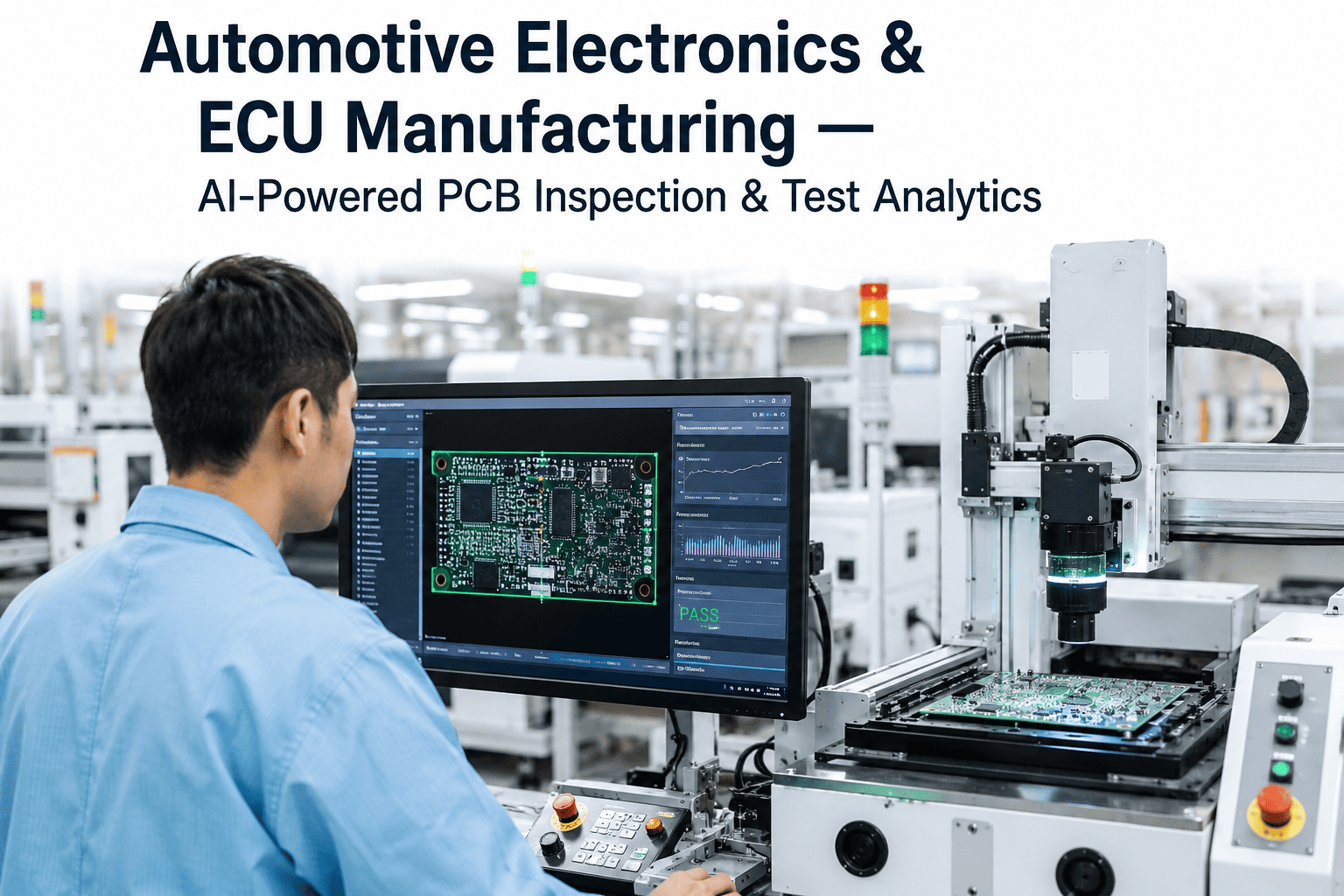
Once the identifier scheme is unified, AI vision inspection stations along the production line become a particularly strong source of continuous evidence, since they generate a verification record for every unit passing through rather than a sampled subset, and that record attaches naturally to the same identifier already being used for lot and serial tracking. This turns what used to be a periodic, effortful compliance check into a continuous byproduct of production itself, which is the difference between scrambling to build a record for an audit and simply pulling one that already exists.
What Auditors Actually Look For Beyond the Paperwork
Experienced auditors reviewing a battery manufacturing program are looking for more than the presence of documentation — they are testing whether the documented process and the actual floor process are the same thing, and whether the organization would catch a deviation between the two on its own before an auditor has to point it out. This is why a strong compliance posture emphasizes continuous, automated verification over periodic manual checks: automated verification catches a process deviation the moment it happens, while a manual check performed only ahead of a scheduled audit can miss weeks or months of drift that occurred in between.
A second thing auditors commonly probe is how quickly an organization can produce a specific record on request, rather than simply confirming the record exists somewhere in the archive. An auditor asking for the compliance trail on a specific pack serial number, and receiving it within minutes rather than days, is itself a strong signal of a mature compliance system, independent of whatever that specific record shows. Manufacturers who have been through several audit cycles consistently report that retrieval speed has become almost as important to auditor confidence as the underlying data quality itself.
Planning for Standard Revisions and New Market Requirements
UN38.3, IECQ, and UL2580 are not static documents frozen in time — each is periodically revised, and a battery program shipping into multiple markets often has to track revision timelines for each standard independently, since adoption of a new revision does not happen simultaneously across every certifying body or every market a program sells into. A compliance program built as a rigid, one-time integration against a specific revision of each standard tends to require significant rework when a revision changes testing parameters or documentation requirements, while one built with flexible, well-organized traceability data adapts far more easily.
Expanding into a new market frequently introduces an additional standard or a market-specific variant of an existing one, and manufacturers with a unified traceability foundation already in place find this expansion considerably less disruptive than those still managing each standard as a separate, siloed workstream. Adding a new standard to an already-connected data foundation is primarily a matter of defining which existing verification points satisfy the new requirement and which additional checks need to be added, rather than building an entirely new compliance system from scratch for each new market.
Manufacturers planning a multi-year production program spanning several vehicle model years should build revision tracking into their compliance roadmap explicitly, assigning ownership for monitoring upcoming standard revisions the same way they would assign ownership for any other regulatory change affecting the product. Waiting to react until a revision is already in force tends to produce the same scramble that an unprepared audit produces, simply on a longer and more predictable timeline.
Assigning Ownership Across Quality, Engineering, and Compliance Teams
A common structural weakness in multi-standard compliance programs is unclear ownership between the quality team responsible for day-to-day inspection, the engineering team responsible for process design, and a dedicated compliance or regulatory affairs function responsible for the certification relationship itself. When responsibility for maintaining traceable records is split across these groups without a clear handoff, gaps tend to appear precisely at the boundaries — a process change engineering makes without informing compliance, or an inspection finding quality flags without routing it to the team responsible for the relevant certification.
The clearest fix is establishing a single point of accountability for the unified traceability record itself, even when the underlying data continues to be generated by multiple teams and multiple systems. This does not mean centralizing all compliance work under one person, but rather ensuring one role is explicitly responsible for confirming that data flowing from quality inspection, engineering process control, and test lab verification all remain connected to the same identifier scheme and are retrievable together when an audit or internal review requires it.
Regular cross-functional review of the traceability system, rather than only interacting with it during audit preparation, helps surface gaps before they become findings. A quarterly review where quality, engineering, and compliance jointly spot-check a handful of records for completeness tends to catch drift far earlier than waiting for either an internal audit or an external certifying body to discover it independently.
Frequently Asked Questions
Can AI vision inspection actually satisfy UN38.3 transport testing requirements?
AI vision inspection does not replace the physical transport testing UN38.3 requires — altitude simulation, vibration, and short circuit testing are physical lab procedures — but it does support the standard by verifying that the physical characteristics and assembly quality of the units selected for testing are representative and defect-free, and by maintaining the traceability link between test results and the production lots they certify. Manufacturers can review exactly how inspection data supports transport test traceability by contacting iFactory support.
Does IECQ certification apply to the product or to the manufacturing process?
IECQ certification is fundamentally a process and quality management system certification rather than a product test, meaning it verifies that a manufacturer's documented processes, controls, and quality management practices meet the standard consistently over time, rather than certifying any single finished unit. This is why continuous, automatically captured verification data matters so much for IECQ specifically — it demonstrates ongoing process conformance rather than a one-time snapshot at initial certification.
What is the difference between UL2580 and other UL battery safety standards?
UL2580 is specifically scoped to batteries used in electric vehicle propulsion applications, covering electrical, mechanical, and environmental safety requirements relevant to that specific use case, which distinguishes it from more general battery safety standards that may apply to consumer electronics or other battery applications with different risk profiles and usage patterns. A pack manufacturer serving the EV market specifically needs to verify against UL2580's particular requirements rather than assuming a more general battery certification covers the same ground.
How often does IECQ recertification require a full audit versus a surveillance audit?
IECQ certification typically involves an initial full certification audit followed by periodic surveillance audits on a defined interval, with a full recertification audit required at a longer interval to renew the certification itself. Surveillance audits generally have a narrower scope than the initial or recertification audit, but both benefit equally from continuously maintained, traceable verification records rather than documentation assembled specifically in preparation for the audit date.
How long does it take to integrate compliance verification into an existing inspection line?
Most manufacturers can integrate lot and serial-level traceability into an existing AI vision inspection deployment within a few weeks, since the underlying inspection data already exists and the integration work centers on connecting that data to test lab records and documentation systems rather than building new inspection capability from scratch. The timeline extends somewhat for manufacturers still relying primarily on manual or paper-based documentation, since that data first needs to be digitized before it can be connected. Book a demo to scope a realistic integration timeline for your current systems.
Turn Compliance From an Audit Scramble Into a Continuous Byproduct
iFactory integrates UN38.3, IECQ, and UL2580 verification directly into your inspection stations, so every pack carries a complete, traceable compliance record automatically. Book a walkthrough to see it built around your process.