An EV battery pack retiring from a vehicle after eight to ten years of service usually still holds seventy to eighty percent of its original capacity, which means most of what shows up at end-of-first-life isn't scrap, it's a second-life energy storage asset waiting for someone to prove it. The trouble is that proving it reliably, cell by cell, module by module, across packs with wildly different histories and aging patterns, is a slow and expensive process when done manually, and getting the state-of-health call wrong in either direction either wastes a usable asset or ships an unreliable one into a grid storage application. iFactory's battery assessment platform automates that call with the consistency a fast-growing second-life and recycling market actually needs.
Every retired pack deserves an accurate second chance
iFactory automates state-of-health assessment, cell grading, and disassembly guidance so second-life and recycling operations can process retired packs faster, safer, and with consistent, defensible grading decisions.
Every retired pack takes one of two paths
The moment a pack arrives at end of first life, the entire economics of what happens next hinge on one measurement: how much usable capacity and how much cell-to-cell consistency remains. Get that assessment right and a pack finds its best possible second use, whether that's grid storage, a second-life EV, or responsible material recovery. Get it wrong and value gets destroyed either way, an asset with years of storage life left gets shredded, or a marginal pack gets deployed somewhere it will underperform and erode trust in second-life products generally.
Second-Life Path
SoH above threshold, acceptable cell consistency
- Module regrouping by matched capacity
- Repurposed for stationary storage or grid use
- Digital passport data carried forward
Recycling Path
Below threshold or unsafe cell divergence
- Automated disassembly to cell or module level
- Material recovery via hydrometallurgical process
- Recovered lithium, cobalt, nickel tracked to source
No two retired packs age the same way
Heterogeneous cell aging
Individual cells within one pack can have significantly divergent remaining capacity, so a single pack-level reading can hide cells that are actually unsafe for second use.
Unknown duty cycle history
Fleet vehicles, personal vehicles, and fast-charge-heavy use patterns age cells differently, and history isn't always available at intake.
Manual grading doesn't scale
Bench testing every module by hand is accurate but far too slow for the volume of packs beginning to arrive as the first wave of EVs retires.
Chemistry and format diversity
NMC, LFP, and NCA chemistries across cylindrical, prismatic, and pouch formats each age and fail differently, complicating any one-size grading rule.
Safety risk during disassembly
A pack with an undetected internal short or thermal event risk needs to be identified before automated disassembly, not discovered during it.
Traceability requirements are tightening
Battery passport rules increasingly expect chain-of-custody data to follow a pack through its second life or into recycled material streams.
The first big wave of retirements is arriving faster than grading capacity
The volume of EVs sold in the early 2015 to 2018 window is now reaching typical end-of-first-life age, and that wave is only going to grow larger every year as more recent, higher-volume EV cohorts age out. Recycling and second-life operators who built manual grading processes for a trickle of packs are now facing a flood, and the operators who can grade accurately at volume are positioned to capture disproportionate value from a market growing faster than most industrial sectors right now.
Regulatory pressure adds urgency too. Battery passport requirements are extending chain-of-custody expectations further into the recycling and second-life supply chain than most operators have historically tracked, and demonstrating consistent, auditable state-of-health assessment is quickly becoming a requirement for participating in higher-value second-life contracts rather than a nice-to-have differentiator.
From intake to graded outcome
Rapid cell and module-level scan
Automated testing captures capacity, internal resistance, and consistency across every cell far faster than manual bench testing.
Classify state of health and safety risk
Each cell and module is scored against second-life suitability thresholds and flagged for any safety-relevant anomaly before further handling.
Route to the right path automatically
Second-life-eligible modules are grouped by matched capacity; recycling-bound packs are routed to automated disassembly with safety flags attached.
Carry traceability data forward
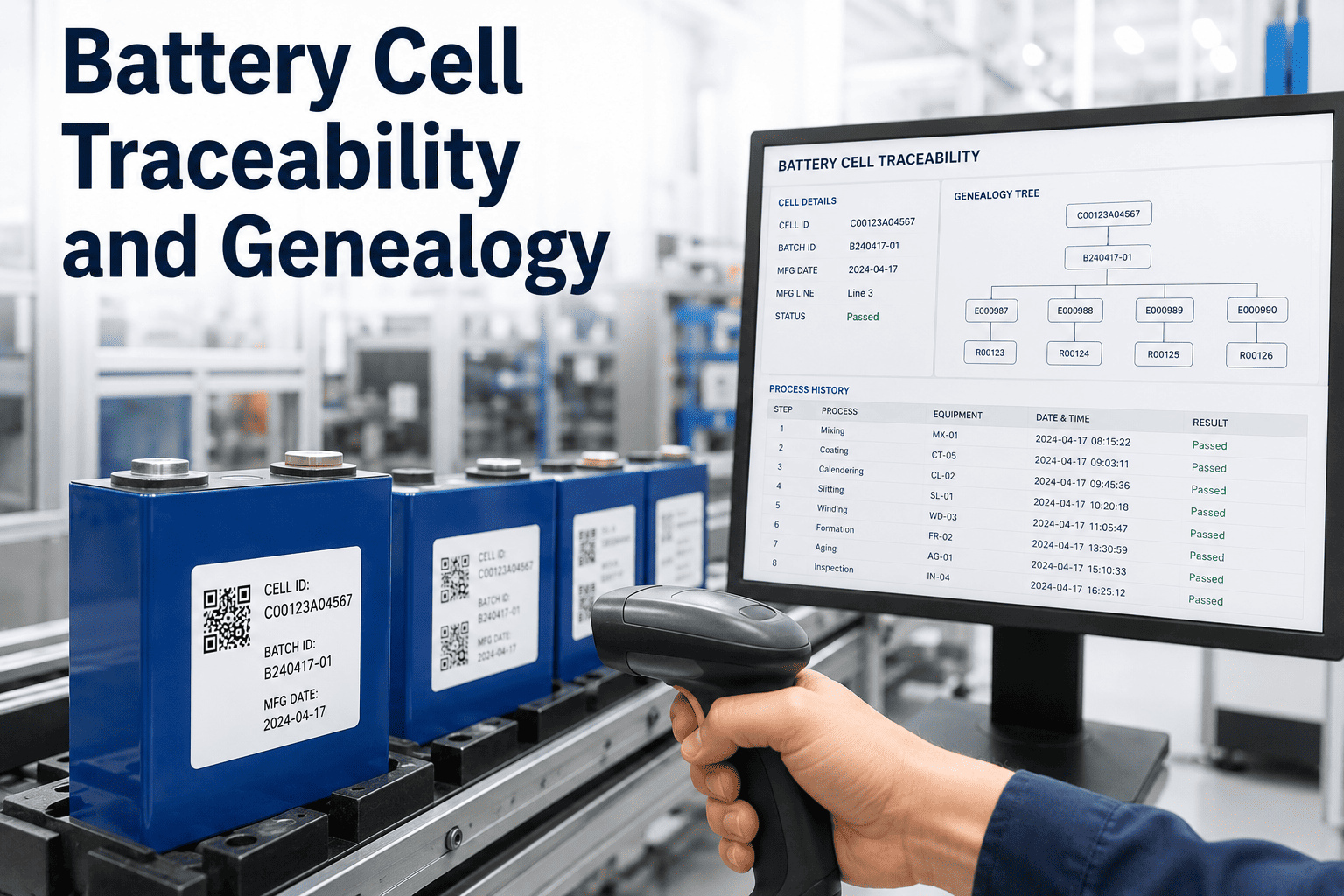
Grading results and material recovery data are logged against pack identity, supporting battery passport and ESG reporting requirements.
Most operators are still grading by hand at a fraction of the volume they'll need next year. Book a demo and see how automated grading scales against your intake volume.
What operators see within two quarters
What a pilot looks like
Works across chemistries and formats
Grading models cover NMC, LFP, and NCA chemistries across cylindrical, prismatic, and pouch formats.
Integrates with existing test benches
Connects to the cell and module test equipment your facility already operates, rather than requiring new hardware.
Six to ten week pilot
Includes grading model calibration against your intake stream and a documented throughput and yield report.
On-premise deployment
Runs on an NVIDIA appliance inside your facility network, keeping pack and cell data on site.
Battery passport-ready data output
Grading and material recovery data structured to support emerging traceability and reporting requirements.
24x7 managed service
iFactory's team monitors grading model performance as new chemistries and formats enter your intake stream.
Why grading automation is worth prioritizing now
The economics of this pilot are unusually direct: every pack correctly routed to second life instead of premature recycling captures materially more value than the cost of the assessment itself, and every unsafe pack caught before automated disassembly avoids an incident that could halt an entire facility. That combination of upside and downside protection tends to make the internal business case straightforward, even for operations that haven't run an AI pilot before.
It's also a pilot well suited to operators anticipating volume growth rather than already straining under it. Establishing automated grading before intake volume becomes overwhelming means the model has time to calibrate against your specific pack mix while manual processes are still keeping pace, rather than trying to retrofit automation during a period when the team is already underwater.
Battery grading and recycling AI, explained plainly
Give every retired pack its most accurate second chance
iFactory automates state-of-health grading so second-life and recycling decisions scale with the volume ahead. Book a demo to see it against your own intake stream.