Every tanker truck that arrives at a biogas plant gate carries either future revenue or future downtime. The difference between them is the acceptance testing protocol in place before the driver opens the hatch. Feedstock variability is the single largest uncontrolled variable in anaerobic digestion — pH swings of two full points, total solids ranging from 3% to 18%, and ammonia concentrations that can shift from nutritious to inhibitory within a single delivery window. Plants that operate without structured acceptance testing absorb this variability directly into their digester biology, where it manifests as foaming events, volatile fatty acid accumulation, gas yield depression, and unplanned maintenance cycles that erode the economics of the entire operation. A gate-to-digester acceptance testing program transforms this risk profile by catching problematic loads before they enter the process, giving lab and operations teams the data they need to reject, blend, or adjust feedstock in real time. Book a Demo
The Four Critical Parameters of Feedstock Acceptance Testing
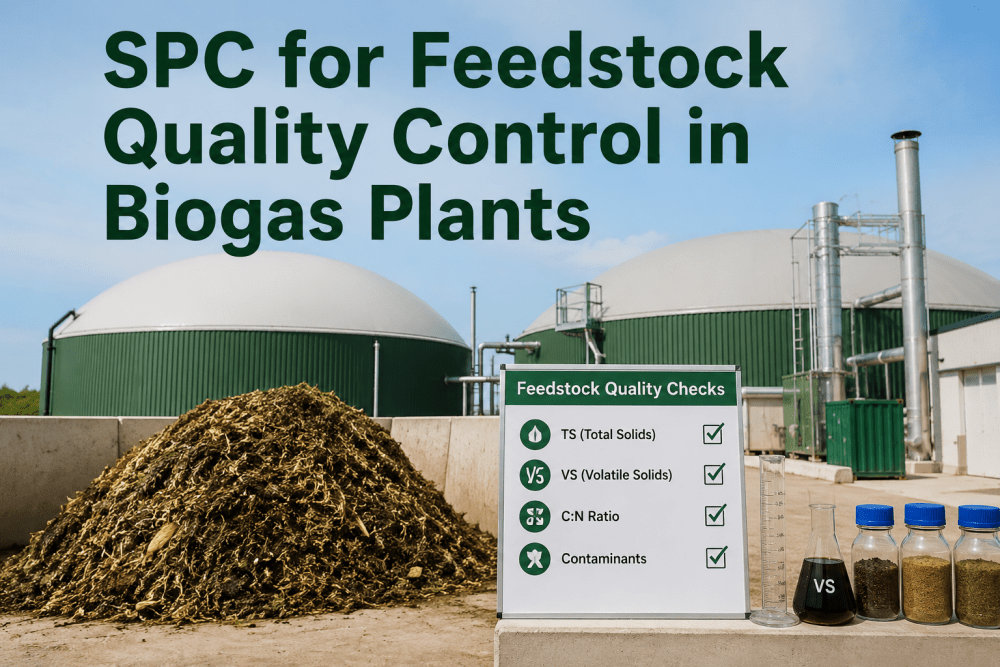
Effective feedstock acceptance testing at a biogas plant depends on assessing four core parameters before any load is transferred to storage or digester feed tanks. Each parameter provides a distinct data point that, taken together, determines whether a feedstock delivery is fit for purpose, requires blending with other substrates, or should be rejected entirely. Facilities that measure all four before offloading reduce process upset frequency by 60-80% compared to plants that rely on supplier documentation alone.
pH and Buffer Capacity
Feedstock pH is the first indicator of process compatibility. Deliveries below pH 4.5 or above pH 9.0 can destabilize digester conditions within hours of introduction. Total alkalinity and buffer capacity measurement provide deeper insight into how the feedstock will interact with the existing digester chemistry — information that pH alone cannot predict, especially for industrial byproducts and food processing residuals.
Total and Volatile Solids
Total solids content determines hydraulic retention time impact and mixing energy requirements. Volatile solids content indicates the biodegradable organic fraction that will actually generate biogas. Plants that accept loads based solely on total solids without measuring volatile solids routinely overpay for feedstock that delivers half the expected gas yield, undermining the facility's economic model.
Ammonia and Nitrogen Loading
Total ammonia nitrogen concentration above 3,000 mg/L in the incoming feedstock can push digester ammonia levels into the inhibitory range, particularly in thermophilic operations. Tracking cumulative nitrogen loading across multiple deliveries enables operators to blend high-risk loads with dilution feedstocks and schedule them when digester biology is most resilient.
Physical Contaminants and Traceability
Plastic, glass, metals, and grit in feedstock cause mechanical wear,沉降 accumulation, and digester volume loss that is expensive to remediate. Visual inspection and sieve analysis at the gate, combined with supplier traceability and batch tracking, create a quality chain of custody that protects both equipment and regulatory compliance for digestate end use.
Feedstock Types and Acceptance Testing Requirements
Different feedstock categories present different risk profiles and require different acceptance testing intensity. The matrix below maps the most common biogas feedstock types against the testing parameters that determine gate acceptance, helping lab managers design testing protocols that match the risk profile of each feedstock stream their plant receives. Book a Demo to see iFactory's feedstock management module configured for your facility's specific feedstock mix and testing protocols.
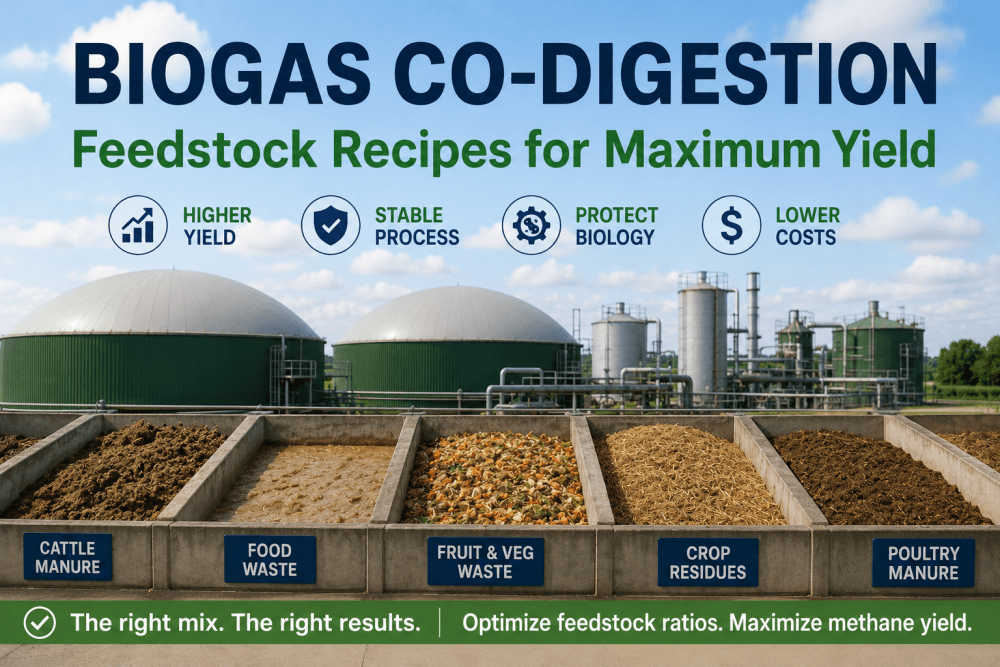
| Feedstock Category | pH Range | Total Solids % | Volatile Solids % TS | TAN mg/L | Contaminants | Testing Frequency |
|---|---|---|---|---|---|---|
| Source Separated Organics | 4.5-6.5 | 12-18 | 80-90 | <1,000 | Low | Every load |
| Food Processing Waste | 4.0-7.0 | 5-15 | 75-88 | <2,500 | Medium | Every load |
| Industrial Byproducts | 3.5-9.5 | 3-25 | 60-95 | <5,000 | Variable | Every load + batch hold |
| Agricultural Slurries | 6.5-8.0 | 4-10 | 70-85 | <3,000 | Low | Spot check + supplier cert |
| FOG (Fats, Oils, Grease) | 3.5-5.5 | 20-40 | 85-98 | <500 | Medium | Every load + LCT sample |
Gate-to-Digester: A Structured Feedstock Acceptance Workflow
The interval between a truck arriving at the gate and its feedstock entering the digester is the critical window for quality decision-making. A structured acceptance workflow ensures that every load is evaluated against the same criteria, that data is captured in a form that supports both operational decisions and regulatory compliance, and that rejected loads are handled according to documented procedures.
Pre-Arrival Documentation Review
Before the truck arrives, verify supplier documentation against approved vendor list, waste transfer notes, and any prior quality history. Repeat suppliers with consistent quality records may qualify for reduced testing frequency under a risk-based protocol. New suppliers or flagged loads always require full testing before offloading.
Visual Inspection and Odor Assessment
Trained gate personnel conduct a visual assessment of the load: color, consistency, visible contamination layers, separation, and odor character. Unusual colors, sulfurous or putrid odors, free liquids on top, or visible non-organic material trigger immediate hold status and elevated testing before any further handling.
Representative Sampling at the Receiving Point
Collect a composite sample from the delivery using standardized sampling equipment and documented procedures. Sample location, time, temperature, and collector ID are recorded in the quality platform. The sample splits into on-site test aliquots and a retained reference sample held for 30 days for dispute resolution or regulatory inquiry.
On-Site Rapid Testing and Decision Gate
Execute the on-site test battery: pH, total solids by microwave or infrared balance, ammonia by ion-selective electrode or colorimetric strip, and visual contamination assessment. Results are entered into iFactory's quality platform, which applies the facility's acceptance rules and returns a clear decision: accept, accept with blending instructions, hold for additional testing, or reject.
Offload Authorization and Batch Assignment
If accepted, the load is authorized for offload into the designated storage tank or feed blend tank. The quality platform assigns a batch ID, links all test data to that batch, and updates the feedstock inventory with quantity, quality parameters, and storage location. This data flows directly to the digester feed blending algorithm to optimize the day's substrate mix.
Replace Gate-Spreadsheet Chaos With a Structured Quality Platform
iFactory's feedstock quality module digitizes the entire gate-to-digester workflow — sampling, testing, decision logic, batch tracking, and supplier quality scoring — in a single platform accessible from tablet, kiosk, or mobile device at the receiving station.
Industry Expert Perspective on Feedstock Acceptance Testing
What Digitizing Feedstock Acceptance Delivers Across Your Operations
The financial and operational impact of moving from paper-based feedstock acceptance to a digitized, platform-driven workflow extends far beyond the receiving gate. The impact grid below maps the capabilities of iFactory's feedstock quality platform to the measurable outcomes that matter to plant managers, lab teams, and facility owners evaluating quality system investments.
Workflow Velocity
- Gate testing decisions in under 10 minutes per load
- Digital sampling checklists eliminate paperwork delays
- Automated pass-fail logic removes operator interpretation
- Real-time feedstock inventory feeds digester blending algorithms
Risk Reduction
- Process upsets from bad feedstock reduced by 60-80%
- Supplier quality scoring identifies problem sources before chronic issues develop
- Rejected loads documented with full traceability for dispute resolution
- Regulatory compliance for digestate quality supported by inbound feedstock records
Revenue Recovery
- Yield loss from process upsets eliminated — recover 5-15% of annual gas production
- Gate fee revenue protected by rejecting out-of-spec loads that would cause damage
- Blending optimization increases methane yield per ton of feedstock accepted
- Supplier renegotiation leverage improves feedstock cost and quality terms
Building a Defensible Feedstock Quality Program
Feedstock acceptance testing is not a laboratory exercise — it is the primary control point for digester stability, gas yield performance, and regulatory compliance in every biogas operation. Facilities that invest in structured gate testing protocols, digitized data capture, and integrated quality platforms consistently outperform those that rely on supplier documentation and occasional spot checks. The data generated at the receiving gate ripples through every downstream decision: feed blend optimization, process stability management, gas yield forecasting, and digestate quality assurance. iFactory's feedstock quality module digitizes the entire acceptance workflow — from pre-arrival documentation review through sampling, rapid testing, decision execution, and batch assignment — creating a quality chain of custody that protects digester biology and maximizes feedstock value. Book a Demo to configure iFactory's feedstock acceptance module for your facility's specific feedstock types, testing protocols, and decision rules.
Digitize Your Feedstock Acceptance Program With iFactory
iFactory gives biogas plant operators a structured, digitized feedstock acceptance platform — from gate sampling and rapid testing to batch tracking and supplier quality scoring — protecting digester biology and gas yield with every load.
Feedstock Acceptance Testing — Frequently Asked Questions
What is feedstock acceptance testing and why does it matter for biogas plants?
Feedstock acceptance testing is the structured process of evaluating every incoming substrate delivery against defined quality criteria before it enters the digester feed system. It matters because feedstock variability is the largest uncontrolled variable in anaerobic digestion — a single off-spec load can destabilize digester biology for weeks, reducing gas yield, increasing operational cost, and creating compliance risk for digestate end use. A properly designed acceptance testing program protects the facility's biological process, economic model, and regulatory standing.
What testing equipment is needed at the receiving gate for effective feedstock QC?
The minimum equipment set for effective gate testing includes a portable pH meter with temperature compensation, a microwave or infrared solids analyzer for rapid total solids determination, ammonia test capability (ion-selective electrode or validated colorimetric method), and visual inspection tools including a sieve or screen for contaminant assessment. Facilities processing higher-risk industrial byproducts should add a portable calorimeter or biogas potential test kit. All instruments should be calibrated daily and integrated with iFactory's quality platform for automated data capture and decision logic.
How should biogas plants handle feedstock that fails acceptance testing?
Feedstock that fails acceptance testing should be placed on hold status in a designated rejection holding area with clear signage and secondary containment. The quality platform documents the rejection decision with all supporting test data, photographs of the load if applicable, and the identity of the authorizing person. Rejected loads are either returned to the supplier under documented procedures or diverted to an alternative disposal route that complies with the facility's environmental permit. All rejection events are recorded in the supplier quality scorecard for trend analysis and procurement decision support.
How does feedstock acceptance testing integrate with digester feed blending optimization?
When acceptance testing data flows directly into iFactory's feed blending module, each accepted load's quality parameters — pH, total and volatile solids, ammonia, and estimated biogas potential — become inputs to the day's feed blend calculation. The blending algorithm optimizes the substrate mix to maintain target digester loading rates, C:N ratio, and nutrient balance while maximizing methane yield per unit of feedstock cost. This closed-loop integration turns gate testing from a defensive quality check into an active production optimization tool that continuously improves gas output.
What is the typical cost and payback of implementing a feedstock acceptance testing program?
The capital cost for a basic gate testing station including pH meter, solids analyzer, and ammonia test capability is typically $8,000-$15,000. Annual consumable and calibration costs add $3,000-$6,000 depending on testing volume. The payback period is typically under three months, driven by prevented process upsets (each costing $20,000-$80,000 in lost gas production and recovery time), improved biogas yield from optimized feedstock blending, and the ability to reject substandard loads that would otherwise degrade facility performance. Book a Demo to model the ROI for your specific facility's feedstock types and volumes.
Deploy a Digitized Feedstock Acceptance Program With iFactory Today
Biogas plant operators across North America and Europe are using iFactory's feedstock quality platform to replace paper logs, eliminate gate delays, and protect digester biology with every load they accept. Schedule a 30-minute demo to see the platform configured for your facility's feedstock mix and testing protocols.