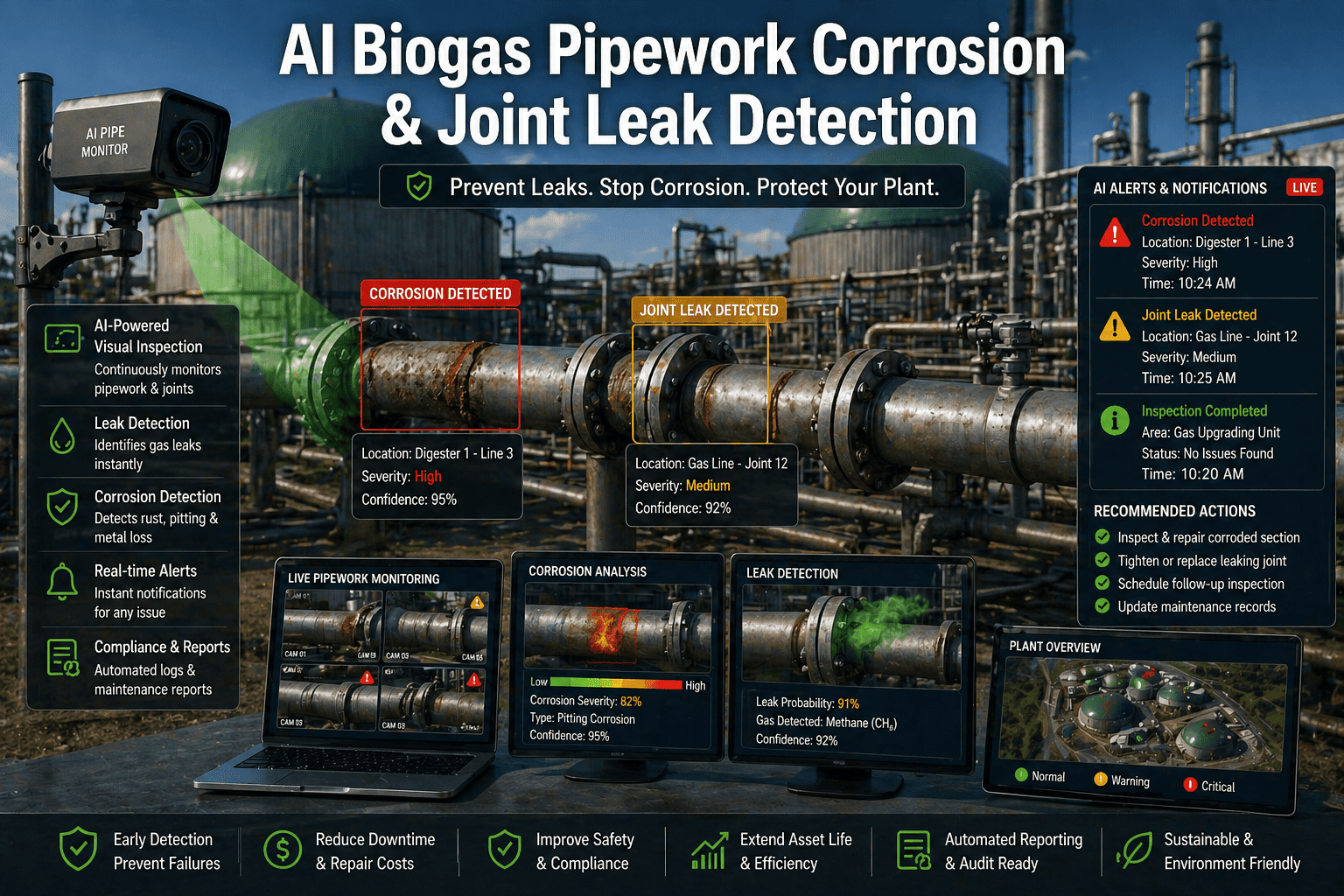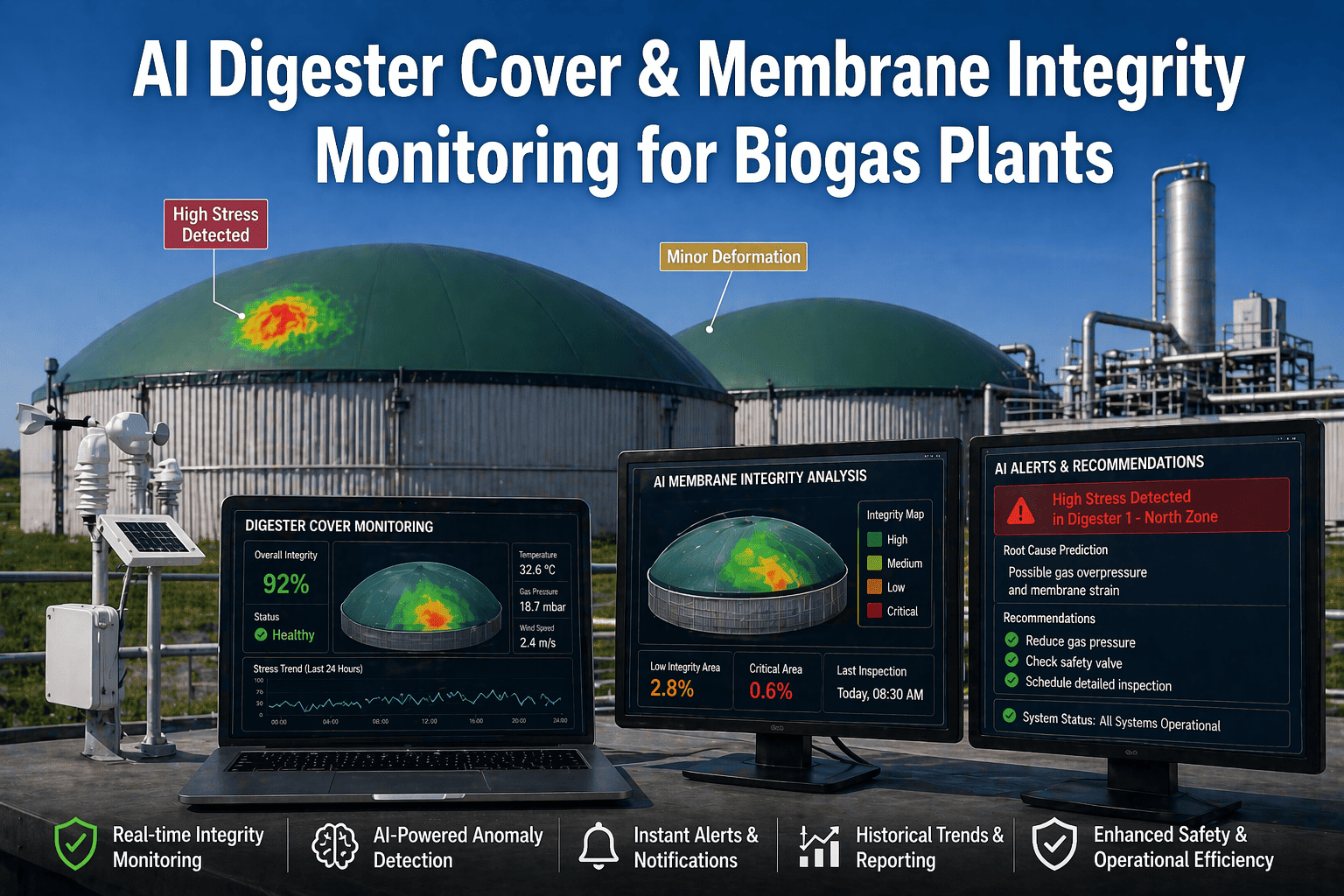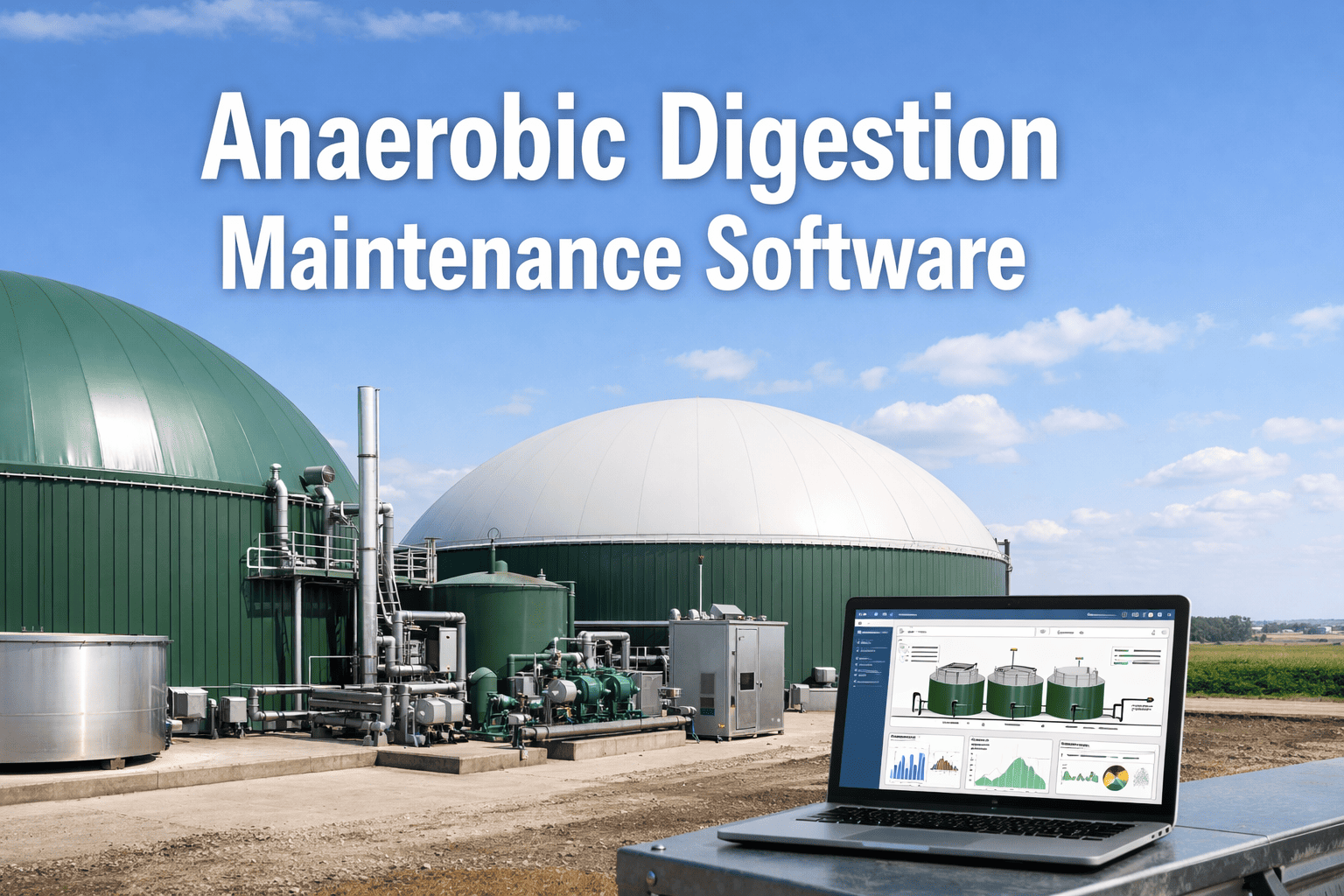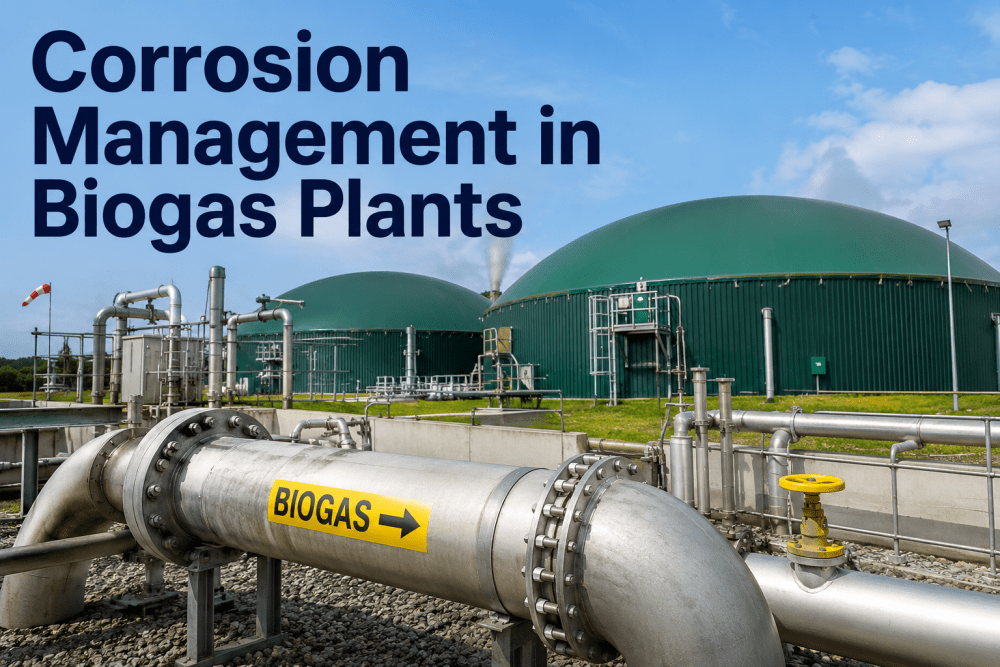
Biogas plants process one of the most corrosive gas streams in industrial energy production — a chemically aggressive mixture of hydrogen sulfide, carbon dioxide, moisture, and volatile organic compounds that attacks metallic infrastructure from the moment feedstock begins digesting. AI-driven corrosion managementtransforms this paradigm by deploying continuous sensor monitoring, predictive wall-thickness modeling, and automated inspection scheduling across every asset in the biogas process chain. Operations teams that Book a demo of iFactory's corrosion analytics platform are achieving measurable reductions in unplanned downtime, extended asset life, and fully audit-ready compliance documentation.
Is Your Biogas Plant's Corrosion Program Keeping Pace?
Deploy continuous H₂S monitoring, AI-driven wall-thickness prediction, and automated inspection management — built specifically for the corrosive demands of anaerobic digestion and biogas upgrading.
Why Biogas Plants Need AI-Driven Corrosion Management
Modern corrosion analytics platforms bridge this critical gap by aggregating data from online H₂S analyzers, ultrasonic wall-thickness sensors, corrosion probes, and process historian systems into a single, unified intelligence layer. When plant reliability managers Book a demo, the most common discovery is that their biogas assets are generating enormous volumes of untapped process data that — once connected — can prevent irreversible corrosion failures and dramatically reduce emergency repair expenditures.
The shift from reactive to predictive corrosion management begins with continuous visibility. Biogas piping, digesters, compressors, and gas upgrading equipment are acutely sensitive to H₂S spikes, condensate pH drops, and temperature excursions — conditions that AI-driven sensor fusion can monitor in real time and flag before they advance to through-wall corrosion or stress cracking. Book a Demo
H₂S Sulfide Stress Cracking
Monitor continuous H₂S concentration trends and predict sulfide stress cracking risk in carbon steel digesters, piping, and gas holders. Receive early alerts before localized corrosion advances to through-wall penetration.
CO₂ & Carbonic Acid Pitting
Track dissolved CO₂ levels and condensate pH across compression and cooling stages. AI models identify pitting corrosion patterns invisible to manual inspection until leakage occurs.
Microbiologically Influenced Corrosion
Detect sulfate-reducing bacteria (SRB) activity through correlated sensor patterns — temperature, pH, and volatile fatty acid concentration — enabling targeted biocide treatment before MIC causes catastrophic failure.
Condensate & Dew Point Corrosion
Monitor gas temperature profiles relative to hydrocarbon and aqueous dew points. Predict condensation zones in pipework and instrumentation, enabling proactive insulation and chemical dosing adjustments.
Mapping Corrosion Threats: A Data-Driven Approach to Biogas Asset Integrity
A purpose-built corrosion management platform for biogas plants must address four foundational requirements unique to anaerobic digestion and gas upgrading assets: real-time H₂S concentration tracking, condensate chemistry monitoring, wall-thickness trending, and inspection interval optimization aligned with regulatory compliance cycles. Managers that have already booked a demo consistently report that connecting their fragmented inspection records, corrosion probe data, and process historian streams into a unified analytics layer is the single most impactful step in their corrosion program modernization.
| Analytics Module | Primary Function | Biogas Application | Corrosion Benefit | Priority Level |
|---|---|---|---|---|
| H₂S Concentration Tracking | Real-time sour gas monitoring | Digester & Raw Biogas Piping | Predict sulfide stress cracking risk | Critical |
| Wall Thickness Trending | UT sensor data analytics | Piping Elbows & Vessel Shells | Remaining life forecasting | Critical |
| Condensate Chemistry | pH & conductivity modeling | Gas Cooling & Drying Stages | Dew point corrosion prevention | High |
| Inspection Management | Automated scheduling & tracking | Regulatory Compliance | Zero overdue inspections | High |
| Chemical Dosing Optimization | Biocide & inhibitor analysis | Feedstock & Digestate Lines | Optimized chemical spend | Standard |
Building a Corrosion Management Program for Biogas Assets
iFactory's implementation methodology has been refined across multiple AD, landfill gas, and biomethane upgrading facilities. Reliability managers who request a consultation early in their program development cycle consistently achieve stronger outcomes and faster ROI realization.
Asset Inventory & Corrosion Risk Classification
Create a comprehensive digital registry of all biogas assets — digesters, pipework, compressors, gas holders, upgrading membranes, and flare systems — mapped against their current corrosion threat level and criticality classification.
Sensor Deployment & Baseline Monitoring
Install online H₂S analyzers, ultrasonic wall-thickness sensors, corrosion probes, and pH monitors at strategic locations. Integrate with existing plant SCADA to create a continuous real-time corrosion data stream.
AI Model Training & Predictive Threshold Configuration
Train machine learning models on historical corrosion probe data, inspection records, and process parameters. Configure predictive alerts that trigger at the earliest deviation from baseline corrosion rates.
Automated Inspection & Compliance Workflow Integration
Enable AI-driven inspection scheduling that prioritizes assets based on predicted corrosion rates rather than fixed calendar intervals. Automate compliance documentation for API 510, API 570, and jurisdictional requirements.
Long-Range Capital Planning & Life Extension
Leverage remaining-life forecasts to generate 5-, 10-, and 20-year capital replacement projections. Build defensible budget justifications for material upgrades, coating renewals, and asset retirement decisions.
"Before deploying iFactory's corrosion analytics platform, we were replacing sections of raw biogas piping every 18 months due to H₂S attack — and we never saw it coming until we had a pinhole leak. Now we get 30-day advance alerts on accelerated corrosion trends, and our first replacement cycle has been extended to over four years. The predictive wall-thickness module alone saved us $340,000 in emergency pipework replacements last year."
Top Corrosion Management Gaps in Biogas Operations
Most biogas plants pursuing improvements to their corrosion management programs encounter a predictable set of operational and documentation challenges. Understanding these gaps before a platform deployment dramatically improves implementation outcomes and helps reliability engineers allocate limited budgets more strategically across complex biogas asset portfolios.Book a Demo
Ultrasonic thickness inspections are performed on fixed quarterly schedules regardless of actual corrosion rate, missing accelerated attack between inspection intervals and reacting only after minimum wall thickness is breached.
Many plants rely on weekly grab samples for H₂S measurement, creating days-long windows where corrosive spikes from feedstock variability go undetected and unmitigated.
Corrosion probe readings, NDT inspection reports, and process data reside in disconnected systems — making it impossible to correlate H₂S excursions with accelerated wall loss or optimize chemical dosing programs.
Wall-thickness data from ultrasonic inspections is recorded on paper or in spreadsheets, with no automated trending, no predictive modeling, and no integration with the maintenance planning system.
Without AI-driven corrosion rate prediction, integrity interventions are triggered only after measurable wall loss has already occurred — a reactive posture that results in higher repair costs and unplanned downtime.
Regulatory and insurance auditors increasingly require digital corrosion management records. Manual documentation approaches consistently fail audits, leading to deferred inspection backlogs and non-compliance exposure.
Closing these gaps requires more than off-the-shelf inspection tracking software — it demands a purpose-built platform designed for the chemical complexity and asset criticality of biogas corrosion management. Reliability engineers regularly Book a demo to benchmark their gaps against a proven industrial corrosion analytics architecture.
How iFactory's AI Platform Enables Proactive Corrosion Control
One of the most technically demanding aspects of biogas corrosion management is the integration of continuous sensor monitoring into existing plant infrastructure without disrupting production. Legacy digesters, gas holders, and upgrading skids must all be digitized with minimum process interruption.Book a Demo
Key Corrosion Analytics Capabilities for Biogas Plants
Maintain continuous records of H₂S concentration at each process stage — from raw digester gas to upgraded biomethane — with automated alerts linked to corrosion rate models.
Centralize ultrasonic thickness measurements, corrosion probe data, and remaining-life calculations in an automated trending engine that predicts minimum wall date with statistical confidence.
Track biocide, oxygen scavenger, and pH adjuster effectiveness against corrosion rate trends — enabling evidence-based adjustments that reduce chemical spend while improving protection.
Automatically adjust UT inspection frequencies based on actual corrosion rate trends rather than fixed calendar schedules — focusing NDT resources where they deliver the highest integrity value.
Transform Your Biogas Corrosion Management Program Today
Deploy a unified analytics platform that integrates H₂S monitoring, wall-thickness prediction, inspection management, and compliance reporting — built specifically for the corrosive demands of biogas production.
Biogas Plant Corrosion Management — Common Questions Answered
What corrosion mechanisms are most damaging to biogas plant infrastructure?
The three most damaging mechanisms are H₂S-induced sulfide stress cracking (SSC) in carbon steel, CO₂-driven carbonic acid pitting in condensate zones, and microbiologically influenced corrosion (MIC) in digester environments. Biogas can contain H₂S concentrations exceeding 5,000 ppm and CO₂ levels up to 40 percent, creating an aggressive chemical environment that accelerates general and localized corrosion rates far beyond typical industrial exposures.
How does AI predict corrosion rates in biogas plants?
AI models are trained on continuous sensor streams — H₂S concentration, temperature, pressure, pH, and humidity — correlated against periodic ultrasonic thickness measurements and corrosion probe data. By learning the unique relationship between process parameters and corrosion rate for each asset, the platform can predict wall loss 30 to 90 days in advance, enabling proactive intervention before minimum thickness thresholds are reached.
What sensors are needed for continuous corrosion monitoring?
A comprehensive monitoring deployment typically includes online H₂S analyzers at the digester outlet and gas upgrading inlet, ultrasonic wall-thickness sensors on critical piping elbows and vessel shell areas, electrical resistance (ER) corrosion probes in wet gas zones, pH and conductivity sensors at condensate collection points, and temperature/humidity transmitters at potential dew point locations. iFactory's data engineering team handles sensor selection, installation oversight, and integration with existing plant systems.Book a Demo
Can the platform integrate with existing biogas plant SCADA and CMMS systems?
Yes. iFactory provides standard API connectors for major SCADA platforms (Siemens, Rockwell, Honeywell), CMMS systems (SAP, Maximo), and process historians (OSIsoft PI, AspenTech). The platform ingests existing H₂S analyzer data, temperature/pressure transmitters, and flow measurements — no additional sensors are required to begin generating value from the data already available in your control system.
What is the typical ROI for AI-driven corrosion management in biogas plants?
Most operators achieve payback within the first 12 months. The primary drivers are avoided emergency pipework replacements (typically $100,000–$500,000 per incident), extended asset life (2–4 year gains on piping and vessel replacement cycles), reduced chemical dosing spend (15–25 percent optimization), and eliminated compliance documentation labor.