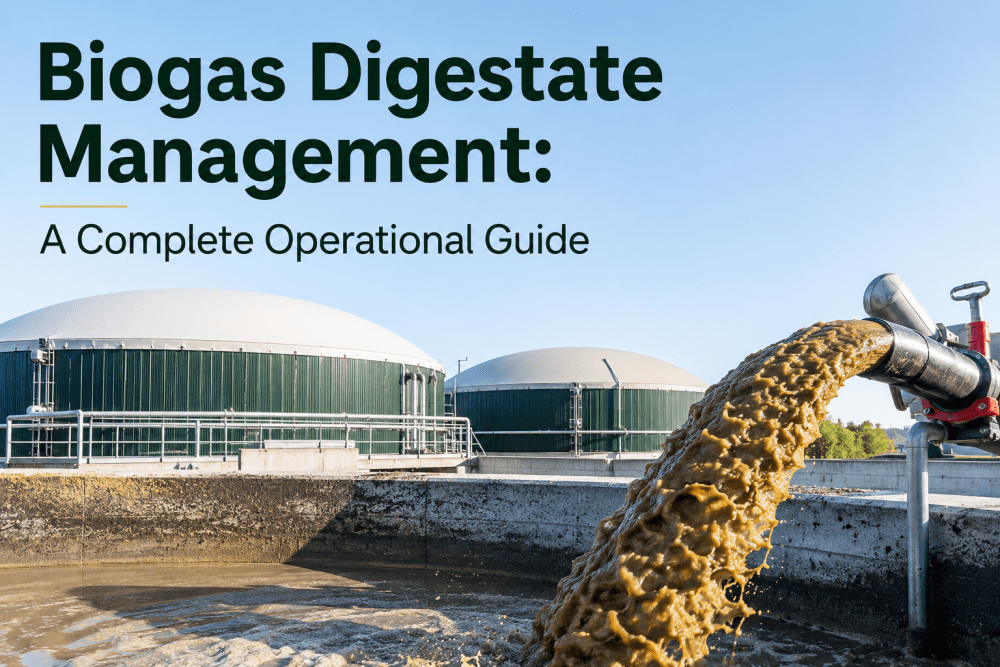
Digestate leaves every biogas plant carrying significant nutrient value — typically 3–6 kg of ammoniacal nitrogen, 1–3 kg of phosphorus, and 3–5 kg of potassium per tonne of liquid digestate. At current fertiliser prices, that represents £15–35 per tonne of applied value. Yet most biogas operators either undervalue digestate by treating it as a waste disposal obligation or lose that value to regulatory breach — applying at the wrong time, to the wrong field, at the wrong rate. The gap between digestate as a compliance liability and digestate as a managed revenue stream is entirely an information gap: who knows what is in each batch, what each field can accept, and what the regulatory window allows. iFactory's digestate and nutrient management platform closes that gap — tracking batch quality, storage levels, application compliance, and fertiliser value in real time. Book a free digestate management assessment.
iFactory tracks digestate nutrient content per batch, monitors storage tank levels continuously, manages the field application record against NVZ and permit limits, and calculates the fertiliser replacement value of every tonne applied — turning digestate from a compliance obligation into a managed agronomic asset. Average result: zero NVZ compliance breaches, 18% increase in fertiliser value recovered per tonne.
Digestate Management Failures iFactory Prevents
Each card below is a real operational and compliance failure that biogas plants experience when digestate is managed manually — and that integrated nutrient management eliminates. Book a demo to see digestate analytics applied to your plant configuration.
iFactory solution: Maintains a live NVZ compliance calendar per field — flagging any planned application that falls within a closed period before the spreading vehicle is dispatched, with automatic recalculation of the next available application window and storage capacity remaining until that date.
iFactory solution: Monitors storage tank levels continuously from ultrasonic or pressure sensors — calculating days to full capacity at current production rate, alerting when capacity drops below 30 days, and triggering early application planning or contingency storage procurement before overflow risk develops.
iFactory solution: Maintains a cumulative nitrogen register per field — tracking all organic material applications, calculating remaining annual N headroom per hectare, and preventing any application that would breach the annual field limit.
iFactory solution: Links lab analysis results to specific digestate batches — tracking ammoniacal N, total N, P, K, dry matter, and pH per batch, and calculating the fertiliser replacement value per tonne applied at current inorganic fertiliser prices. High-value batches are identified for premium agronomic use.
iFactory solution: Maintains GIS-linked field maps with watercourse buffer zones and protected feature exclusions mapped — providing GPS-linked spreading guidance to contractor equipment and logging the application boundary against the restricted zones for compliance evidence.
iFactory solution: Captures application records in real time at point of spreading — volume from flow meter or load cell, field from GPS, weather conditions from automated weather station integration — generating a complete, timestamped application register ready for permit return without manual compilation.
iFactory connects storage sensors, lab analysis, GPS spreading records, and NVZ field data into a single nutrient management platform — tracking every tonne from tank to field with full regulatory compliance and fertiliser value accounting.
Digestate Nutrient Intelligence Deployment Roadmap
iFactory activates digestate management in four phases — connecting existing data sources before any new field hardware is required.
iFactory imports your field register — hectarage, NVZ classification, watercourse buffers, and historical application records — building the compliance framework before any live data is captured. Existing lab analysis results populate the batch nutrient library.
Storage tank level sensors connected — continuous volume tracking with days-to-full alert based on current digester production rate. Digestate production volume linked to SCADA feedstock and process data for mass balance tracking from feedstock intake to digestate output.
GPS-linked application logging activated — volume, field, date, and weather captured at point of spreading. Pre-application compliance check against NVZ closed period, field N headroom, and watercourse buffer enforced before each spreading event is confirmed.
Fertiliser replacement value calculated per application from batch nutrient content and current inorganic fertiliser prices — monthly nutrient value report showing agronomic value delivered per farm agreement. Annual permit return assembled automatically from the continuous application register.
Platform Capability Comparison — Digestate Nutrient Management
Gatekeeper, Muddy Boots, Omnia, and generic farm management systems offer field nutrient recording and NVZ compliance tools built for farmers. iFactory differentiates on integration with the biogas plant's production and storage data — connecting digestate volume and quality from the digester through to field application records in one platform, without requiring a separate farm management system. Book a comparison demo.
| Capability | iFactory | Gatekeeper | Omnia | Muddy Boots | Generic FMIS |
|---|---|---|---|---|---|
| Plant-Side Integration | |||||
| Digestate production linked to SCADA | Live mass balance from plant | Not available | Not available | Not available | Not available |
| Storage tank level — continuous monitoring | Sensor-linked, days-to-full alert | Not available | Not available | Not available | Not available |
| Batch nutrient quality linked to lab results | Per batch — NPK, DM, pH | Manual entry | Manual entry | Manual entry | Manual entry |
| Field Compliance | |||||
| NVZ closed period pre-application gate | Enforced before dispatch | Supported | Supported | Supported | Manual check |
| Cumulative field nitrogen register | All organic sources tracked | Supported | Supported | Supported | Manual |
| GPS watercourse buffer enforcement | GIS-mapped, contractor guidance | Map display only | Map display only | Map display only | Not available |
| Value & Reporting | |||||
| Fertiliser replacement value per application | Per tonne at current prices | Nutrient calc only | Nutrient calc only | Not available | Not available |
| Permit return auto-assembly from records | Structured to permit format | Export only | Export only | Export only | Not available |
Based on publicly available product documentation as of Q1 2025. Verify current capabilities with each vendor before procurement decisions.
Measured Outcomes Across Deployed Plants
iFactory's pre-deployment assessment reviews your existing application records, lab analysis data, and field register — identifying compliance gaps and fertiliser value that is currently unaccounted for.
From the Field
Frequently Asked Questions
Continue Reading
iFactory manages batch nutrient quality, storage capacity, NVZ compliance, GPS field application records, and fertiliser replacement value — turning digestate management from a compliance liability into an agronomic asset.