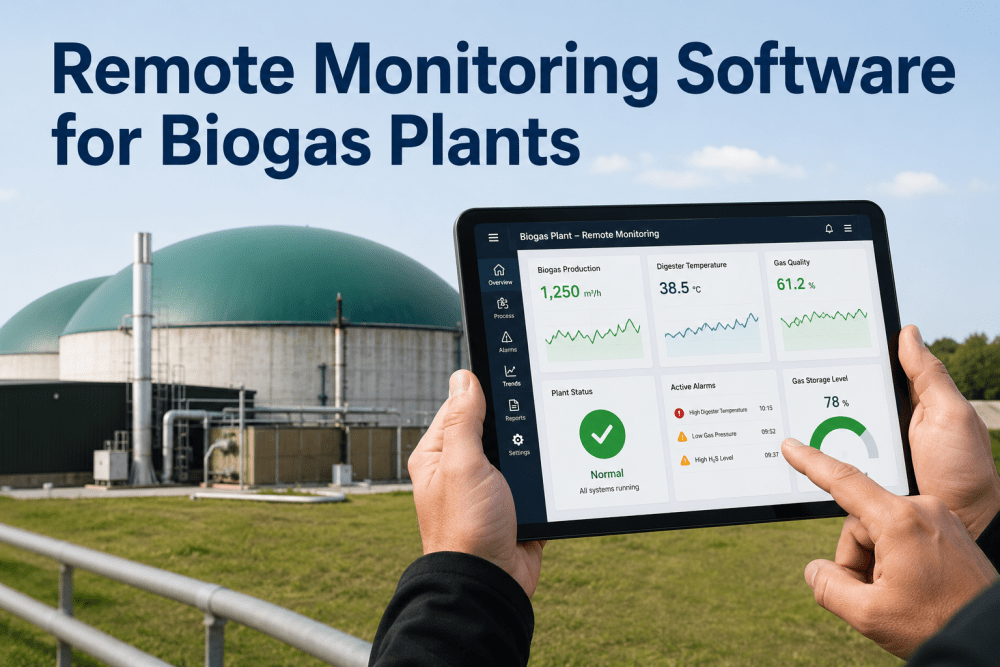
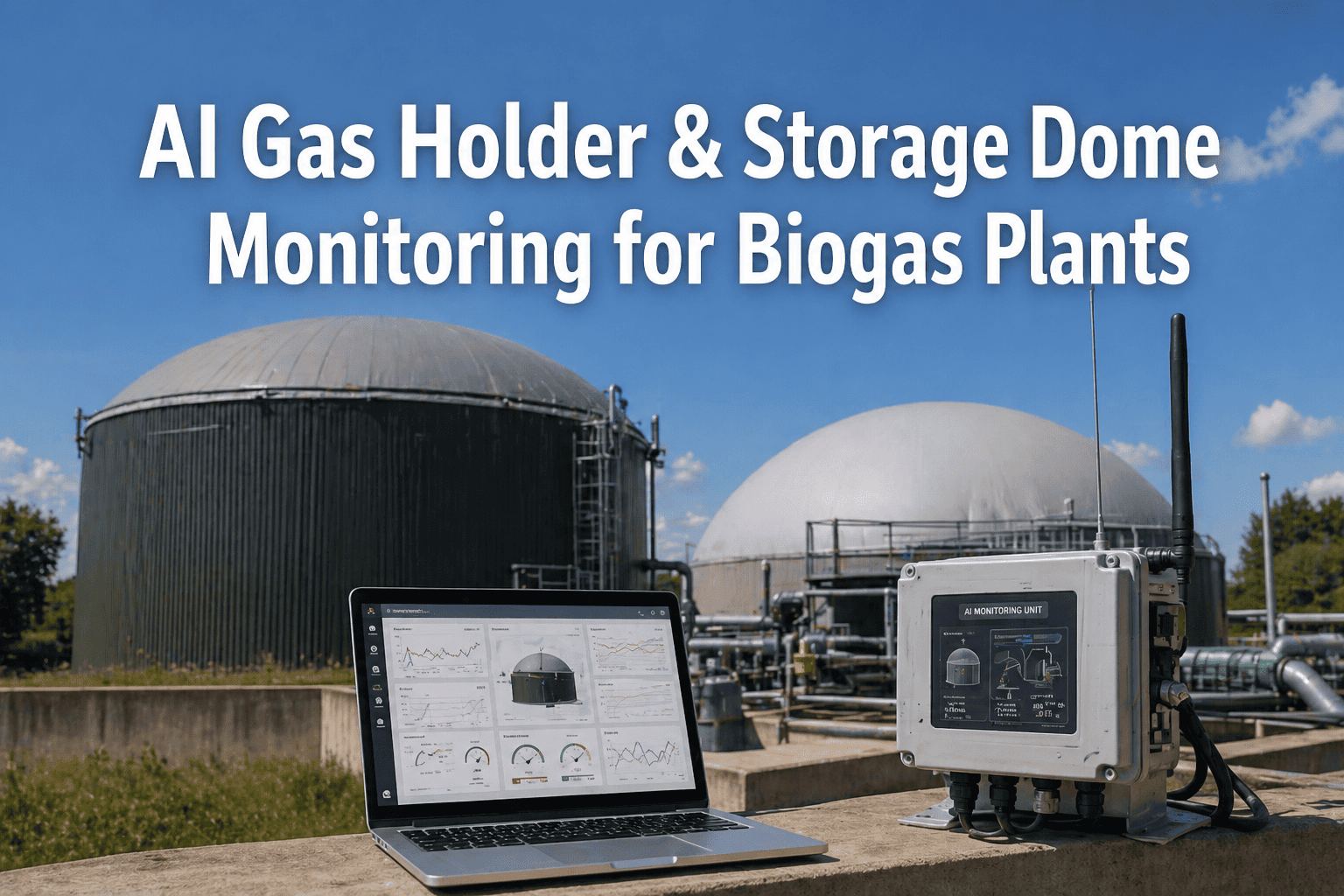
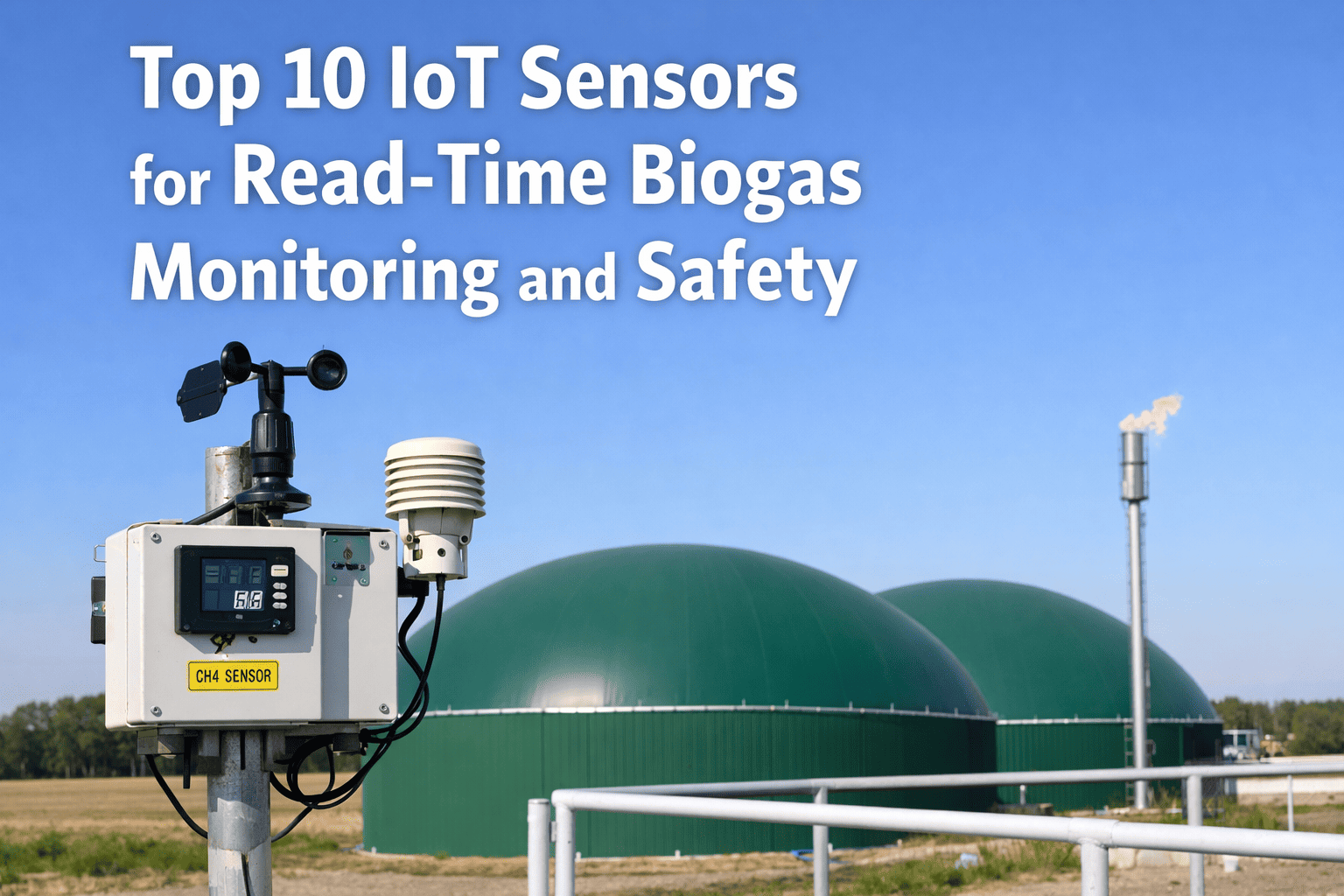
Most biogas plants were built before the era of smart sensors — yet the biological and mechanical complexity they manage demands real-time data that legacy instrumentation simply cannot provide. iFactory's industrial IIoT sensor integration programme retrofits wireless vibration, temperature, pressure, and gas quality sensors onto existing equipment without production shutdown, connecting older AD facilities to AI-powered analytics within days. No rip-and-replace. No PLC overhaul. Just intelligent monitoring layered onto the infrastructure you already have.
Quick Answer
iFactory integrates wireless IIoT sensors — vibration accelerometers, thermocouple arrays, pressure transmitters, gas analysers, and flow meters — with existing SCADA, PLC, and legacy control systems via OPC-UA, Modbus TCP, MQTT, and REST APIs. Retrofit deployments are completed in 3–5 days without production interruption, connecting legacy biogas plants to AI analytics that detect equipment failures 7–30 days early and process upsets 4–7 days before biological crisis.
What iFactory Deploys — Sensor Types & What They Monitor
Every sensor category below addresses a specific monitoring gap in legacy biogas plants. iFactory's deployment engineers assess your existing instrumentation and identify exactly which gaps are causing blind spots in your AI analytics coverage.
Most Critical
Wireless Vibration Accelerometers
Mounted on CHP engines, pumps, mixers, and compressors. Captures vibration signatures at 1,600–25,600 Hz sampling rates to detect bearing wear, imbalance, cavitation, and misalignment 7–30 days before mechanical failure.
Multi-point temperature monitoring across digester zones, heat exchanger surfaces, CHP cooling circuits, and substrate feed lines. Detects stratification, heat exchanger fouling, and heating system degradation.
Digester zones · Heat exchanger · CHP cooling
Pressure Transmitters
Differential and gauge pressure across gas lines, digester headspace, pump discharge, and filter housings. Identifies gas handling blockages, pump performance degradation, and membrane integrity loss.
Gas lines · Pump discharge · Filter housings
Inline Gas Analysers
Continuous CH4%, CO2, H2S, and O2 measurement on biogas lines. Detects quality deviations causing CHP trip events and enables real-time biological stability inference from gas composition trends.
CH4% · H2S · CO2 · O2
Ultrasonic Flow Meters
Clamp-on, non-invasive installation on existing pipe work. Measures substrate feed rates, digestate recirculation, gas flow, and process water flows without cutting pipework or production interruption.
No pipe cutting · Clamp-on · Non-invasive
Electrochemical Process Sensors
Online pH, dissolved oxygen, oxidation-reduction potential (ORP), and conductivity. Provides continuous biological process state data between lab sampling intervals — filling the data gaps that cause late upset detection.
pH · ORP · Conductivity · DO
Current & Power Analysers
Non-invasive clamp-on current transformers on mixer motors, pump drives, and CHP auxiliaries. Detects motor load anomalies indicating mechanical stress, impeller wear, and efficiency degradation without electrical panel access.
Mixer load · Pump drive · CHP aux
The Retrofit Process — From Legacy Plant to AI-Connected Facility in 5 Days
iFactory's deployment methodology is designed around one constraint: zero production downtime. Every step is planned to be executed during normal plant operation, with no requirement for digester shutdown, PLC reprogramming, or SCADA system modification.
Day 1
Site Assessment
Instrumentation Gap Analysis & Sensor Placement Planning
iFactory deployment engineers audit existing sensors, SCADA tags, PLC outputs, and lab data workflows. Asset criticality ranking identifies which equipment has highest failure risk and lowest existing monitoring coverage — prioritising sensor placement for maximum AI analytics impact.
Output: Instrumentation gap map · Sensor placement plan · Integration architecture document
Wireless sensors mounted using non-invasive fixings (magnetic mounts, adhesive pads, clamp-on brackets) on all identified assets. IIoT edge gateway installed and connected to site network. No welding, no pipe cutting, no electrical panel access required for wireless sensor deployment.
Output: All wireless sensors live · Edge gateway transmitting · Signal quality verified
Day 3
Integration
SCADA / PLC Data Integration & Protocol Bridging
Existing SCADA tags, PLC data points, and historian databases connected to iFactory platform via OPC-UA, Modbus TCP, MQTT, or REST API — depending on your existing control system architecture. No modification to existing control logic required. iFactory runs as a read-only analytics layer on top of existing systems.
Output: All existing data tags mapped · Protocol bridge verified · Historical data imported
Day 4
Configuration
AI Model Baseline Configuration & Alert Threshold Setup
iFactory AI models configured with your plant's asset inventory, equipment specifications, and biological operating parameters. Alert thresholds calibrated to plant-specific normal operating ranges. Mobile app and dashboard provisioned for operations team with role-based access for plant manager, operators, and maintenance staff.
Output: AI models live · Alerts configured · Team trained on mobile app
Day 5
Go Live
Full Platform Activation — AI Analytics Running on All Assets
All sensors, integrations, and AI models active. iFactory begins learning your plant's normal operational fingerprint — establishing equipment baselines for vibration, temperature, and process parameters that will define early-warning detection thresholds within 14–30 days. 24/7 monitoring active from day one.
Output: Full AI monitoring active · 24/7 alert coverage · Baseline learning initiated
IIoT Retrofit Programme
Connect Your Legacy Plant to AI Analytics in 5 Days
No production shutdown. No SCADA overhaul. No PLC modification. Just wireless sensors and an intelligent analytics layer on top of what you already have.
Integration Compatibility — Legacy Systems Supported
iFactory's edge gateway supports every major industrial communication protocol used in biogas SCADA and PLC systems — ensuring connectivity regardless of control system age, manufacturer, or architecture.
Industrial Protocols
OPC-UA
All modern SCADA systems
Modbus TCP / RTU
Legacy PLCs, energy meters, analysers
Profibus DP
Siemens S7, older field devices
DNP3
Utility-grade SCADA systems
BACnet
Building and energy management
IoT & Cloud Protocols
MQTT / MQTT-SN
Lightweight IoT telemetry
REST API
Web-connected systems, lab LIMS
WirelessHART
Field wireless sensors
ISA100.11a
Industrial wireless mesh
LoRaWAN
Low-power wide-area sensors
SCADA / Historian Systems
Siemens WinCC / TIA Portal
All versions from V7+
Wonderware / AVEVA
InTouch, System Platform
Ignition (Inductive Automation)
All versions
OSIsoft PI / AVEVA PI
Historian data integration
Custom BMS / Biogas SCADA
Agraferm, EnviTec, custom builds
Measured Impact — Legacy Plant Retrofits vs. No Monitoring Upgrade
The table below shows performance differences between legacy biogas plants operating on existing instrumentation only versus plants retrofitted with iFactory IIoT sensors and AI analytics.
Scroll to see full table
Monitoring Metric
Legacy Instrumentation Only
iFactory IIoT + AI Analytics
Improvement
Annual Value
Unplanned equipment failures per year
6.8–11.2 events avg
1.2–2.4 events avg
–82%
$95K–$160K
CHP engine unplanned downtime
310–520 hrs/yr
48–90 hrs/yr
–83%
$55K–$95K energy revenue
Process upset events (biological)
4.2–7.8 events/yr
0.4–0.8 events/yr
–90%
$180K–$320K
Average failure detection lead time
At failure or after
7–30 days early
+7–30 days
Emergency repair cost avoided
Sensor data coverage (% of assets monitored)
28–44% of critical assets
94–100% of critical assets
+3× coverage
Full AI analytics enabled
Annual maintenance cost
34% of operating cost avg
19% of operating cost avg
–44%
$62K–$110K
Total Annual Value Per Plant
Baseline
IIoT + AI Retrofit
–82% failures
$340K–$620K/yr
Platform Comparison — IIoT Integration Depth
Generic IoT platforms and standard SCADA add-ons provide data collection without domain-specific AI. iFactory combines biogas-specific sensor integration with trained AI models that understand the biological and mechanical context of AD operations. Book a comparison demo.
Scroll to see full table
Capability
iFactory
Generic IoT Platform
Standard SCADA Add-on
Agraferm B-Control
Sensor & Connectivity
Wireless sensor retrofit — no shutdown
Full programme, 5 days
Hardware only, no AD expertise
SCADA-wired only
Plant-new install only
Legacy protocol support (Modbus, Profibus)
All major protocols
OPC-UA / MQTT only
OPC-UA / Modbus
Proprietary only
AI Analytics
Biogas-specific AI models (biological + mechanical)
Pre-trained AD models
Generic ML only
Threshold alarms only
Basic VFA/pH logic
Equipment failure prediction lead time
7–30 days early
Anomaly only, no lead time
At failure
At failure
Process upset early warning
4–7 days before crisis
Not available
Threshold only
1–2 days
Deployment
Deployment without production stop
Always — by design
Depends on hardware
Requires SCADA downtime
New plant only
Time to first AI insight
Day 5 after deployment
Weeks of configuration
Months of integration
Plant commissioning only
Based on publicly available product documentation as of Q1 2025. Verify current capabilities with each vendor before procurement decisions.
Measured Results Across Legacy Plant Retrofits
82%
Reduction in Unplanned Equipment Failures
Across 50+ retrofitted AD facilities
5 days
Typical Full Deployment Time
Zero production hours lost
3×
Increase in Monitored Asset Coverage
From 28% to 94%+ of critical assets
$340K
Average Annual Value per Plant
Maintenance savings + revenue protection
From the Field
Midwest Agricultural Biogas Facility
2.1 MW · Built 2009 Triple digester · Cattle slurry
$148K
First-year savings
4 days
Deployment time
"Our plant was built in 2009 with the sensors that were standard at the time — pH, temperature, a gas flow meter, and that was essentially it. We had no vibration monitoring on any of our pumps, mixers, or the CHP engine. We were flying blind on mechanical health. iFactory deployed wireless accelerometers on 14 assets in four days without stopping production. Within 6 weeks, the system flagged abnormal vibration on our main recirculation pump — a bearing failure pattern that the engineers said was 3–4 weeks from causing a complete pump seizure. We replaced the bearing during a planned 4-hour maintenance window. The alternative would have been a pump failure mid-winter with a 3–6 week lead time on the replacement part. The ROI on that single prevention alone covered the first year's platform cost."
Operations Manager
2.1 MW Agricultural Biogas Plant — United States
Frequently Asked Questions
QWill retrofitting sensors interfere with our existing SCADA or control system?
No. iFactory operates as a read-only analytics layer — it reads data from your existing systems without writing to them or modifying any control logic. Your SCADA and PLC continue operating exactly as before.
QHow long do wireless sensor batteries last in a biogas plant environment?
Wireless vibration sensors operate on 3–5 year battery life at standard sampling intervals. Battery status is monitored remotely with replacement alerts sent 60+ days before depletion — replacement takes under 5 minutes per sensor.
QCan sensors operate in the ATEX / hazardous area zones around our digester?
Yes. iFactory specifies ATEX Zone 1 and Zone 2 certified sensors for all hazardous area deployments. Sensor selection is confirmed during the Day 1 site assessment based on your plant's hazardous area classification drawings. Discuss ATEX requirements in a scoping call.
QHow does iFactory handle plants with poor or no internet connectivity?
iFactory's edge gateway runs AI inference locally — all time-critical alerts (equipment failure warnings, process upset detection) are generated and delivered on-site without cloud dependency. Cloud connectivity is used for dashboards, reporting, and model updates only, and can operate on 4G/LTE where fixed broadband is unavailable.
QWhat is the minimum viable sensor set to start getting AI analytics value?
For mechanical monitoring: one vibration sensor on the CHP engine and one on the main substrate pump delivers immediate predictive maintenance value. For biological monitoring: existing pH and temperature data combined with gas flow metering enables process upset early warning. Full analytics coverage is built incrementally from this foundation. Talk to an expert about your starting point.
Ready to Connect Your Legacy Plant to AI Analytics?
iFactory's IIoT retrofit programme gives you enterprise-grade monitoring without enterprise-grade disruption. Everything your AI analytics needs, installed in 5 days, without stopping production.
✓No production downtime during deployment
✓No SCADA modification or PLC reprogramming
✓AI analytics active from Day 5
✓ATEX-certified sensors for hazardous zones
✓Edge-deployed AI — no cloud dependency for alerts