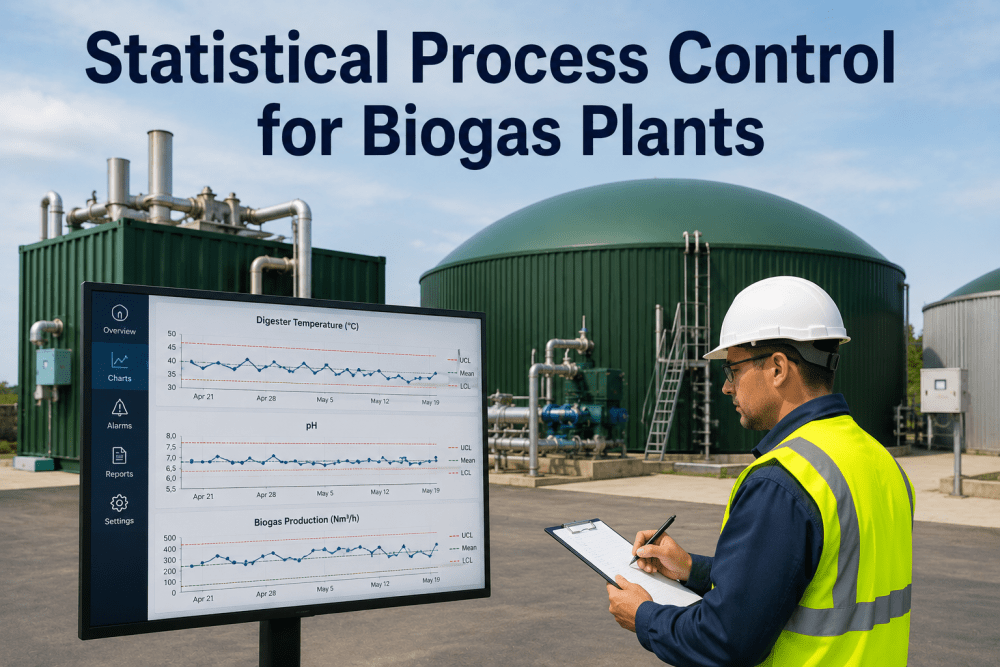
A digester pH crash is not a sudden event — it is the final visible stage of a biological failure that has been developing for 48–72 hours. Volatile fatty acids accumulate when hydrolysis and acidogenesis outpace methanogenesis, driving VFA:alkalinity ratios above safe limits before pH registers any deviation. By the time pH drops below 6.8, the methanogen population is already suppressed, gas output is falling, and the recovery window is measured in weeks — not hours. The difference between a managed intervention and a full digester crash is whether VFA accumulation is detected at 0.4 VFA:alkalinity or at 0.8. iFactory's early warning system monitors the complete biological stress cascade — VFA trend, alkalinity buffer, pH slope, gas composition, and temperature — issuing classified alerts with corrective action guidance before the crisis develops. Book a free digester early warning assessment.
iFactory monitors VFA:alkalinity ratio, total alkalinity trend, individual VFA fractions, pH slope rate, and gas composition simultaneously — issuing a biological stress alert at VFA:alkalinity 0.4, 48–72 hours before pH drops below 6.8. Every alert includes a classified cause and corrective action: reduce OLR, add buffer, adjust feedstock mix, or change retention time.
Biological Stress Events iFactory Detects & Prevents
Each card below represents a real digester failure pattern — the biological signal that precedes the visible crisis, and the iFactory intervention that stops it. Book a demo to see early warning applied to your digester configuration.
iFactory solution: Issues an OLR reduction alert when VFA:alkalinity exceeds 0.4, with a specific feed rate reduction recommendation in tonnes per substrate type — stopping accumulation 48–72 hours before pH impact.
iFactory solution: Distinguishes ammonia inhibition from OLR-driven VFA accumulation by correlating nitrogen loading from substrate inputs to VFA fraction profile — recommending carbon-rich co-substrate addition rather than OLR reduction.
iFactory solution: Monitors digester temperature per zone against setpoint, detects sustained deviations, and traces the cause to heat exchanger performance, feed temperature, or substrate water content — issuing a specific corrective action rather than a generic temperature alarm.
iFactory solution: Estimates alkalinity trend continuously from pH correlation and bicarbonate inference, flags depletion trajectory before it reaches critical threshold, and recommends sodium bicarbonate or lime addition to restore buffer capacity before any VFA event occurs.
iFactory solution: Monitors headspace H2S alongside VFA and alkalinity — distinguishing H2S-driven inhibition from OLR-driven inhibition by analysing the sequence and profile of each signal. Corrective action for H2S inhibition is iron dosing or trace element addition, not OLR reduction.
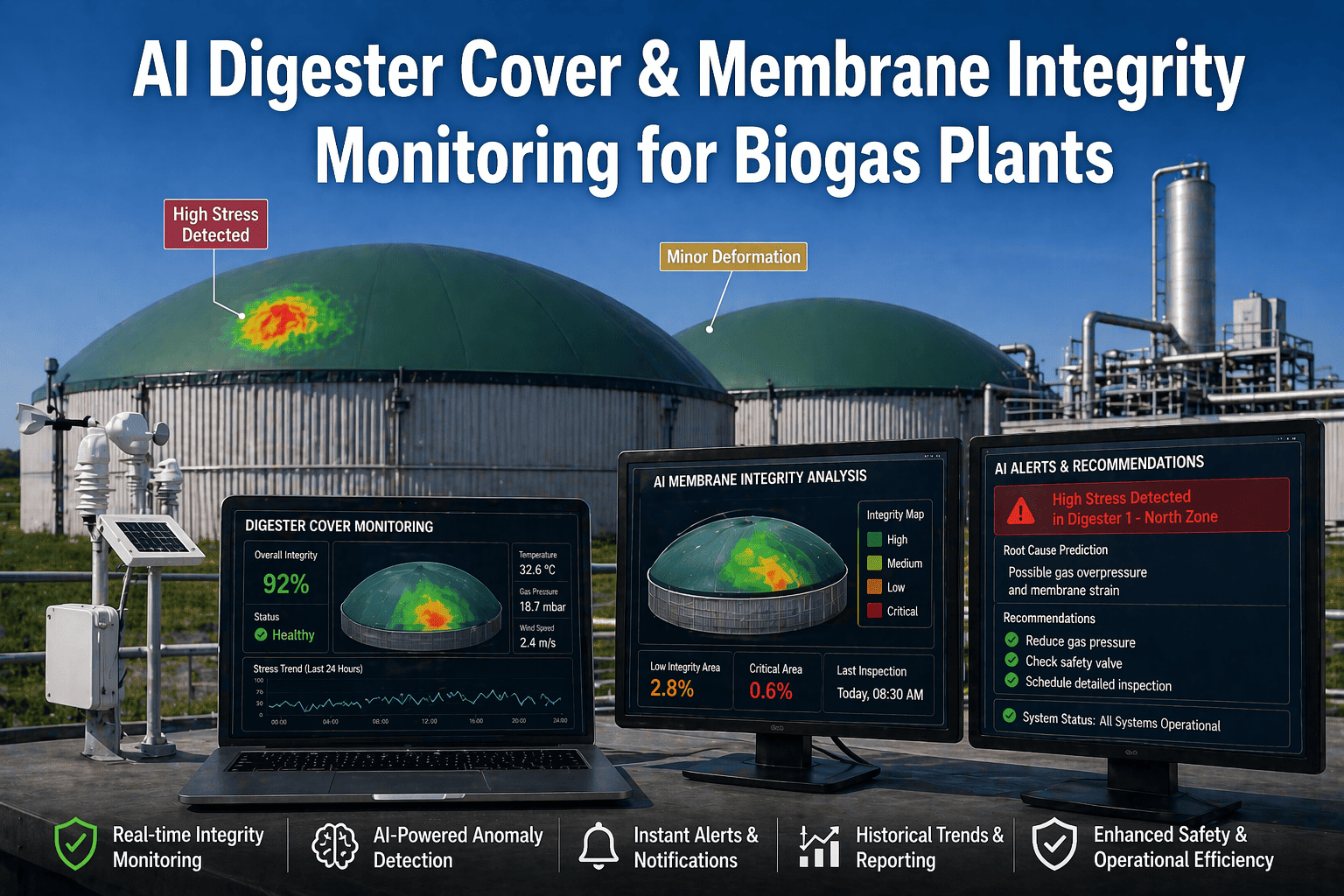
iFactory solution: Detects foam precursors from headspace pressure increase, gas flow irregularity, and agitator current deviation — issuing a foam risk alert with antifoam dosing guidance before overflow risk develops.
iFactory connects to your existing SCADA and lab data — soft-sensor VFA estimation active from pH, alkalinity, and gas flow alone. No inline VFA analyser required. First alerts within 4 weeks.
How iFactory's Early Warning System Works
Most monitoring tools detect anomalies. iFactory classifies biological stress events — identifying the cause, severity trajectory, and corrective action simultaneously. The alert you receive is not "VFA high" — it is "OLR-driven VFA accumulation, severity 2/5, recommend 12% feed rate reduction for 48 hours."
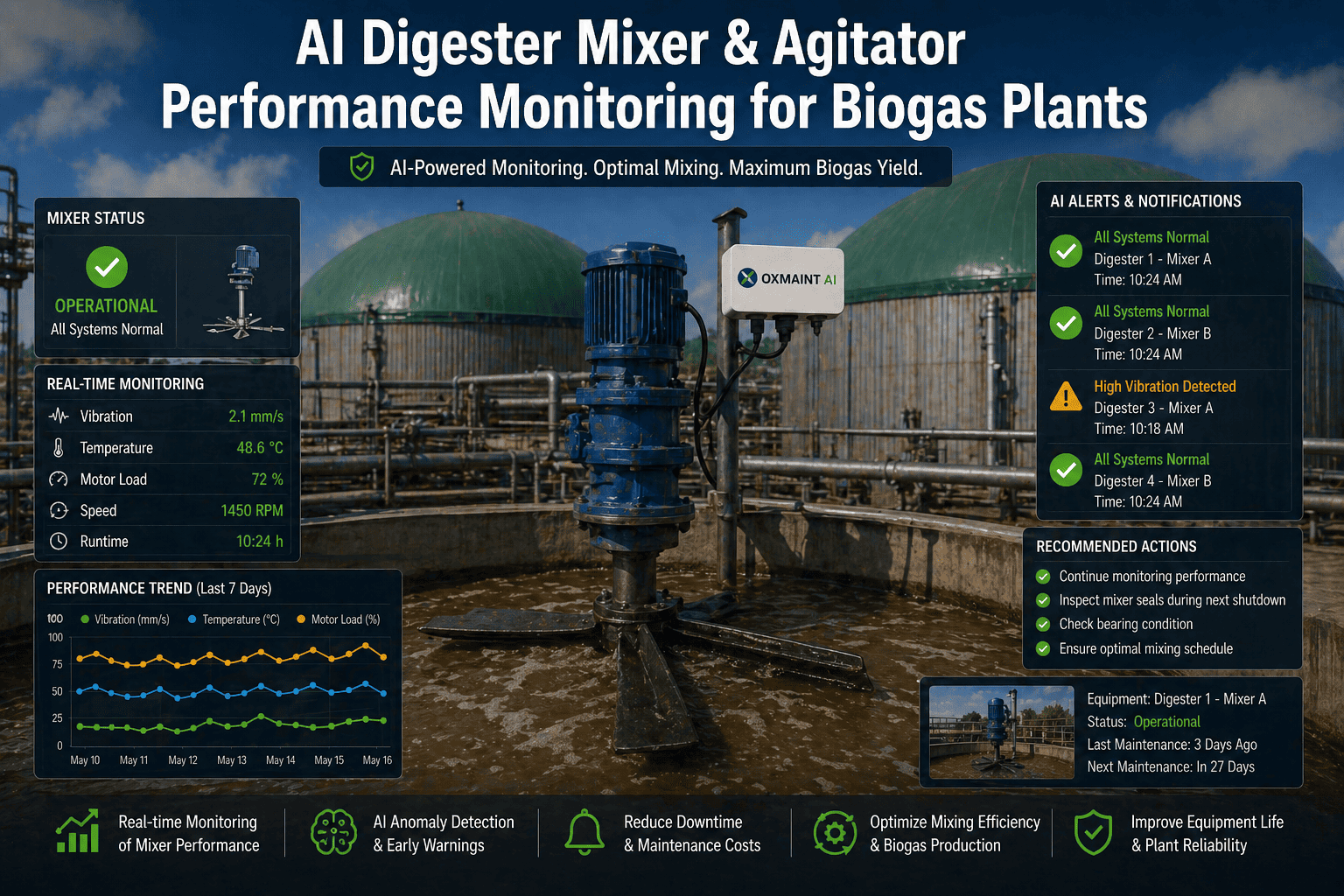
iFactory ingests pH, temperature, gas flow rate, gas composition (CH4%, CO2%, H2S), agitator current, feed volume, and substrate type continuously from SCADA. Where inline VFA analysers are absent, soft-sensor estimation infers VFA and alkalinity from correlated parameters.
AI compares current parameter profiles to a library of biological stress patterns — distinguishing OLR overloading, ammonia inhibition, temperature stress, H2S toxicity, and alkalinity depletion by their unique multi-parameter signatures. Each pattern triggers a different corrective action pathway.
When a stress pattern is detected, iFactory issues an alert that includes: stress type, severity on a 1–5 scale, estimated time to pH impact, and a specific corrective action with dosing or feeding rate recommendation. Operators act on intelligence — not on a raw threshold alarm.
After a corrective action is applied, iFactory tracks the biological response — confirming VFA:alkalinity trajectory is improving, gas output is recovering, and pH is stabilising. Each event is logged with cause, action taken, and recovery timeline — building a plant-specific biological intelligence database.
iFactory VFA Early Warning Deployment Roadmap
iFactory activates biological stress monitoring in four phases — delivering early warning from existing SCADA data before any new instrumentation is required.
iFactory reviews existing SCADA data streams — pH, temperature, gas flow, and available lab records — to identify which biological stress events are detectable from current sensors and which would benefit from additional instrumentation.
Historical SCADA data is used to calibrate VFA and alkalinity soft-sensor models specific to your digester configuration, feedstock mix, and operating range. Plant-specific biological stress thresholds are set — not generic defaults.
Biological stress monitoring goes live. VFA:alkalinity ratio, alkalinity depletion, ammonia load, temperature deviation, and H2S inhibition are monitored continuously. Classified alerts with corrective action guidance delivered to operators via dashboard and mobile.
Every stress event, corrective action, and recovery outcome is logged — continuously refining the biological model for your specific plant. Alert thresholds are refined as iFactory learns your digester's specific tolerance ranges, reducing false positives over time.
Platform Capability Comparison — VFA & Digester Early Warning
Hach Biogas Analyser, Endress+Hauser Memosens, BioGasViewer, and generic SCADA historian platforms offer pH and temperature logging with threshold alarms. iFactory differentiates on biological stress pattern classification, soft-sensor VFA estimation, multi-cause differentiation, and corrective action guidance — capabilities unavailable from instrument-level monitoring. Book a comparison demo.
| Capability | iFactory | Hach Biogas | E+H Memosens | BioGasViewer | Generic SCADA |
|---|---|---|---|---|---|
| VFA & Alkalinity Monitoring | |||||
| VFA:Alkalinity ratio early warning | 72 hr advance — 0.4 threshold | pH threshold only | pH + conductivity | pH + gas flow | Not available |
| Soft-sensor VFA (no inline analyser) | pH + alkalinity inference | Requires inline sensor | Requires inline sensor | Not available | Not available |
| Alkalinity depletion trend detection | Continuous, buffer floor alert | Not available | Not available | Not available | Not available |
| Stress Classification | |||||
| OLR vs ammonia vs H2S cause classification | Multi-cause, per pattern | Not available | Not available | Not available | Not available |
| Corrective action guidance per alert | Specific action + dose | Not available | Not available | Not available | Not available |
| Foam precursor detection | Pressure + agitator current | Not available | Not available | Not available | Not available |
| Infrastructure | |||||
| Works without inline VFA analyser | Soft-sensor from pH + alk | Hardware required | Hardware required | Hardware required | Not applicable |
| Multi-digester stage monitoring | Per stage, independent models | Per instrument only | Per instrument only | Aggregated only | Not available |
Based on publicly available product documentation as of Q1 2025. Verify current capabilities with each vendor before procurement decisions.
Measured Outcomes Across Deployed Plants
iFactory's pre-deployment assessment reviews your SCADA historian and lab data to identify whether current biological stress patterns are present — before any new software is installed.
From the Field
Frequently Asked Questions
Continue Reading
iFactory monitors VFA:alkalinity ratio, alkalinity depletion, ammonia load, temperature deviation, H2S toxicity, and foam precursors — classifying each event with cause, severity, and corrective action before pH registers any deviation.