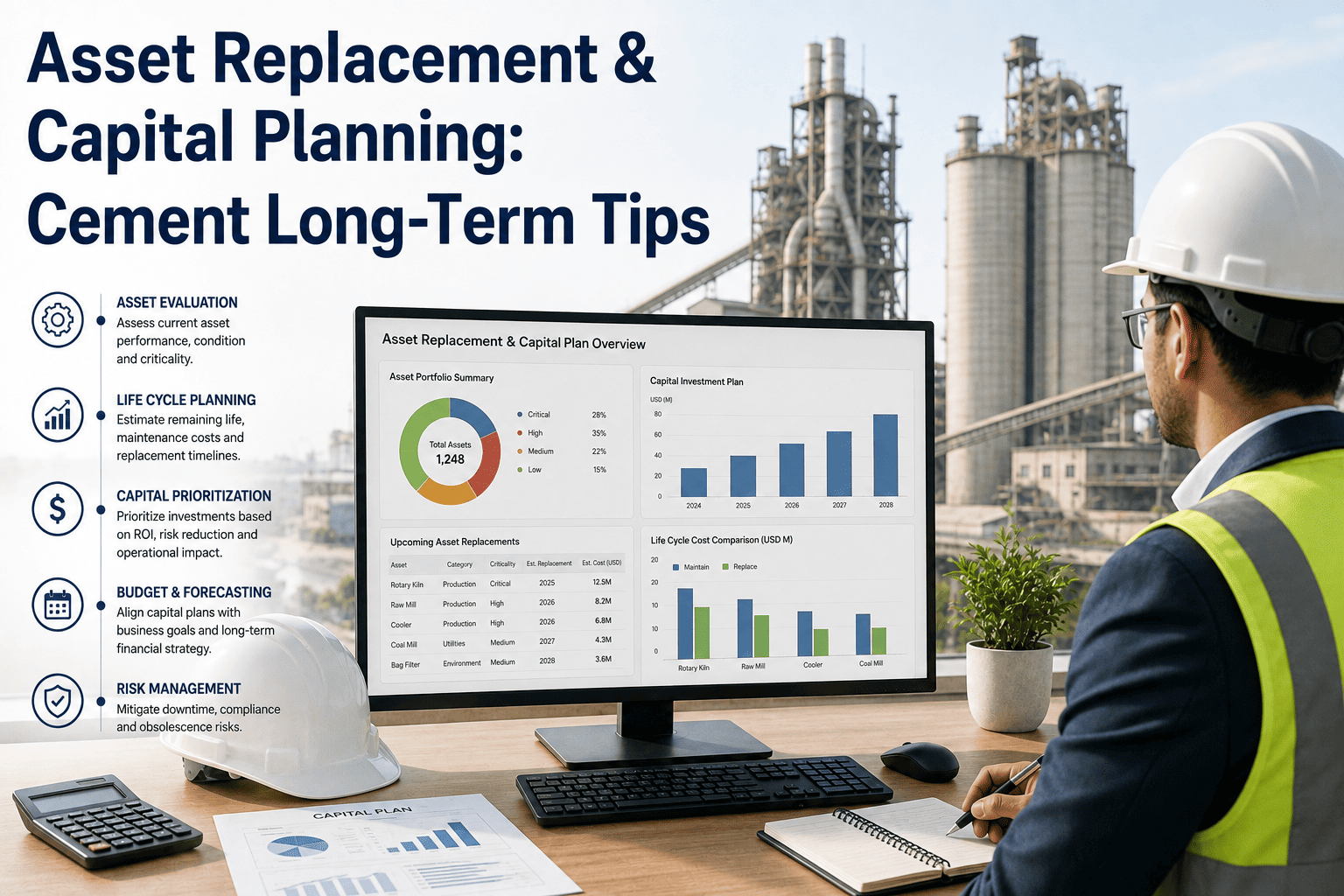
A cement plant's capital budget doesn't get blown by the assets everyone was watching. It gets blown by the kiln shell nobody flagged until it hit its fatigue ceiling, the girth gear that needed a forty-week lead time nobody started tracking until it was already failing, or the finish mill drive that quietly cost more in cumulative repairs over three years than a full replacement would have. Capital budget variance of forty to sixty-five percent against actual spend is the norm in cement plants that plan replacement reactively instead of on a structured multi-year horizon — and every point of that variance is either wasted capital on premature replacement or an unplanned outage on the deferred side. A long-term capital plan built on real asset condition data, not calendar guesses, is what turns that variance into a number a CFO can actually plan around. iFactory's cement asset management team can walk through how this fits your specific plant portfolio and capital review cycle.
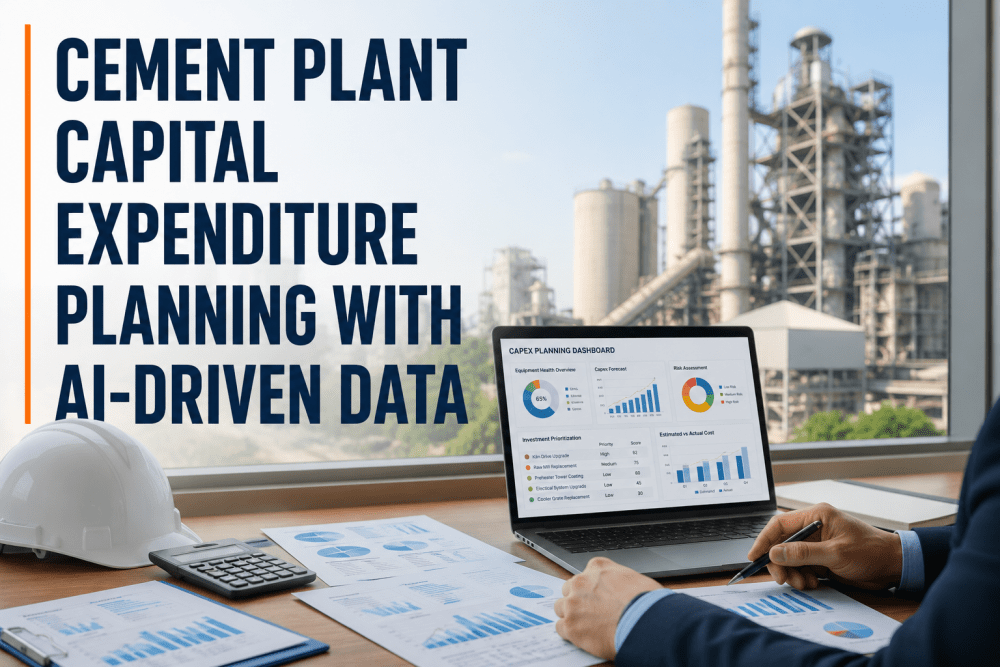
Asset Replacement and Capital Planning for Cement Plants: A Long-Term Framework
A structured approach to capital budgeting, replacement timing, and technology upgrade evaluation across a cement plant's full asset base — built to replace the guesswork and last-minute budget requests that produce the forty-to-sixty-five percent capital variance most plants live with today.
Most Cement Capital Budgets Are Built on Age, Not Condition
The default approach to cement capital planning in most plants is still calendar-based: a kiln shell gets a rough replacement date because it's "old," a mill gearbox goes on the five-year list because that's roughly how long the last one lasted. This produces two failure modes simultaneously. Assets get replaced years before they actually need to be, wasting capital that could have funded something else — and assets that are quietly degrading faster than their nameplate age suggests get missed entirely, until a failure event forces an emergency capital request that blows the annual budget by a third or more in a single quarter.
The gap between these two outcomes is entirely a data problem. A kiln shell's actual remaining useful life depends on thermal cycling history, refractory wear patterns, and shell thickness measurements — not on the number of years since commissioning. A plant that tracks this condition data continuously can queue a replacement twenty-four to thirty-six months ahead of the actual need, giving procurement enough runway to source long-lead items like kiln tires or girth gears before they become an emergency. A plant that doesn't track it is planning capital on a guess, and guesses are what produce forty to sixty-five percent forecast variance.
This isn't an argument for more frequent inspections alone — it's an argument for connecting condition data directly to the capital planning process, so the finance team reviewing next year's budget is looking at a forecast built from actual degradation curves, not from an asset register that only tracks purchase date and depreciation schedule. Plants that make this shift typically don't need to overhaul how they inspect equipment; they need to change how that inspection data flows into the budgeting conversation.
Capital Planning Operates at Three Different Time Scales Simultaneously
A long-term capital plan isn't one forecast — it's three overlapping horizons that require different data, different confidence levels, and different levers to manage. Conflating them is one of the most common reasons capital plans lose credibility with finance leadership: a five-year strategic estimate presented with the same confidence as a confirmed near-term replacement makes the whole forecast look unreliable the first time reality diverges from the long-range guess. Separating the horizons explicitly, and being honest with stakeholders about which numbers are confirmed versus projected, is what keeps a multi-year plan trustworthy over time.
When Replacement Becomes a Technology Decision, Not Just a Capital One
Every major asset replacement is also, implicitly, a technology decision — the question isn't only "does this need to be replaced" but "does this get replaced with an equivalent, or does this become the point where the plant upgrades to a materially different generation of equipment." Getting this evaluation wrong in either direction is expensive: replacing like-for-like when a technology upgrade would have paid back inside its own capital cost wastes an opportunity that won't come around again for another equipment generation, while over-specifying an upgrade the operating budget can't support creates its own risk. The four-step sequence below is what separates a defensible technology decision from one made under the pressure of an unplanned outage, where there's rarely time to run the comparison properly.
Walk Through a 20-Year Capital Plan Built From Your Actual Asset Condition Data
iFactory's cement asset management team builds this three-horizon forecast against your specific asset register, condition history, and plant hierarchy — not a generic industry template. Bring your current CapEx variance numbers and we'll show what a condition-driven forecast would have projected differently.
The Timeline That Should Be Driving Your Replacement Queue
A replacement decision that's technically correct but procured too late produces the same emergency outage a missed condition signal would. Major cement equipment carries lead times long enough that the procurement calendar, not just the condition data, has to shape when a decision gets made. Plants that track condition data closely but don't cross-reference it against this kind of lead-time table often find themselves with a correct, well-documented decision that still arrives too late to prevent an unplanned stop — the analysis was right, but the timing discipline wasn't there to act on it.
| Component | Typical Lead Time | Recommended Decision Window |
|---|---|---|
| Kiln Tires / Girth Gears | 40–52 weeks | 18–24 months ahead of projected need |
| Kiln Drive System | 30–40 weeks | 15–20 months ahead of projected need |
| Preheater / Pyroprocessing Components | 14–20 months | 24 months ahead for full-line scope |
| Mill Liners and Trunnions | 16–24 weeks | 9–12 months ahead of relining window |
| Control System / Drive Electronics | 20–30 weeks | 12–18 months, factoring vendor support life |
A capital plan that queues replacements against this table — rather than against a generic annual budget cycle — is what converts condition data into procurement action early enough to matter.
How iFactory Feeds This Directly Into Your Capital Planning Process
iFactory connects continuous asset condition monitoring directly to a capital forecasting layer — ship the pre-configured AI hardware, instrument the critical asset base, and remaining-useful-life projections start feeding a rolling capital plan instead of sitting in a maintenance log nobody outside the plant floor sees. The output is built to hand directly to finance: a rolling forecast across the near, mid, and long-term horizons with confidence levels attached to each entry, updated as new condition data comes in rather than revised once a year during the budget cycle.
The Difference Shows Up in the Budget Review, Not Just the Maintenance Log
The real test of a capital planning framework isn't whether maintenance likes it — it's whether the annual budget review stops being a negotiation over surprise requests. Plant managers who've made this shift describe the change less in terms of dollars saved and more in terms of what the conversation with finance sounds like: a rolling forecast with confidence levels attached, reviewed and adjusted quarterly, instead of a static annual number that everyone already expects to be wrong by the time Q3 arrives.
Frequently Asked Questions
Build a Long-Term Capital Plan on Real Condition Data, Live in 6–12 Weeks
iFactory's cement asset management platform connects condition monitoring directly to a rolling multi-year capital forecast — hardware racked and ready, models pre-loaded with cement-specific degradation patterns, and 24×7 remote monitoring included. Get a turnkey AI quote with the twelve-week delivery timeline, or start with a focused pilot on your highest-risk critical assets to build the forecast case before expanding plant-wide.