Every cement plant finance and maintenance team eventually faces the same argument in the same budget meeting: which aging asset gets replaced this year, and which one gets patched together for another twelve months. Most plants answer that question with gut instinct, whichever piece of equipment failed most recently, or whoever argues loudest in the room. That approach quietly wastes capital on assets that still have useful life left while starving genuinely high-risk equipment of the investment it needs before it fails catastrophically during a production run. Book a demo to see how iFactory turns capital asset planning into a data-backed process instead of a guessing game.
Stop Replacing Equipment on Instinct. Start Replacing It on Evidence.
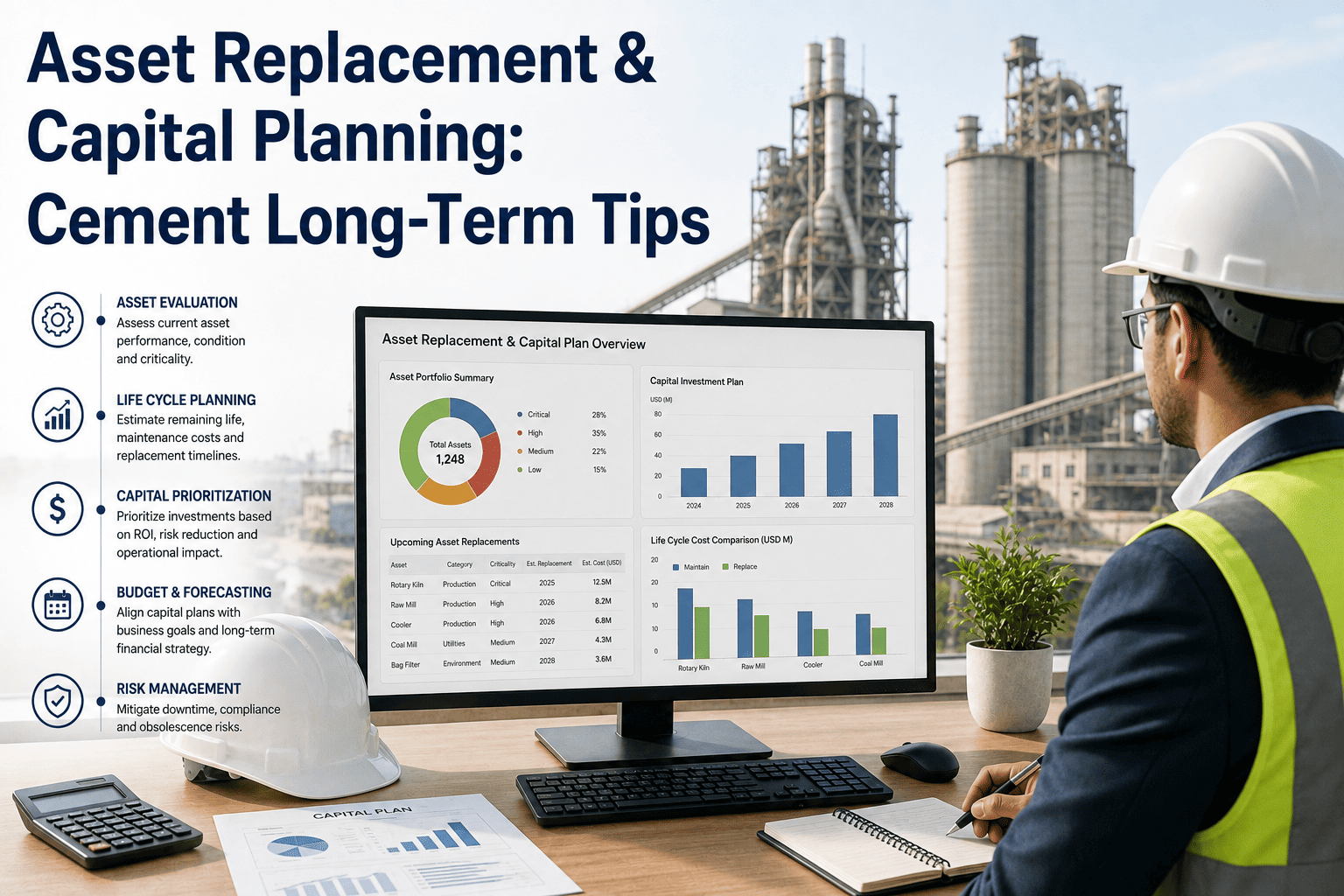
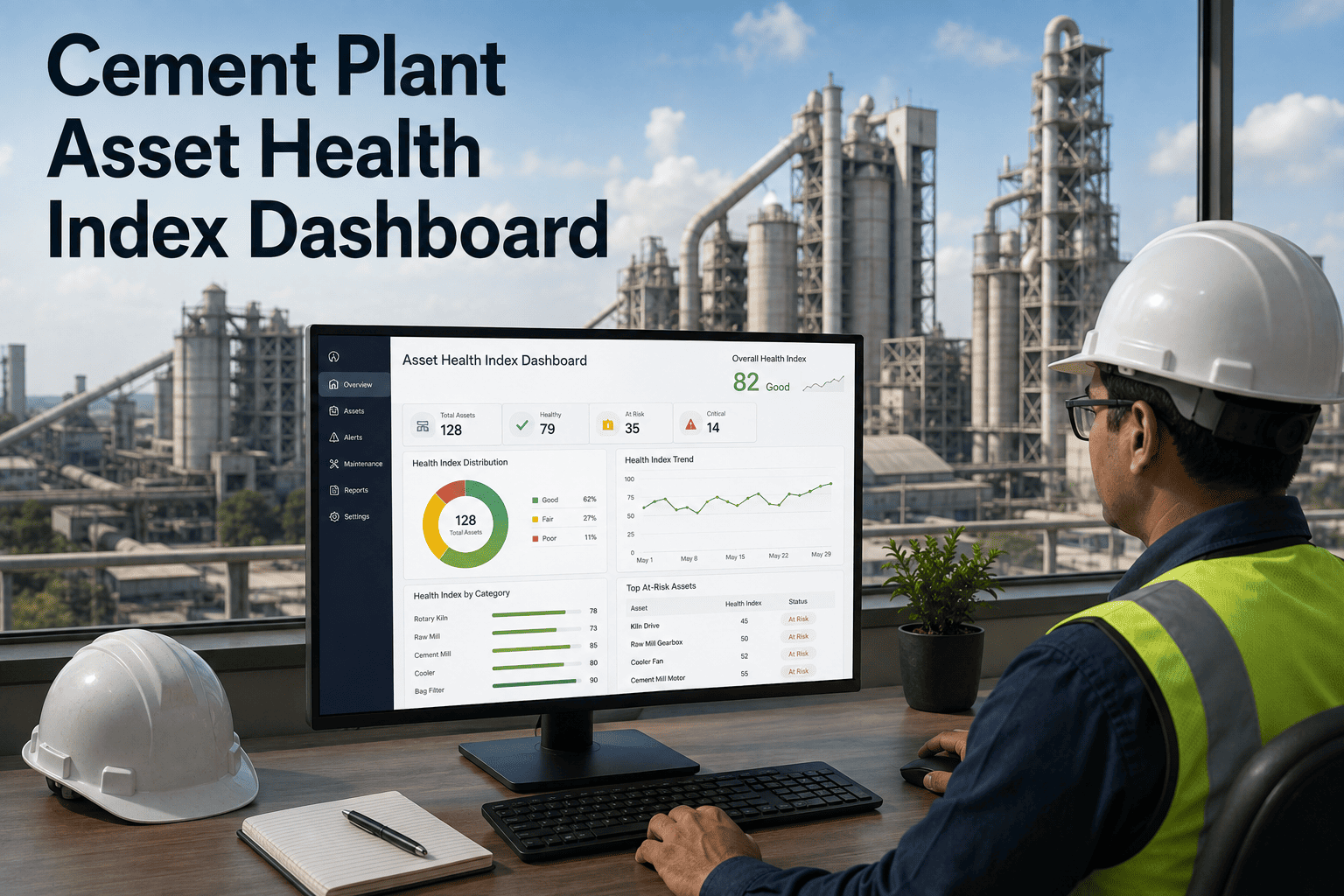
iFactory scores every major asset across your cement plant against remaining useful life, failure risk, production impact, and repair cost history, then ranks capital projects so your next budget cycle funds the investments that actually reduce downtime.
Capital Budgets Built on Memory Instead of Data Fund the Wrong Projects
Cement plants run on capital-intensive equipment: kilns, mills, conveyors, fans, and refractory systems that each represent a significant multi-year investment. When a plant's capital planning process relies on whichever asset most recently caused an outage, the resulting budget tends to overcorrect for last year's crisis while ignoring a slower-moving asset that is quietly degrading toward its own failure. Finance teams approve requests based on incomplete justification, maintenance teams submit requests based on frustration rather than data, and the two groups rarely agree on which projects deserve priority. The result is a capital plan that looks reasonable on paper but consistently under-funds the highest-risk equipment while over-funding assets that could have run safely for another two or three years.
A data-driven capital asset planning process changes the conversation entirely. Instead of arguing from memory, plant leadership and finance can point to a ranked list built from actual condition data, failure history, spare parts lead time, and production criticality. That ranked list becomes the shared reference point for every budget discussion, and it holds up under scrutiny when a corporate finance team asks why a particular project was funded ahead of another.
The stakes extend beyond the budget meeting itself. A cement plant that consistently defers the wrong assets accumulates hidden liability in the form of aging equipment operating past its reliable service life, which shows up later as unplanned downtime during peak production demand, higher emergency repair costs, and in the worst cases safety incidents that a scheduled replacement would have prevented entirely. Building the discipline to score, rank, and revisit capital decisions on a rolling basis turns a once-a-year budget scramble into a continuous, defensible planning process that both protects the plant and makes far better use of a limited capital budget.
Four Weighted Criteria That Should Drive Every Capital Replacement Decision
A defensible capital plan does not treat every asset the same way. Each piece of equipment should be scored against a consistent set of criteria so that projects across completely different asset classes, a kiln shell versus a bag filter versus a conveyor gearbox, can still be compared on equal footing.
Reactive Budgeting Versus AI-Assisted Capital Planning
The difference between a plant that plans capital investment reactively and one that plans it with continuous asset intelligence shows up clearly when the two approaches are placed side by side. The comparison below reflects patterns observed across cement operations that have shifted from annual guesswork to ongoing, data-backed asset scoring.
| Dimension | Reactive Budgeting | AI-Assisted Planning |
|---|---|---|
| Basis for decisions | Recent failures, anecdote, budget pressure | Condition data, failure risk score, cost history |
| Planning horizon | Single budget year | Rolling three to five year asset roadmap |
| Cross-department agreement | Frequent disputes between finance and maintenance | Shared ranked list both teams can reference |
| Spare parts alignment | Ordered after failure, expedited freight common | Procurement timed against projected asset life |
| Audit trail | Verbal justification, hard to defend later | Documented scoring criteria and data sources |
A Five-Stage Cycle for Building a Defensible Capital Plan
iFactory keeps a live, scored inventory of every major asset in your plant so the ranked project list is always ready before the budget meeting starts, not assembled the week before.
Four Risk Categories Every Asset Falls Into, and What Each One Demands
Once assets are scored, grouping them into risk categories makes the resulting capital plan far easier to communicate to leadership that was not involved in the scoring process itself.
Five Budgeting Mistakes That Quietly Drain Capital Efficiency
| Mistake | Consequence |
|---|---|
| Funding the loudest request instead of the highest-risk asset | Genuinely critical equipment gets deferred another year |
| Evaluating assets in isolation from spare parts lead time | Approved project stalls waiting on a twelve-month lead item |
| Treating the capital plan as fixed for the full fiscal year | New condition data revealing rising risk gets ignored until next cycle |
| Excluding operations from the scoring conversation | Production criticality gets underweighted relative to raw failure data |
| No documented scoring rationale behind funded projects | Difficult to defend the plan when corporate finance asks why |
What a Data-Backed Capital Plan Changes Within a Year
Common Questions About AI-Assisted Capital Asset Planning
How is remaining useful life actually calculated for cement plant equipment?
Remaining useful life combines several data sources rather than relying on a single manufacturer design-life figure. Condition monitoring readings such as vibration trends, thickness measurements on refractory or shell components, and thermal imaging history all contribute to an evidence-based estimate. Repair frequency and severity over recent years adjust that estimate up or down depending on whether the asset has been degrading faster or slower than its design assumptions predicted. The result is a dynamic figure that updates as new inspection and monitoring data arrives, rather than a static number set once when the asset was installed. Book a demo to see how iFactory calculates and updates this figure automatically across your asset register.
Should capital planning happen annually or more frequently?
An annual cycle sets the formal budget, but the underlying risk scoring that feeds it should be reassessed far more often, ideally quarterly. Equipment condition does not wait for the fiscal calendar, and an asset that was moderate risk in January can shift to critical risk by September if a monitored parameter starts trending sharply. Plants that only revisit their capital plan once a year routinely discover mid-cycle that a deferred asset has deteriorated faster than expected, forcing an unplanned emergency purchase at a much higher cost than a scheduled one. Rolling reassessment keeps the plan current without requiring a full annual re-budgeting exercise every quarter.
How do you get finance and maintenance teams to agree on capital priorities?
Agreement becomes far easier once both teams are looking at the same ranked list built from the same weighted criteria, rather than each team arriving at the budget meeting with a separate, informally justified wish list. Finance tends to trust cost and total-cost-of-ownership data, while maintenance tends to trust condition and failure risk data. A shared scoring framework that explicitly incorporates both perspectives gives each side confidence that their concerns were factored in, which shifts the conversation from advocacy toward tradeoff discussion. Documenting the scoring rationale for every funded and deferred project also makes it much easier to revisit the plan later without relitigating the same argument.
What happens when the approved budget cannot fund every high-risk asset?
This is the most common real-world constraint, and it is exactly why scenario modeling matters during the planning stage. Running the ranked asset list against several budget levels shows leadership precisely which projects fall below the funding line at each tier, along with the risk being accepted by deferring them. That visibility allows leadership to make an informed tradeoff decision, sometimes funding a partial mitigation such as increased monitoring frequency or an interim repair, rather than either fully funding an unaffordable list or deferring critical risk without anyone consciously deciding to accept it. Contact support to discuss scenario modeling for constrained budget years.
How does capital planning connect to day-to-day maintenance work orders?
Capital planning and routine maintenance work orders should draw from the same underlying condition data rather than operating as separate systems that never talk to each other. A recurring pattern of work orders on the same component is itself a signal that should feed into the capital scoring process, since repeated repairs on an aging asset are exactly the kind of total-cost-of-ownership signal that justifies replacement over continued repair. When work order history, condition monitoring, and capital scoring live in one connected system, the case for a given capital project is built automatically from real operating history instead of being reconstructed manually before each budget cycle. Book a demo to see this connection in action.
Build Next Year's Capital Plan on Evidence, Not Memory
iFactory keeps a continuously updated, scored asset register across your entire cement plant so every capital request arrives at the budget meeting already justified by real condition and cost data.